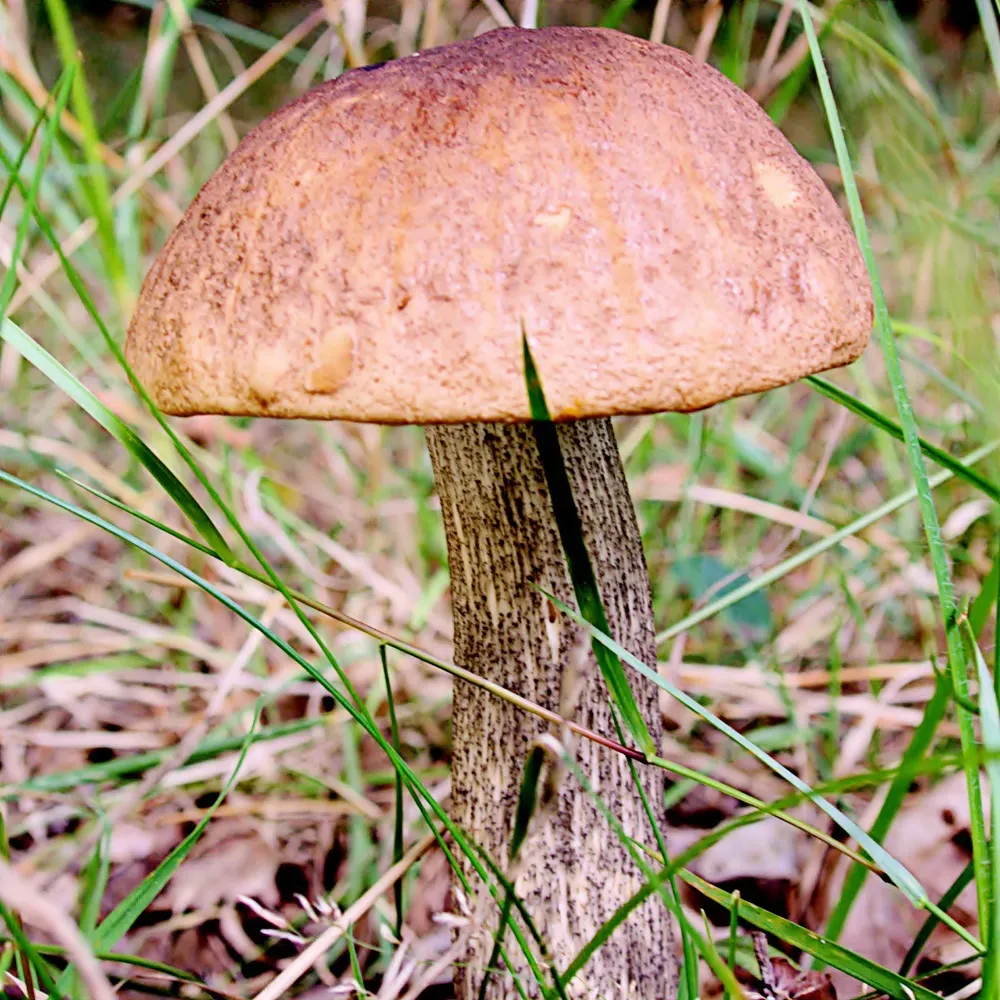
Orange oak boleteLeccinum quercinum
Expert-verifiedUpdated August 15, 2026
Passport
- Edibility
- Edible
- Season
- Jun — Oct
- Hymenophore
- Pored
- Cap color
- Red
- Size
- Large (over 15 cm)
- Smell
- Pleasant
- Reviewed
- Yes ✓
Quick answers
Where to look?
Deciduous forest, Mixed forest
When does it appear?
Jun — Oct
Active months: June, July, August, September, October.
How to recognize it? Three signs
- Cap color: Red, Brown, Dark brown
- Cap shape: Convex
- Smell: Pleasant
Fruiting season
June – October
Description
The orange oak bolete (Leccinum quercinum) is one of the four main orange-capped scaber stalks of Ukraine's flora, alongside the classic L. aurantiacum, the pine-loving L. vulpinum and the white L. percandidum. As the name suggests, this species is mycorrhizal with oak rather than aspen or pine. Its cap has the typical brick color of an orange scaber stalk, more vivid and darker than the classic one.
In Ukraine it is widespread in oak and oak-beech forests: Polissia, the Forest-Steppe, the Carpathians and the Carpathian foothills. It loves older oak forests with a thick layer of leaf litter. It can also fruit in young oak plantations 10–20 years old, but more abundantly in older ones. It is not found in conifer forests or pure birch woods without oak.
Edibility — top-tier, a category 2 mushroom on the traditional Eastern European scale. The flesh is very firm; when cut it quickly turns blue, then black. This is a normal reaction, not a sign of toxicity. In the kitchen it's treated as a "dark scaber stalk" — when cooked it gives the dish a characteristic gray-black color. Young, firm specimens are excellent for pickling. You can dry it, but dried it is much darker than the classic red-capped scaber stalk. It fries beautifully with potatoes and onions.
Cap
Cap 5–15 cm, hemispherical in young mushrooms, then cushion-shaped. The color is brick-red, blood-brick, darkening with age to brownish red. The surface is matte and velvety, slightly sticky in wet weather. The skin does not peel and overhangs the cap margin as a thin "fringe".
Hymenophore
The hymenophore is tubular, free, notched at the stem. White when young, then grayish cream, grayish brown in mature ones. The pores are small and round. They darken quickly when pressed.
Stem
Stem 10–18 cm tall, 2–4 cm thick, cylindrical, slightly bulbous at the base. The color is whitish, covered with characteristic dense brown fibrous scales — especially rich in the lower part. The base may have a bluish-green or reddish-brown tint.
Flesh
The flesh is white and very firm. When cut it quickly (within 30–60 seconds) turns blue, then black. In the stem it may turn slightly violet. The texture is meaty, like the classic red-capped scaber stalk. It gets wormy less readily than the classic one.
Smell
The smell is richly mushroomy and pleasant. The taste is mild and delicate, with a note of forest litter.
Lookalikes
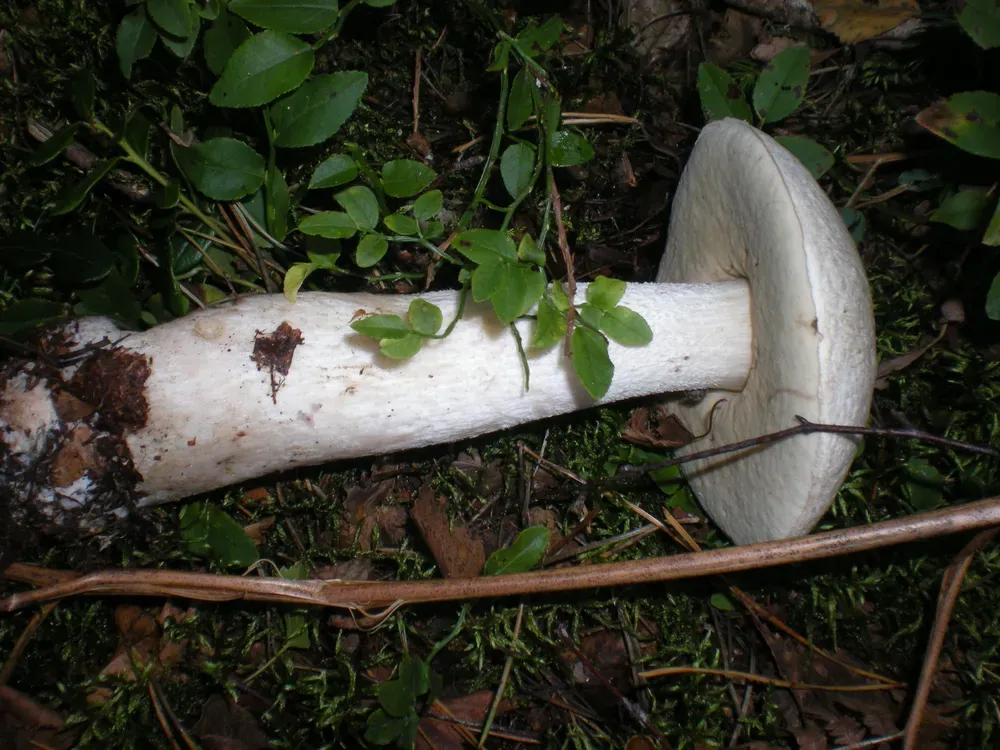
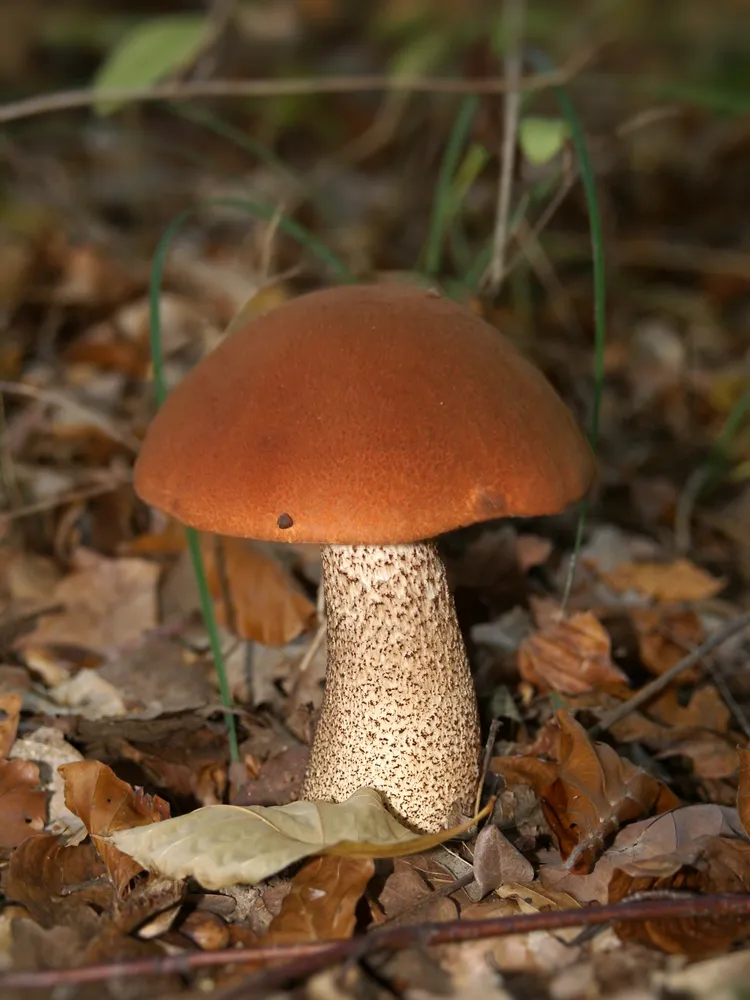
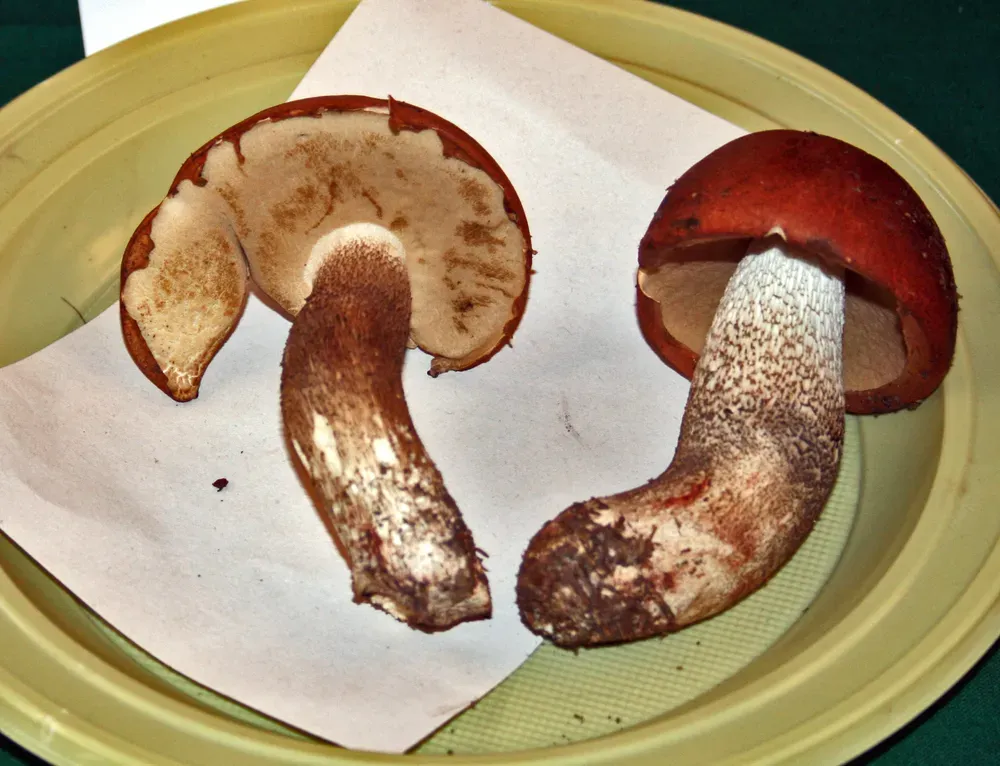
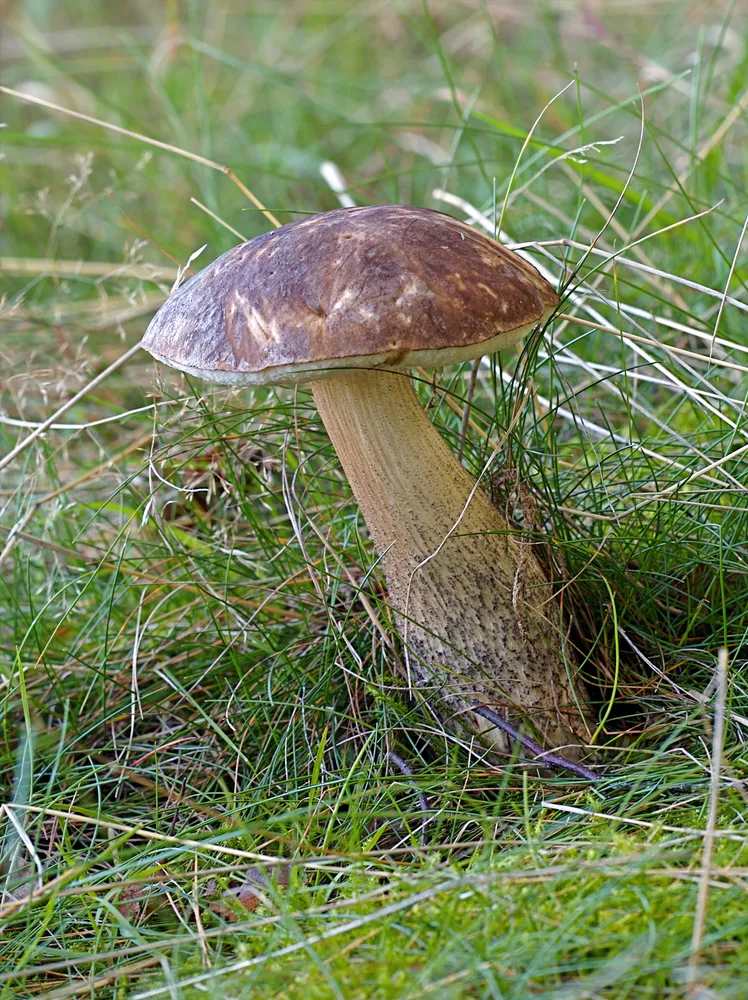
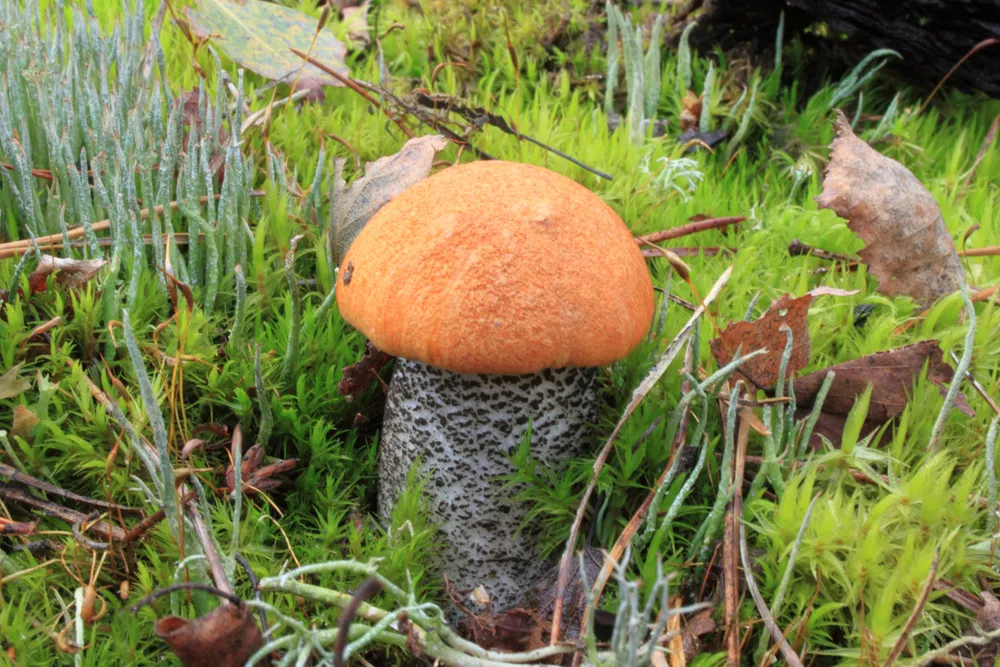
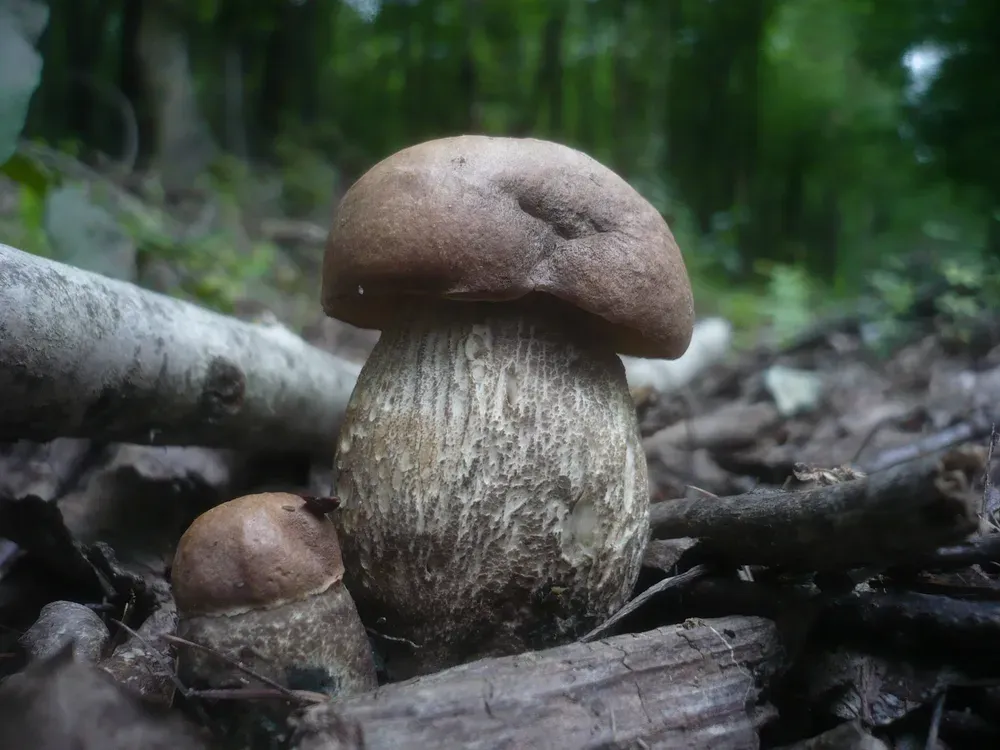
_Bresinsky_&_Manfr._Binder_533003_2015-06-29.webp)
Related species
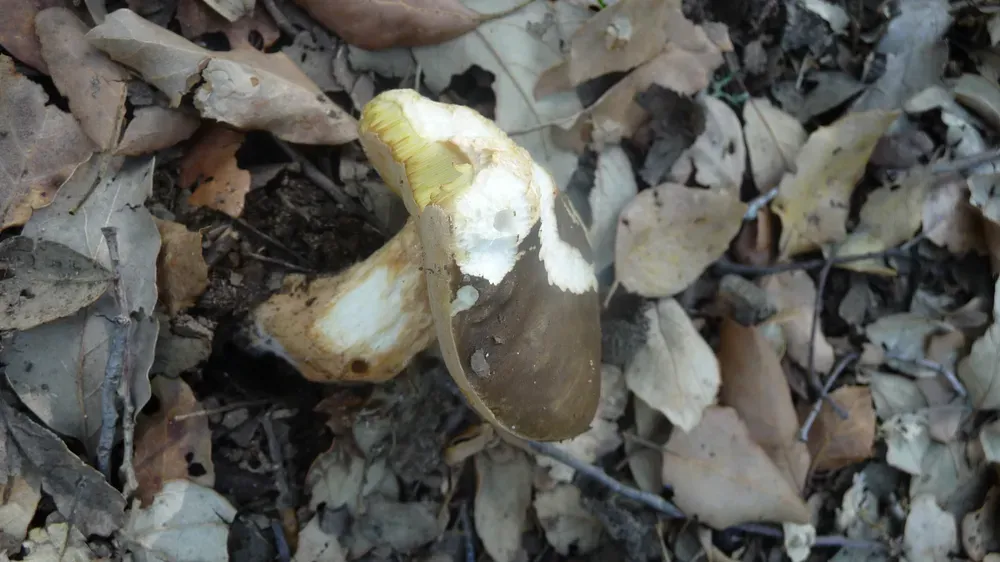
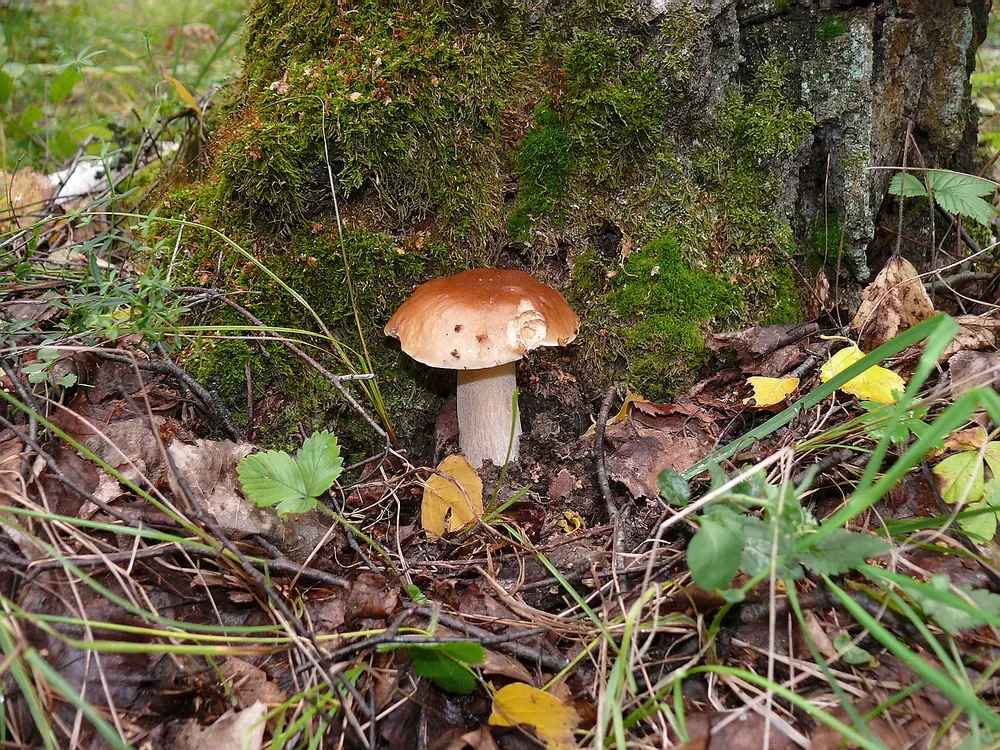
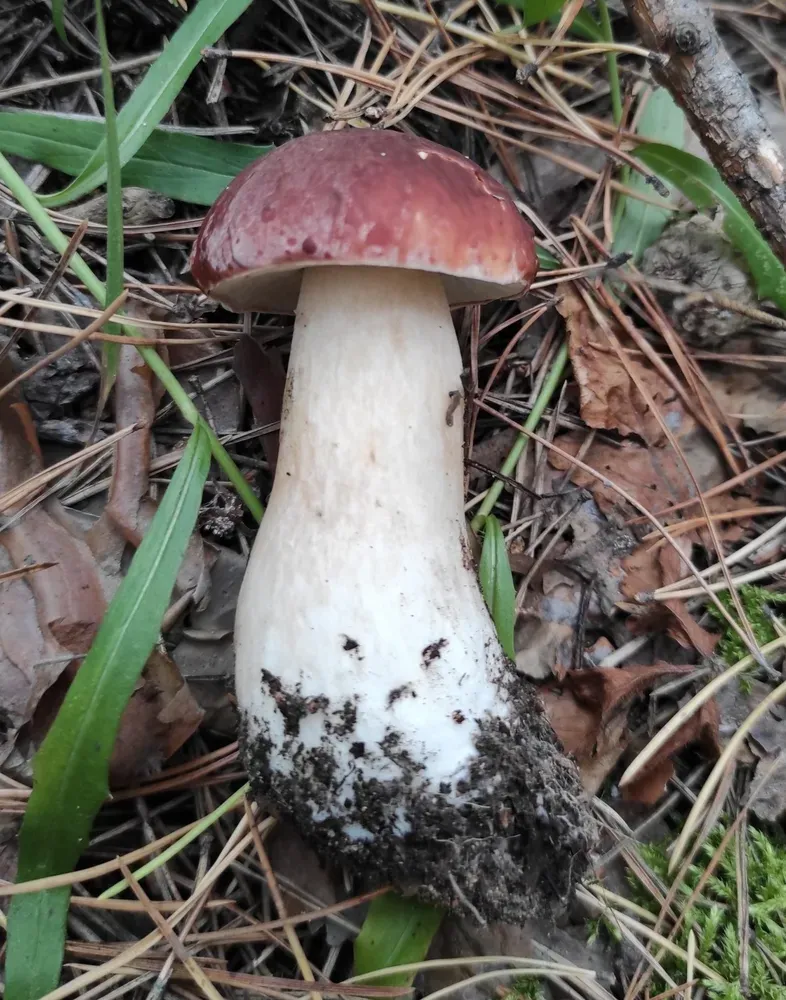
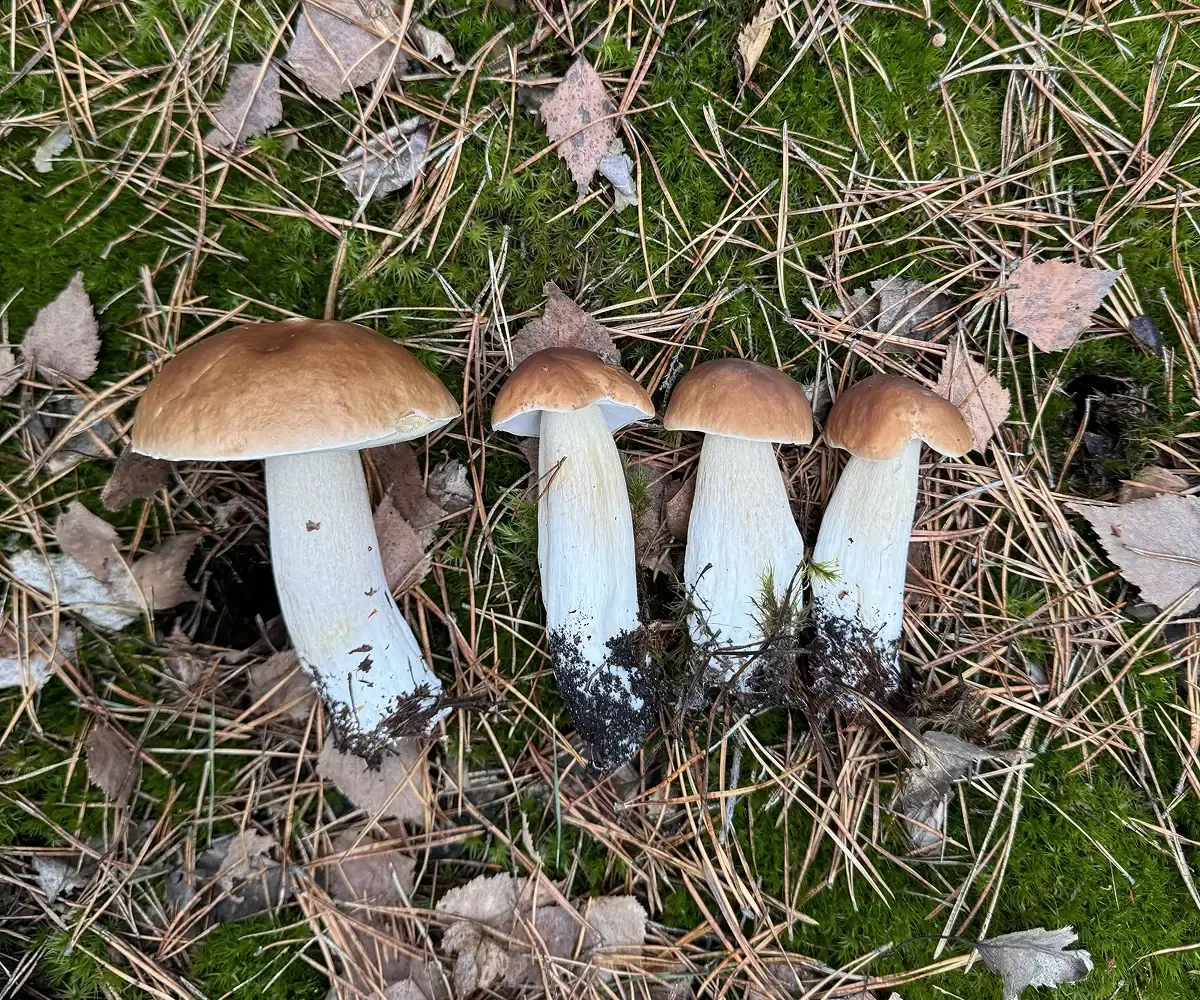
Mushrooms of the same genus and habitat — to study side by side and never mix up.
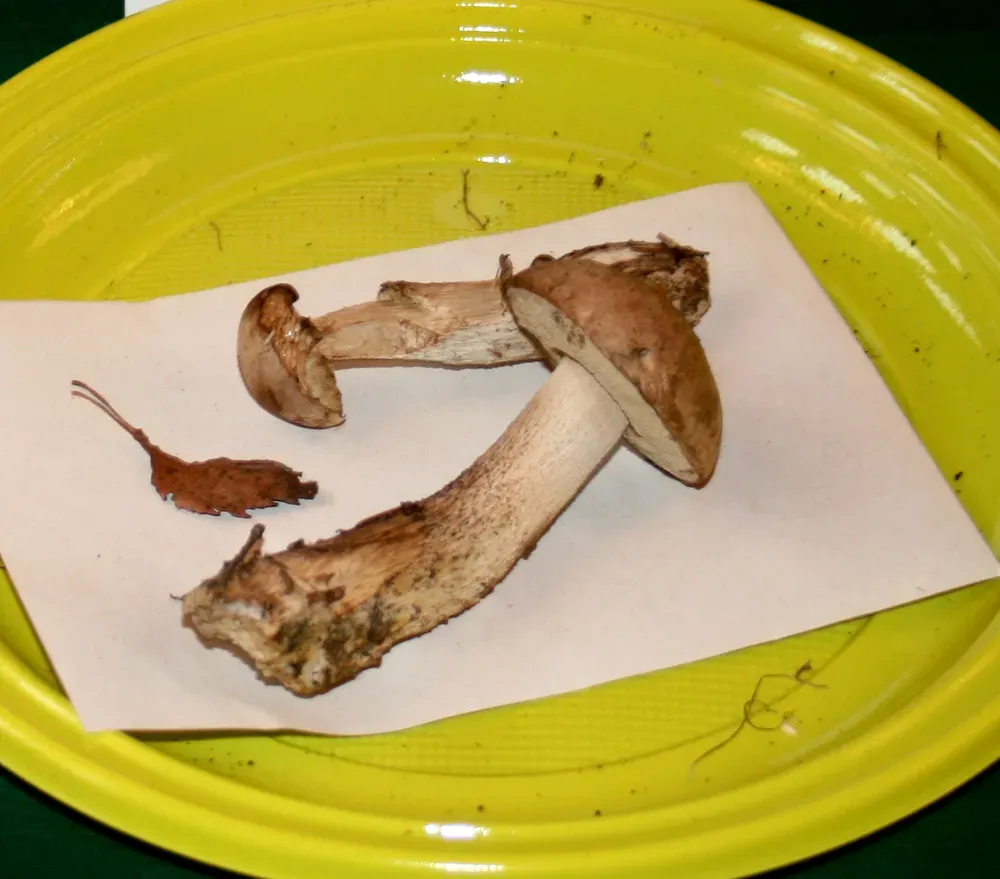
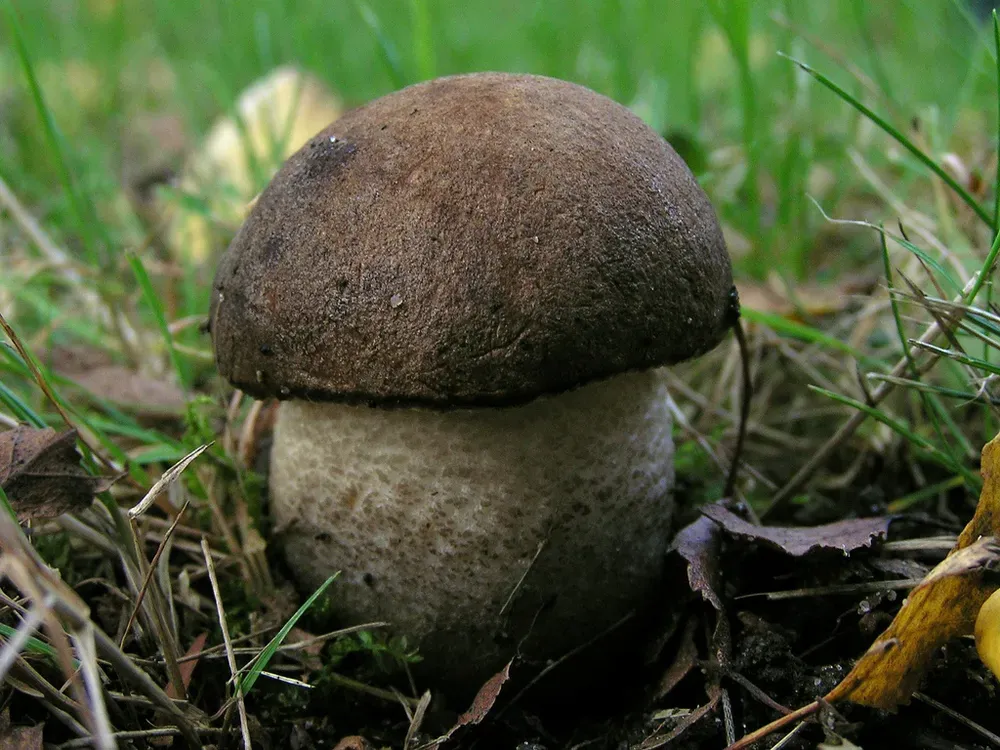
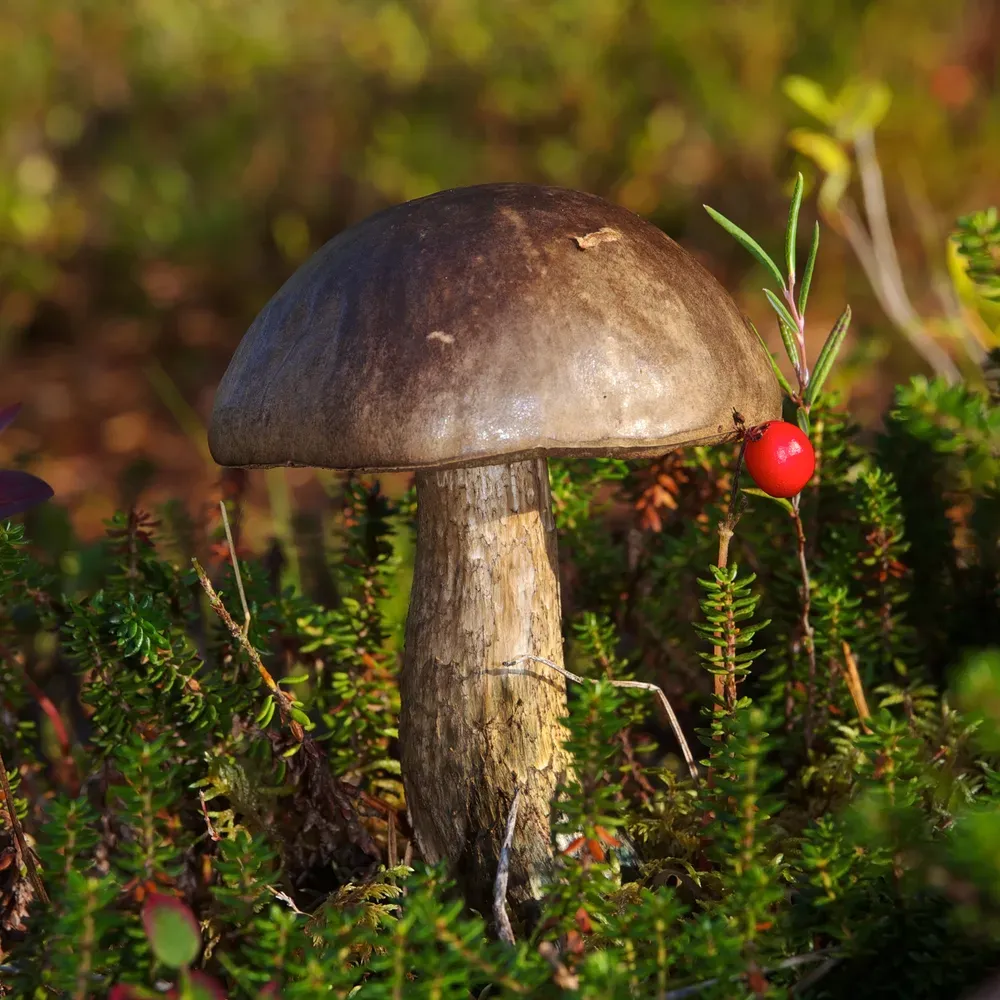
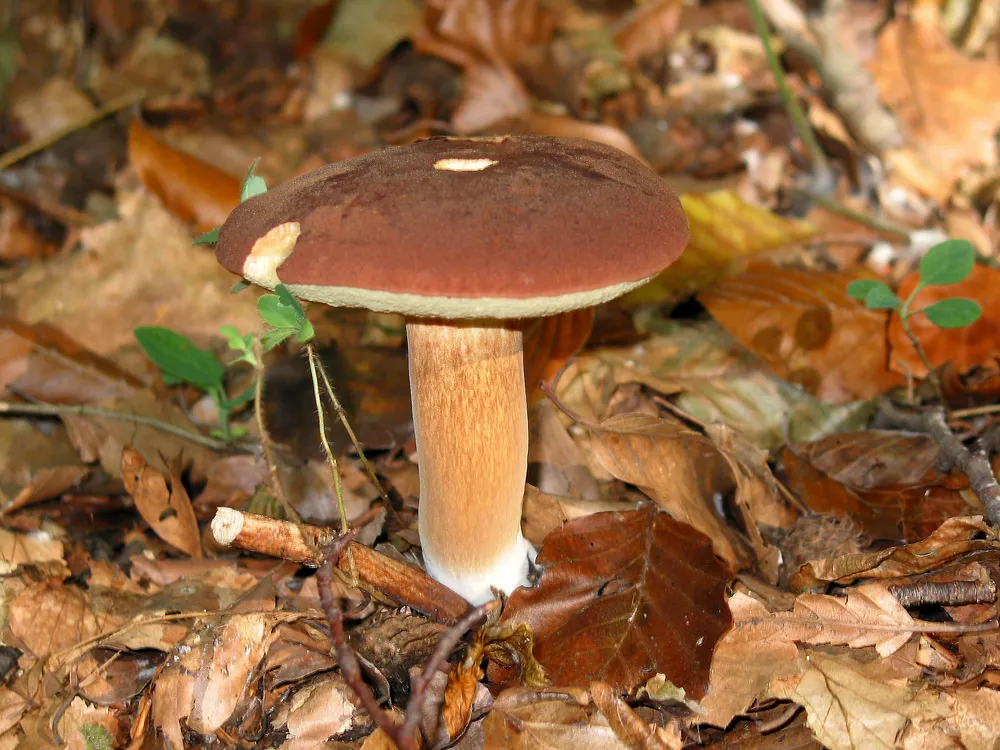
Related reading
 How to identify
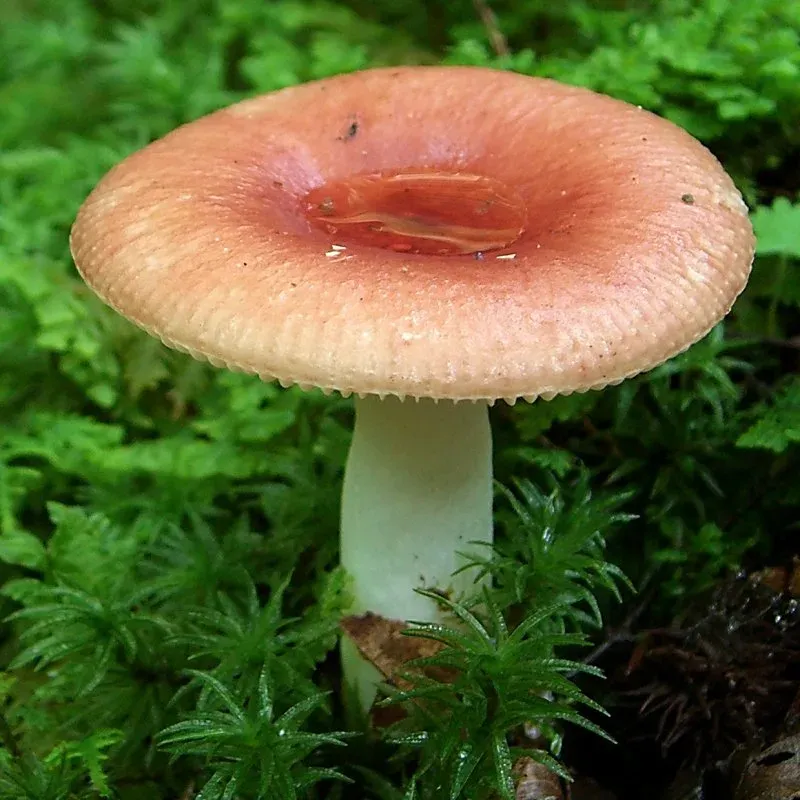
Red-capped mushrooms: edible and dangerous
A red cap in the forest is a reason to stop. These mushrooms include both tasty red-capped scaber stalks and p…
August 21, 2026·3 min.webp) How to identify
How to identifyRed-capped bolete (aspen bolete): how to identify it and where it grows
The orange bolete, also known as the aspen bolete, is hard to mistake thanks to its bright cap and bluing cut…
August 6, 2026·3 min
Frequently asked questions
Is it safe that the flesh turns black?
Yes. Rapid bluing and darkening of the cut flesh is a normal reaction for this species (pigment oxidation). Don't confuse it with the myth "turns blue = poisonous". When cooked, the color disappears or settles to dark gray — that's normal.
Can it be confused with a poisonous mushroom?
There are no serious dangerous look-alikes among orange and brown scaber stalks in Ukraine. All species with scales on the stem and a tubular hymenophore are edible. Only avoid mushrooms with RED pores (Rubroboletus) — the orange oak bolete has white-to-gray pores.
Where to look in Ukraine?
Oak and oak-beech forests: Polissia, the Forest-Steppe, the Carpathians and the Carpathian foothills. It loves older oaks (50+ years) with a thick layer of leaf litter. It can also fruit in young oak stands, but less often. It is not found in purely coniferous or pure birch forests.
When does it fruit?
From June to October, peaking in August-September after heavy rains. In cold years the season is shorter and later. The first specimens appear in June after the first serious rains.
How does it differ from the classic red-capped scaber stalk?
The classic red-capped scaber stalk (Leccinum aurantiacum) has a bright orange or orange-red cap and grows with aspen. The oak species is darker, brick-red, and grows with oak. The stem scales of the oak species are darker; in the classic one they are almost black.
Which trees does it form mycorrhiza with?
Exclusively with oak (Quercus robur, Q. petraea), less often with beech (in mixed oak-beech forests). Unlike other orange scaber stalks, this species is strictly tied to oak.
How to cook it?
Clean it and slice it 5–8 mm thick. Young ones can be fried right away. For mature ones, boil them first for 10–15 min and discard the first water (this reduces the intense darkening in the pot). Fry with onions, stew with potatoes in cream, pickle. You can dry it — dried it is dark, but the flavor is rich.
How to store it?
The best methods are drying, pickling and freezing. Before drying, slice it 5–8 mm thick. Dried, in glass jars with lids, it keeps for up to 2 years. It pickles beautifully — its firm texture holds the acidic marinade well. It's better to freeze it after frying.
Is Orange oak bolete edible or poisonous?
Does Orange oak bolete have gills or pores?
What does the cap of Orange oak bolete look like?
What does the stem of Orange oak bolete look like?
Sources
- [1]Вікіпедія (українська)
- [2]Mushrooms Demystified, David Arora
- [3]Mushrooms (Roger Phillips), Roger Phillips
- [4]Визначник грибів України, Зерова М.Я. та ін. (1979)
- [5]iNaturalist Ukraine
- [6]Species Fungorum
- [7]Index Fungorum
- [8]GBIF
- [9]MycoBank Database
- [10]Атлас грибів України, Зеров Д.К. (1979)