.webp)
The orange bolete is one of the most striking mushrooms of our forests. Its bright orange cap stands out from afar, its sturdy, slender stem draws foragers in, and the mushroom itself is almost never wormy. Behind the folk name “orange bolete” hides the aspen bolete, a close relative of the brown birch bolete. Confusing it with anything dangerous is practically impossible, which makes it a great choice even for a beginner.
Let's look at how to recognize the orange bolete, where to find it and how it differs from similar mushrooms.
What the orange bolete looks like
The aspen bolete, also known as the orange bolete, has several distinctive features.
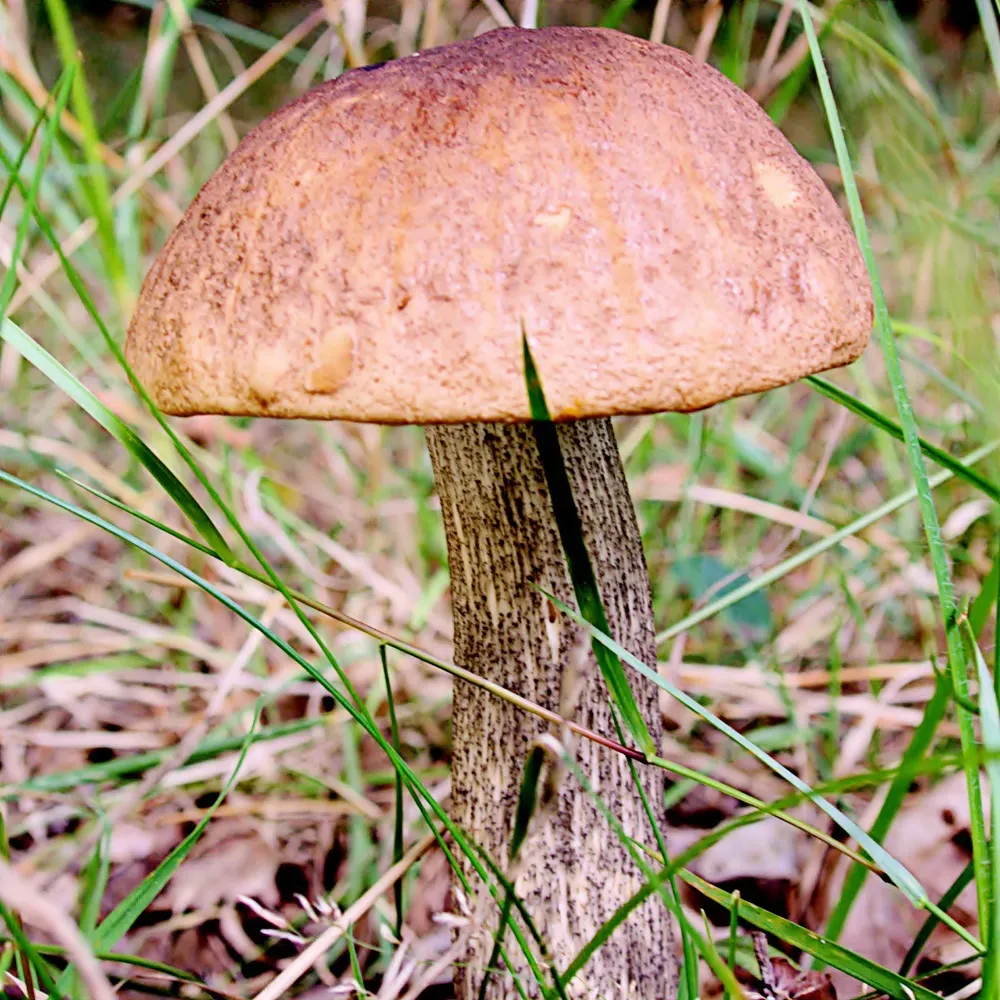
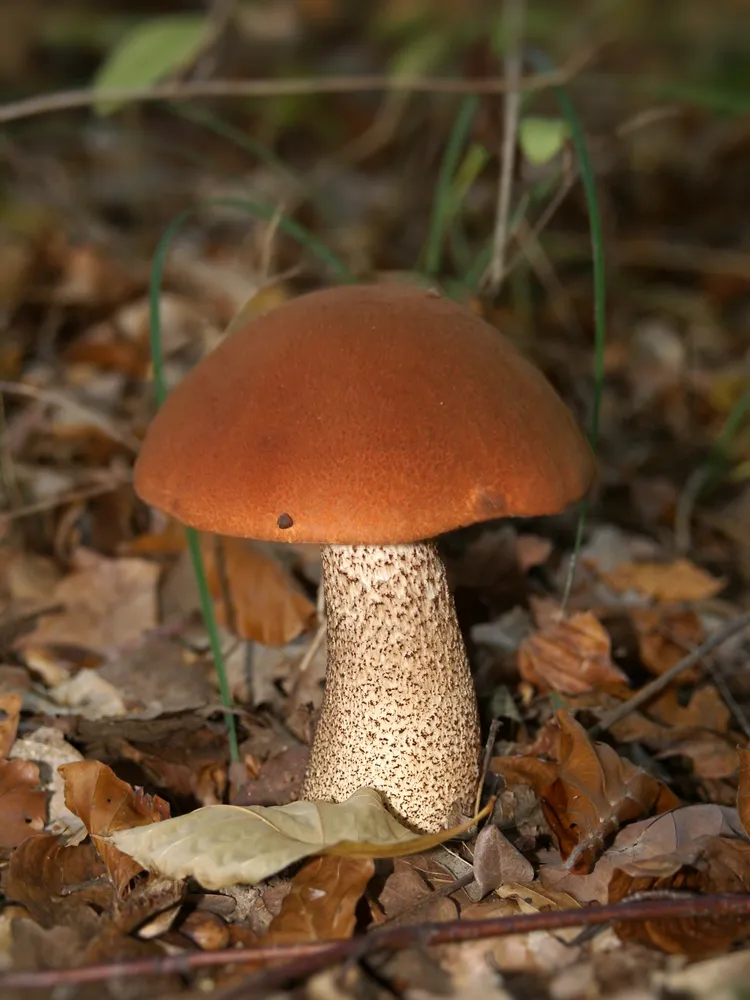
- Cap. Brick-red, orange or fiery yellow-orange, firm; in a young mushroom it hugs the stem tightly, as if stretched over it.
- Stem. Tall, slender, white or grayish, covered in small dark scales.
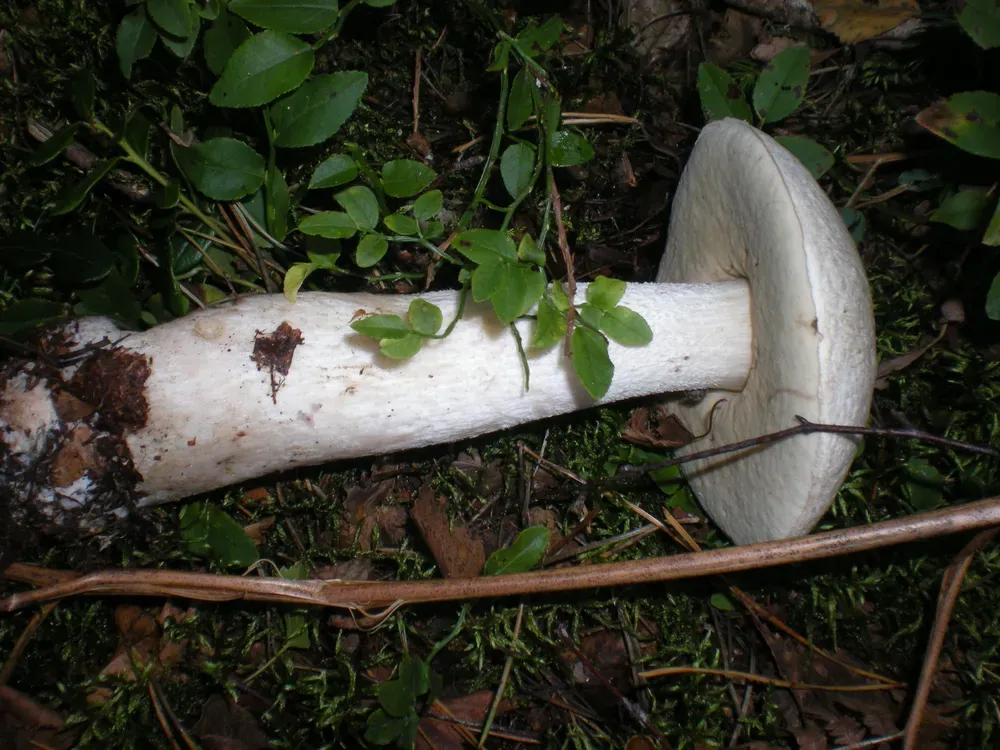
- Pores underneath. Under the cap there's a sponge, white at first, then grayish brown.
- Bluing when cut. The flesh quickly turns blue where broken, then darkens to violet-black. This is a telltale sign.
It's precisely the combination of a bright cap, scales on the stem and bluing cut flesh that makes the orange bolete easy to recognize.
Where and when it grows
The orange bolete is a mycorrhizal mushroom, meaning it lives in partnership with trees.
Classically it grows under aspens, hence the name “aspen bolete”, but it also turns up under birches and oaks and in mixed forests. Look for it in young deciduous and mixed plantings, at forest edges and in the grass under trees. The season runs from June to October, in flushes after rain.
The orange bolete often grows singly or in small groups. To see what else to pick alongside it in different months, check the mushroom calendar.
How it differs from the brown birch bolete
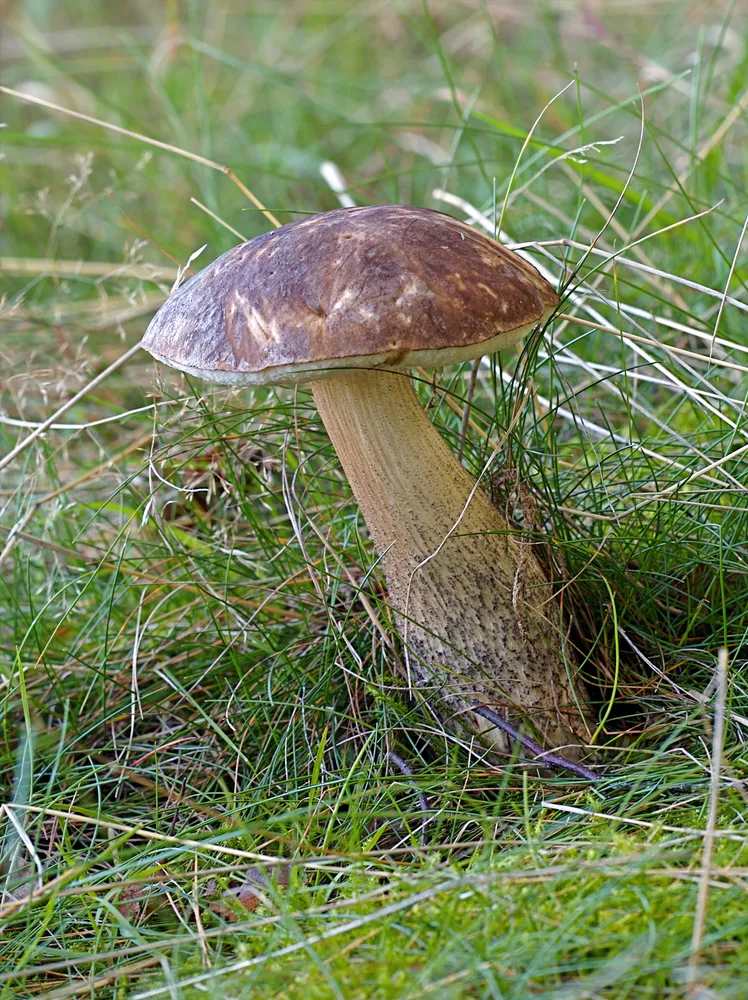
The orange bolete's closest relative is the brown birch bolete, also called the birch bolete.
Both are boletes with a slender, scaly stem, so they're easy to confuse. The main differences: the orange bolete has a bright orange or red cap and flesh that turns blue when cut, while the brown birch bolete has a gray or brown cap and flesh that barely changes color when broken. We cover their differences in more detail in our piece on how the brown birch bolete differs from the red-capped scaber stalk.
Besides the oak form, there are other species, such as the red-capped scaber stalk and Leccinum percandidum, all edible and similar in build.
What makes the orange bolete so good
Foragers love this mushroom for more than its looks.
- Almost never wormy. The dense flesh is rarely tunneled, so your basket stays clean.
- Safe. It has no dangerous lookalikes, which makes it suitable for a beginner.
- Versatile. Fry it, dry it, pickle it. It darkens when cooked, but that doesn't spoil the flavor.
- Easy to spot. The bright cap is visible from afar, so it's a pleasure to hunt for.
The only thing to get used to is the flesh darkening during cooking, and that's normal. When picking orange boletes, follow the rules of safe foraging, and it will be the pride of your basket.
Sources
- “Field Guide to the Fungi of Ukraine” (Kyiv, Naukova Dumka publishing house).
- Leccinum aurantiacum in GBIF, the global biodiversity database.
- Leccinum in MycoBank, the international fungal nomenclature database.
- Leccinum aurantiacum on Wikipedia.
Frequently asked questions
What is the orange bolete?
It's a folk name for the , an edible bolete with a bright orange or red cap, a scaly stem and flesh that turns blue when cut. A close relative of the brown birch bolete.
How do you recognize the orange bolete?
By its firm, bright orange cap, its tall stem with small dark scales, and flesh that turns blue when cut and then darkens to violet-black. Under the cap there's a sponge.
Where does the orange bolete grow?
Classically under aspens, hence the name, and also under birches and oaks and in mixed forests. Look for it in young plantings, at forest edges and in the grass under trees from June to October.
Why does the aspen bolete turn blue when cut?
It's the flesh's natural reaction to air: it quickly turns blue, then darkens. The bluing doesn't signal danger and even confirms that it's an aspen bolete. The mushroom stays edible.
How does the orange bolete differ from the brown birch bolete?
The orange bolete has a bright orange or red cap, and its flesh turns blue when cut. The has a gray or brown cap, and its flesh barely changes color. Details are in a .
Does the orange bolete have poisonous lookalikes?
There are practically no dangerous lookalikes. All the similar species, and others, are edible. That makes the orange bolete a safe mushroom even for a beginner.
Why does the aspen bolete darken when cooked?
Because of the same flesh reaction that causes bluing when cut. When boiled or fried, the mushroom darkens, even to black, but that doesn't spoil the flavor. It's a normal trait of the species.
Does the orange bolete get wormy?
Rarely. Thanks to its dense flesh, the orange bolete is attacked by larvae less than many other mushrooms, so your basket usually stays clean.
Mushrooms in this article
Related articles
 How to identify
Truffles in Ukraine: do they grow here, and where to look
Truffles aren't just a French delicacy. Several species grow in Ukraine too. Here's which ones, where they occ…
August 24, 2026·2 min Recipes & cooking
How to store fresh mushrooms, and for how long
Fresh mushrooms spoil faster than you might think. Here's how long they keep in the fridge, how to store them…
August 21, 2026·4 min Recipes & cooking
How long to boil mushrooms
Boiling time depends on the type of mushroom and on what you're cooking next. Here's a clear cheat sheet: how…
August 22, 2026·4 min