.webp)
The brown birch bolete (birch bolete) and the red-capped scaber stalk, also known as the orange bolete, often come up in the same breath among foragers. No wonder: they're the closest of relatives, both belong to the scaber stalk genus (Leccinum) and are built very much alike.
Still, they're hard to confuse, because the difference catches your eye at first glance. Let's look at how the brown birch bolete differs from the red-capped scaber stalk, so you know for sure what's in front of you. For a detailed side-by-side comparison, see the page brown birch bolete vs. red-capped scaber stalk.
Cap color, the main difference
The first thing that gives these mushrooms away is the color of the cap.
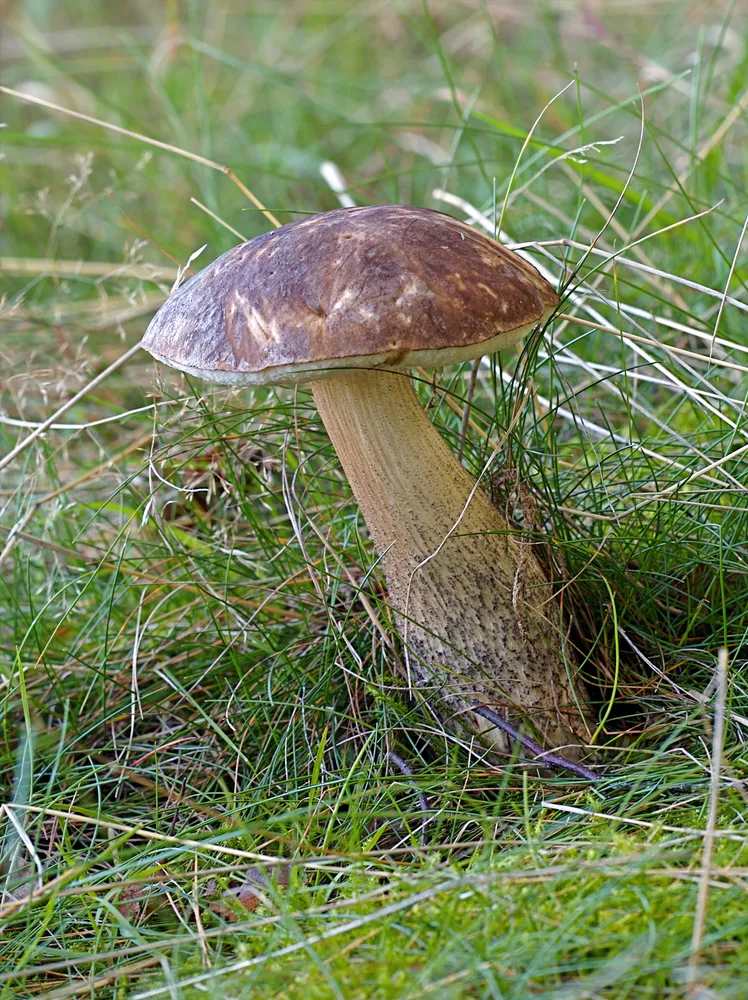
- The brown birch bolete has a gray, brown or almost black cap, modest and unremarkable.
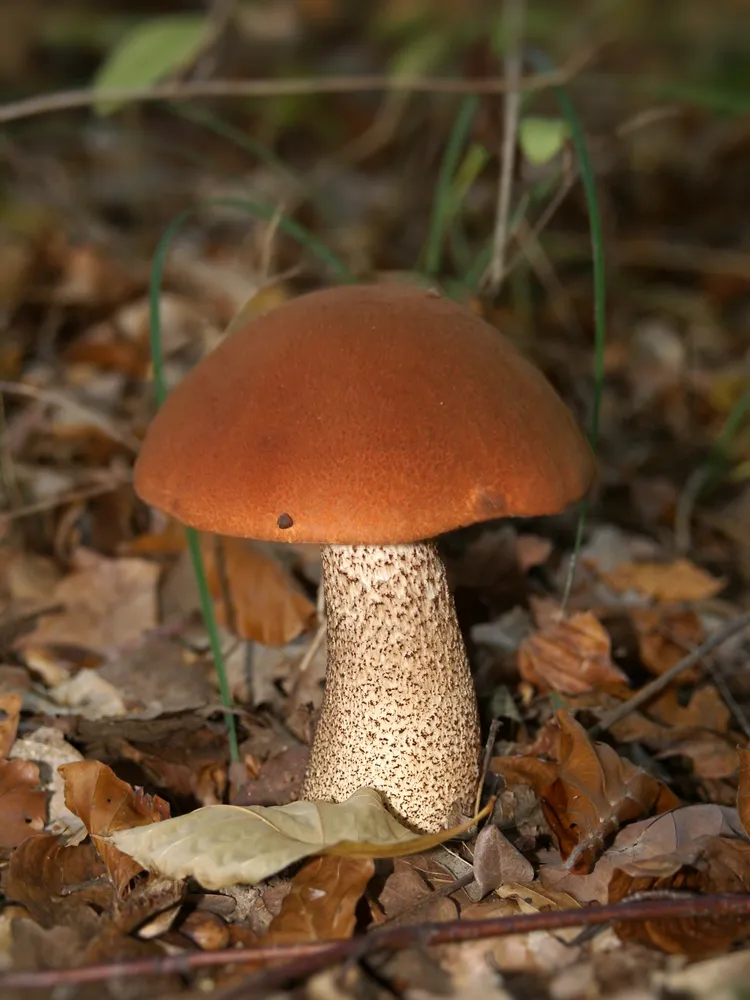
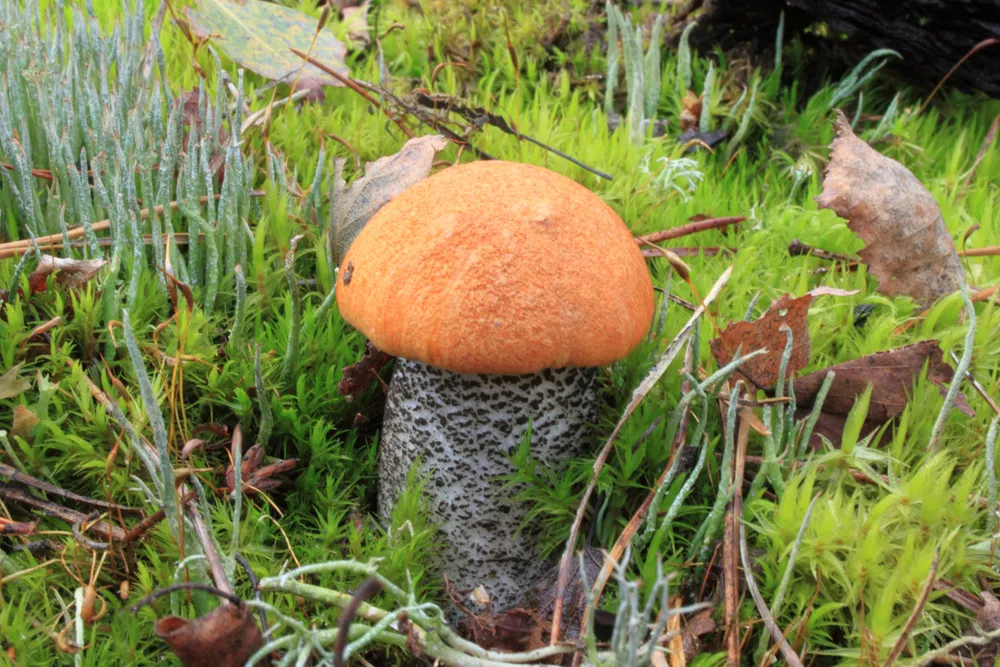
- The red-capped scaber stalk has a bright rusty-orange, orange-red cap that you can spot from afar.
It's that fiery cap that gave the red-capped scaber stalk its name. If an orange «head» glows in the grass, it's a red-capped scaber stalk. If it's a modest grayish mushroom, it's a brown birch bolete.
Stem and flesh
The two mushrooms are built alike, but there are small differences.
Both have a long white stem with scales. But on the brown birch bolete the scales are mostly dark on a pale background, while on the red-capped scaber stalk they darken over time and look coarser, and the stem itself is stockier.
The difference is far more noticeable when you cut them. The flesh of the brown birch bolete barely changes when cut, or turns slightly gray. The flesh of the red-capped scaber stalk, on the other hand, quickly turns blue, black or even takes on a violet tinge. This is normal and safe, but it looks dramatic.
Which tree they grow under
The mushrooms' names hint at their main partners.
- The brown birch bolete lives under birch, so look for it in deciduous and mixed birch woods.
- The red-capped scaber stalk classically grows under aspen, though it also turns up under birch and other trees.
So in a pure birch grove you're more likely to come across the brown birch bolete, and in an aspen stand or near aspens, the red-capped scaber stalk. In a mixed forest, where both birch and aspen grow, you may find both.
Among the orange-capped scaber stalks there's also the orange birch bolete, which grows specifically under birch, so sometimes these mushrooms really do share the same forest edge.
Which is tastier and firmer
Both mushrooms are edible and good, but the red-capped scaber stalk is prized a little more.
The red-capped scaber stalk has denser flesh, so it holds its shape better and goes soggy less. The brown birch bolete is more tender and tasty when young, but turns spongy faster. Both darken during cooking, but they're equally good on the table.
Like all scaber stalks, they're best picked young and firm for the table. The main thing is not to mistake either of them for the bitter-tasting bitter bolete, which stands out with its pinkish pore layer and unbearable bitterness.
The weather will tell you when exactly to head out for mushrooms. Keep an eye on conditions with our mushroom radar: it shows when moisture and warmth line up well for mushrooms to appear.
Sources
- «Key to the Fungi of Ukraine» (Kyiv, Naukova Dumka publishers).
- Leccinum aurantiacum on GBIF, a global biodiversity database.
- Leccinum on MycoBank, an international fungal nomenclature database.
- Leccinum aurantiacum on Wikipedia.
Frequently asked questions
How does the brown birch bolete differ from the red-capped scaber stalk?
Above all by cap color: on the it's grayish brown, on the bright rusty-orange. The red-capped scaber stalk also has denser flesh that turns blue or black when cut, and it grows mostly under aspen.
Are the brown birch bolete and the red-capped scaber stalk related?
Yes, both belong to the scaber stalk genus (Leccinum) and are built alike. They differ mainly in cap color, partner tree and how the flesh behaves when cut.
Why does the red-capped scaber stalk's flesh turn blue, but the brown birch bolete's doesn't?
It's a trait of the species. The flesh of the readily turns blue, black or violet when cut, while in the it barely changes. Both reactions are safe.
Which tree does the brown birch bolete grow under, and which the red-capped scaber stalk?
grows under birch in and , while the classically grows under aspen, though it also occurs under birch and other trees.
Which is tastier, the brown birch bolete or the red-capped scaber stalk?
Both are good, but the red-capped scaber stalk is prized a little more for its denser flesh: it holds its shape better. The brown birch bolete is more tender and goes soggy faster, but it's tasty when young.
Can the brown birch bolete and the red-capped scaber stalk grow side by side?
Yes, in a with birch and aspen they turn up side by side. There's also the , which grows right under birches.
Do both mushrooms darken during cooking?
Yes, both the brown birch bolete and the red-capped scaber stalk darken when cooked. This doesn't affect taste or safety, only the color of the dish.
Can they be confused with a poisonous mushroom?
They have no poisonous lookalikes. The only one to watch out for is the bitter-tasting , which stands out with its pink pore layer, dark netting on the stem and unbearable bitterness.
Mushrooms in this article
Related articles
 How to identify
Truffles in Ukraine: do they grow here, and where to look
Truffles aren't just a French delicacy. Several species grow in Ukraine too. Here's which ones, where they occ…
August 24, 2026·2 min Recipes & cooking
How to store fresh mushrooms, and for how long
Fresh mushrooms spoil faster than you might think. Here's how long they keep in the fridge, how to store them…
August 21, 2026·4 min Recipes & cooking
How long to boil mushrooms
Boiling time depends on the type of mushroom and on what you're cooking next. Here's a clear cheat sheet: how…
August 22, 2026·4 min