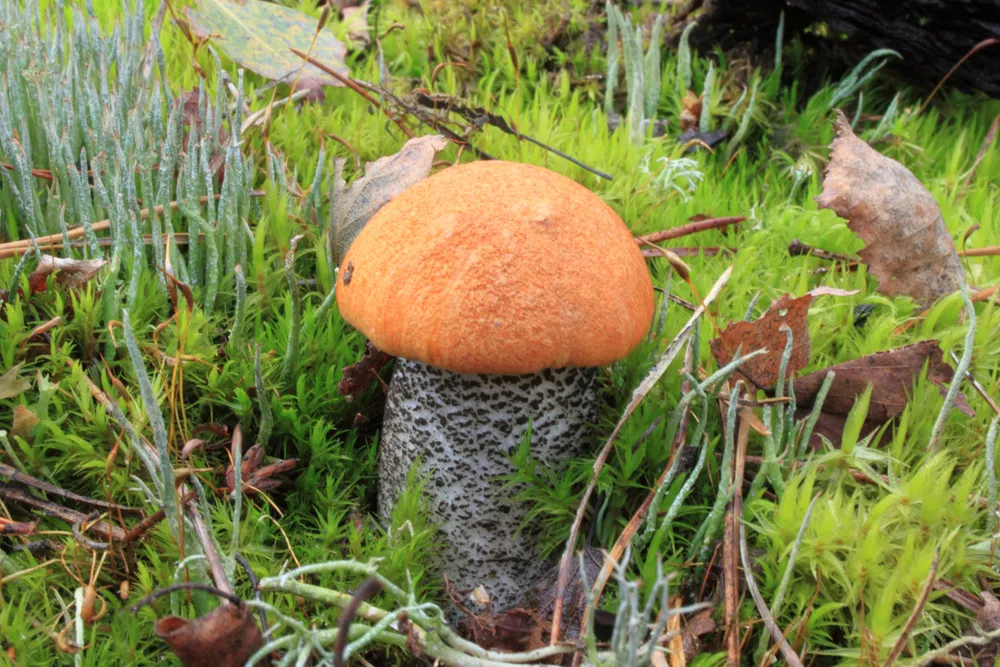
Orange birch boleteLeccinum versipelle
Expert-verifiedUpdated August 15, 2026
Passport
- Edibility
- Edible
- Season
- Jun — Oct
- Hymenophore
- Pored
- Cap color
- Orange
- Size
- Large (over 15 cm)
- Smell
- Pleasant
- Reviewed
- Yes ✓
Quick answers
Where to look?
Deciduous forest, Mixed forest
When does it appear?
Jun — Oct
Active months: June, July, August, September, October.
How to recognize it? Three signs
- Cap color: Orange, Red, Yellow
- Cap shape: Convex
- Smell: Pleasant
Fruiting season
June – October
Description
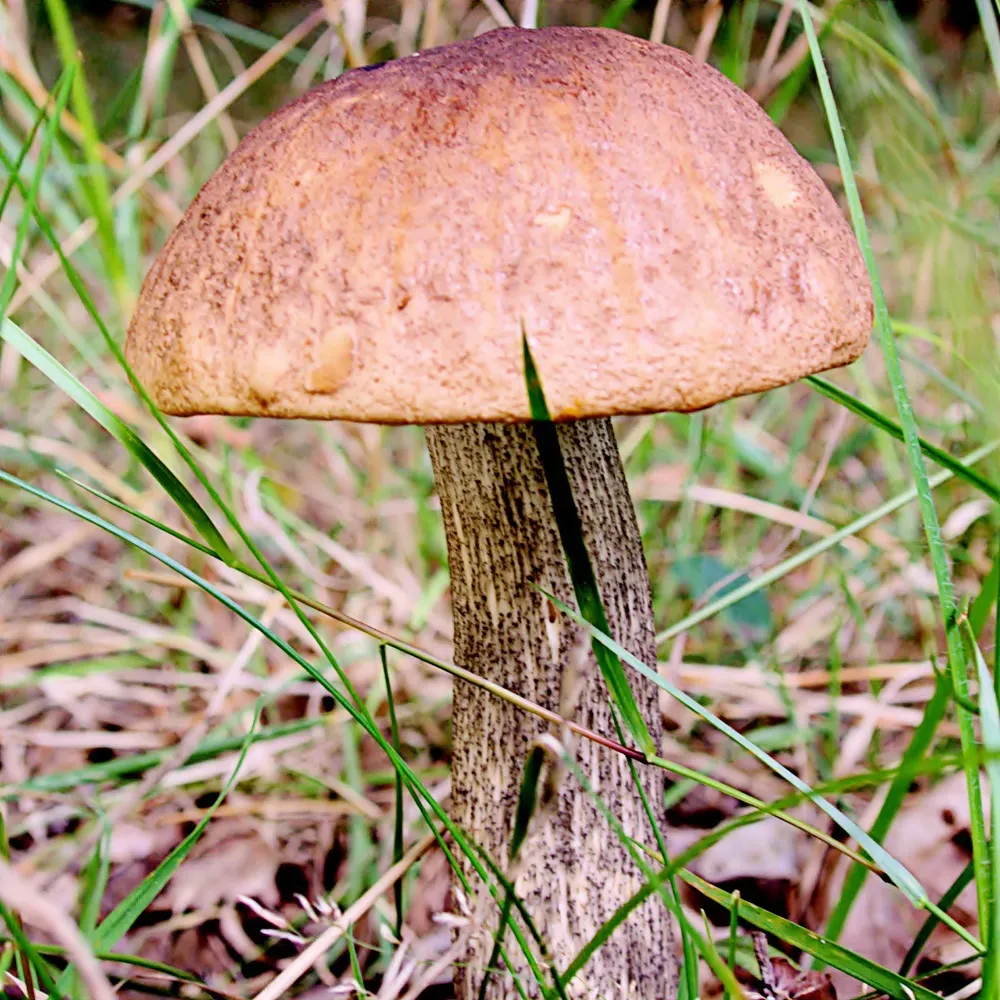
The orange birch bolete, also known as the yellow-brown bolete (Leccinum versipelle), is a close relative of the red-capped scaber stalk, but it is tied to birch rather than aspen. A big, stately mushroom with a bright orange-yellow to brick-colored cap on a sturdy grayish stem, sprinkled with characteristic dark scales. Finding a birch bolete is always a joy: you can spot its red-orange cap from meters away against the birch litter, it is meaty, and it gives a superb result in the kitchen. One of the three "kings" of our mushroom autumn (porcini, orange bolete, brown birch bolete).
This is a very good edible mushroom with firm white flesh and a pronounced mushroomy taste. Young ones — with a rounded cap — are best for any kind of cooking. Mature (flattened) ones are a bit watery, but still good. The key thing to know: when the cut flesh meets the air, it turns pink, then violet-gray, and then black — this is a normal reaction of the species, not a sign of spoilage. The mushroom darkens when cooked anyway — that's normal too. Good for frying, stewing, pickling, drying and salting. Dried, it makes a dark broth with a rich aroma.
In Ukraine it is common in deciduous and mixed forests with birch — mainly in the Carpathians, Polissia and the Forest-Steppe. It forms mycorrhiza with birch. It loves mossy patches in birch and mixed birch-pine forests, forest edges and the verges of forest roads. Season: June–October, peaking in July–September. It often grows in groups of 2-5 fruiting bodies under a single birch. One of the abundant species — in a wet year you can fill a basket on a single outing.
Cap
The cap is large: 6-20 cm across, hemispherical with an inrolled margin in young mushrooms, becoming convex with age, then flat and spread out. The color is bright orange, brick-yellow, rusty orange, more intense in young mushrooms and paler in old ones. The cap skin is roughly suede-like or slightly fibrous, a little slippery in wet weather. The skin does not peel off; ragged scraps of a leathery "curtain" often hang from the margin.
Hymenophore
Tubular hymenophore. The tubes are long (2-3 cm), grayish-white in young mushrooms, grayish-cream with age. They are not attached to the stem (they separate easily from the cap). The spore print is olive-brown. The pores are small and round.
Stem
The stem is sturdy: 8-20 cm tall, 1.5-3 cm thick, cylindrical, thickened at the base and narrowing toward the top. Its color ranges from whitish to dirty gray, densely covered with dark gray or blackish scale-like fibers — a hallmark of the genus Leccinum. No ring.
Flesh
The flesh is thick, white, very firm and meaty in young mushrooms. When cut, it quickly turns pink, then violet-gray, then black — a normal reaction of the species, not a sign of spoilage. It also darkens when cooked. The texture holds its shape well in the pan.
Smell
A faint, pleasant mushroomy smell with a hint of fresh forest litter. The taste is mild, delicate, typically mushroomy. No sharp or unpleasant notes.
Lookalikes
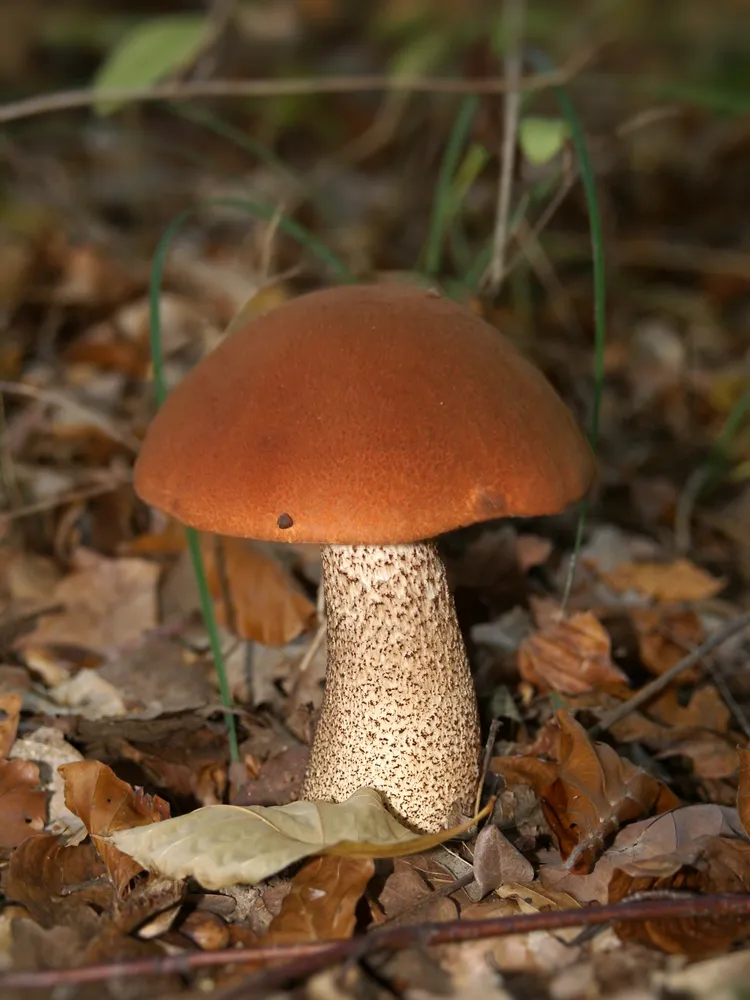
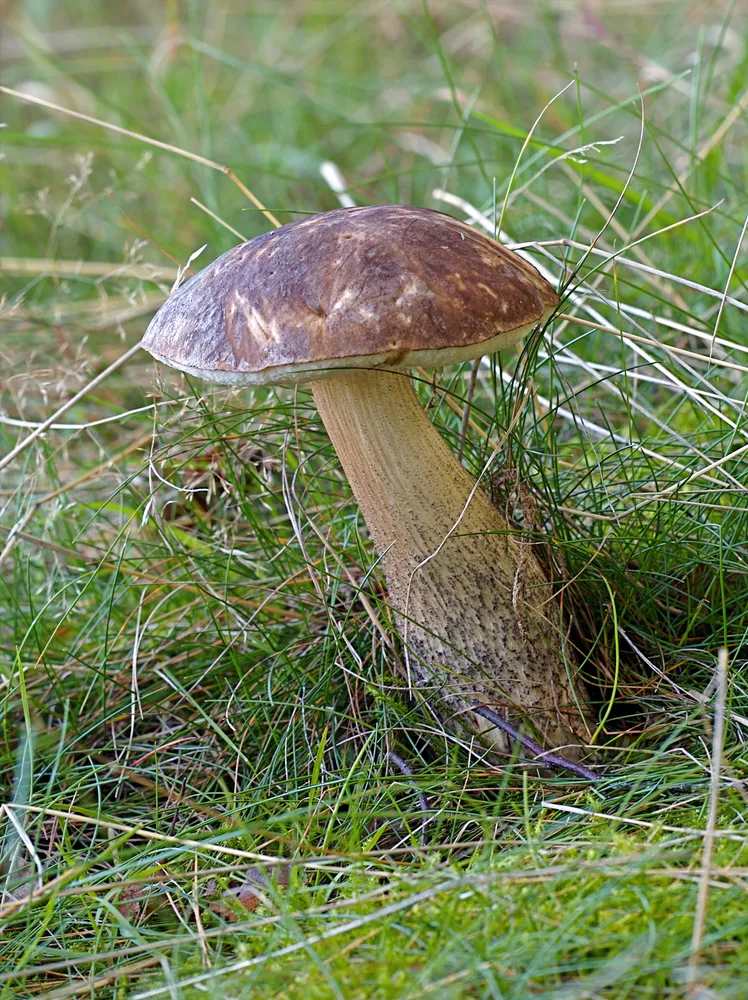
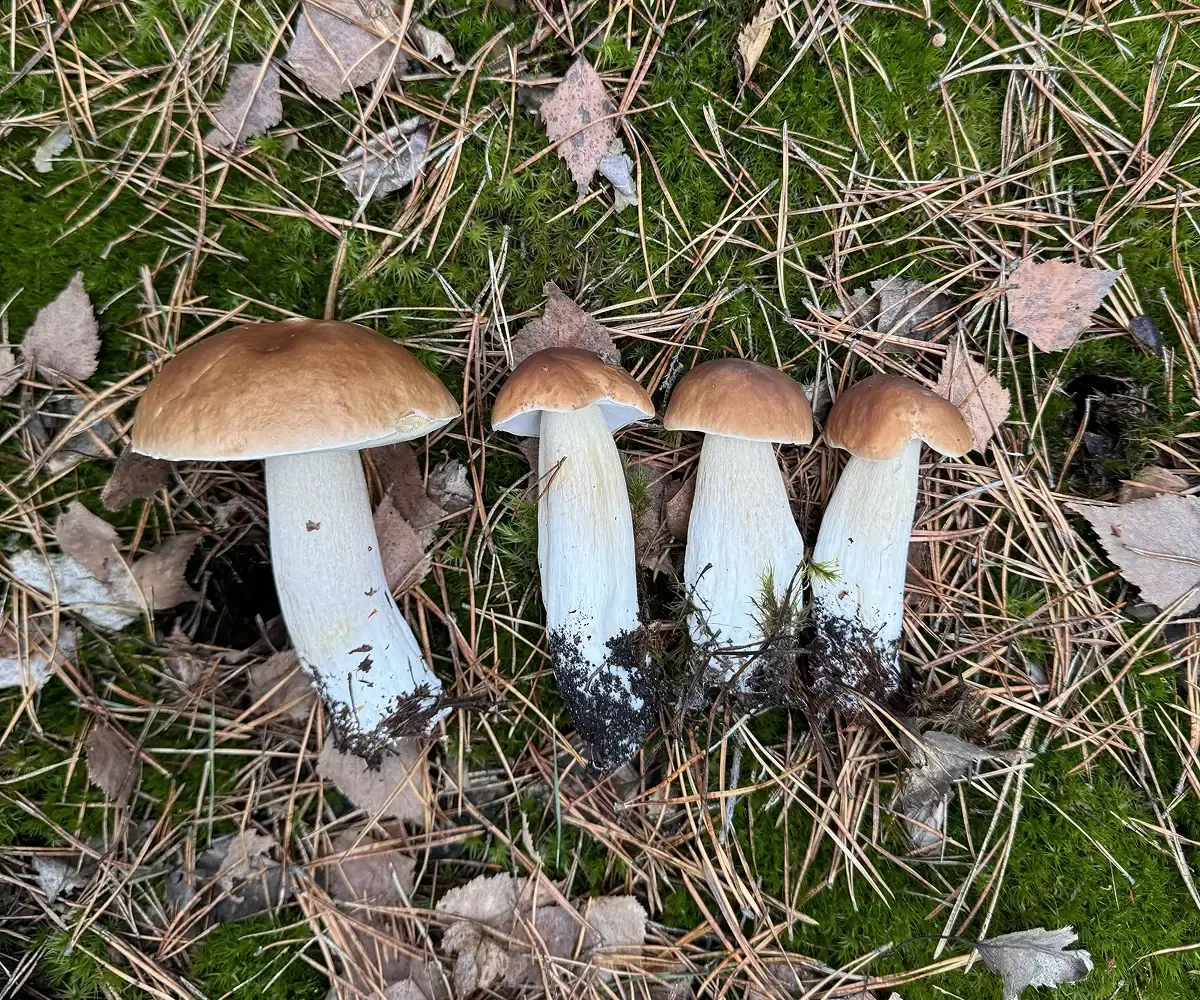
Related species
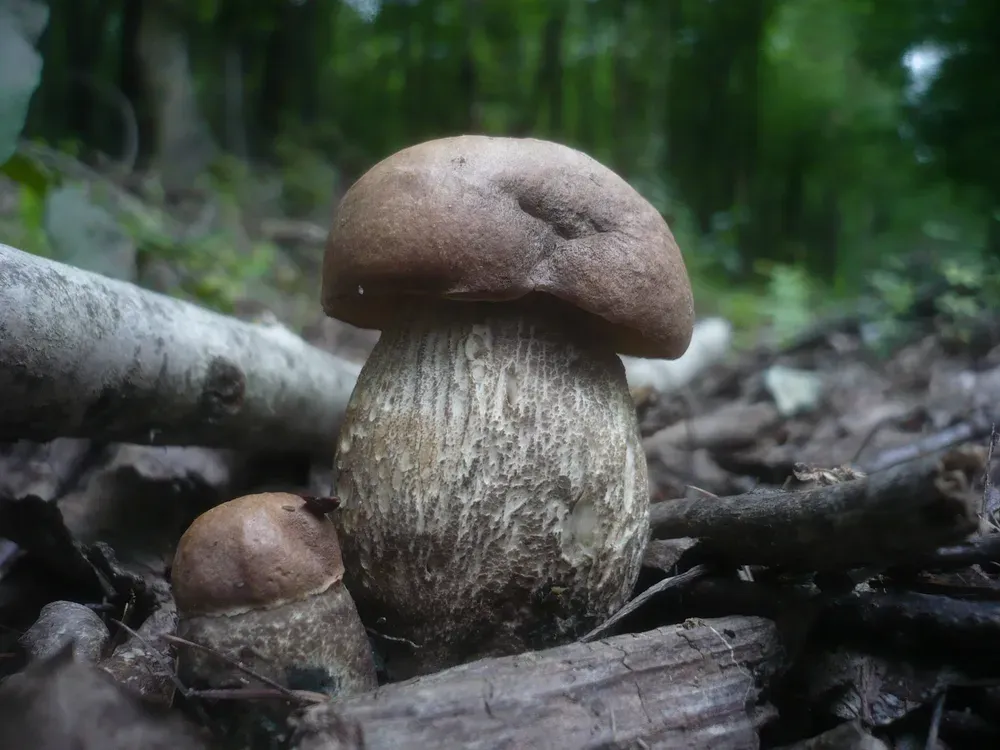
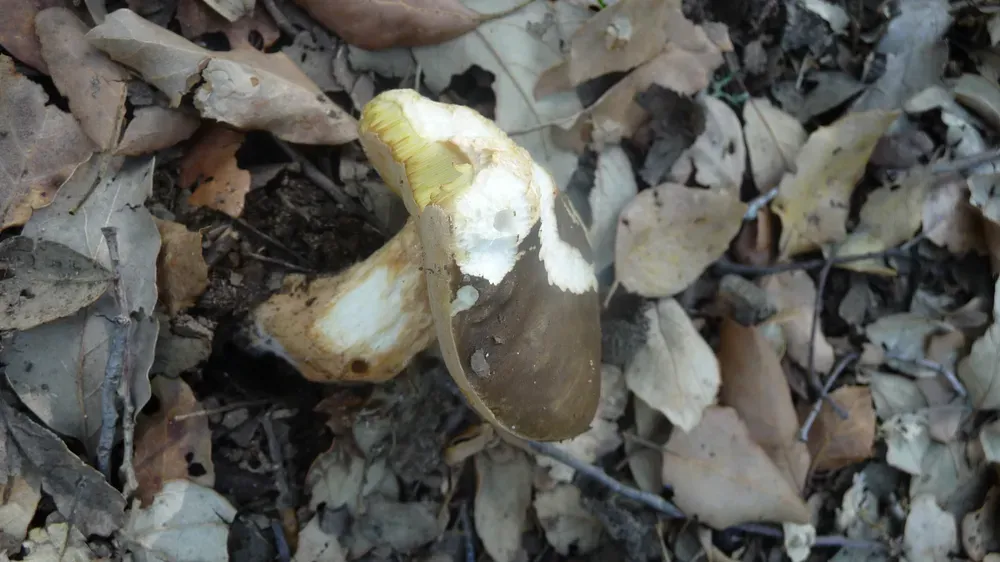
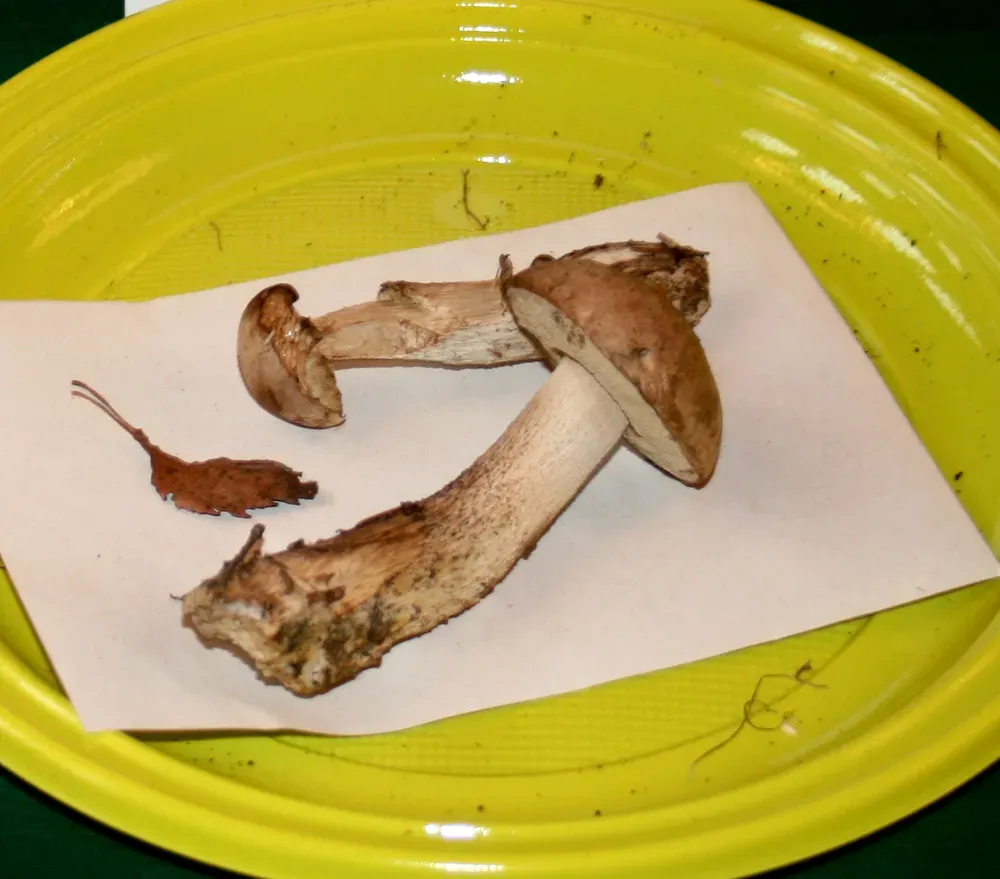
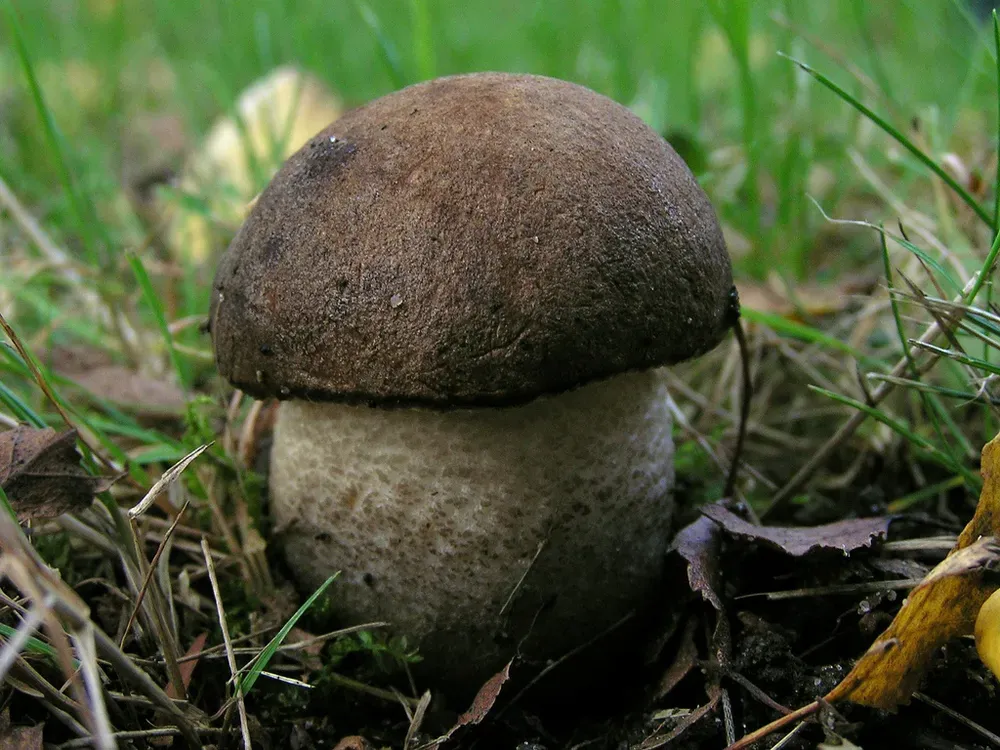
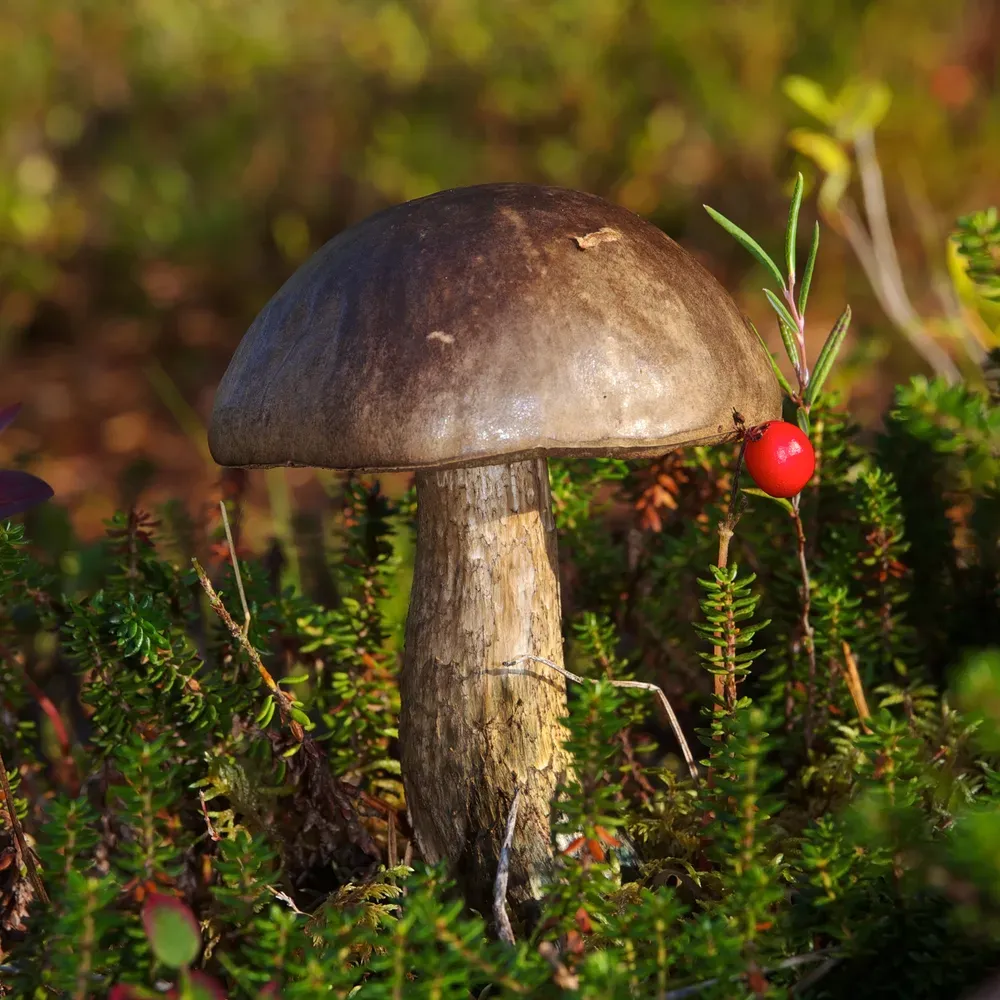
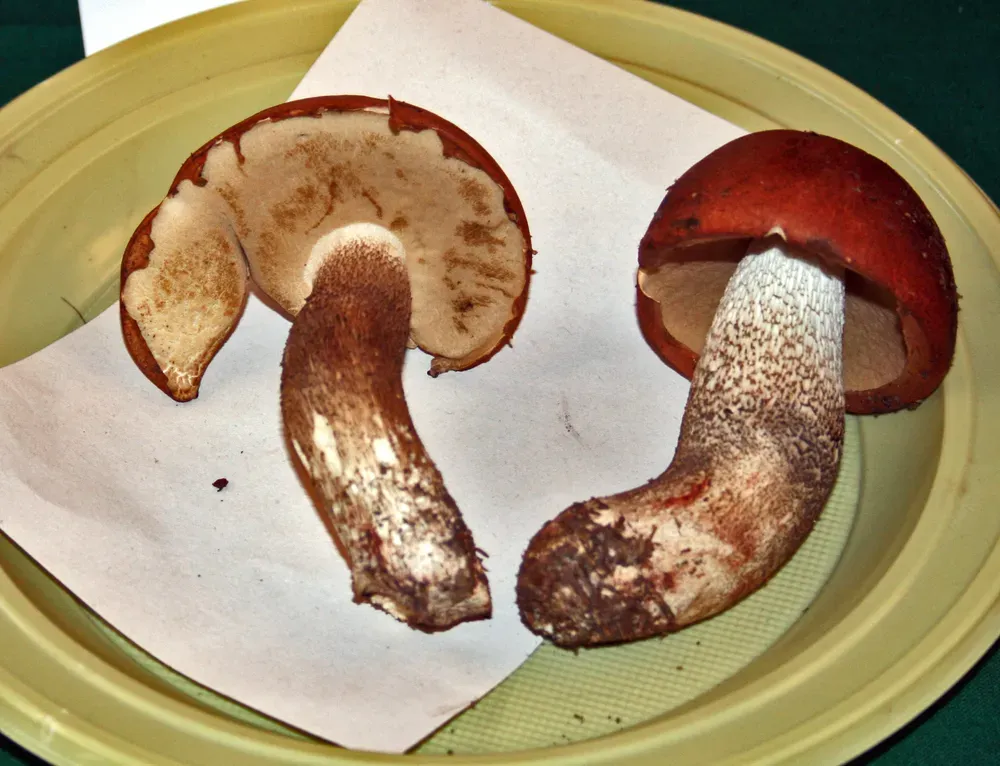
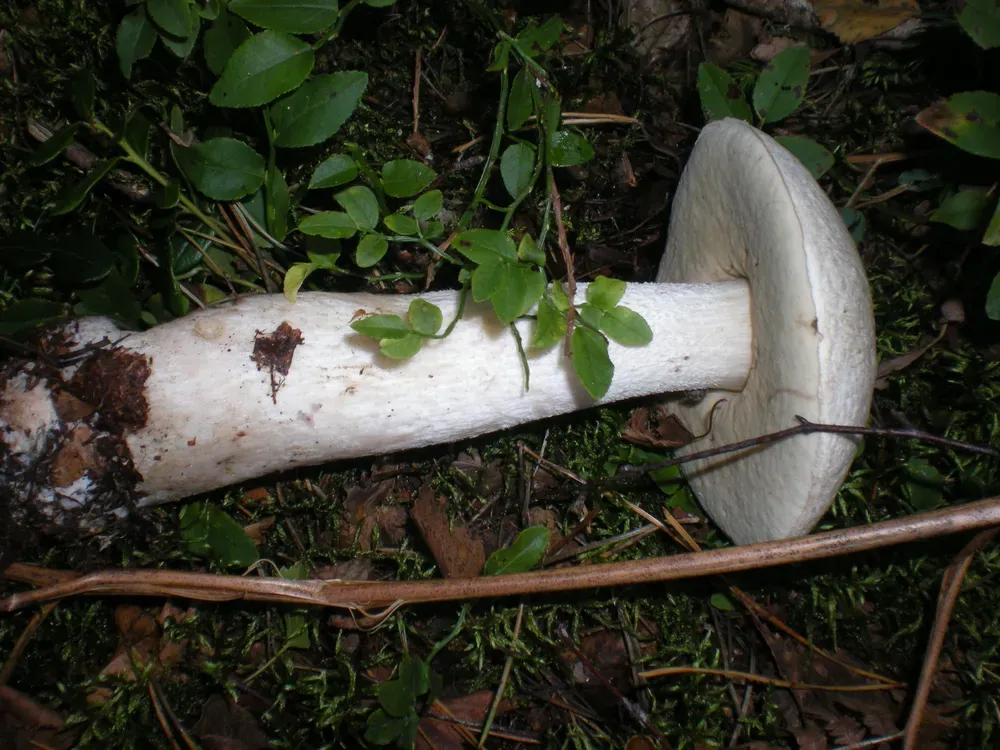
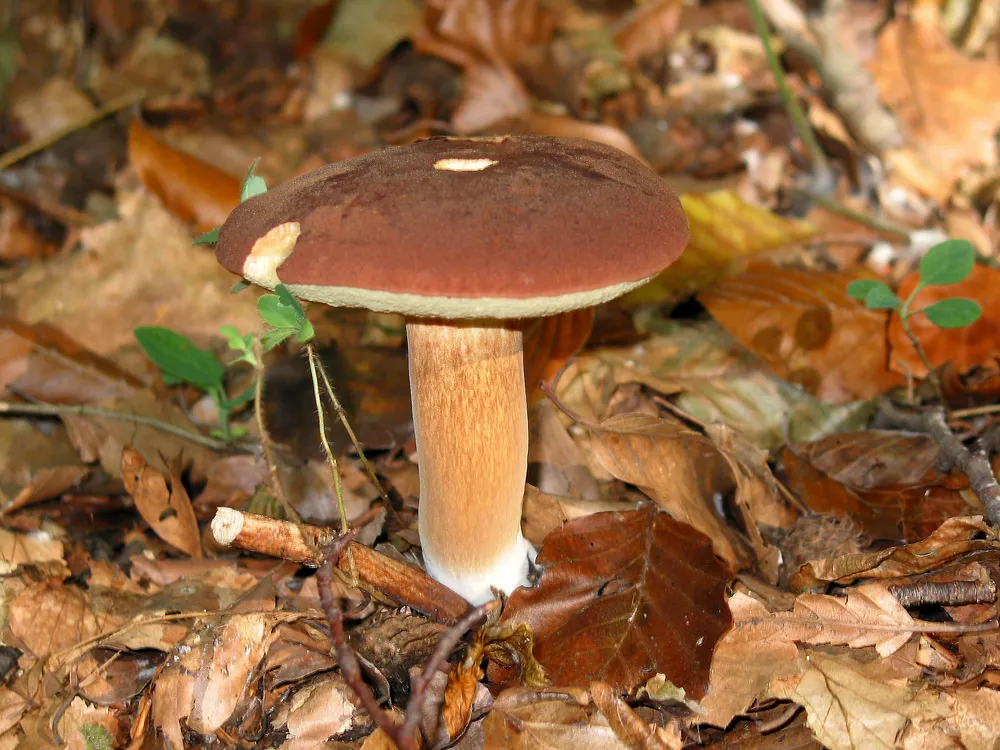
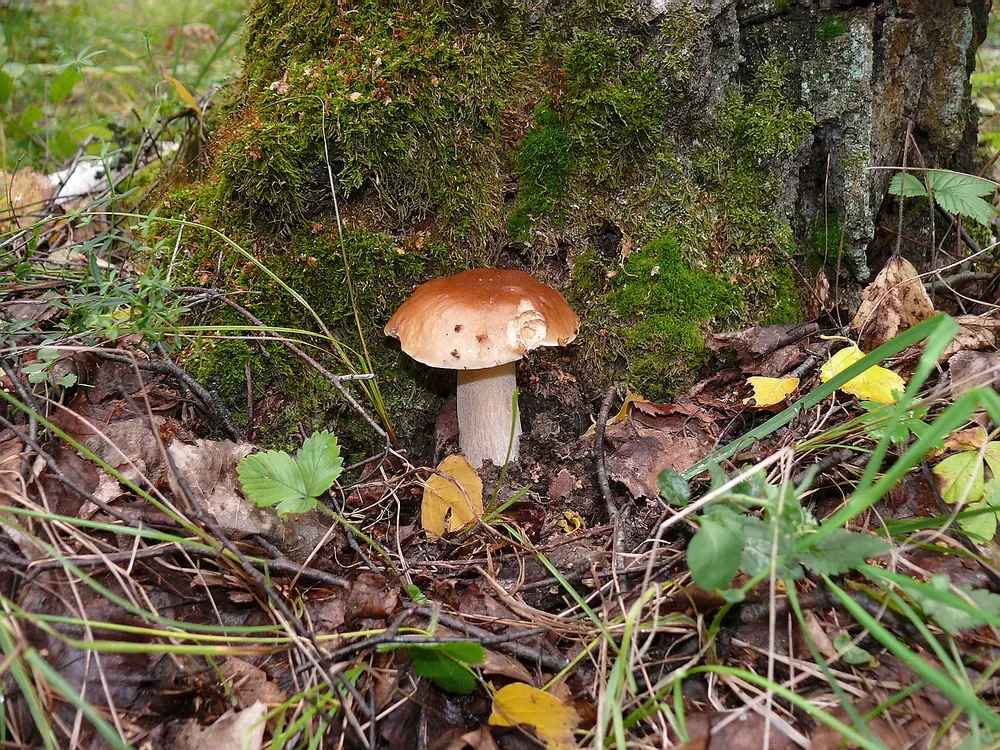
Mushrooms of the same genus and habitat — to study side by side and never mix up.
Related reading
.webp) Where & when to forage
Where & when to forageAspen bolete: when it grows and where to look
The red-capped scaber stalk, known in Ukraine as krasnoholovets (“redhead”), is one of the most eye-catching m…
July 12, 2026·3 min.webp) How to identify
How to identifyBirch bolete or aspen bolete: what's the difference?
The brown birch bolete and the red-capped scaber stalk often come up together, because they're close relatives…
April 28, 2026·3 min
Frequently asked questions
Is it safe to eat?
Yes, it is one of the best and safest edible mushrooms — it has practically no dangerously poisonous lookalikes. A red-orange cap with the characteristic dark-scaled stem next to a birch is almost certainly a safe orange bolete or a close relative. Suitable for beginner foragers. Don't be alarmed that the flesh turns black when cut and when cooked — this is a normal reaction of the species.
How should you cook it?
Clean it and cut it into thick slices. Young ones (rounded cap) — fry right away for 15-20 min with onion and cream, the classic way. Mature ones (flattened) — boil for 10 min first, drain the water (it takes away the wateriness), then fry. Young ones pickle well — the firm flesh holds its shape in the jar. Drying gives a dark, rich broth. In soups — add toward the end of cooking.
Can children eat it?
Yes, from age 3-4 in small portions — it is one of the safer mushrooms. Cook it thoroughly (never serve it undercooked). The dark color of the cooked mushroom may put a child off — but it is only a color, not a sign of quality. Children under 3 should not be given any mushrooms at all.
Where should you look for it?
In deciduous and mixed forests with birch — most often in birch stands, mixed birch-pine forests, on forest edges and the verges of forest roads. It forms mycorrhiza with birch — without birch it does not grow. It loves mossy patches, bilberry thickets and open sunny glades in birch copses. It often grows in groups of 2-5 fruiting bodies under a single birch.
Which regions of Ukraine is it found in?
Throughout the forest and forest-steppe zones wherever there is birch: the Carpathians, the Carpathian foothills, Polissia (especially abundant), and all three forest-steppe belts. In the steppe — in birch woods in ravines (bairak forests). The birch stands of Polissia are the main area for mass picking.
When should you look for it?
June — October, peaking in July–September. The first flush comes after heavy summer rains, the second in September. In a dry summer there are few. It likes moderate warmth and moisture — 5-7 days after rain it appears in large numbers.
What is it confused with?
With other orange boletes: the red-capped scaber stalk (Leccinum aurantiacum, mostly under aspen, a more intense red color) and the orange oak bolete (L. quercinum, under oak). All of these orange boletes are edible and similar in quality. With the brown birch bolete (Leccinum scabrum) — also an edible relative, but with a gray-brown cap without any orange tone. You can pick any Leccinum — there are practically no poisonous species of this genus in our forests.
Can it be confused with an amanita?
No. Amanitas are gilled mushrooms with a ring on the stem and a volva at the base. The orange birch bolete is a bolete (a spongy layer under the cap, not gills), with no ring and no volva, and with characteristic scales on the stem. With even basic attention, you can't mix them up.
Is Orange birch bolete edible or poisonous?
Does Orange birch bolete have gills or pores?
What does the cap of Orange birch bolete look like?
What does the stem of Orange birch bolete look like?
Sources
- [1]Вікіпедія (українська)
- [2]Атлас грибів України, Зеров Д.К. (1979)
- [3]MycoBank Database
- [4]Index Fungorum
- [5]GBIF
- [6]iNaturalist Ukraine