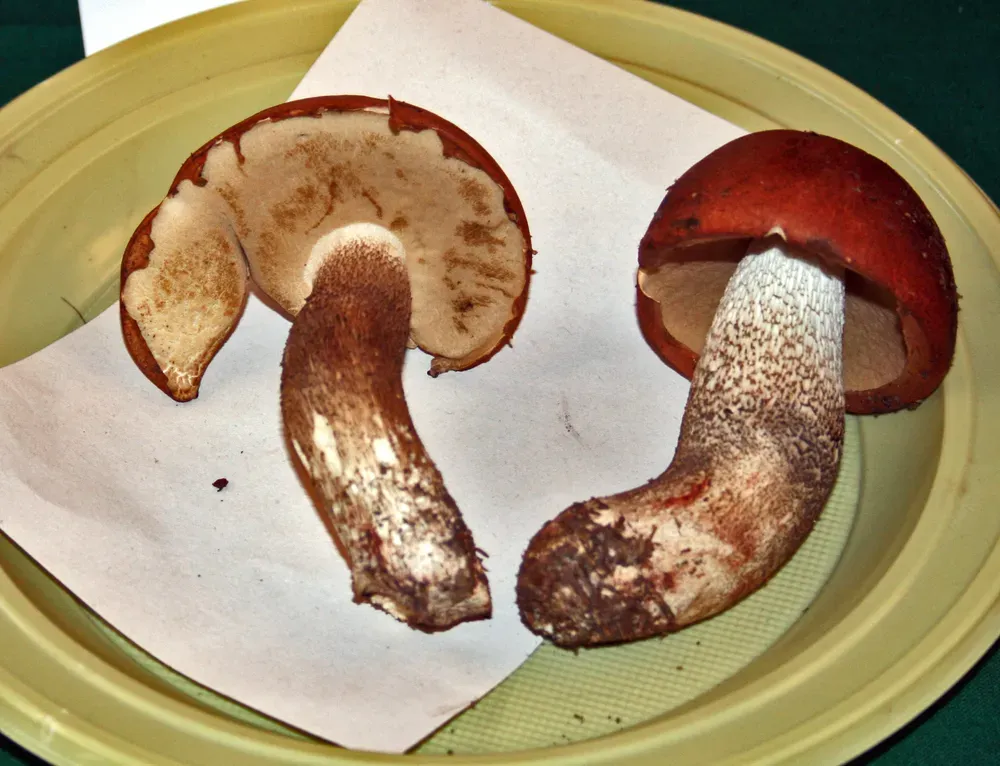
Foxy boleteLeccinum vulpinum
Expert-verifiedUpdated October 3, 2026
Passport
- Edibility
- Edible
- Season
- Jun — Oct
- Hymenophore
- Pored
- Cap color
- Red
- Size
- Large (over 15 cm)
- Smell
- Pleasant
- Reviewed
- Yes ✓
Quick answers
Where to look?
Conifer forest, Mixed forest
When does it appear?
Jun — Oct
Active months: June, July, August, September, October.
How to recognize it? Three signs
- Cap color: Red, Brown, Dark brown
- Cap shape: Convex
- Smell: Pleasant
Fruiting season
June – October
Description
The foxy bolete (Leccinum vulpinum) is one of the four main red-capped scaber stalks of the Ukrainian flora. At first it somewhat hides its kinship with the others: it grows not with aspen but with pine. Its dark crimson or brownish-red cap, like a ripe cherry, makes it stand out against the dark pine litter. In the old pine forests of Polissia and the Carpathians, finding it at the end of summer is quite ordinary.
A mycorrhizal species, strictly tied to pine — the name “vulpinum” (“foxy”) comes from the reddish tint of its cap. In mature mushrooms the cap is darker than that of the classic red-capped scaber stalk, and the scales on the stem often have a reddish-brown tinge. It occurs throughout Ukraine's forest belt wherever there are old pine forests and mixed forests with pine — Polissia, the Western Forest-Steppe, the Carpathians, the Carpathian foothills.
An edible mushroom of the second category: pleasant taste, with the characteristic firmness of a scaber stalk. When cut, the flesh quickly turns blue, then black — a normal reaction for the species, nothing dangerous. It's best to pick young, firm specimens: old mushrooms turn watery and are often wormy. Good for frying, pickling and drying. Dried, it darkens more than porcini but keeps its flavor well.
Cap
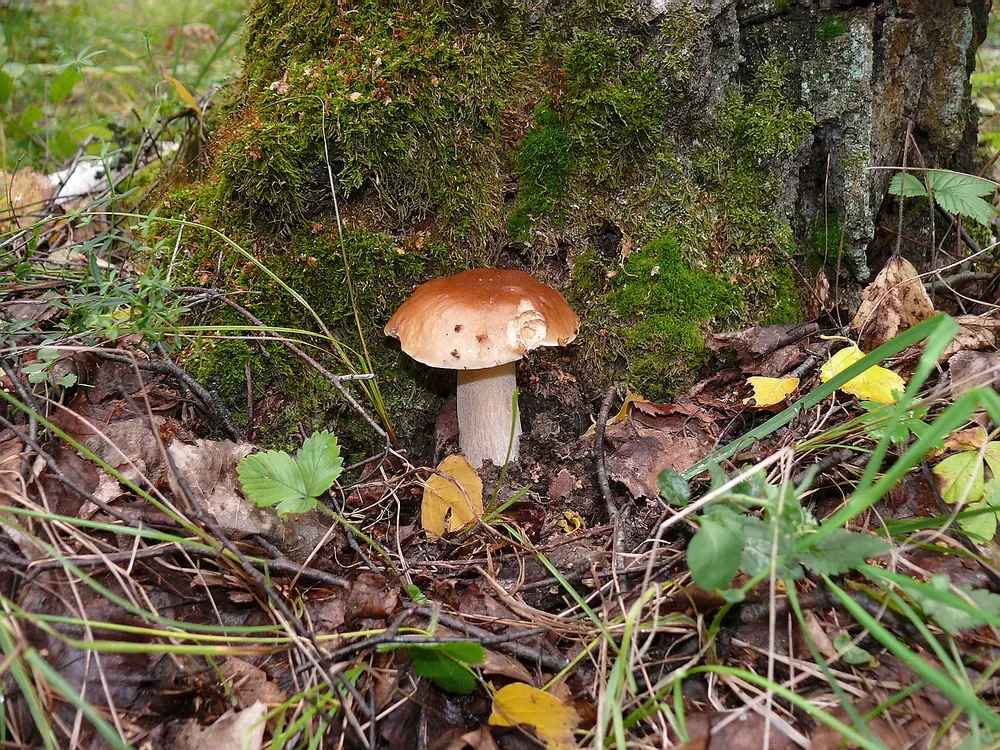
Cap 8–15 cm, hemispherical in young mushrooms, then cushion-shaped, almost flat in old ones. The color is dark — from brownish crimson to dark chestnut or blood-cherry red. The surface is matte and velvety, slightly rough in dry weather, barely tacky in damp weather. The cap skin does not peel off.
Hymenophore
The hymenophore is tubular, free, with a small notch near the stem. White when young, then grayish cream, grayish brown in mature mushrooms. The pores are small and round. They darken quickly when pressed.
Stem
Stem 8–15 cm tall, 2–4 cm thick, cylindrical, slightly bulbous at the base. Whitish or cream, covered along its entire length with characteristic dense reddish-brown fibrous scales — darker than those of the classic red-capped scaber stalk. The base of the stem sometimes has a bluish-green tinge.
Flesh
The flesh is white and very firm; when cut it quickly (within 30–60 seconds) turns blue, then black. In the stem it sometimes turns blue with a violet tinge. The texture is meaty, with a pleasant resistance under the knife. It gets wormy less often than the classic red-capped scaber stalk.
Smell
Smell faint, pleasantly mushroomy, with no distinct notes. Taste mild, not bitter.
Lookalikes
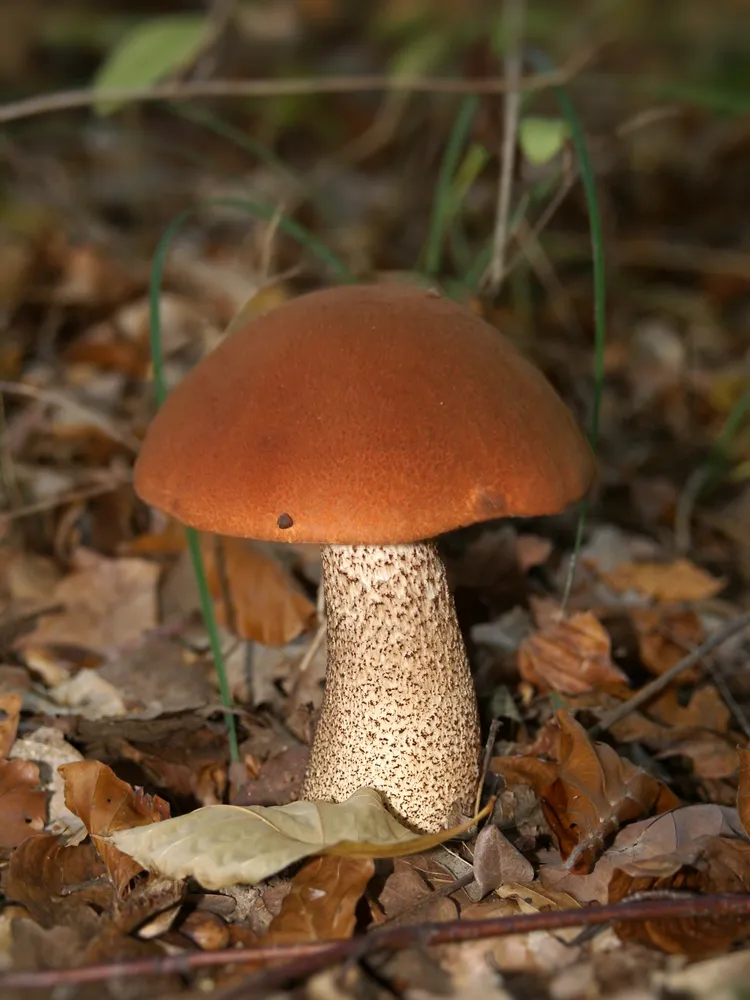
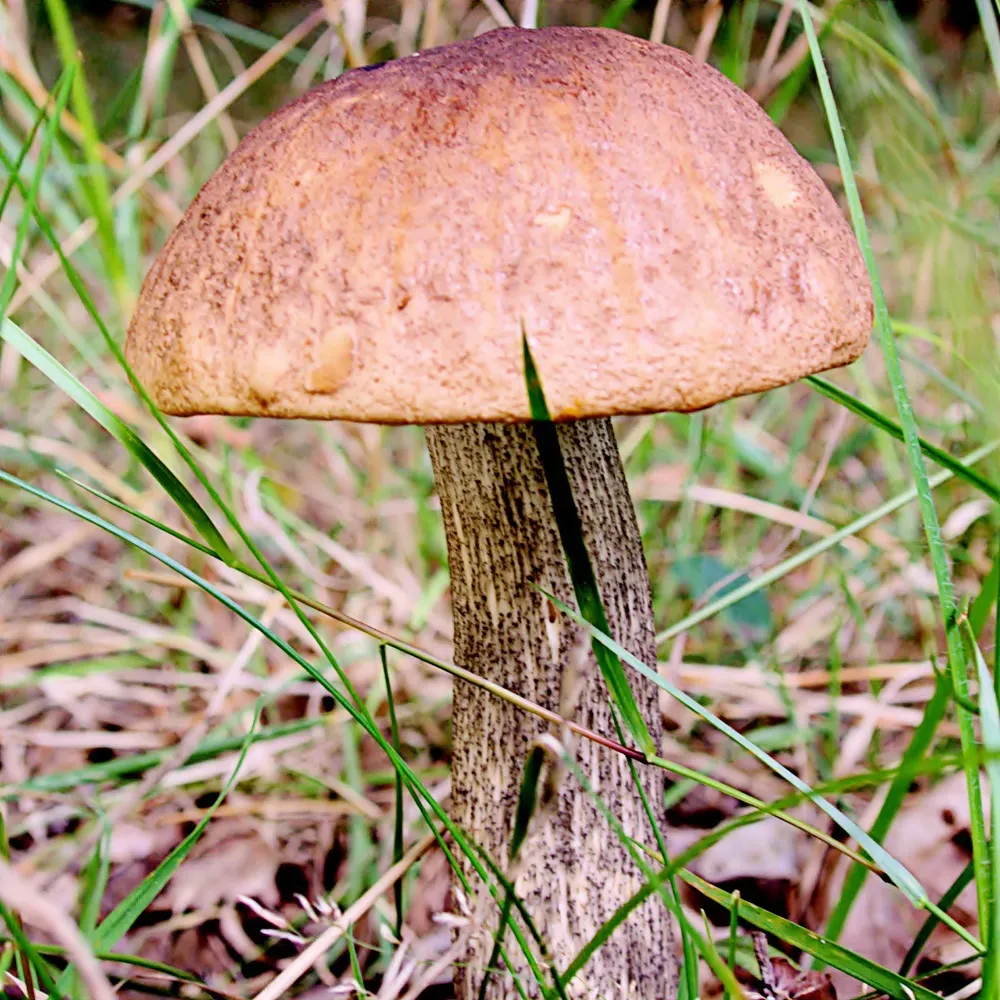
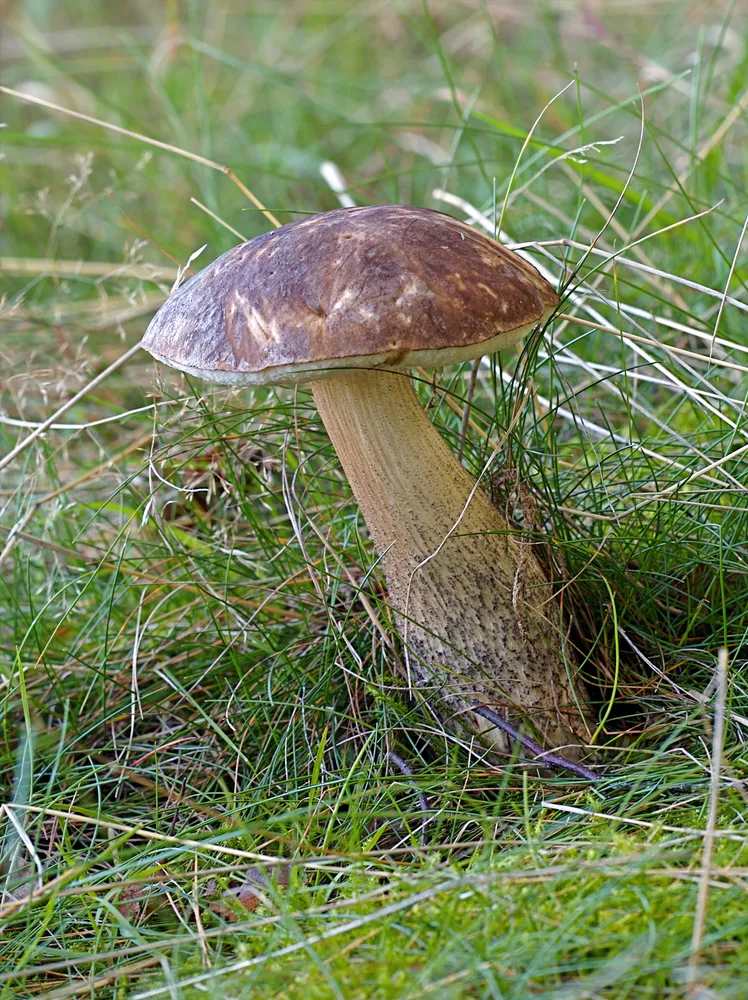
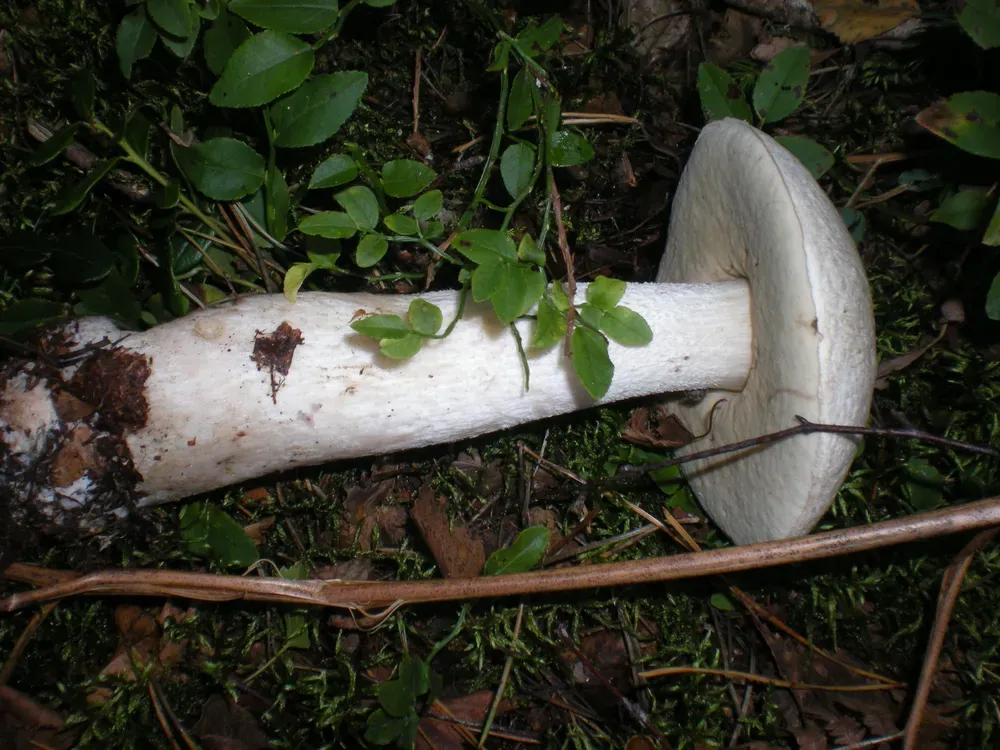
Related species
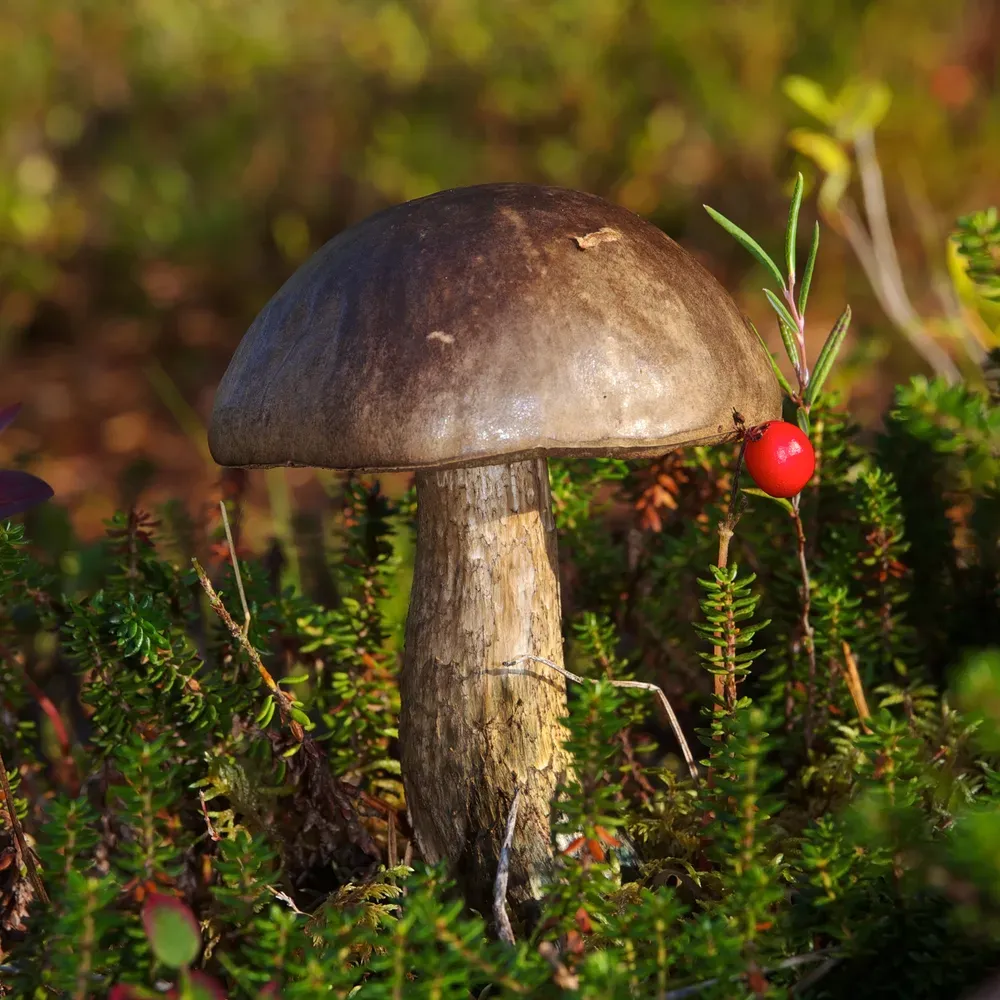
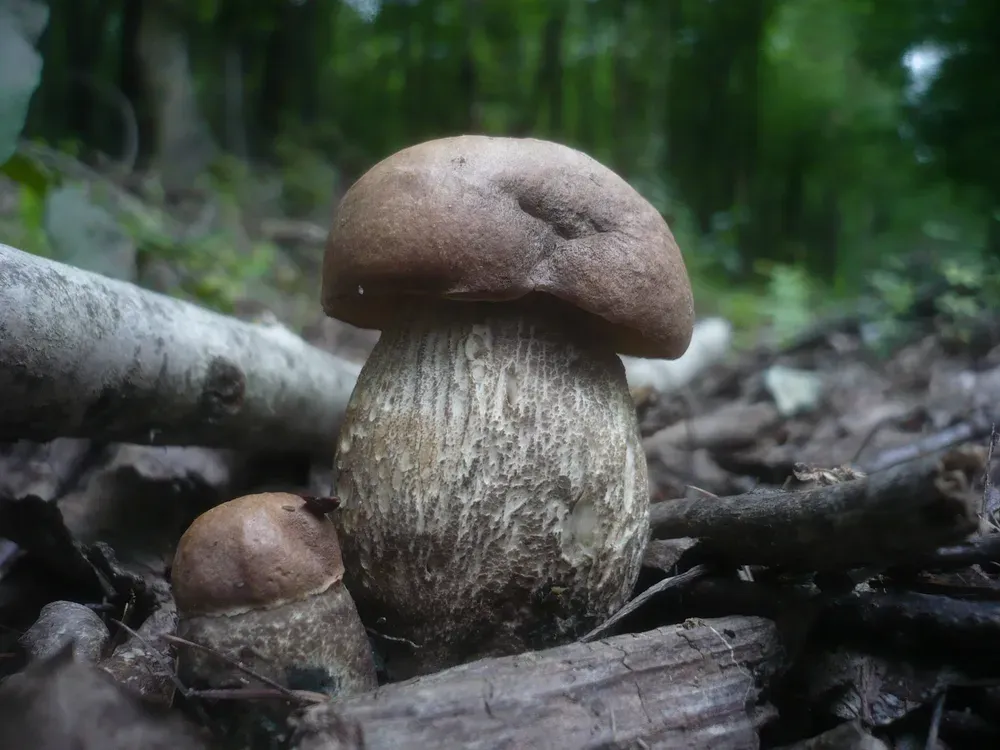
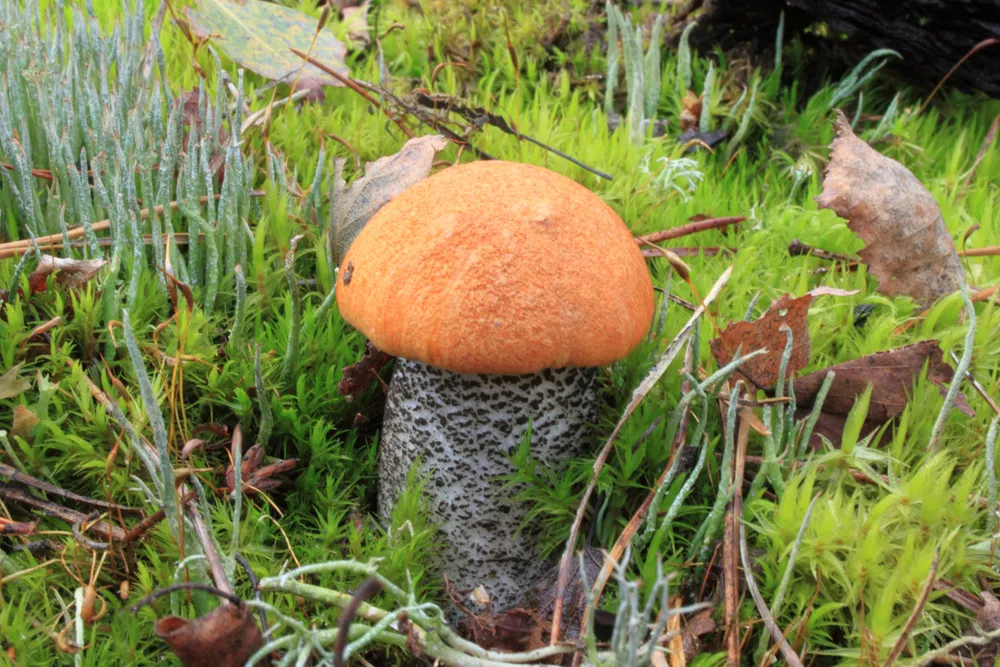
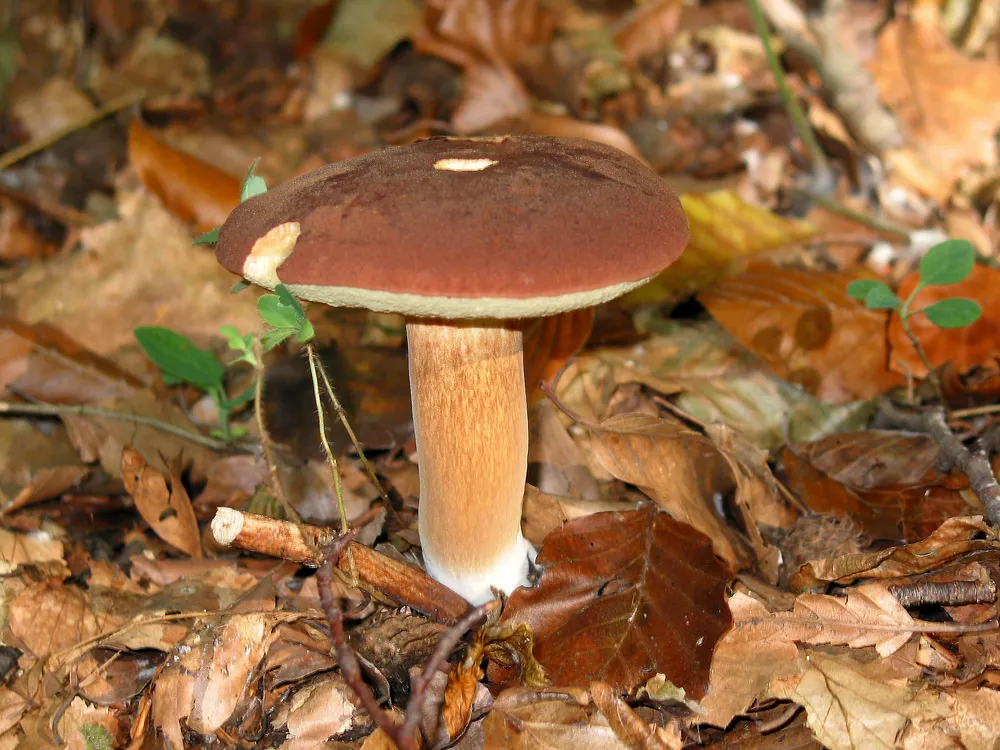
Mushrooms of the same genus and habitat — to study side by side and never mix up.
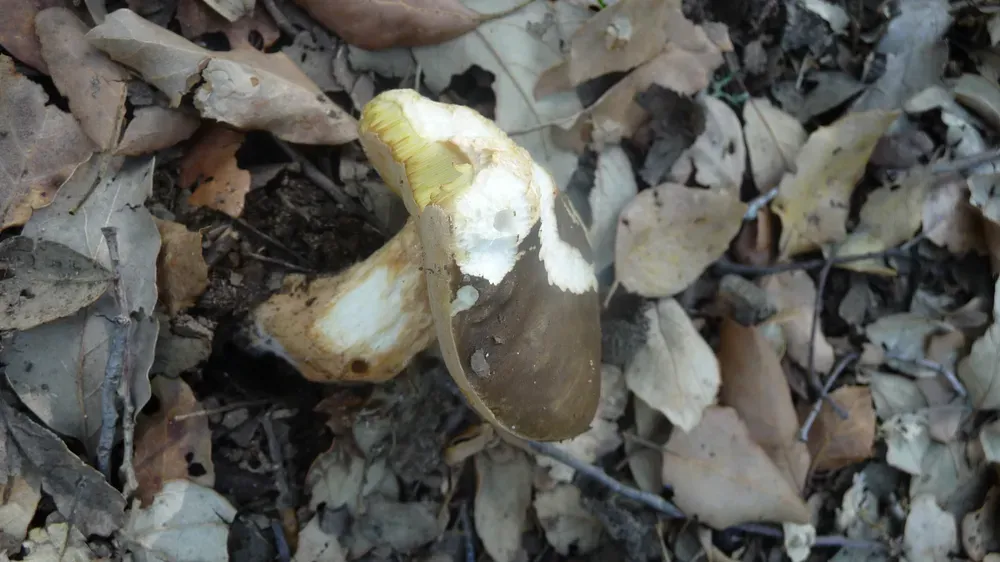
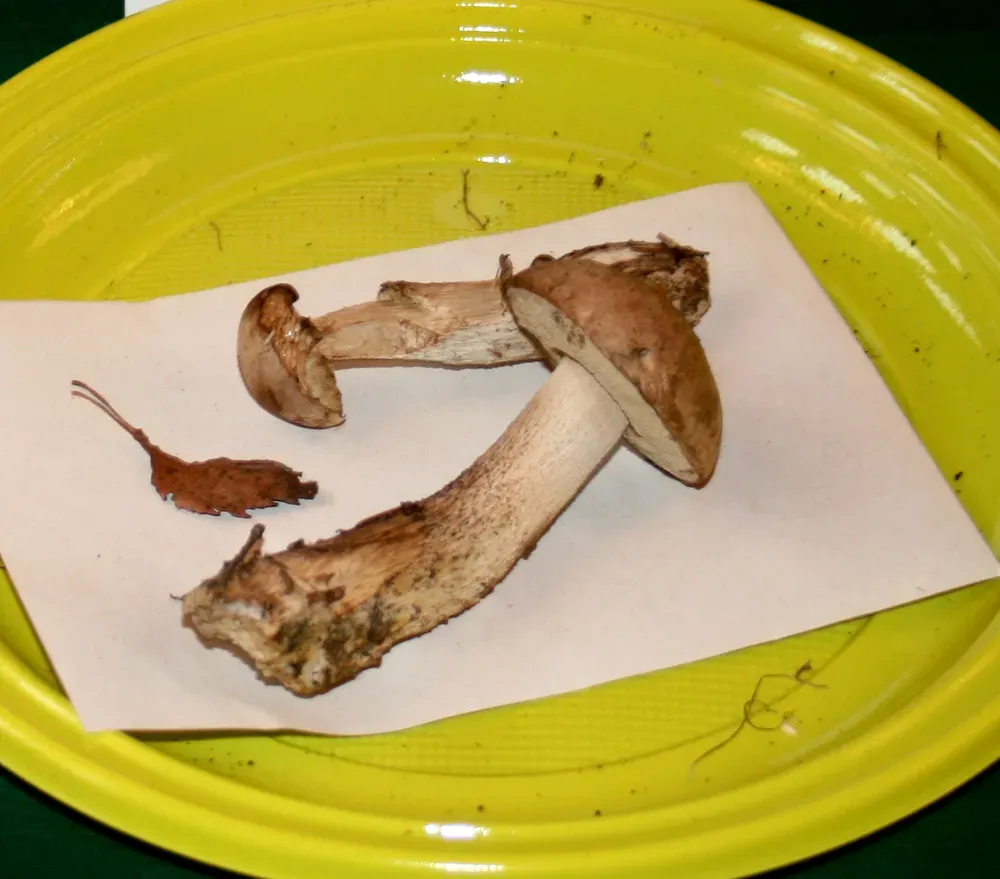
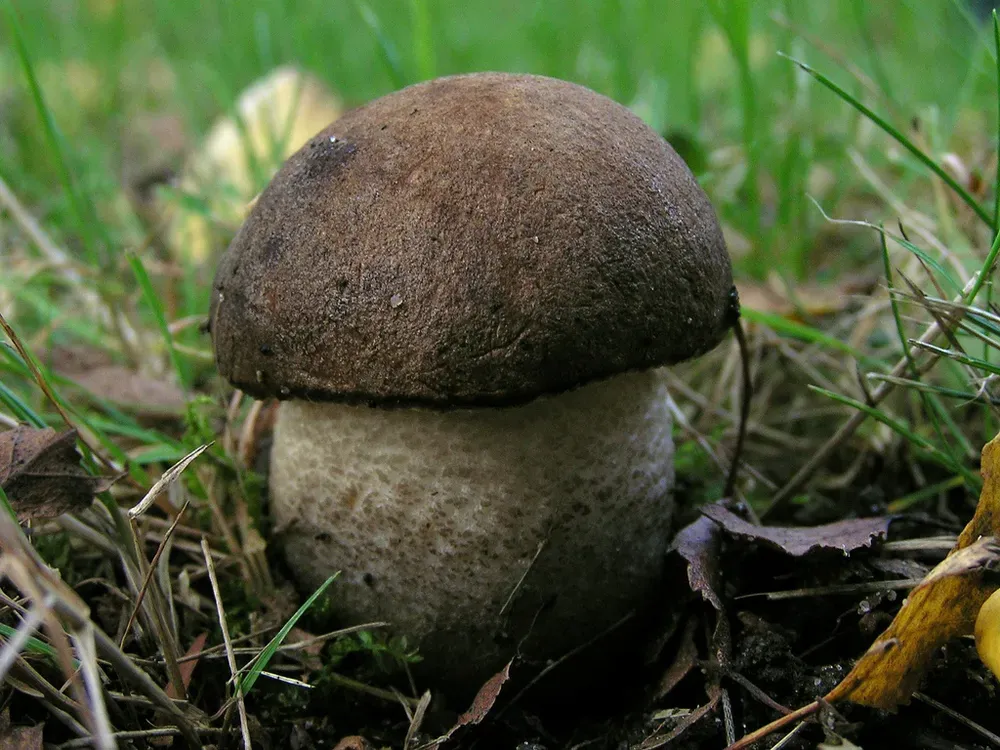
Frequently asked questions
Is it safe that the flesh turns blue?
Yes, completely. Bluing and darkening when cut is a normal reaction for the species (oxidation of pigments). Don't fall for the myth that “blue = poisonous” — many edible mushrooms do the same (Xerocomus boletes, the cornflower bolete). The color disappears with cooking.
Can it be confused with a poisonous mushroom?
Red-capped scaber stalks have no seriously dangerous lookalikes. In Ukraine, all species with scales on the stem and tubes under the cap that grow with broadleaf or coniferous trees are edible. Just avoid mushrooms with red or orange pores — those are other genera.
Where to look in Ukraine?
Old pine forests and mixed forests with pine. Polissia (Chernihiv, Kyiv, Zhytomyr and Rivne regions), the Western Forest-Steppe, the Carpathians, the Carpathian foothills. It likes mossy and bilberry-rich spots. It doesn't occur in pure broadleaf forests or in the steppe.
When does it fruit?
From June to early October, peaking in August–September after heavy rains. In cold years the season is shorter and later. The first specimens may appear as early as late June.
How is it different from the classic red-capped scaber stalk?
The classic red-capped scaber stalk (Leccinum aurantiacum) has a bright orange or orange-red cap and grows with aspen. The foxy bolete is darker, brownish crimson, and grows with pine. The scales on the foxy bolete's stem are reddish brown; on the classic one they're almost black.
Which trees does it form mycorrhiza with?
Only with Scots pine (Pinus sylvestris). Unlike other red-capped scaber stalks, this species is strictly a pine partner. If you find a red-capped scaber stalk in a broadleaf forest, it's a different species (the classic one or the orange oak bolete).
Should you peel the cap?
Not necessarily, but some foragers do it to make the cooking water less dark. The skin doesn't peel easily (unlike slippery jacks), so it's a fiddly job. Usually the mushroom is cooked with the skin on and the first water is simply discarded.
How to preserve it?
The best ways are drying, pickling and freezing. Before drying, cut into 5–8 mm slices. Dried, it's darker than porcini, but the aroma keeps well. It pickles beautifully — the firm texture holds up well in a sour marinade.
Is Foxy bolete edible or poisonous?
Does Foxy bolete have gills or pores?
What does the cap of Foxy bolete look like?
What does the stem of Foxy bolete look like?
Sources
- [1]Вікіпедія (українська)
- [2]Атлас грибів України, Зеров Д.К. (1979)
- [3]MycoBank Database
- [4]Index Fungorum
- [5]GBIF
- [6]iNaturalist Ukraine