THIS DATA HAS NOT BEEN VERIFIED BY AN EXPERT. Use at your own risk.
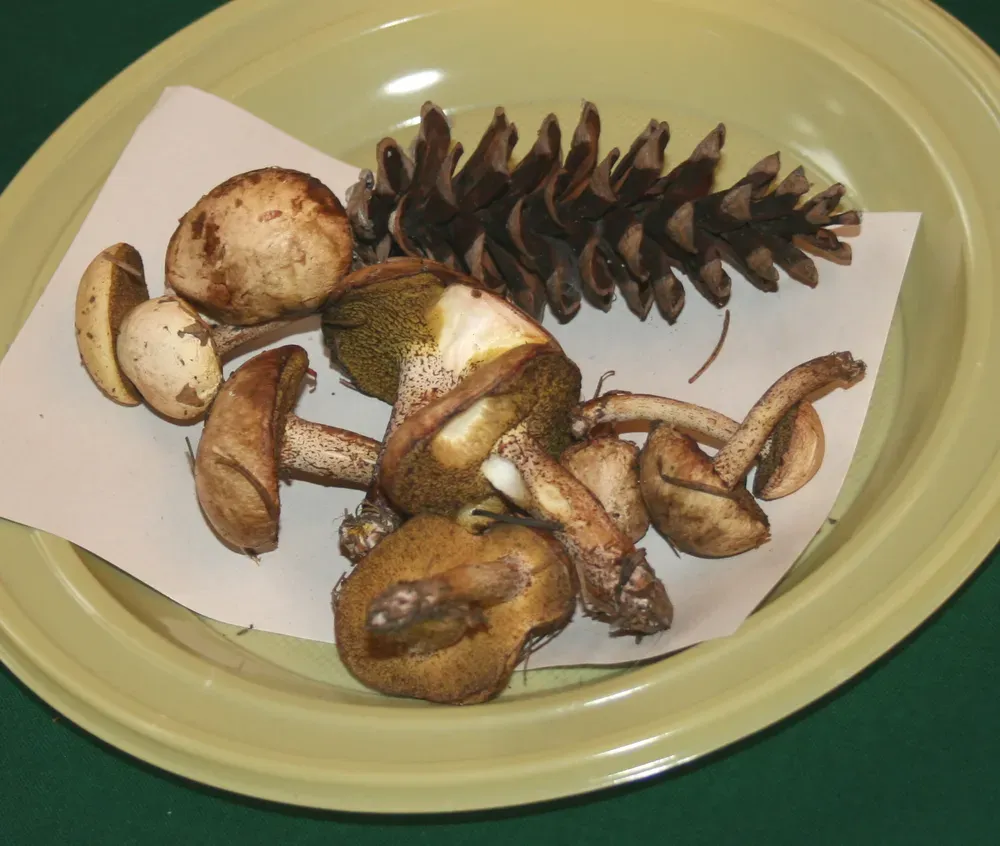
Suillus placidus
Under reviewUpdated October 3, 2026
Passport
- Edibility
- Edible
- Season
- Jul — Oct
- Hymenophore
- Pored
- Cap color
- White
- Size
- Medium (5–15 cm)
- Smell
- Pleasant
- Reviewed
- Under review
Quick answers
Where to look?
Conifer forest
When does it appear?
Jul — Oct
Active months: July, August, September, October.
How to recognize it? Three signs
- Cap color: White, Cream
- Cap shape: Convex
- Smell: Pleasant
Fruiting season
July – October
Description
Suillus placidus is an elegant, pale-skinned member of the Suillus genus that stands out from its brown relatives with the delicate milky-white or cream color of its cap. This mushroom is quite picky about its neighbors: it forms mycorrhiza exclusively with five-needle pines, above all eastern white pine and stone pines, so in Ukraine it occurs mostly where these ornamental trees have been planted, in parks, botanical gardens and forest plantations.
Because of this attachment to introduced trees, Suillus placidus is not a common mushroom of our forests and is known mainly to attentive foragers who know where the "exotic" pines grow. It fruits in the second half of summer and in fall, peaking in August–September. Once you find one partner tree, you can often gather a whole group of these neat, pale mushrooms beneath it.
In terms of edibility, Suillus placidus is an edible mushroom with a mild, pleasant flavor. Its tender white flesh is good for frying, pickling and soups, although in the kitchen it falls a little short of the slippery jack. As with all Suillus, it's best to peel the slimy skin off the cap before cooking. Young, firm specimens are the tastiest, because with age the flesh quickly turns watery.
Cap
The cap of Suillus placidus is small, usually 3 to 10 centimeters across. When young it is convex and hemispherical, later opening out to cushion-shaped and almost flat. The cap surface is smooth and slimy, especially in wet weather, as if covered with a thin layer of glaze. The coloring is very pale and characteristic of the species: milky white, ivory or pale cream in young mushrooms, possibly taking on yellowish or ocher tones with age. The slimy skin peels easily off the cap.
Hymenophore
Under the cap is a layer of tubes with small pores. In young mushrooms they are whitish or pale yellow, turning yellowish and light ocher as they mature. A characteristic feature of the species is small reddish-brown glandular dots, often visible on the pore surface, and in wet weather droplets of liquid may appear on the young pore surface, leaving rusty spots as they dry. The tubes are short and attached to the stem.
Stem
The stem of Suillus placidus is cylindrical, 3 to 8 centimeters tall, relatively thin and solid. Unlike many other Suillus species, it has no ring. The stem is whitish or pale yellow, and its whole surface is covered with characteristic small glandular dots that darken with age to reddish brown or almost purple. These dots, together with the pale cap and growth under five-needle pines, are reliable features of the species. There is no volva.
Flesh
The flesh of Suillus placidus is tender and soft, white or slightly cream, sometimes with a pale pink tinge in the stem. In the air it barely changes, or very faintly turns pink or brownish when cut. The taste of the flesh is mild and pleasant, with no bitterness. As with all Suillus, it quickly soaks up moisture and softens, so for the table it's better to choose young, springy mushrooms.
Smell
The smell of Suillus placidus is weak, mild and pleasantly mushroomy, with no sharp or unpleasant notes. The aroma carries no warning signs, so for identification go by the pale slimy cap, the glandular dots on the stem and the essential presence of five-needle pines nearby.
›Scientific synonyms (1)
Boletus placidus
Lookalikes
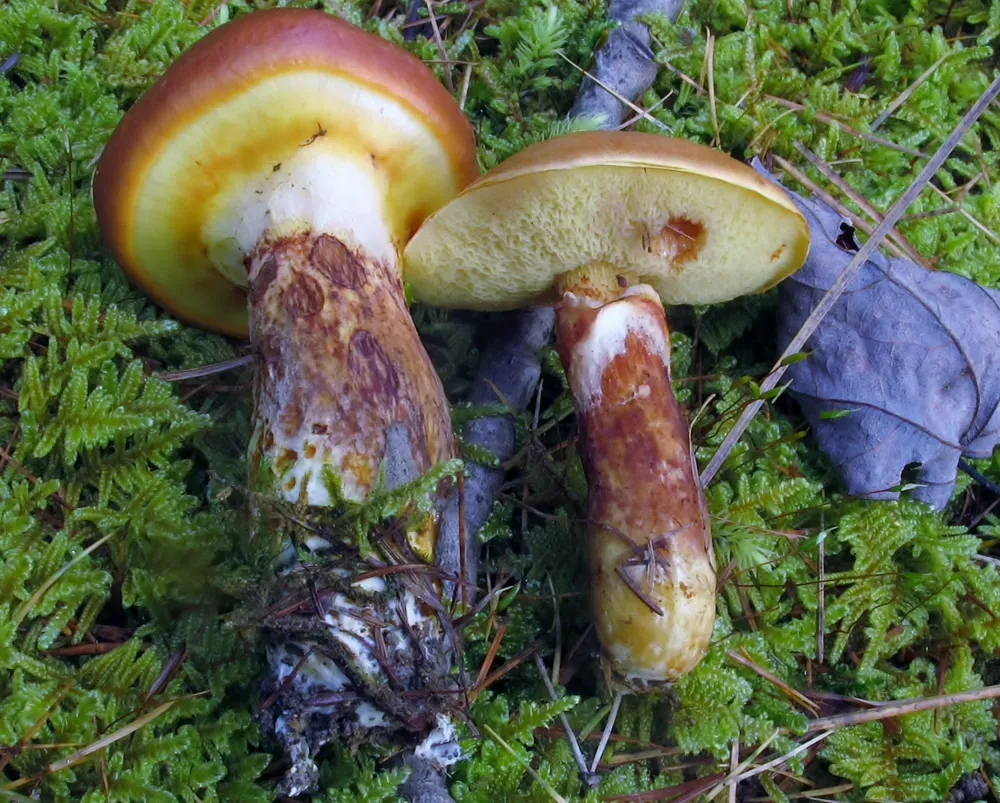
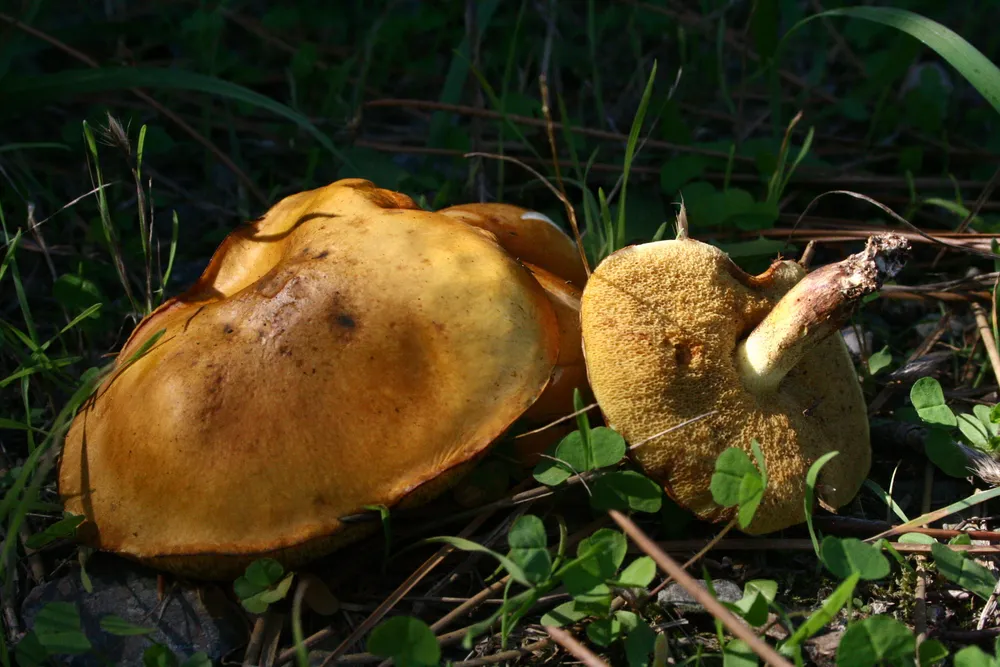
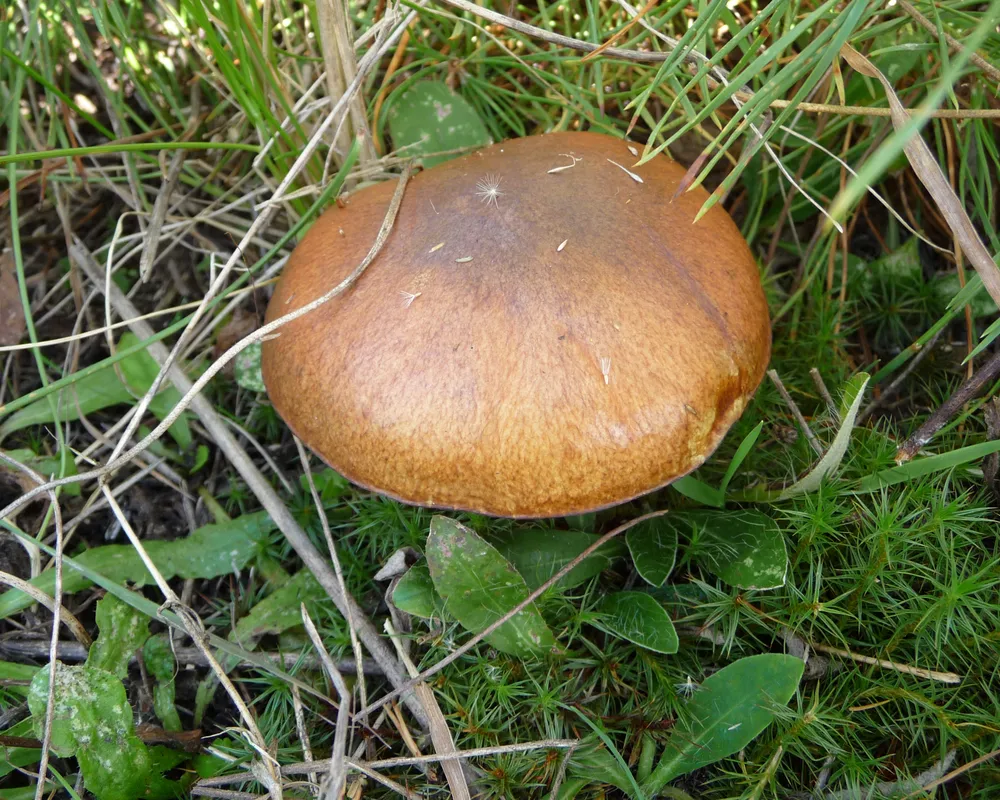
Related species
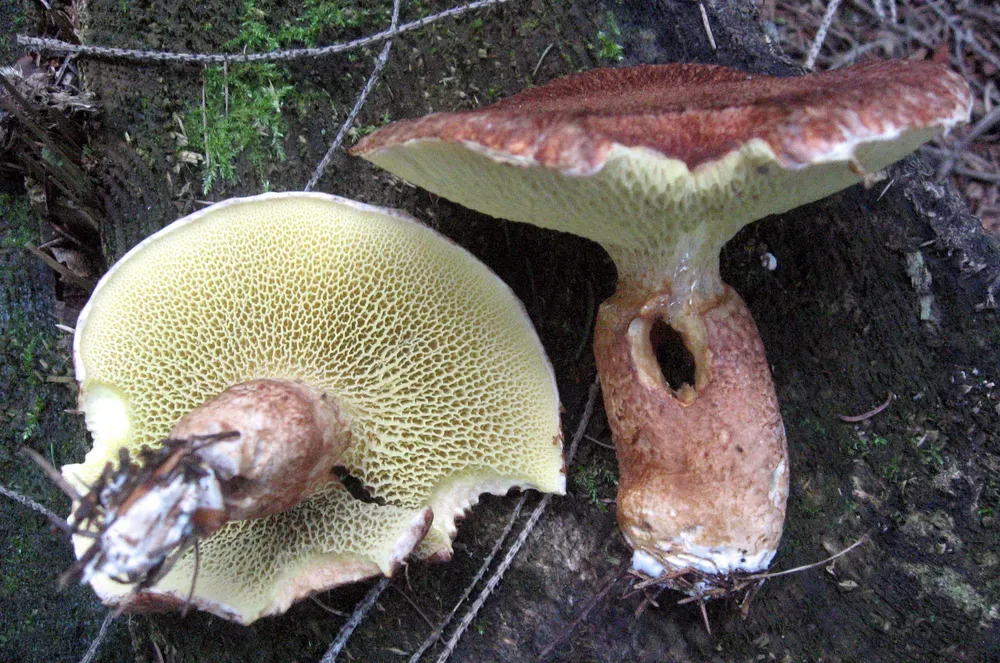
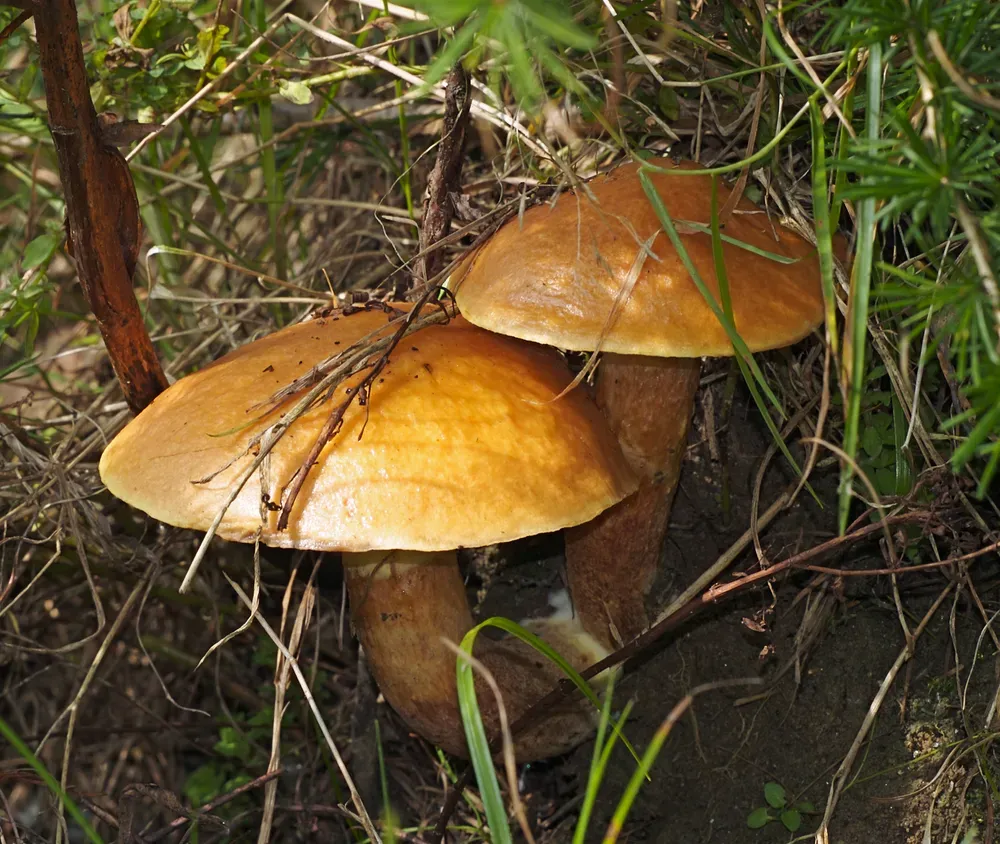
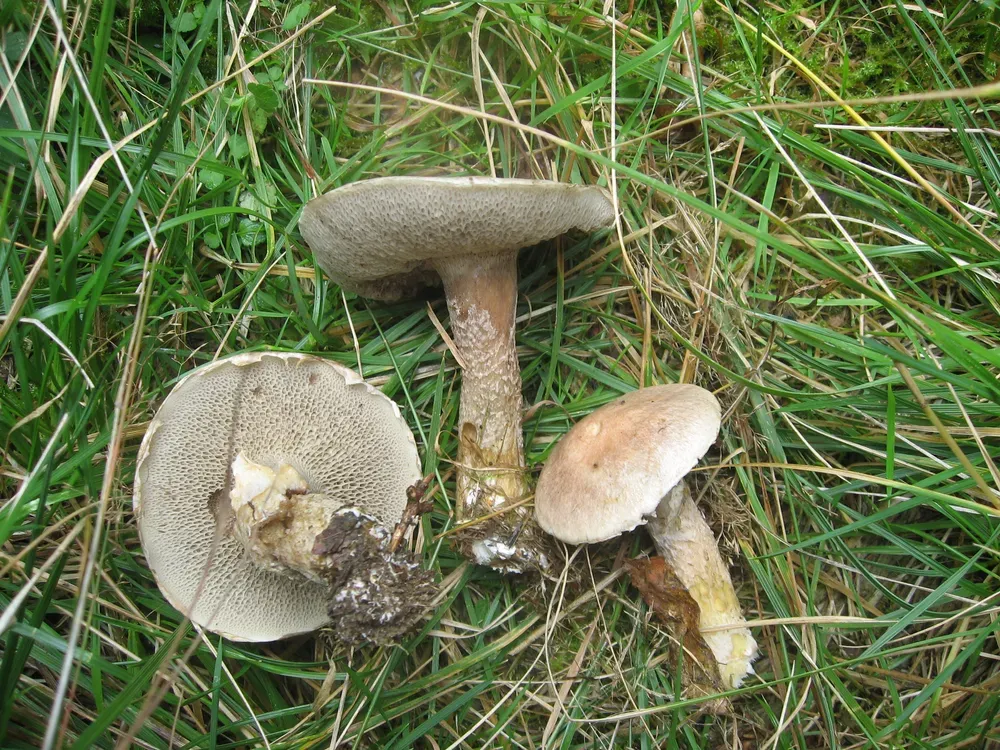
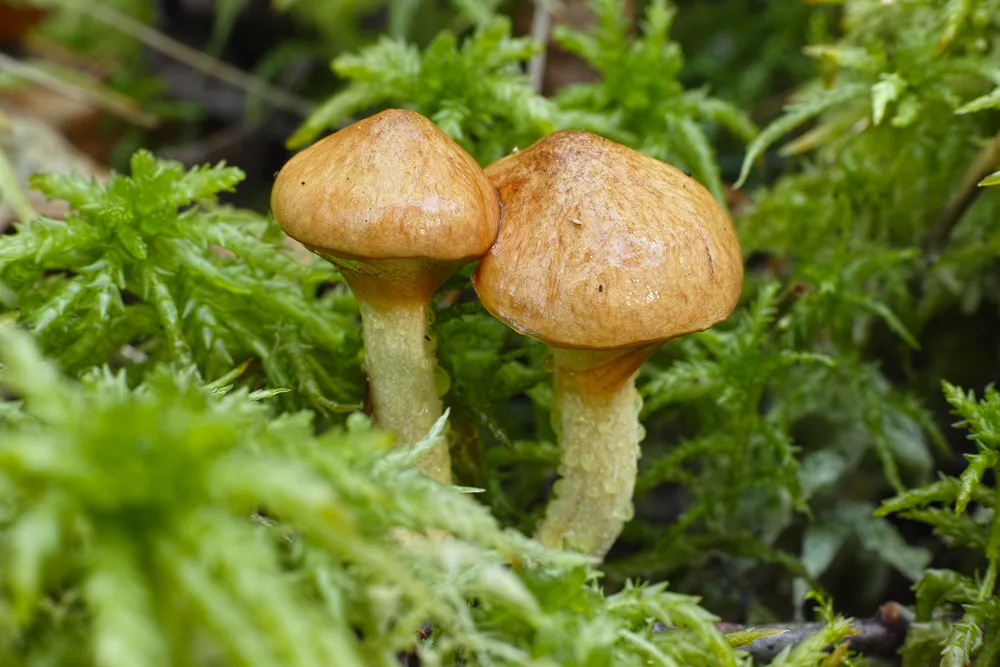
Mushrooms of the same genus and habitat — to study side by side and never mix up.
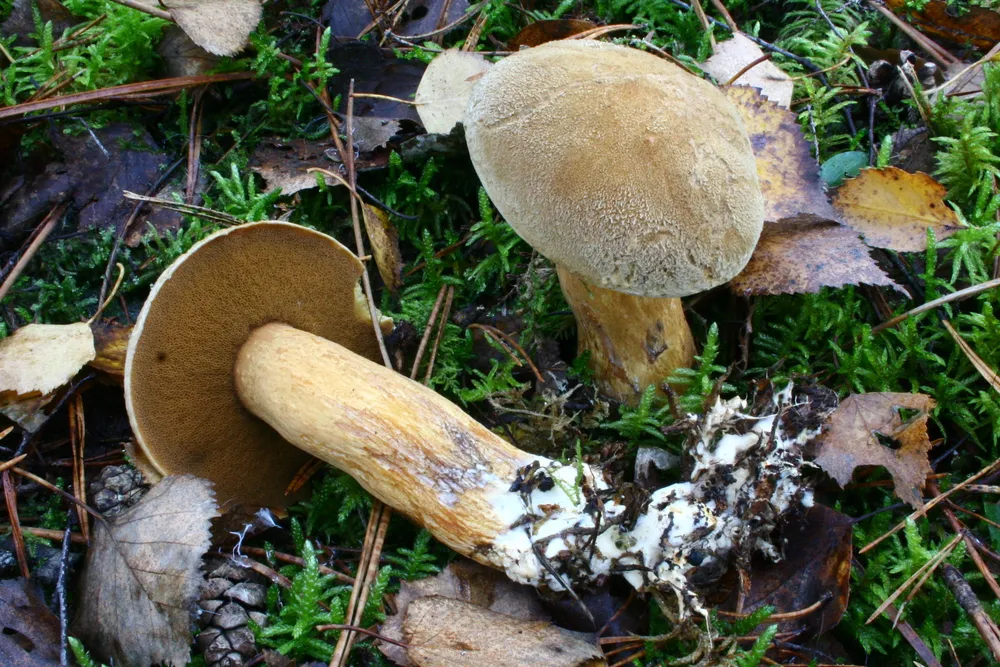
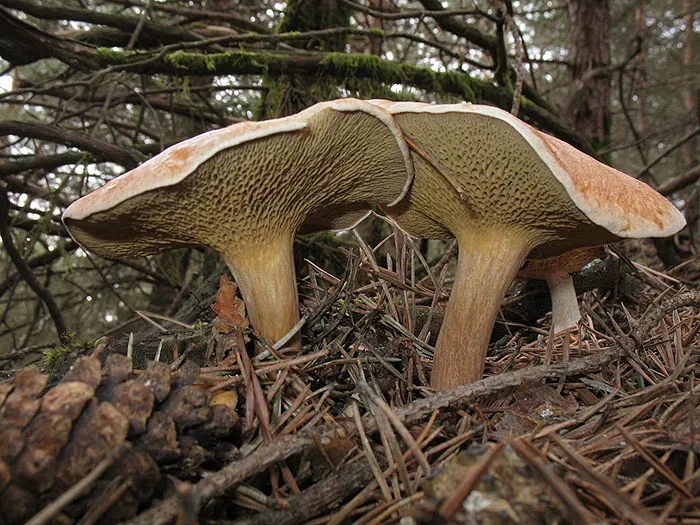
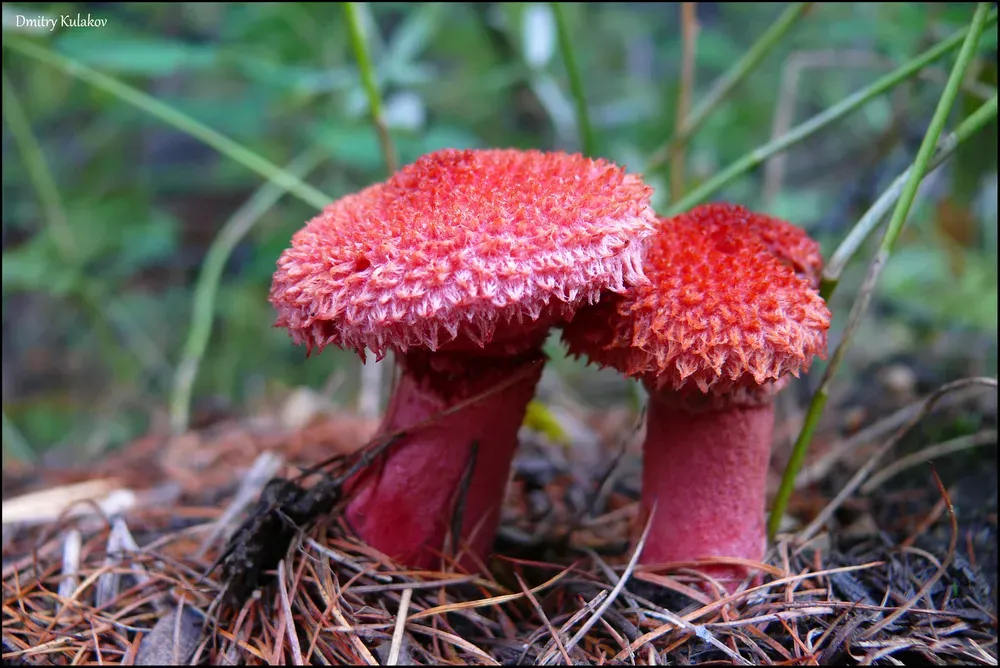
_Kuntze_791558.webp)
Related reading
 Where & when to forage
When does slippery jack season start?
Slippery jacks come out early and grow in flushes through almost the whole warm half of the year. Here's when…
April 4, 2026·3 min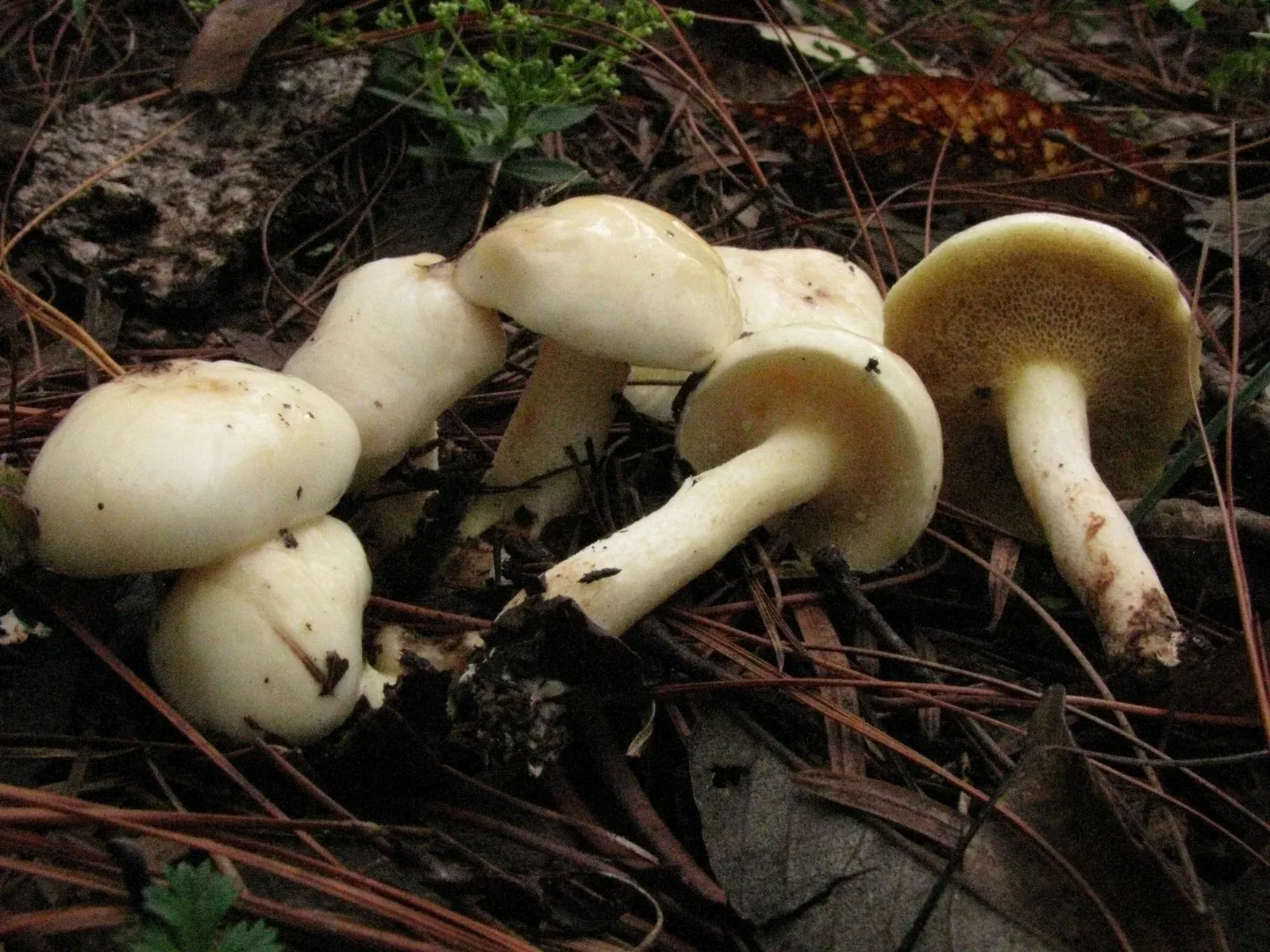 How to identify
White suillus, a delicate mushroom of young pinewoods
The palest of the slippery jacks, almost white when young. We'll show you how to recognize Suillus placidus, w…
March 15, 2026·3 min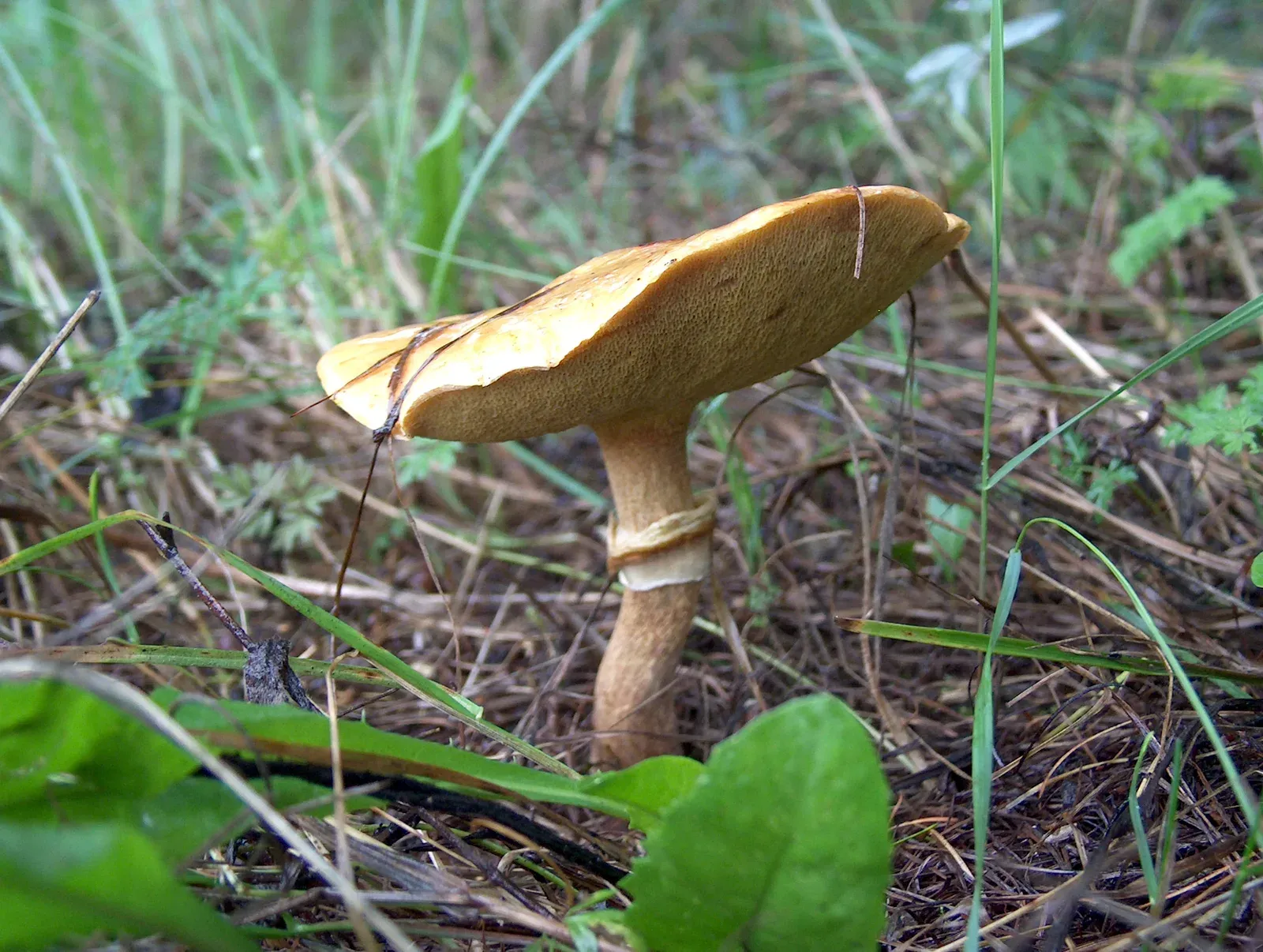 Science & taxonomy
Types of slippery jacks: a complete guide
The slippery jack isn't one mushroom but a whole family. We sort out what kinds of slippery jacks there are, h…
March 7, 2026·4 min
Frequently asked questions
Is Suillus placidus edible or poisonous?
Does Suillus placidus have gills or pores?
What does the cap of Suillus placidus look like?
What does the stem of Suillus placidus look like?
What do Suillus placidus smell and taste like?
Where does Suillus placidus grow?
Which trees does Suillus placidus grow under?
When should you pick Suillus placidus?
What can Suillus placidus be confused with?
How do you cook Suillus placidus?
Can you dry Suillus placidus?
What is the scientific name of Suillus placidus?
Sources
- [1]Вікіпедія (українська)
- [2]Атлас грибів України, Зеров Д.К. (1979)
- [3]MycoBank Database
- [4]Index Fungorum
- [5]GBIF
- [6]iNaturalist Ukraine