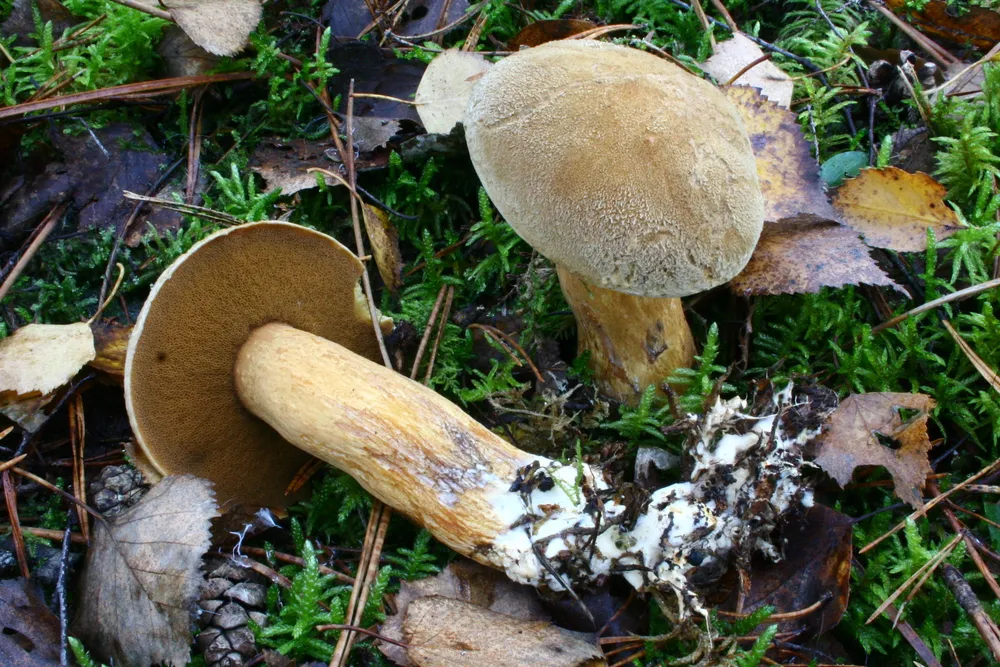
Velvet boleteSuillus variegatus
Expert-verifiedUpdated October 3, 2026
Passport
- Edibility
- Edible
- Season
- Jun — Nov
- Hymenophore
- Pored
- Cap color
- Yellow
- Size
- Medium (5–15 cm)
- Smell
- Pleasant
- Reviewed
- Yes ✓
Quick answers
Where to look?
Conifer forest
When does it appear?
Jun — Nov
Active months: June, July, August, September, October, November.
How to recognize it? Three signs
- Cap color: Yellow, Brown, Orange
- Cap shape: Convex
- Smell: Pleasant
Fruiting season
June – November
Description
Velvet bolete (Suillus variegatus) is the driest and sturdiest of Ukraine's slippery jacks. Unlike the classic slippery jack, its skin is hardly slimy at all, but rather velvety and dryish, with characteristic dark tiny scales, which is why the young cap is often mistaken for a Xerocomus bolete. That's why in many regions it's called just that — the "bolete Suillus" or the "sand mushroom".
Edible without restrictions, and quite tasty. The flesh is firmer than in other Suillus and holds its shape when cooked. When cut it turns slightly blue — this is a normal reaction, not a sign of poison. The skin usually isn't peeled (it isn't slimy), which makes prep much easier — and foragers who have struggled with peeling slippery jacks especially appreciate this. Good for frying, pickling and drying. Pairs very well with porcini in soups.
In Ukraine it's widespread throughout the pine zone: Polissia, the Carpathians, the Carpathian foothills, the forest-steppe (in pine plantations), the northern steppe (in planted pine woods). A mycorrhizal partner of Scots pine (Pinus sylvestris), less often of other pine species. It likes drier spots than other Suillus — sandy hills, dune slopes, the edges of pine woods. Season: June — November, peaking in June (the summer wave) and August-September (the main one). It often grows in abundance, in groups of 10-30 fruiting bodies — one of the "bread-and-butter" mushrooms of the season.
Cap
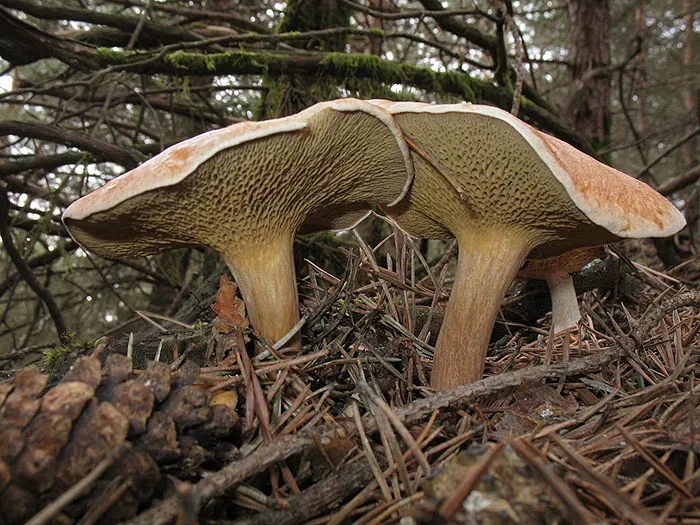
Cap 5-12 cm across, hemispherical with an inrolled edge when young, becoming convex-flat with time. The color is yellow-brown, ocher-yellow to brownish, lighter when young, darkening with age. The surface is velvety and dryish, with tiny dark scales ("variegated" — which is where the Latin name comes from). In wet weather it becomes a little sticky, but not truly slimy.
Hymenophore
Pores and tubes — the tubes are attached to the stem or slightly decurrent, yellowish when young, turning yellow-olive to rusty brown with age. The pores are small, the same color as the tubes. When cut or pressed they turn slightly blue — a normal reaction. Spore print rusty brown.
Stem
Stem 5-10 cm tall, 1.5-2.5 cm thick, thick, cylindrical, often thickening toward the base. The color is yellow-ocher, reddish in the lower part. No ring and no zone — a key difference from other Suillus. The stem flesh is firm and, when cut, turns faintly blue.
Flesh
Flesh firm, yellow, more reddish in the stem. When cut it slowly turns blue (over 1-2 minutes), then fades. The smell is faint, neutral. The taste is mild, mushroomy.
Smell
Faint, pleasant, mushroomy, with no distinctive notes.
›Scientific synonyms (2)
Boletus variegatus, Ixocomus variegatus
Lookalikes
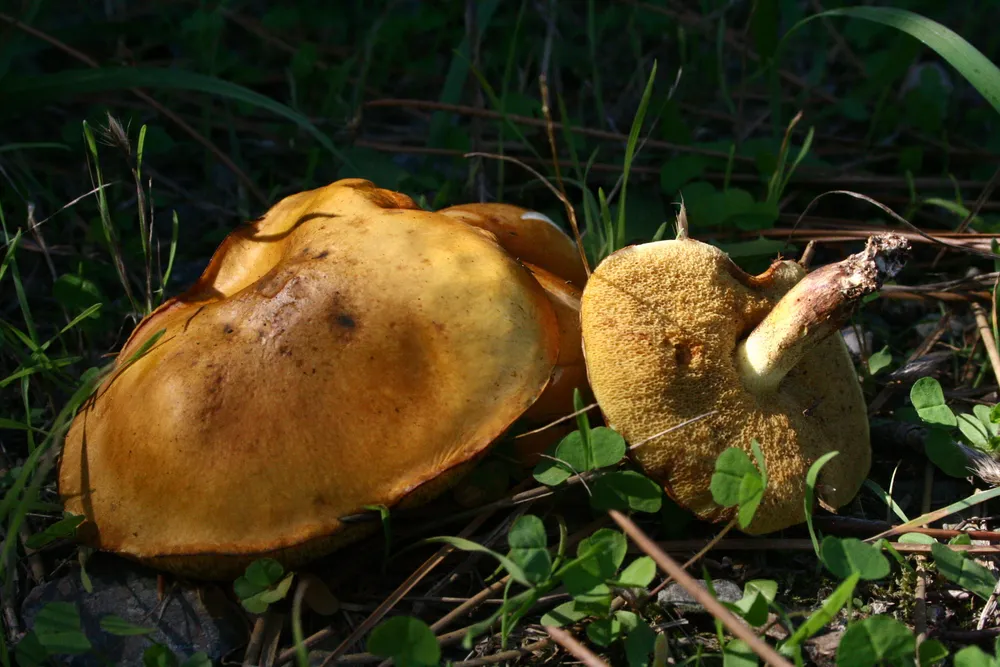
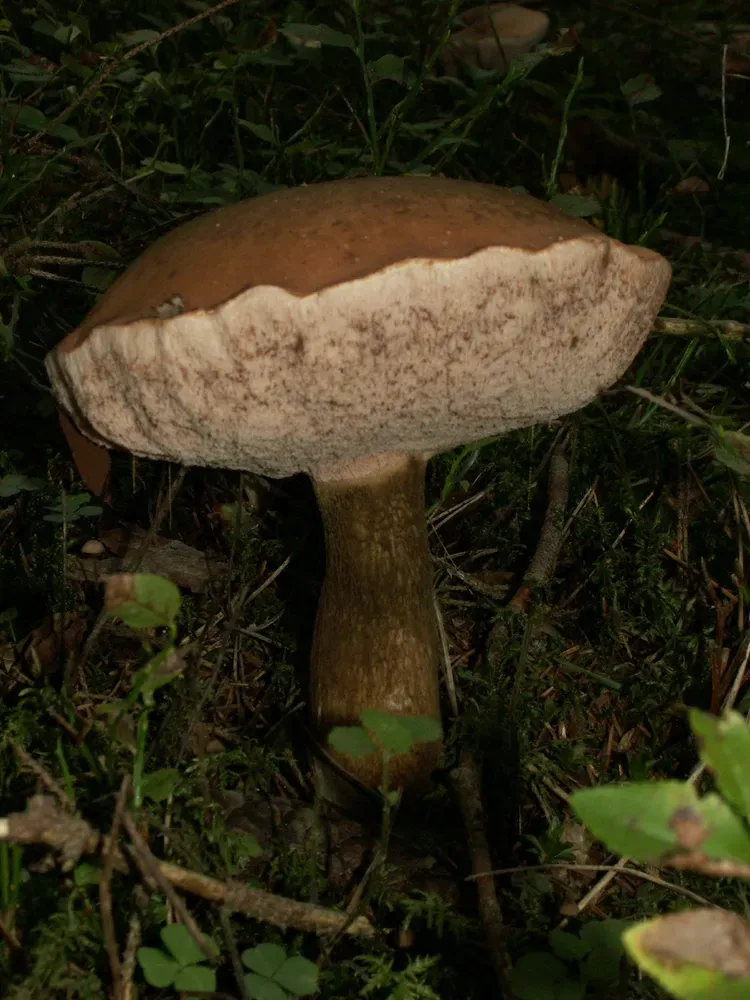
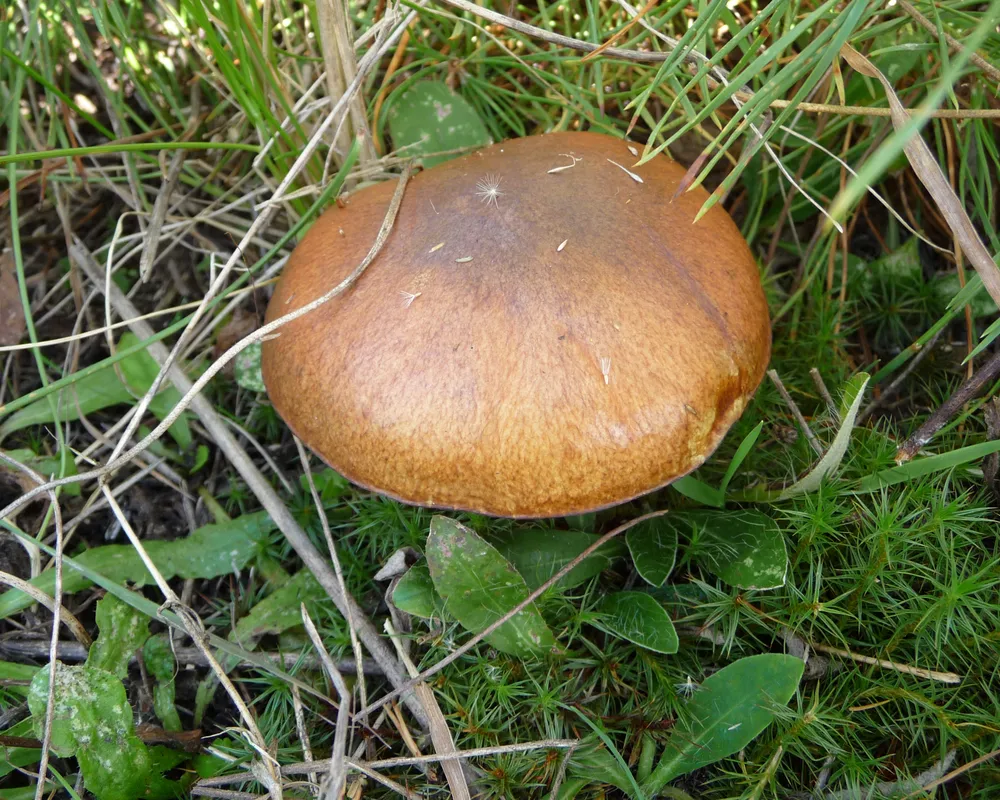
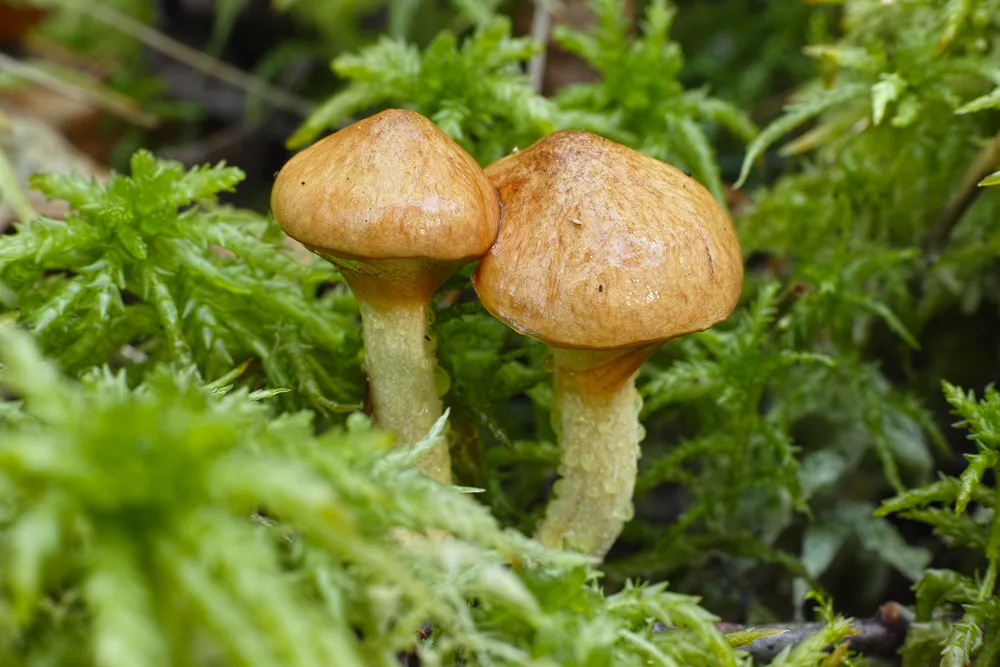
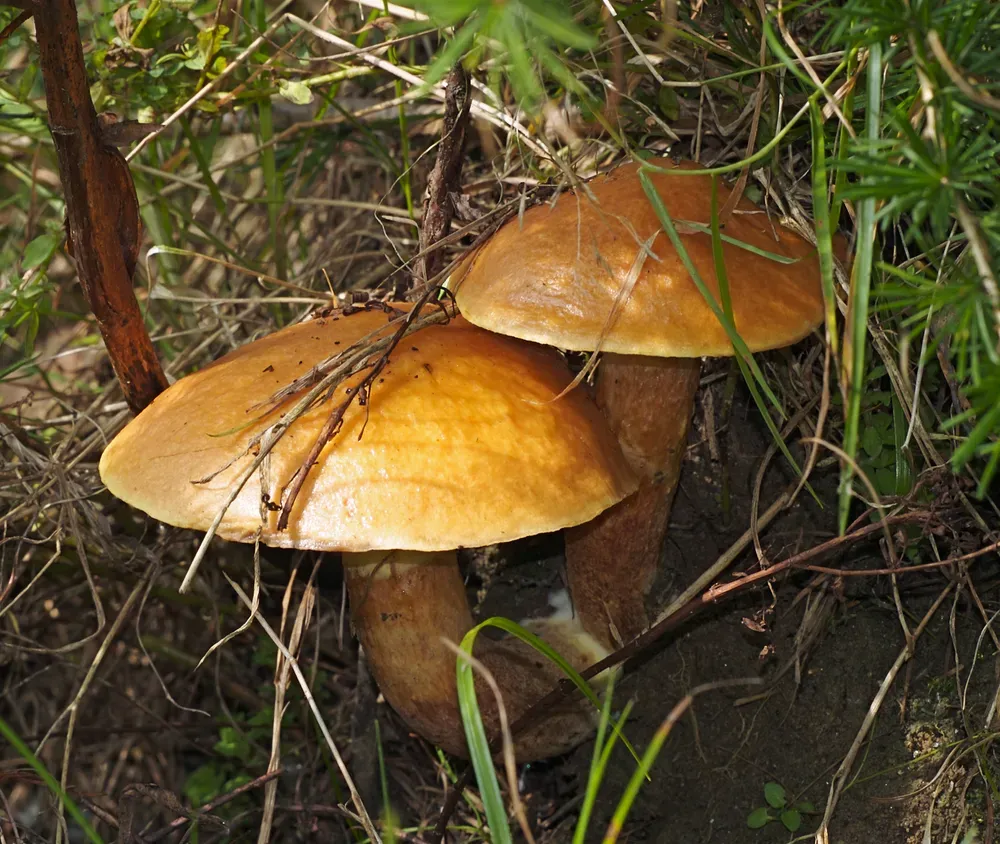
Related species
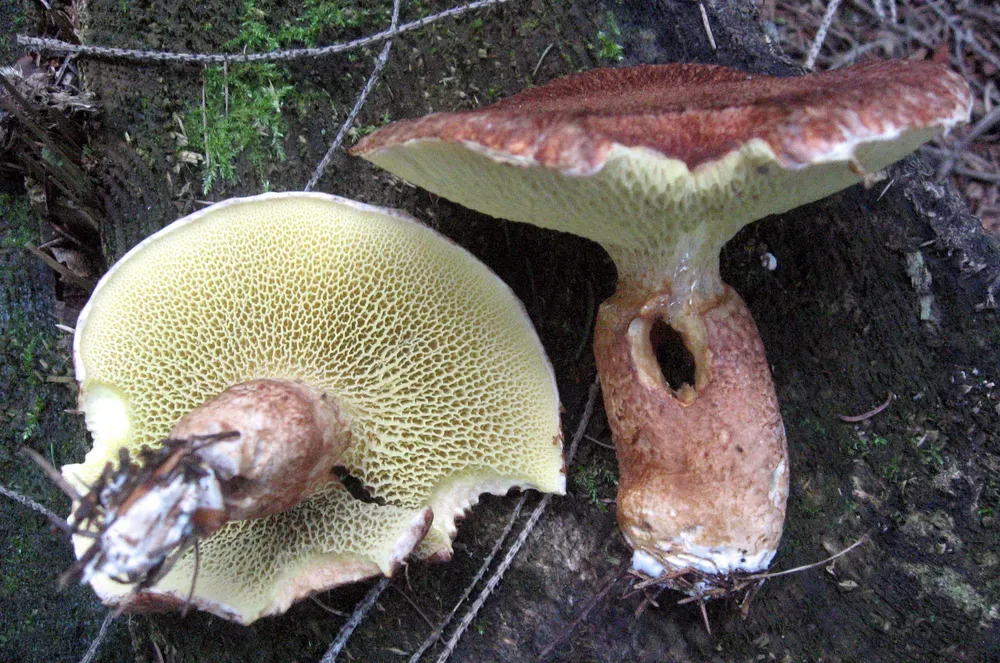
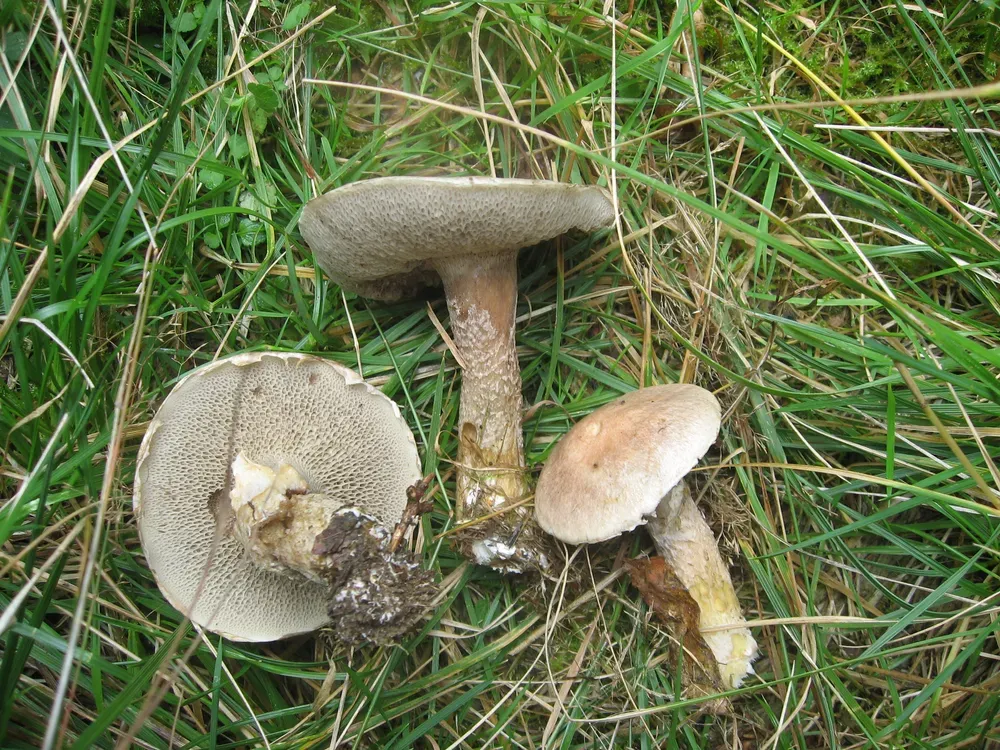
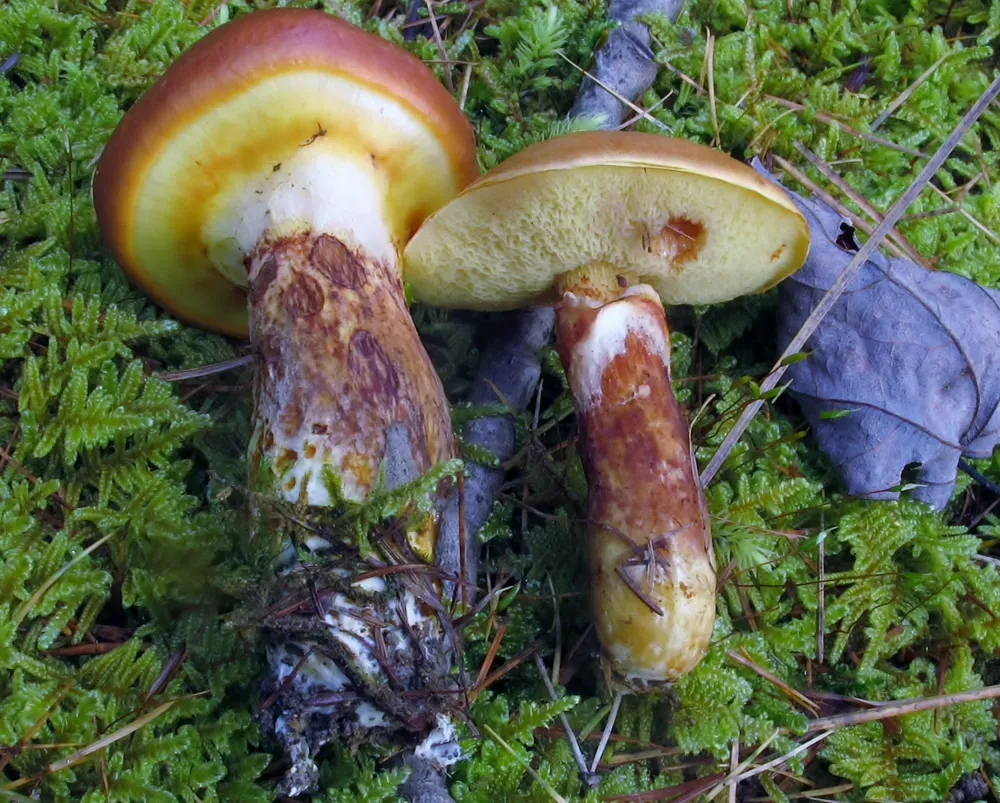
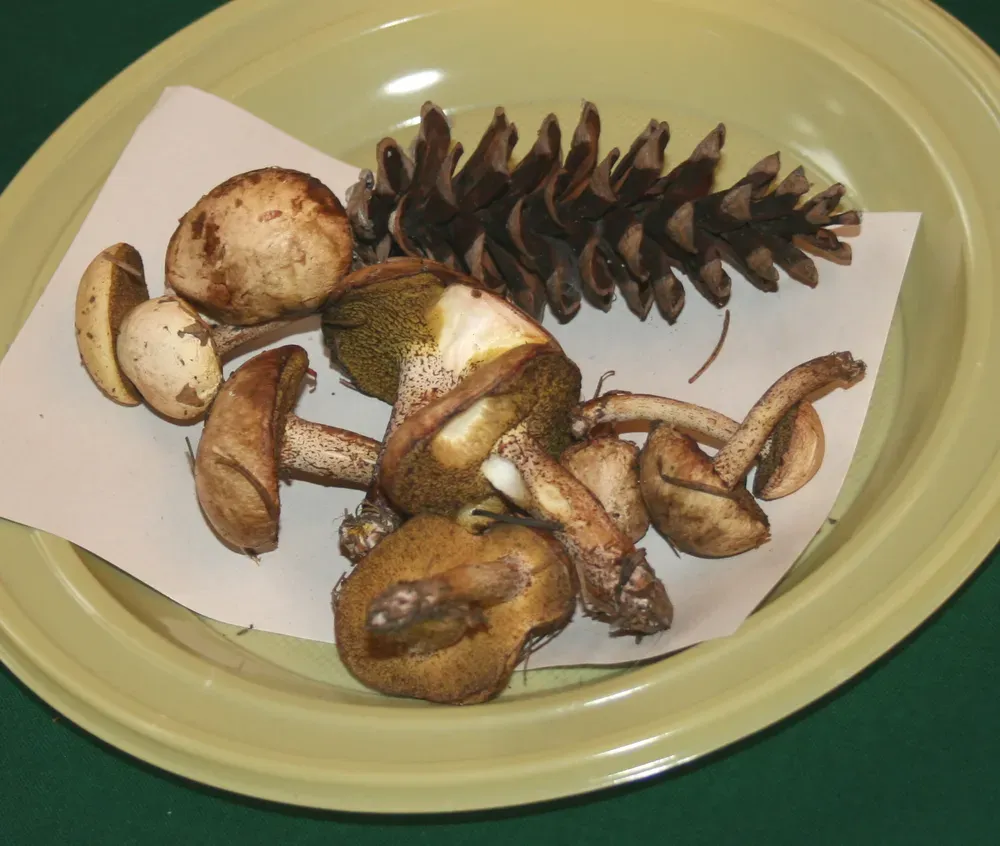
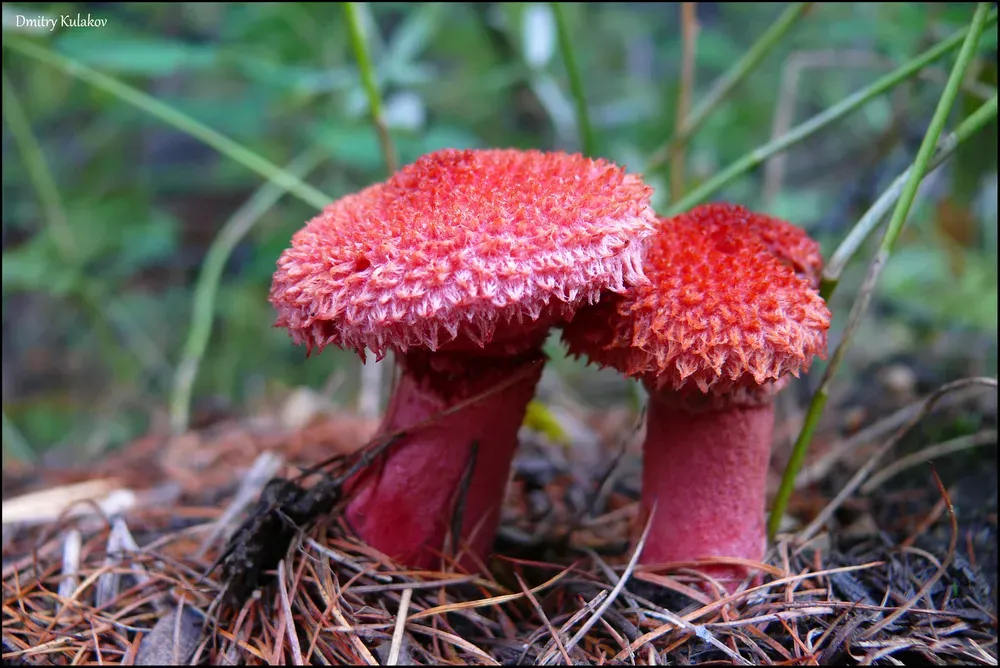
Mushrooms of the same genus and habitat — to study side by side and never mix up.
_Kuntze_791558.webp)
Related reading
 Where & when to forage
Slippery jacks in autumn, the season's second wave
Autumn is often the most generous time for slippery jacks. The mushrooms are firm, clean and plentiful right u…
April 8, 2026·3 min Where & when to forage
When does slippery jack season start?
Slippery jacks come out early and grow in flushes through almost the whole warm half of the year. Here's when…
April 4, 2026·3 min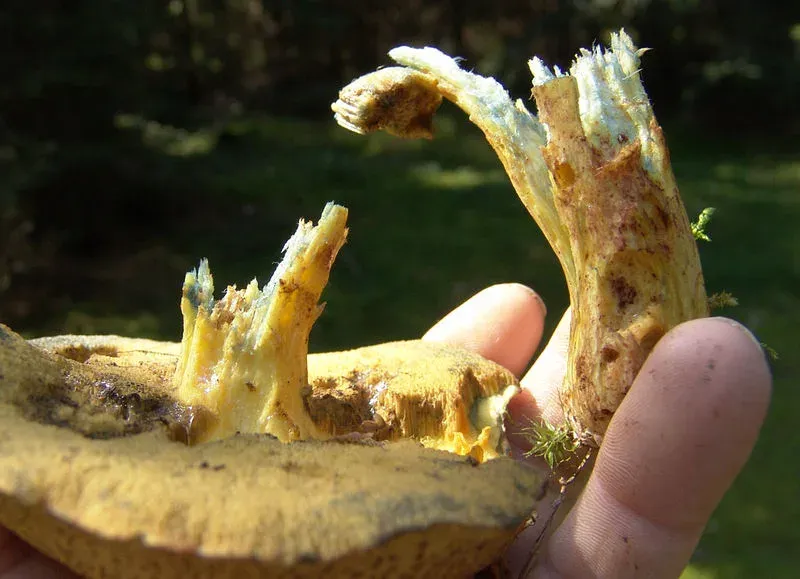 How to identify
Velvet bolete, the one whose skin won't peel
A slippery jack that's barely slimy and won't let you peel its skin. Here's how to recognize the velvet bolete…
March 19, 2026·4 min
Frequently asked questions
Is it safe to eat?
Yes, without restrictions. One of the most "hassle-free" Suillus in the kitchen — no need to peel the skin. You can cook it fresh, dry it or pickle it. Old specimens with soft caps are better left behind.
Why does the flesh turn blue when cut? Isn't that poison?
It's a normal oxidation reaction of the pigment variegatic acid. Not a sign of poison. Slight bluing occurs in many edible mushrooms — the bay bolete, some Suillus. It doesn't affect the taste at all, or the safety.
Can it be confused with dangerous mushrooms?
There are no serious poisonous lookalikes among true Suillus and the boletes of pine woods. In theory, you could mix it up with a young Devil's bolete (Rubroboletus satanas) — but that one doesn't grow in pine woods and has red pores. Or with the bitter bolete (Tylopilus felleus) — it's bitter, not poisonous, but it ruins the dish; it has a pinkish pore surface. Look closely at the pores: in the velvet bolete they're yellow-olive.
Where should you look for it?
In pine woods on sandy or sandy-loam soils. It likes dry spots — hills, slopes, forest edges. It often grows in young pine plantations (10-30 years old), as well as in old pine woods with sparse grass. A mycorrhizal partner of Scots pine (Pinus sylvestris).
Which regions of Ukraine is it found in?
Throughout the pine zone: Polissia (especially abundant — the Rivne, Volyn, Zhytomyr, Chernihiv and Sumy regions), the Carpathians and the Carpathian foothills, the forest-steppe in pine plantations, the northern steppe in planted pine woods.
When should you look for it?
June — November, peaking in June (the summer wave after rain) and August-September (the main peak). In the warm forest-steppe it fruits until November. It survives the first light frosts.
How do you tell it from other Suillus?
From the slippery jack — that one has a dark slimy skin and a dark ring on the stem. The velvet bolete is lighter, dryish, without a ring. From the weeping bolete — that one also has a slimy skin and, on the stem, granular droplets of milky juice on the tubes. You won't confuse the velvet bolete with anything once you know these three features.
And the yellow-brown Xerocomus bolete — is that the same mushroom?
No, but it's very similar — hence the confusion. "Velvet bolete" (Suillus variegatus) is our mushroom. Bay bolete (Imleria badia, also known as the "Polish mushroom") — a different species from the bolete family, also edible, just bigger and darker, with a smooth skin without scales. Both are tasty.
Is Velvet bolete edible or poisonous?
Does Velvet bolete have gills or pores?
What does the cap of Velvet bolete look like?
What does the stem of Velvet bolete look like?
Sources
- [1]Вікіпедія (українська)
- [2]Атлас грибів України, Зеров Д.К. (1979)
- [3]MycoBank Database
- [4]Index Fungorum
- [5]GBIF
- [6]iNaturalist Ukraine