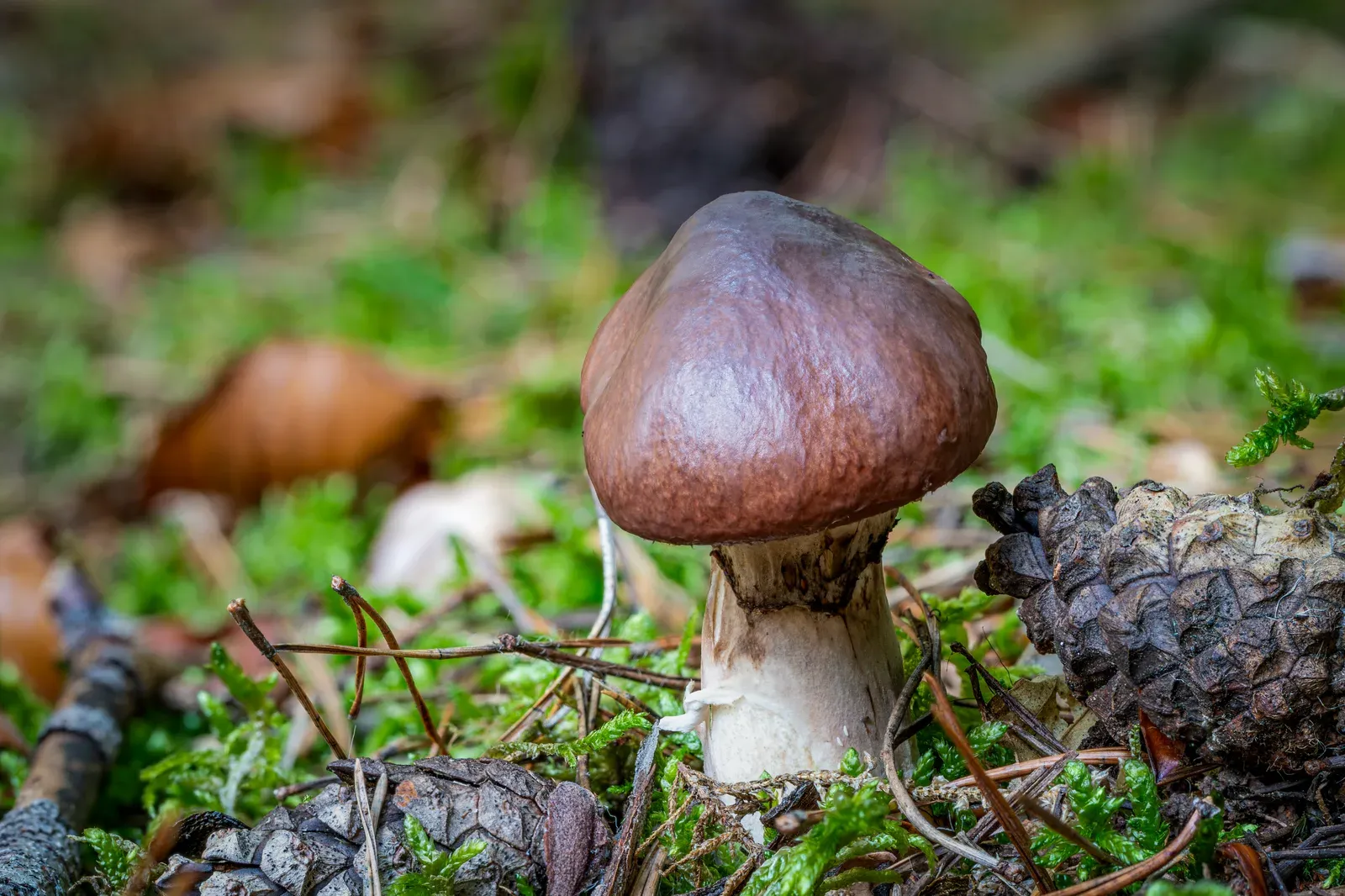
Many foragers consider autumn the best season for slippery jacks. Summer flushes are explosive but short-lived, while in autumn the slippery jack (Suillus luteus and its close relatives) gives a plentiful, long-lasting and remarkably clean harvest.
Cool nights, gentle rains and warm soil create almost ideal conditions for it. Let's look at why autumn slippery jacks beat summer ones, where to find them and when the season finally ends.
Why slippery jacks love autumn
In summer, the slippery jack's main enemies are heat, which dries out the sandy soil, and maggots, which quickly spoil the mushrooms. In autumn, both problems recede.
Cool nights hold back the maggot invasion, so autumn slippery jacks are much cleaner. Rains become more frequent and more even, and the soil, warmed over the summer, holds its heat for a long time. With this combination, the mycelium fruits eagerly and generously.
That's why the autumn flush of the slippery jack is often called the main one of the season: there are lots of mushrooms, they're firm, and picking them is a pleasure.
Why autumn slippery jacks beat summer ones
You can see the difference right in your basket.
- Cleanliness. Autumn slippery jacks are less infested with maggots, because the cold holds insects back.
- Firmness. In cool weather the mushrooms grow more slowly, so the flesh is denser and holds its shape better.
- Longer flushes. Autumn mushrooms stay fresh in the ground longer, so you don't have to rush.
- Abundance. The main flush of the harvest often falls in September.
That's why autumn slippery jacks are especially prized for pickling and drying: the dense flesh makes for better preserves.
Where to find autumn slippery jacks
The spots are the same as in summer, with a few small adjustments for the cold.
- young pine stands and pine plantations;
- bright, sun-warmed clearings and forest edges;
- south-facing slopes and sandy hills that hold heat longer;
- patches of mixed forest where pine grows next to birch.
In autumn, look for slippery jacks where the sun still reaches: shaded, damp hollows cool down quickly, and the mushrooms stop there sooner. On sun-warmed south-facing slopes, the season lasts longest.
In autumn, its relatives do well alongside the slippery jack too: the bovine bolete and velvet bolete, which handle the cold well.
When the season ends
The autumn flush lasts as long as the soil stays warm, usually into October, and in warm years into November. The first lasting frosts bring the season to an end.
Frost-bitten slippery jacks lose their flavor and turn watery, so after a few frosty nights they're no longer worth picking. But as long as the days are warm and the ground hasn't frozen, every new rain can still bring a flush.
To catch the last warm windows, follow the weather with our mushroom radar: it shows when moisture and warmth line up well for mushrooms to appear. In autumn this is especially useful, because good days become rarer.
Sources
- “Key to the Fungi of Ukraine” (Kyiv, Naukova Dumka publishers).
- Suillus luteus on GBIF, the global biodiversity database.
- Suillus on MycoBank, the international fungal nomenclature database.
- Suillus luteus on Wikipedia.
Frequently asked questions
Why are there the most slippery jacks in autumn?
Because autumn conditions are almost ideal: cool nights hold back maggots, rains become more frequent, and soil warmed over the summer holds its heat for a long time. So the mycelium fruits generously.
Why are autumn slippery jacks better than summer ones?
They're cleaner because they're less infested with maggots, firmer because they grow more slowly, and they stay fresh in the ground longer. That makes autumn mushrooms especially good for preserving.
Until what month can you pick slippery jacks in autumn?
Usually until October, and in warm years into November. The season ends with the first lasting frosts, after which the mushrooms turn watery and tasteless.
Do slippery jacks grow after frosts?
After the first light frosts you may still find the odd mushroom here and there, but frost-bitten slippery jacks lose their flavor. Once the ground freezes, the season is over.
Where should you look for slippery jacks in autumn?
In sun-warmed spots: south-facing slopes, sandy hills, bright clearings and the edges of . Shaded, damp hollows cool down faster in autumn, so there are fewer mushrooms there.
Why are autumn slippery jacks less maggoty?
Because the cool weather holds back the insects that lay their larvae in mushrooms. So in autumn, slippery jacks are much cleaner than in the summer heat.
Is it worth picking bovine boletes and velvet boletes in autumn?
Yes, the and the handle the cold well and often turn up in autumn next to the slippery jack. Both are edible.
How do you catch the last warm days of the season?
Follow the weather: as long as the days are warm and the ground hasn't frozen, every new rain can bring a flush. An easy way to spot the good windows is our .
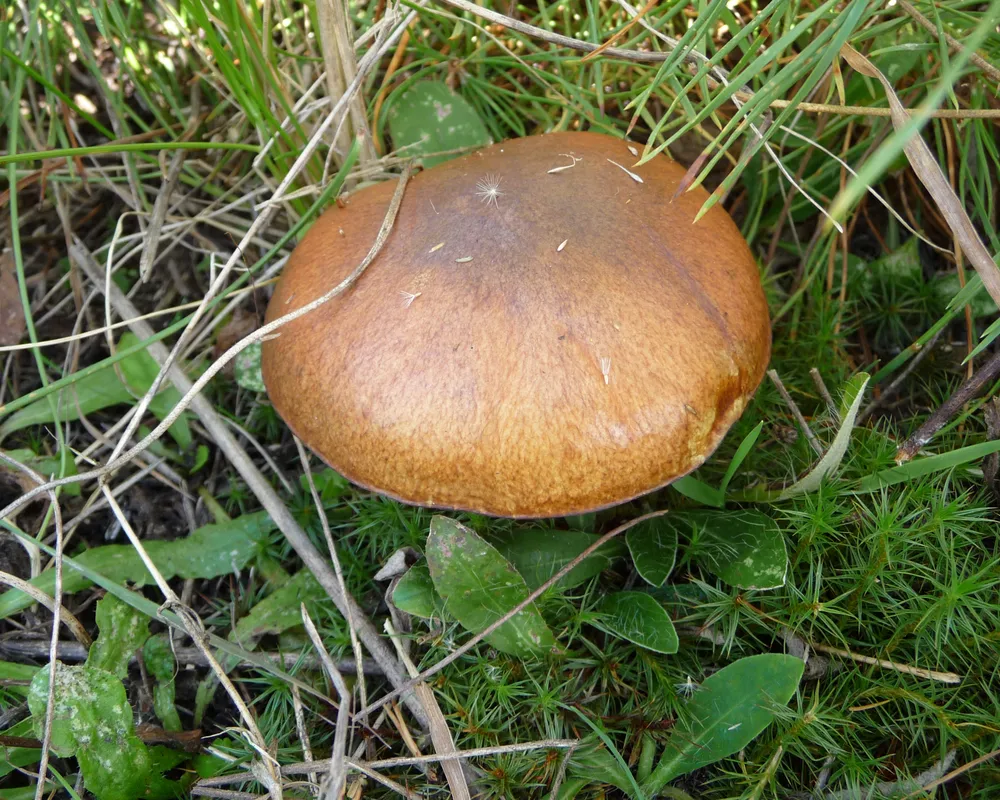
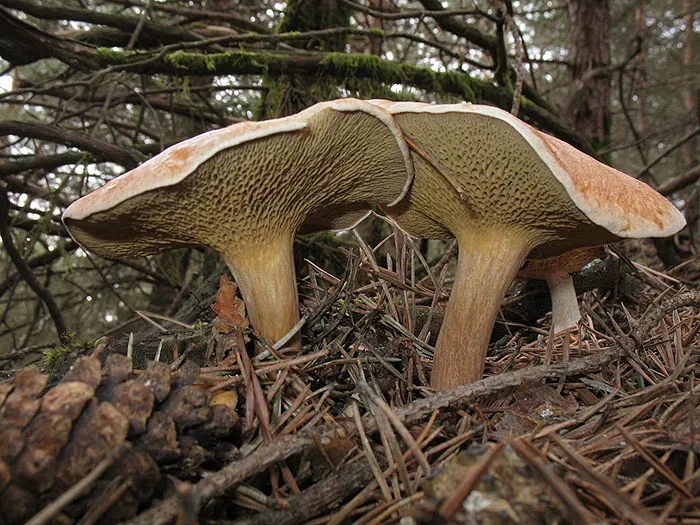
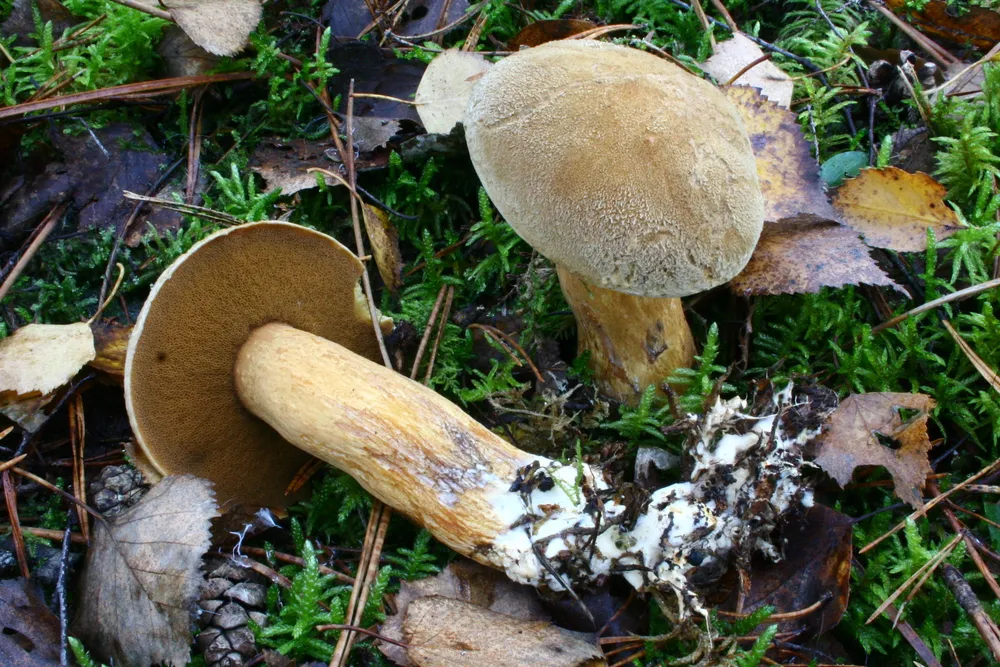
Mushrooms in this article
Related articles
 Recipes & cooking
How to store fresh mushrooms, and for how long
Fresh mushrooms spoil faster than you might think. Here's how long they keep in the fridge, how to store them…
August 21, 2026·4 min Recipes & cooking
How long to boil mushrooms
Boiling time depends on the type of mushroom and on what you're cooking next. Here's a clear cheat sheet: how…
August 22, 2026·4 min How to identify
Truffles in Ukraine: do they grow here, and where to look
Truffles aren't just a French delicacy. Several species grow in Ukraine too. Here's which ones, where they occ…
August 24, 2026·2 min