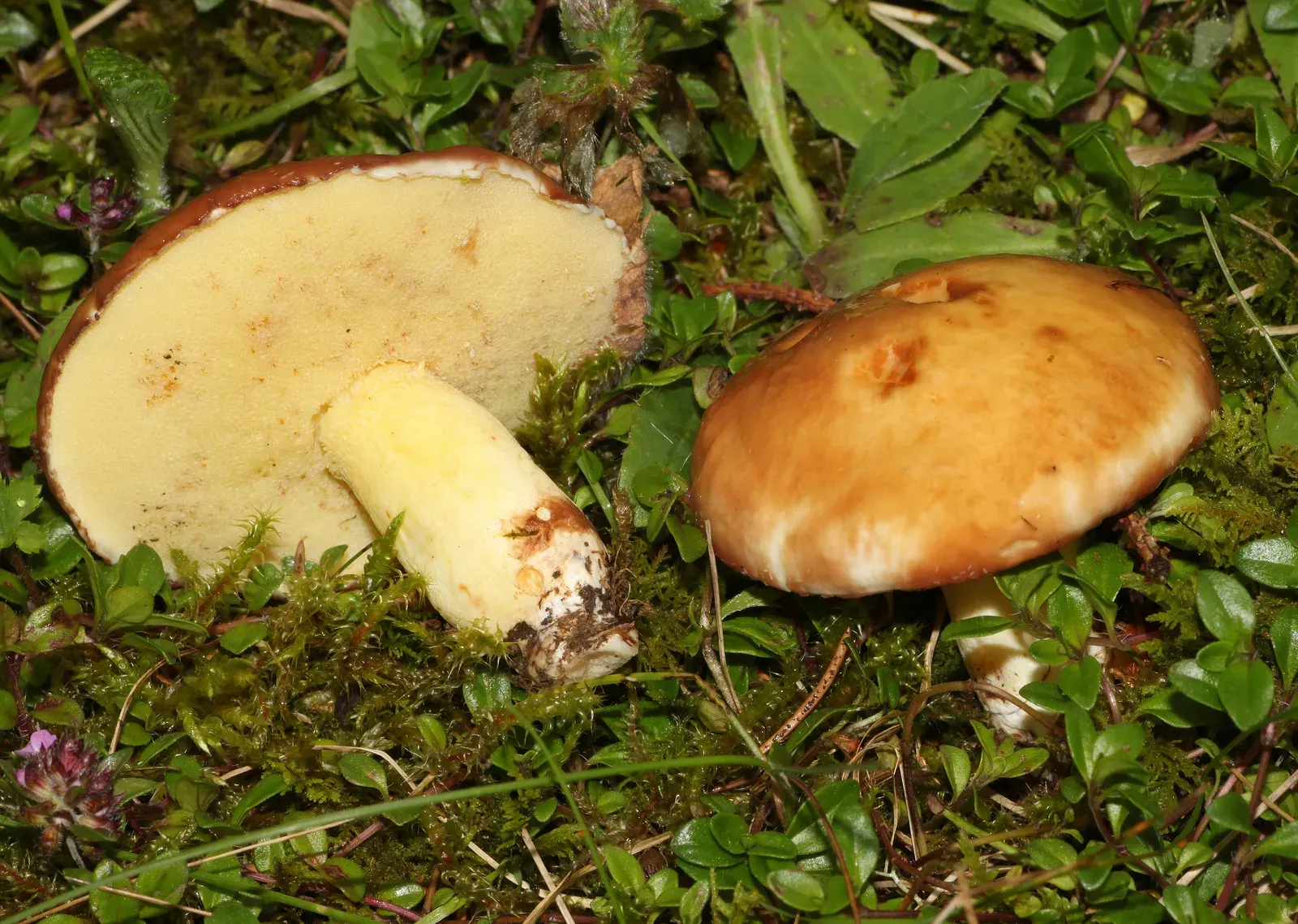
The slippery jack is rightly considered one of the safest mushrooms for a beginner: it has no deadly poisonous lookalikes. But that doesn't mean only slippery jacks turn up underfoot in a pine forest. There are still a few similar mushrooms worth learning to tell apart.
The good news is that all of them are either edible or simply unpalatable, not poisonous. So the main goal here isn't fear but confidence: so you know exactly what you're putting in your basket.
Why the slippery jack is safe for beginners
The slippery jack (Suillus luteus and close relatives) belongs to the pored mushrooms: under its cap there's a spongy layer, not gills. That's exactly what sets it apart from dangerous gilled mushrooms such as amanitas.
No poisonous mushroom of Ukrainian forests looks so much like a slippery jack that the two are easy to confuse. That's why the slippery jack is often recommended as a first mushroom for those just learning. Still, a few similar pored neighbors are worth knowing.
Similar mushrooms it gets confused with
Most often the slippery jack is confused with its own relatives and other pored mushrooms of the pine forest.
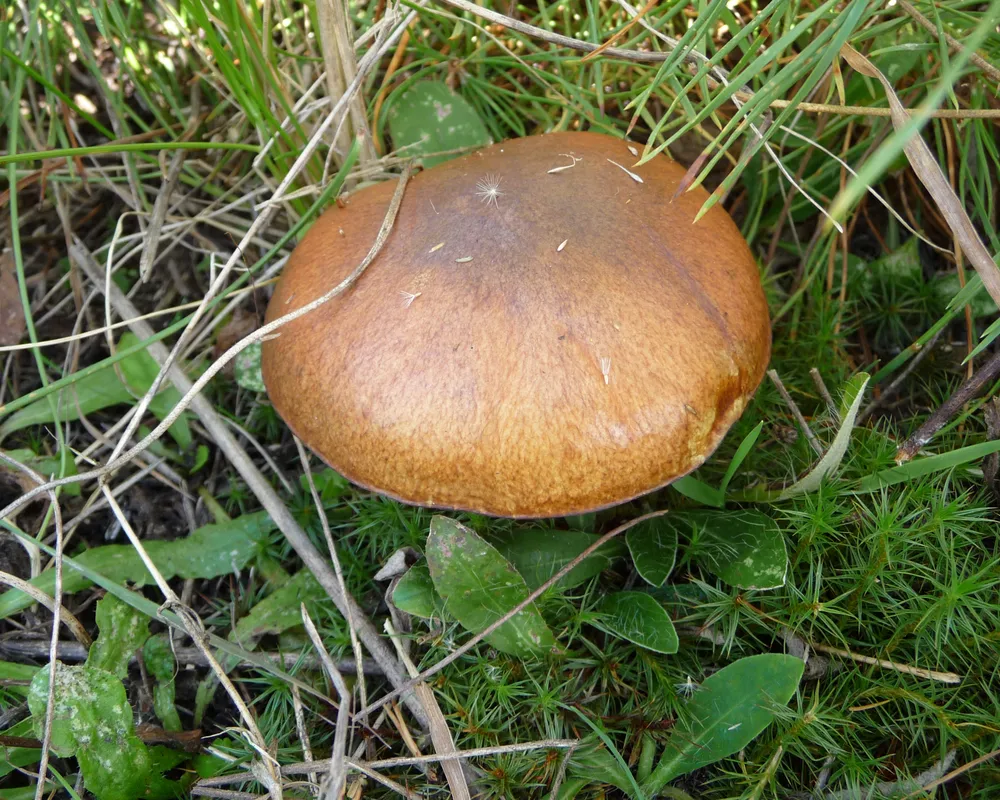
- **Bovine bolete.** A close relative with a dry, reddish-brown cap and large pores. Edible, so the mistake is harmless.
- **Weeping bolete.** Essentially the same kind of slippery jack, just without a ring. Mixing them up is no problem; both are tasty.
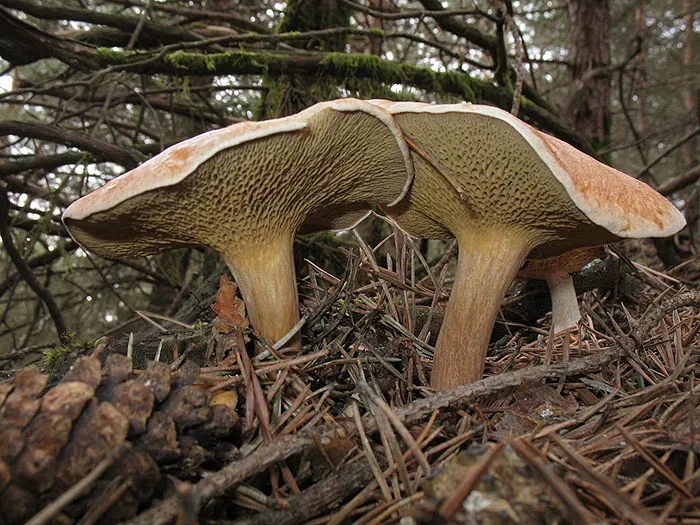
- Xerocomus boletes. Pored mushrooms with a dry, velvety cap that often turn blue when cut. Also edible.
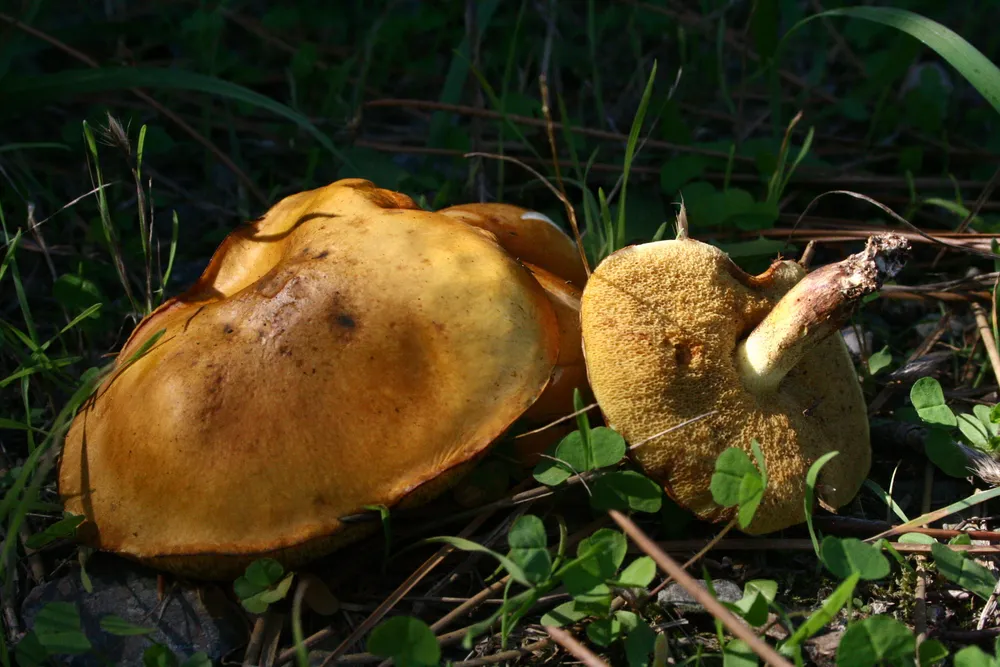
- Peppery bolete. A small pored mushroom with a hot, bitter taste. Not poisonous, but it can spoil a dish with its bitterness.
As you can see, even the slippery jack's “lookalikes” pose no threat to your health. The worst that can happen is a bitter peppery bolete in the pot.
The key check: sponge vs gills
To avoid mistakes altogether, remember one thing. Turn the mushroom over and look under the cap.
- A spongy, tubular layer. This is a slippery jack or another safe pored mushroom.
- Gills. This is no longer a slippery jack, and a mushroom like this under a pine should be set aside until you're sure of the ID.
It's gilled mushrooms that can be truly dangerous, so the habit of looking under the cap saves you from the biggest mistakes. The slippery jack always passes this check.
How to recognize a slippery jack with confidence
Let's sum up the features of a true slippery jack in a short rule:
- a slimy, shiny cap (in the classic species);
- a spongy underside, not gills;
- a ring or granules on the stem;
- a pine or larch nearby.
If a peppery bolete does end up in your basket, the taste will give it away: the tip of your tongue will feel a burning bitterness. So it's better not to pick doubtful small mushrooms with a reddish pore surface.
The best time to look for slippery jacks is a day or two after a warm rain, in conifer and mixed forests. An easy way to keep track of good windows is our mushroom radar: it shows when moisture and warmth line up just right for mushrooms to appear.
Caution never hurts
Even though the slippery jack is safe, the golden rule stays the same for any mushroom: if you're not sure, don't pick it. One doubtful mushroom isn't worth the risk or a ruined dish. And the habit of checking for a spongy underside will make your outings stress-free.
Sources
- “Field Guide to the Fungi of Ukraine” (Kyiv, Naukova Dumka publishing house).
- Suillus luteus in GBIF, the global biodiversity database.
- Suillus in MycoBank, the international fungal nomenclature database.
- Suillus luteus on Wikipedia.
Frequently asked questions
Does the slippery jack have poisonous lookalikes?
The slippery jack has no deadly poisonous lookalikes. It's only confused with its relatives (, ), Xerocomus boletes and the peppery bolete, but all of them are either edible or simply bitter, not dangerous.
Can you get poisoned by a slippery jack?
Not by a true slippery jack; it's edible. Poisoning is only possible through a misidentification, if you pick a completely different mushroom, so always check that the underside of the cap is spongy, not gilled.
What is the slippery jack most often confused with?
Most often with the and Xerocomus boletes, because they're also pored and grow under pines. All of them are edible, so this mix-up is harmless.
What is the peppery bolete and why is it a problem?
It's a small pored mushroom with a hot, bitter taste. It isn't poisonous, but even a single specimen can spoil a dish with its bitterness, so it's better not to pick small mushrooms with a reddish pore surface.
How do you tell a slippery jack from a dangerous mushroom?
Look under the cap. The slippery jack has a spongy, tubular underside, while dangerous mushrooms usually have gills. Gills under the cap are a reason to set the mushroom aside until you're sure.
Is the bovine bolete edible if you mistake it for a slippery jack?
Yes, the is edible, so this mistake is harmless. It's just a bit firmer and more rubbery than the classic slippery jack, but perfectly good for pickling and drying.
Why is the slippery jack recommended for beginners?
Because it's easy to spot, grows in clusters, has clear features and no dangerous lookalikes. Just check for the slimy cap and spongy underside to recognize it with confidence.
Where is there less risk of misidentifying a slippery jack?
In its typical habitats: young under pines. The partner tree and the spongy underside together give you solid confidence.
Mushrooms in this article
Related articles
 Recipes & cooking
How to store fresh mushrooms, and for how long
Fresh mushrooms spoil faster than you might think. Here's how long they keep in the fridge, how to store them…
August 21, 2026·4 min Recipes & cooking
How long to boil mushrooms
Boiling time depends on the type of mushroom and on what you're cooking next. Here's a clear cheat sheet: how…
August 22, 2026·4 min How to identify
Truffles in Ukraine: do they grow here, and where to look
Truffles aren't just a French delicacy. Several species grow in Ukraine too. Here's which ones, where they occ…
August 24, 2026·2 min