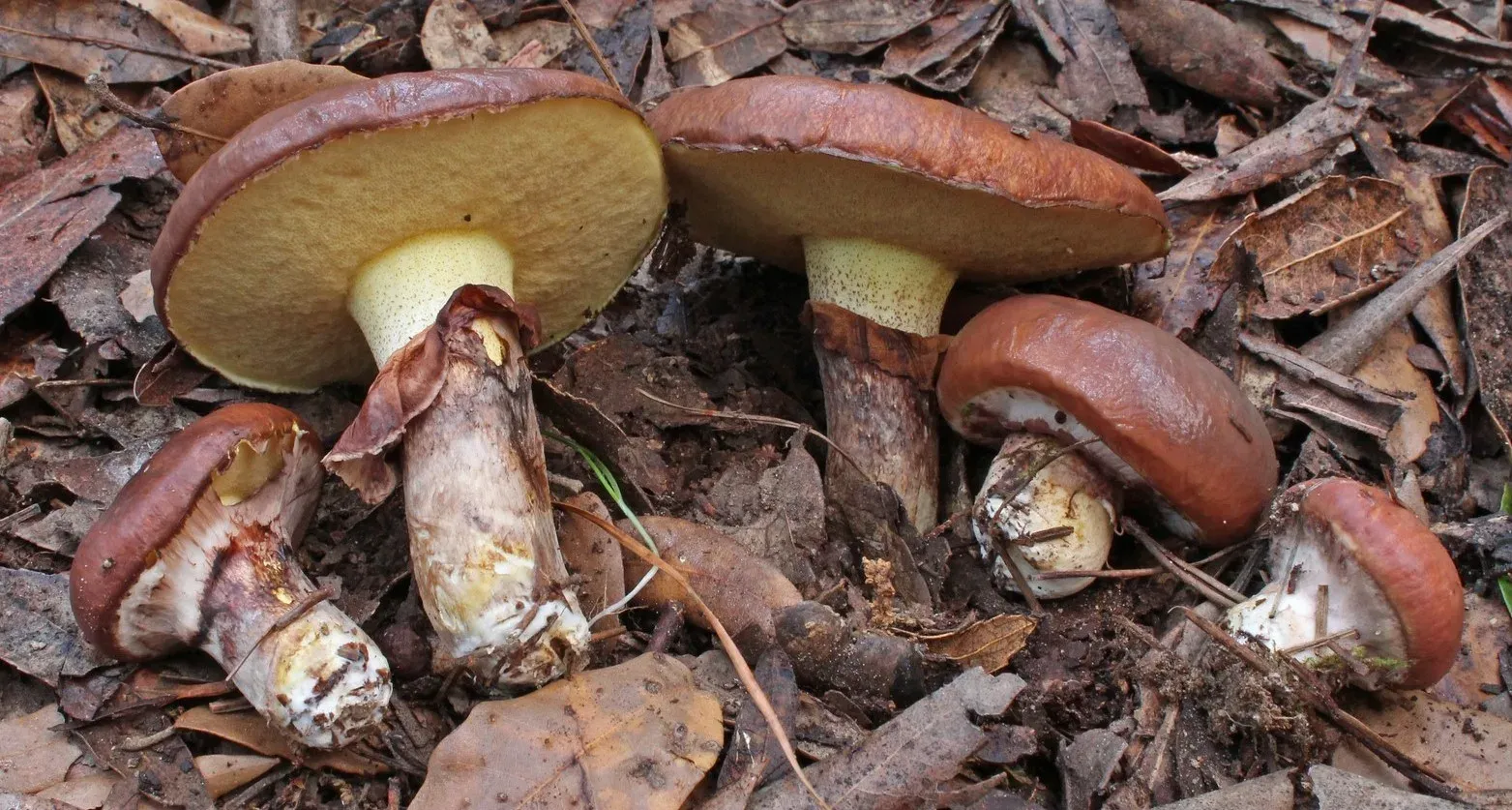
The slippery jack is the mushroom so many of us first picked as kids. It's easy to recognize and grows in sociable troops, and in June after a warm rain the pine forest edges get covered with shiny brown caps so thickly that your basket fills up in minutes.
Let's look at when slippery jacks appear, why they stick so close to young pines, and how not to miss their June flush.
When slippery jacks come up in June
The slippery jack is very sensitive to moisture and responds to rain perhaps faster than any other mushroom. Just two or three days after a good warm rain, young pine stands can be covered with slippery jacks.
June suits them because the soil has warmed up and there's still plenty of moisture. The slippery jack dislikes both cold and parched sand, so an early heat wave without rain can hold it back, but after the first thunderstorms it pops up in masses.
To keep track of the rains, use the mushroom radar: it shows when moisture and warmth line up just right. We've gathered more on how slippery jacks respond to weather in our article on when to go for slippery jacks after rain.
Why slippery jacks love young pines
The slippery jack lives in symbiosis with pine, so look for it first and foremost wherever this tree grows.
- Young pine stands. The best spots are low pines about as tall as a person. It's in plantations like these that slippery jacks fruit most densely.
- Pine forest edges and clearings. The sun-warmed edges of the coniferous forest, where the litter is thin and warm.
- Forest roadsides. Sandy, well-lit strips along paths through the pine woods.
In a dense old pine forest with a thick layer of needles, there are fewer slippery jacks. But in mixed forest, where pine grows alongside birch, you'll find them too. Besides the common one, the weeping bolete also appears early, a frequent visitor to young pine woods.
How fast slippery jacks grow after rain
The slippery jack is one of the fastest-growing mushrooms. If you head into a young pine stand on the third day after a warm rain, you can come across whole fields of young caps.
Because they grow so fast, slippery jacks easily get past their prime. Old specimens turn slimy, darken, and get maggots. So during the June flush, it's worth getting out on time and picking young, firm mushrooms before they go soggy.
Slippery jacks are best picked in the morning, before the heat dries out the caps. A young slippery jack is springy, with a pale pore surface under the cap, and those are the tastiest.
How to recognize a slippery jack
The slippery jack is hard to confuse with anything else thanks to a few striking features.
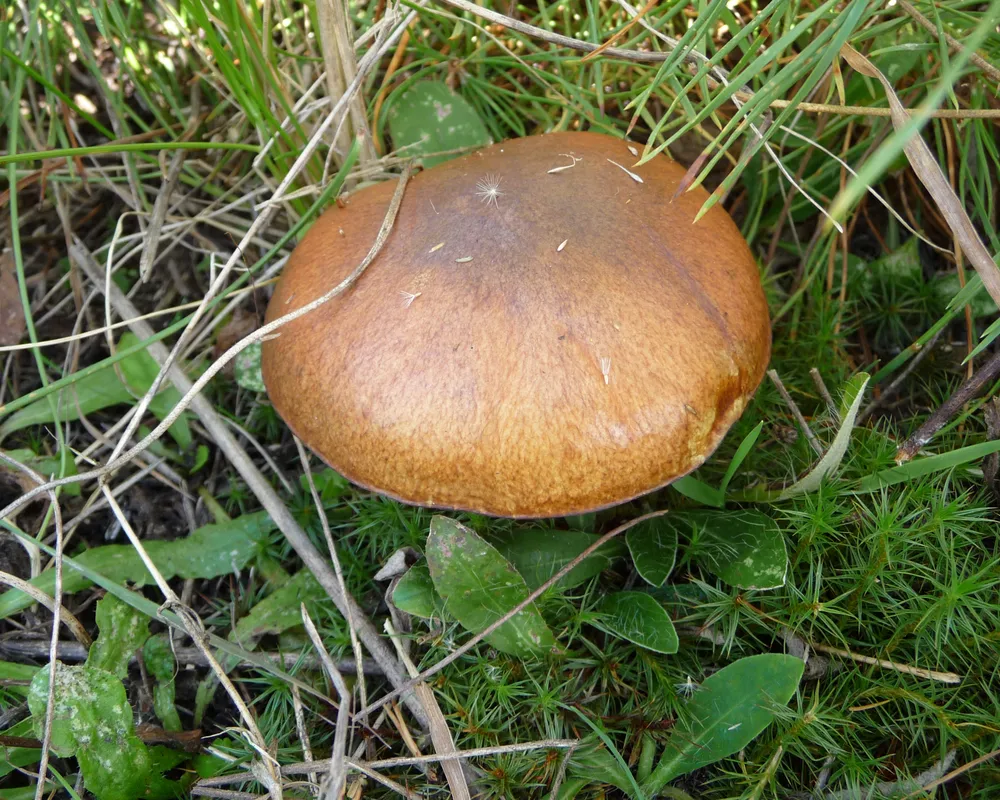
- Cap. Smooth, convex, chocolate brown; in wet weather slimy and shiny, as if rubbed with oil. Hence the Ukrainian name, which comes from the word for butter.
- Cap skin. Peels off the cap easily as a thin film.
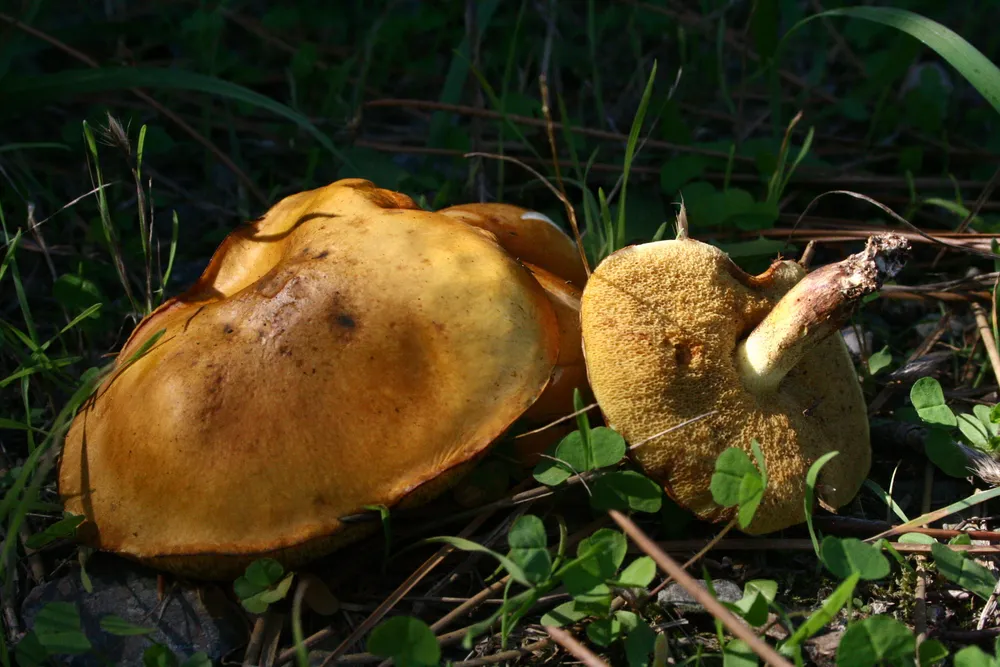
- Underside. A fine, spongy, yellowish pore surface, not gills.
- Stem. The slippery jack has a membranous ring left over from the veil.
Slippery jacks are excellent edible mushrooms. The one thing: it's usually recommended to peel the skin off the cap, because it gives the dish a slightly bitter taste and is harder to digest.
What to do with slippery jacks right after the forest
The slippery jack is a rewarding mushroom, but it needs to be processed quickly. With its slimy skin and tender flesh, it doesn't like to wait, so deal with it the same day.
- Don't wash before peeling. First peel the slimy skin off the caps, and only then rinse the mushrooms. If you wet a slippery jack right away, the skin goes soggy and is harder to peel.
- Peel with dry hands. The slime really stains your fingers. Many people air-dry the caps a little or wipe them so the skin comes off more easily.
- Don't delay. Slippery jacks darken and spoil quickly, so it's best to process them on the day you pick them rather than leaving them for tomorrow.
Once peeled, young June slippery jacks are great both for frying and for pickling. Thanks to their clean, springy flesh, the early flush gives perhaps the best raw material of the whole season.
Sources
- “Field Guide to the Fungi of Ukraine” (Kyiv, Naukova Dumka publishing house).
- Suillus luteus on GBIF, the global biodiversity database.
- Suillus on MycoBank, the international fungal nomenclature database.
- Suillus luteus on Wikipedia.
Frequently asked questions
Do slippery jacks grow in June?
Yes, June is one of the best times for . After a warm rain they appear within two or three days and fruit in dense troops in young pine stands.
Where should you look for slippery jacks in June?
First of all in young plantations, on pine forest edges, in clearings and along forest roads. In with pine, you'll find them too.
Why do slippery jacks grow specifically under pines?
The slippery jack lives in symbiosis with pine, exchanging nutrients with its roots. So without a pine nearby, there are practically no slippery jacks.
How quickly do slippery jacks appear after rain?
Very quickly. Two or three days after a good warm rain, young pine stands can be covered with slippery jacks. So it's worth heading to the forest soon after rainfall.
Why do people peel slippery jacks?
The slimy cap skin gives the dish a slightly bitter taste and is harder to digest. So it's usually recommended to peel it while the mushroom is fresh and the skin comes off easily.
How do you recognize a slippery jack?
By its smooth brown cap that's slimy and shiny in wet weather, its easily peeled skin, the yellowish spongy layer under the cap, and, on the slippery jack, a ring on the stem.
Why are slippery jacks so often maggoty?
The slippery jack grows very fast and ages just as fast. Overgrown mushrooms darken and get maggots. So during the June flush, pick young, firm specimens.
When is the best time to pick slippery jacks?
Two or three days after a warm rain, ideally in the morning while the caps are still springy. The best moment for your region will be shown by the .
Mushrooms in this article
Related articles
 Recipes & cooking
How to store fresh mushrooms, and for how long
Fresh mushrooms spoil faster than you might think. Here's how long they keep in the fridge, how to store them…
August 21, 2026·4 min Recipes & cooking
How long to boil mushrooms
Boiling time depends on the type of mushroom and on what you're cooking next. Here's a clear cheat sheet: how…
August 22, 2026·4 min How to identify
Truffles in Ukraine: do they grow here, and where to look
Truffles aren't just a French delicacy. Several species grow in Ukraine too. Here's which ones, where they occ…
August 24, 2026·2 min