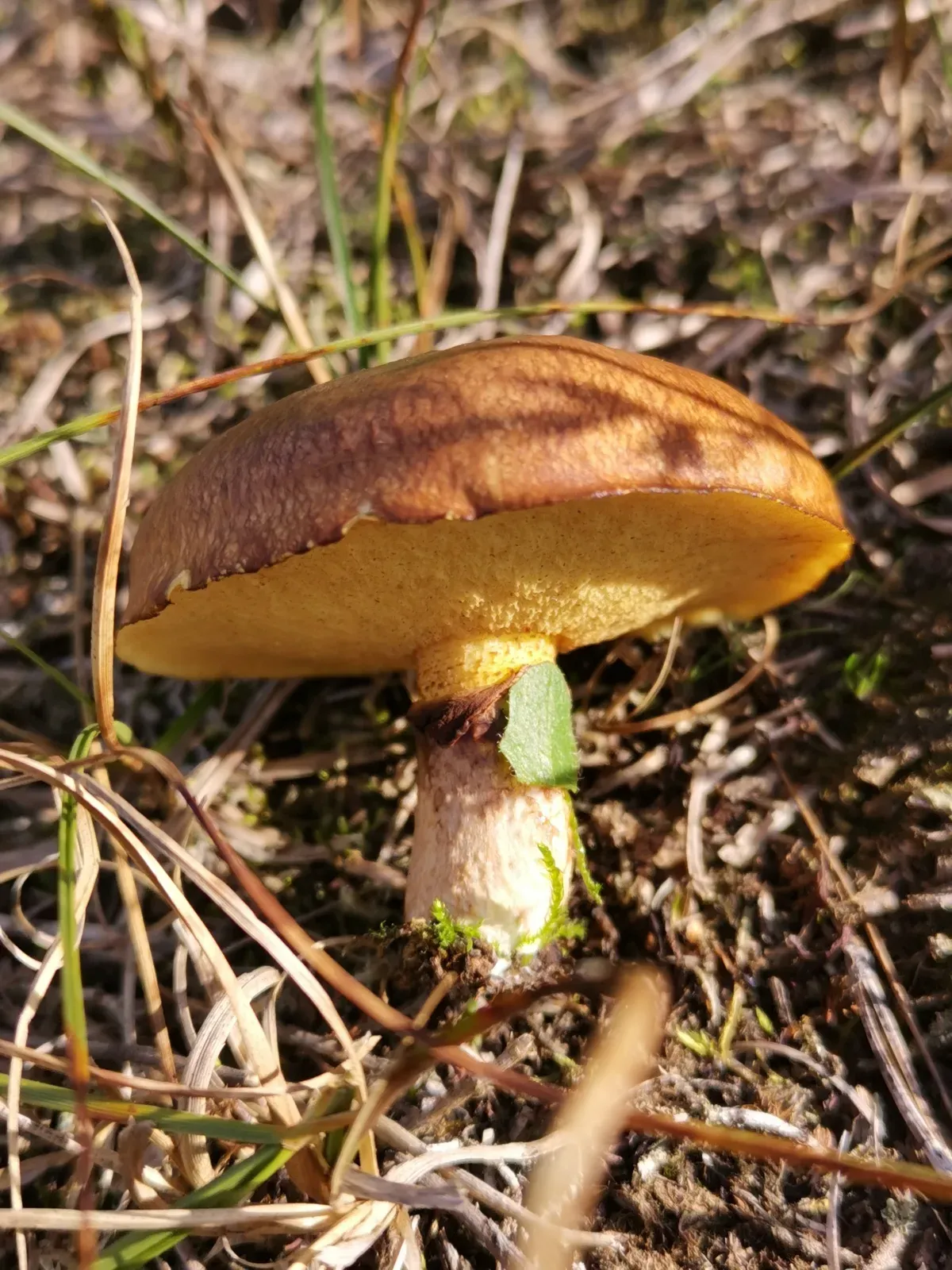
Foragers have an unwritten rule: when a warm rain falls, get your basket ready. For the slippery jack, this rule works like for no other mushroom. The slippery jack (Suillus luteus and its close relatives) responds to moisture quickly and grows within days.
The only question is exactly how long to wait after the rain and when your outing will pay off best. Let's break it down step by step, because you can't dawdle with slippery jacks: they age just as fast.
Why slippery jacks love rain so much
The slippery jack's mycelium lives in the sandy soil of pine woods all year round, but the fruiting bodies, meaning the mushrooms themselves, appear only when two conditions come together: enough moisture and enough warmth.
The sand under pines warms up quickly, but dries out just as quickly. So without rain the mycelium “sleeps,” and a good downpour gives it the signal: time to fruit. Within a few days, young slippery jacks push up to the surface.
That's why slippery jacks grow in flushes tied to the rains, rather than in a steady stream all season. Every warm rain is a potential new flush.
How many days to wait after rain
The classic rule for slippery jacks is one to two days after a good warm rain. That's faster than for many other mushrooms, because slippery jacks grow rapidly.
Here's a rough guide:
- first day after rain: the tiniest mushrooms appear, still “buttons”;
- second to third day: the main flush of firm young slippery jacks, the best time to go out;
- fourth to fifth day: the mushrooms mature, and some are already getting maggoty.
So the sweet spot is the second or third day after a warm rain. Show up a few days late, and instead of firm young mushrooms you'll find overripe, maggoty ones.
Why warmth matters as much as moisture
Rain on its own doesn't guarantee a harvest. If cold nights set in afterward, the mycelium slows down and the flush will be weak.
Slippery jacks grow best when warm weather holds after a warm rain: around twenty degrees during the day and not-too-cold nights. Then the sand keeps both moisture and warmth, and the mushrooms come up all together.
In autumn, when the nights get colder, the flushes slow down, but the mushrooms last longer and get less maggoty. So late slippery jacks are often cleaner than summer ones.
How to catch a good day
The most reliable approach is not to guess, but to watch the conditions. Remember a simple sequence: a few fine warm days, then a good rain, then warmth again. That's the perfect recipe for a big flush of slippery jacks.
So you don't have to keep it all in your head, use our mushroom radar: it shows when moisture and warmth line up well for mushrooms to appear. It's more accurate than any calendar.
Look for slippery jacks in coniferous and mixed forests under pines, on bright forest edges and sun-warmed sandy hills. And remember: when you find one mushroom, search all around it, because slippery jacks grow in families.
Sources
- “Key to the Fungi of Ukraine” (Kyiv, Naukova Dumka publishers).
- Suillus luteus on GBIF, the global biodiversity database.
- Suillus on MycoBank, the international fungal nomenclature database.
- Suillus luteus on Wikipedia.
Frequently asked questions
How many days after rain should you pick slippery jacks?
Usually one to two days, and the best time is the second or third day after a good warm rain. That's when the main flush of firm young mushrooms appears. Slippery jacks grow fast, so don't put it off.
Why do slippery jacks grow so fast after rain?
Because their mycelium lives in sandy soil and responds to moisture almost instantly. Warmth and moisture together give the signal to fruit, and within a few days young slippery jacks push up to the surface.
Will slippery jacks appear if it turns cold after the rain?
The flush will be weak. Without warmth the mycelium slows down, even if there's enough moisture. Slippery jacks grow best when warm weather holds after the rain.
When should you go for slippery jacks after rain?
Best on the second or third day, when the mushrooms have grown a bit but are still young and firm. By the fourth or fifth day, some of the slippery jacks are already maturing and getting maggoty.
Why are late autumn slippery jacks cleaner than summer ones?
Because in the cold season mushrooms grow more slowly and are less infested with maggots. So autumn slippery jacks are often firmer and cleaner, even though the flushes are less explosive.
How can you predict a flush of slippery jacks?
Watch for the sequence: warm, fine days, then a good rain, then warmth again. These are ideal conditions for a big flush. An easy way to follow it is our .
Can you go for slippery jacks right after the rain?
On the first day only the tiniest “button” mushrooms appear. It's better to wait another day or two for them to grow, but don't be late, because slippery jacks age quickly.
Where do slippery jacks appear first after rain?
In bright, warm spots: south-facing forest edges, sandy hills and young , where the soil quickly soaks up moisture and warmth.
Mushrooms in this article
Related articles
 Recipes & cooking
How to store fresh mushrooms, and for how long
Fresh mushrooms spoil faster than you might think. Here's how long they keep in the fridge, how to store them…
August 21, 2026·4 min Recipes & cooking
How long to boil mushrooms
Boiling time depends on the type of mushroom and on what you're cooking next. Here's a clear cheat sheet: how…
August 22, 2026·4 min How to identify
Truffles in Ukraine: do they grow here, and where to look
Truffles aren't just a French delicacy. Several species grow in Ukraine too. Here's which ones, where they occ…
August 24, 2026·2 min