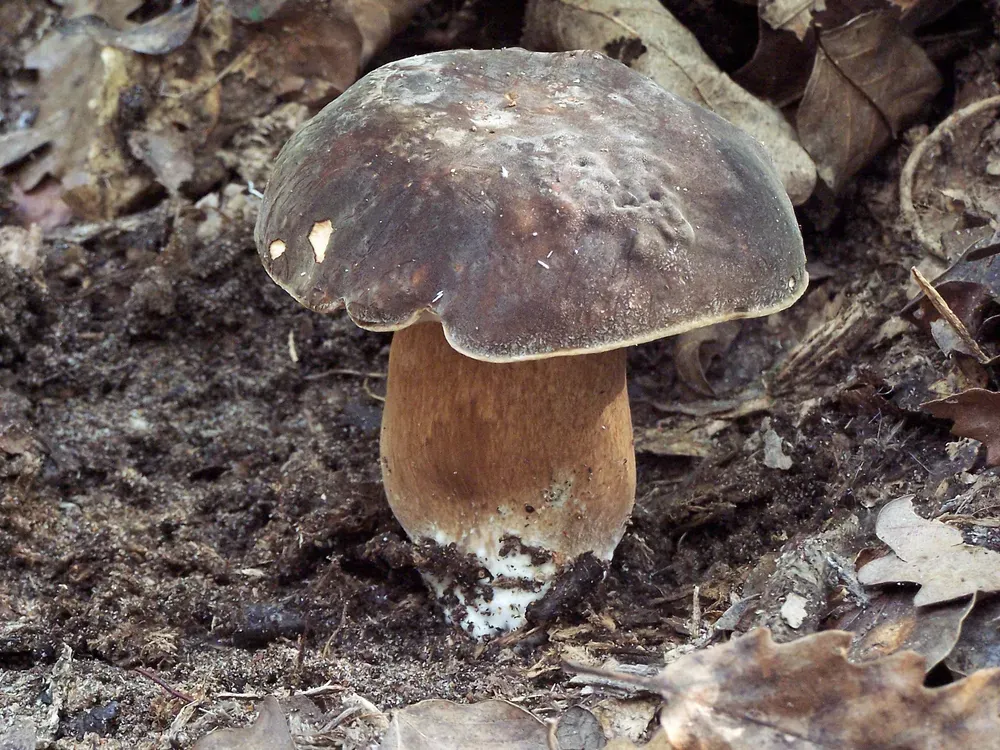
Bronze boleteBoletus aereus
Expert-verifiedUpdated October 3, 2026
Passport
- Edibility
- Edible
- Season
- Jun — Oct
- Hymenophore
- Pored
- Cap color
- Brown
- Size
- Large (over 15 cm)
- Smell
- Pleasant
- Reviewed
- Yes ✓
Quick answers
Where to look?
Deciduous forest
When does it appear?
Jun — Oct
Active months: June, July, August, September, October.
How to recognize it? Three signs
- Cap color: Brown, Dark brown
- Cap shape: Convex
- Smell: Pleasant
Fruiting season
June – October
Description
The bronze bolete (Boletus aereus) is the darkest and, in the opinion of many gourmets, the tastiest of Europe's four porcini. Its chocolate-bronze cap looks very understated against young oak shoots, so it is not always easy to spot. But once you learn to find it, you get a mushroom with a denser, richer flavor than classic porcini.
In Ukraine the bronze bolete is rare: confirmed finds are known from the Ternopil and Khmelnytskyi regions and the Carpathian foothills (Prykarpattia). It loves warmth and needs well-warmed oak and oak-hornbeam woods. It does not grow in the northern regions. Because it is rare, it is listed in the Red Data Book of Ukraine — wild foragers are asked not to remove the fruiting bodies but to leave them to spread their spores.
Edibility is the highest: a first-category mushroom. In Southern Europe (Italy, Spain, southern France) the bronze bolete costs more than ordinary porcini. The flesh is firm, does not get wormy as quickly as porcini, and dries, pickles and fries beautifully. Sadly, in Ukraine you can only taste it legally if it is imported or from cultivated farms.
Cap
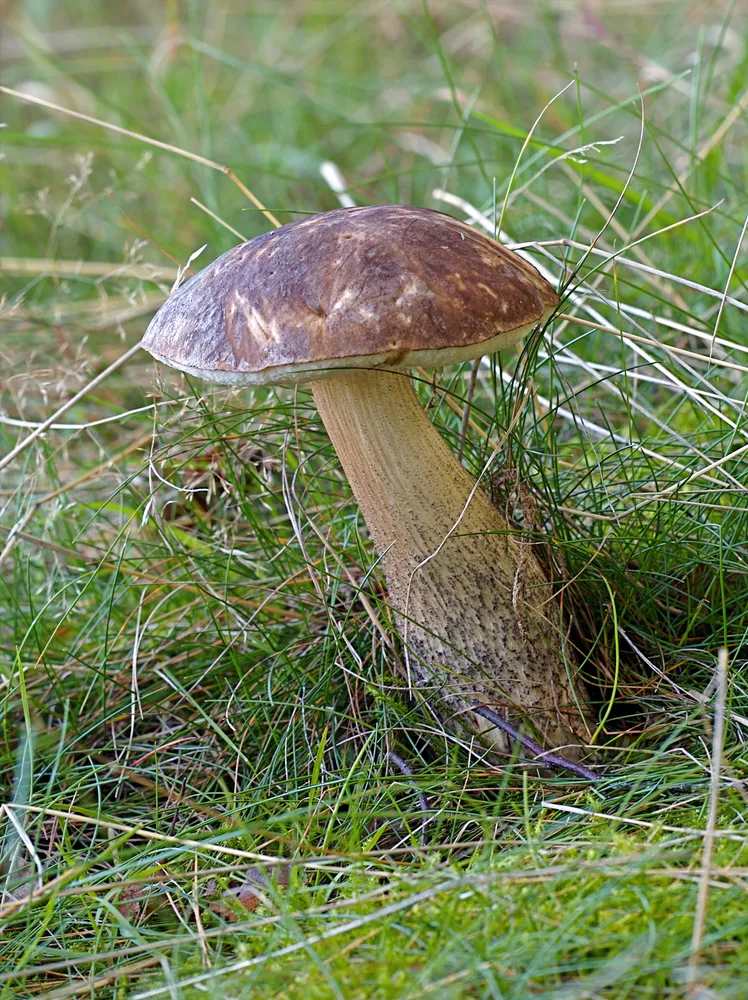
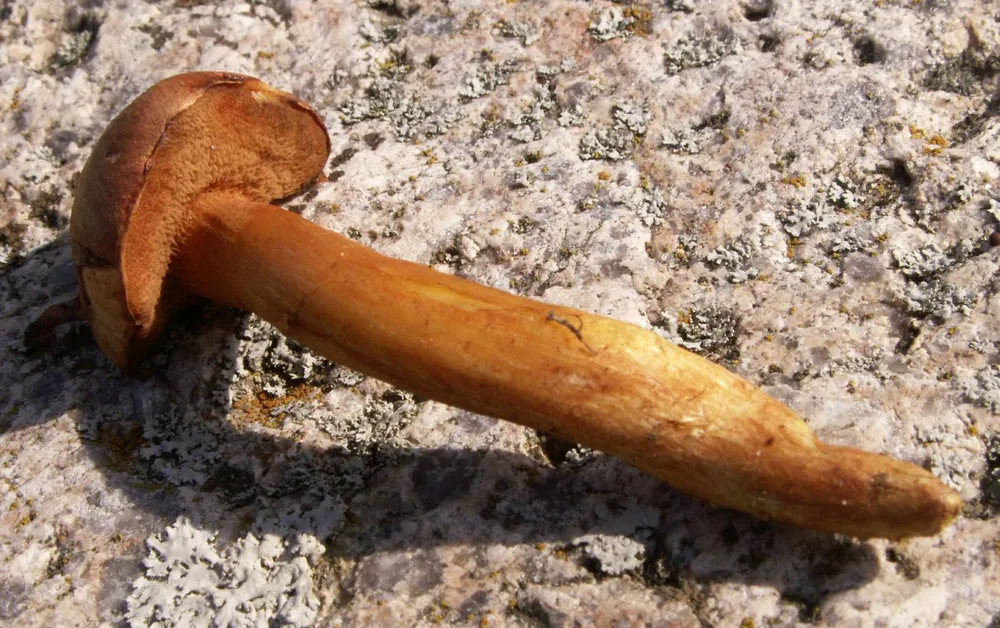
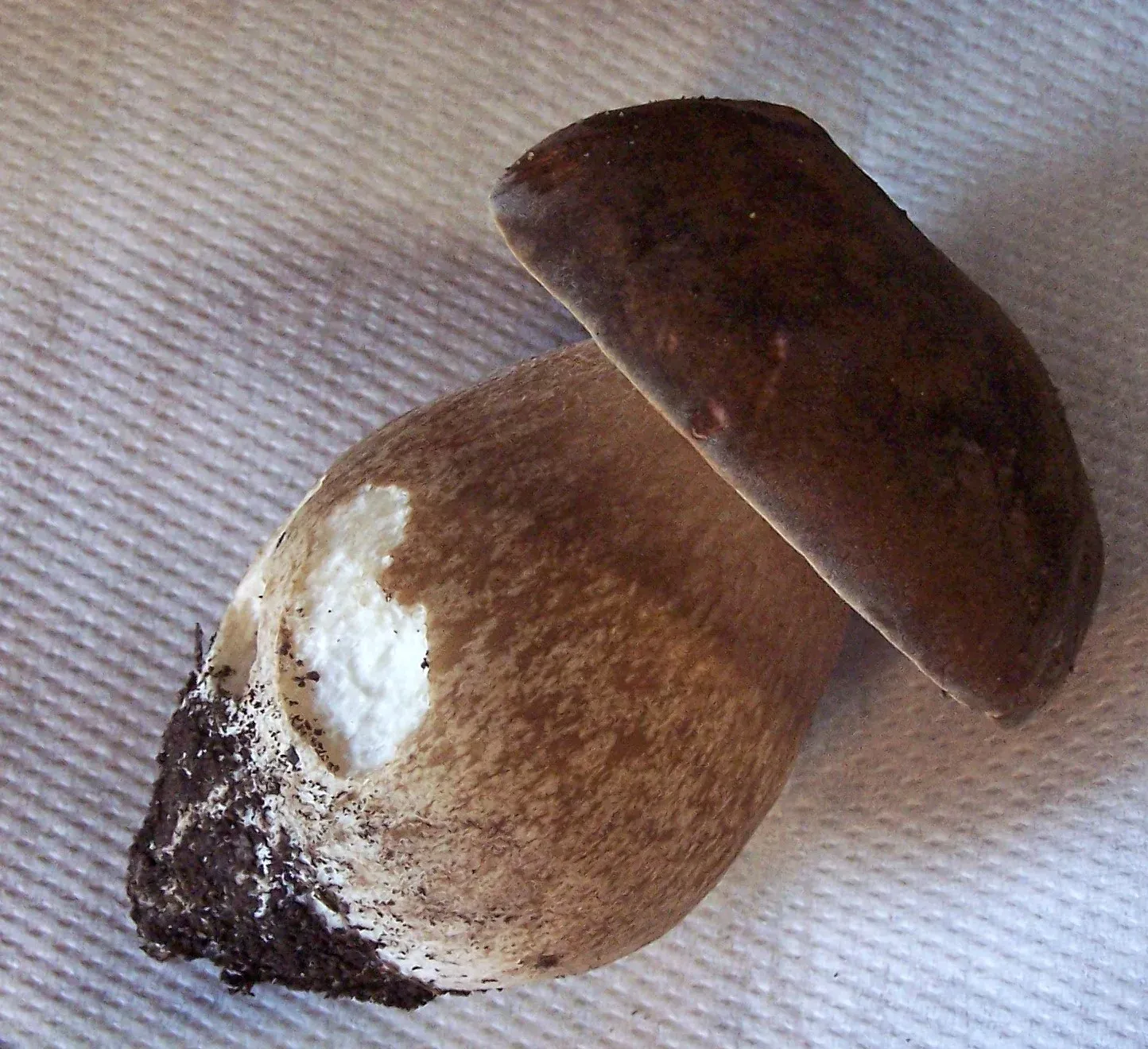
Cap 5–20 cm, hemispherical in young mushrooms, then cushion-shaped. Color dark — from bronze-olive to chocolate brown, sometimes almost blackish brown. Surface matte, slightly fibrous or finely cracked in dry weather. In old mushrooms it may fade noticeably.
Hymenophore
Hymenophore tubular, free or slightly notched at the stem. White at first, then yellowish, olive-yellow in mature mushrooms. Pores small and round. Key feature: it does NOT turn blue when pressed or cut — this sets it apart from many potentially dangerous boletes.
Stem
Stem 5–13 cm tall, 2–4 cm thick, bulbous or club-shaped, cylindrical in old mushrooms. Color chestnut brown, darker than the cap. Along its whole length runs a clearly visible pale net of thick ridges, more pronounced in the upper part. This is a hallmark feature of porcini.
Flesh
Flesh white, very firm, does NOT change color when cut. This is an important diagnostic feature — in lookalikes (for example, the bitter bolete) the flesh turns pinkish. The texture is like a nicely mature porcini: fibrous, with a pleasant resistance when you slice it.
Smell
Smell richly mushroomy, with nutty notes, in some specimens stronger than in ordinary porcini. Taste mild, sweetish, with no bitterness.
Lookalikes
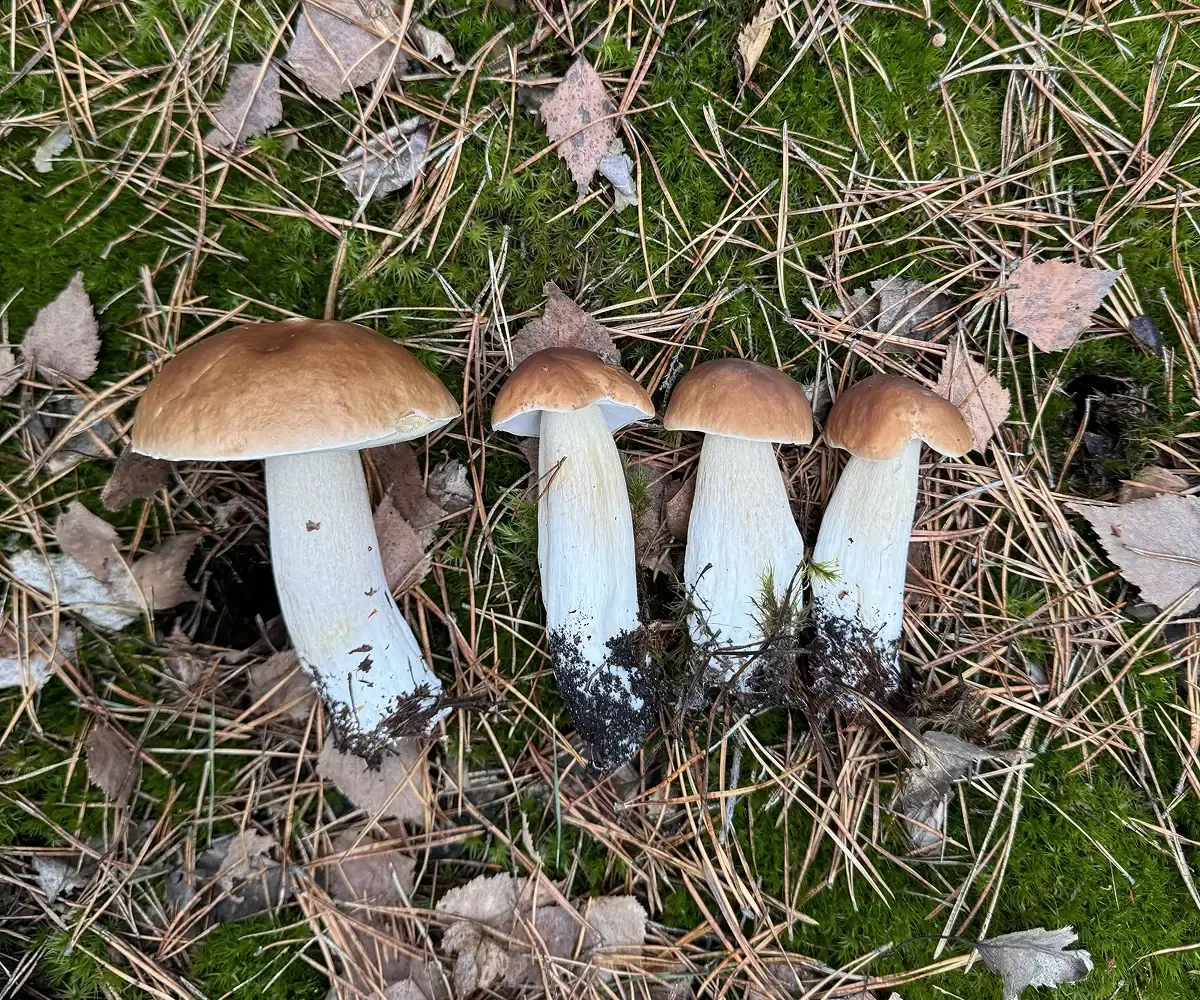
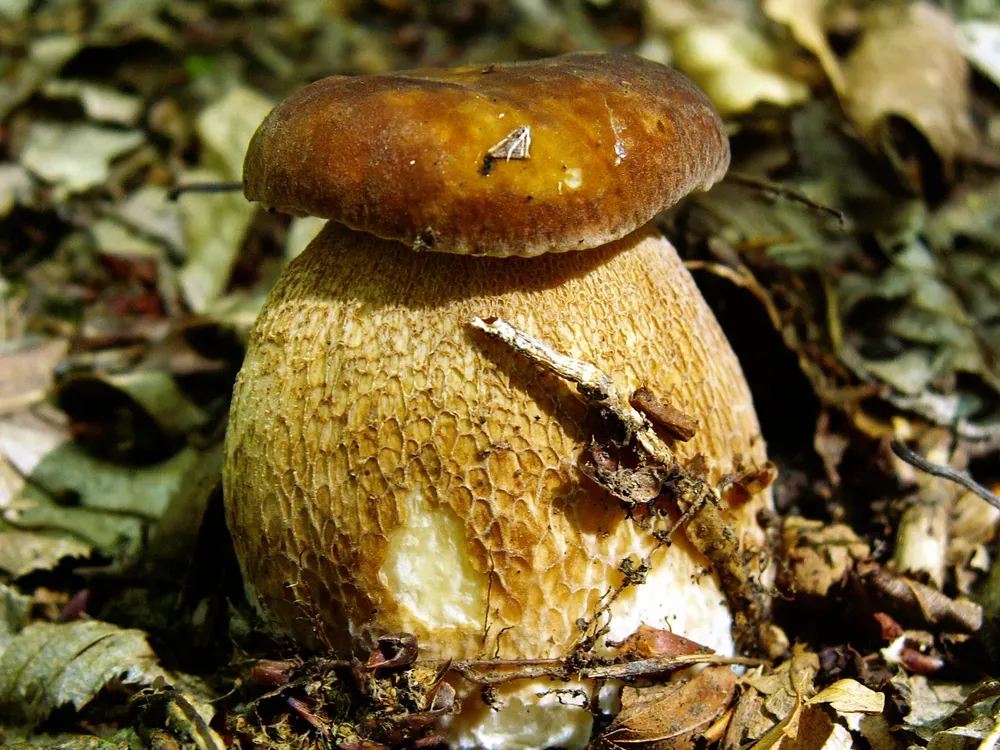
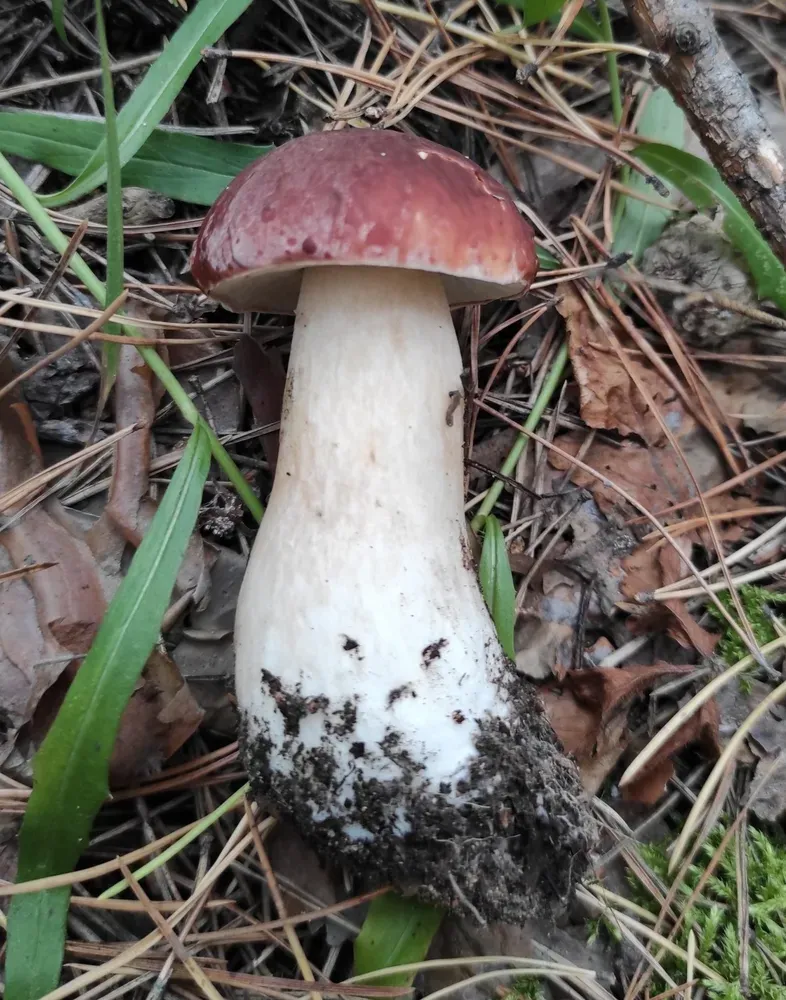
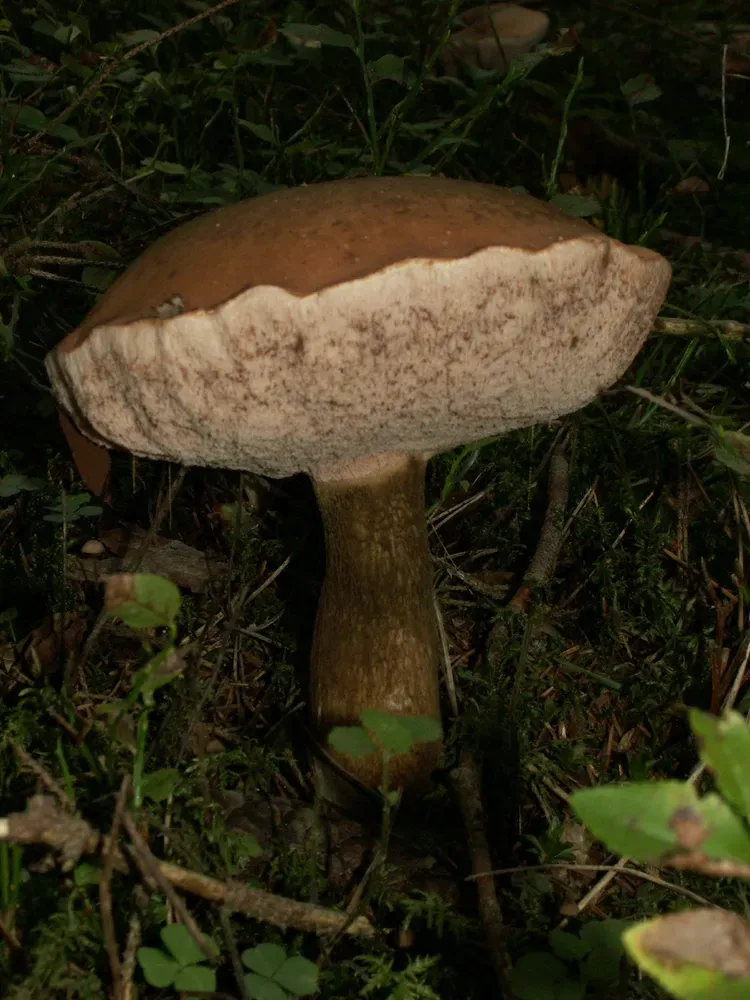
Related species
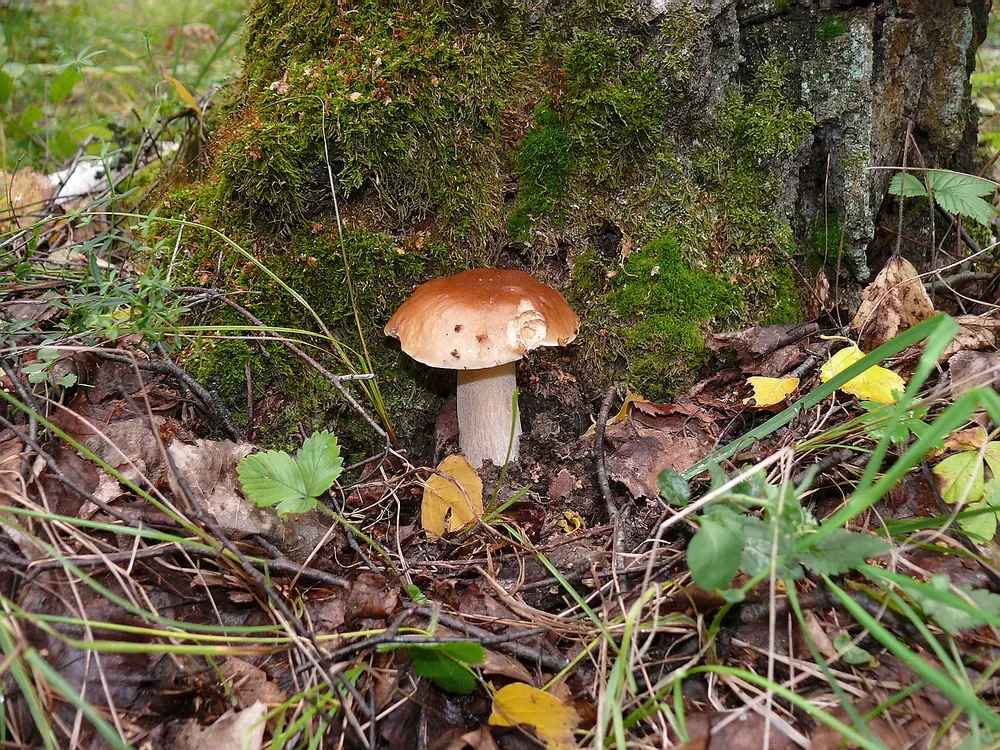
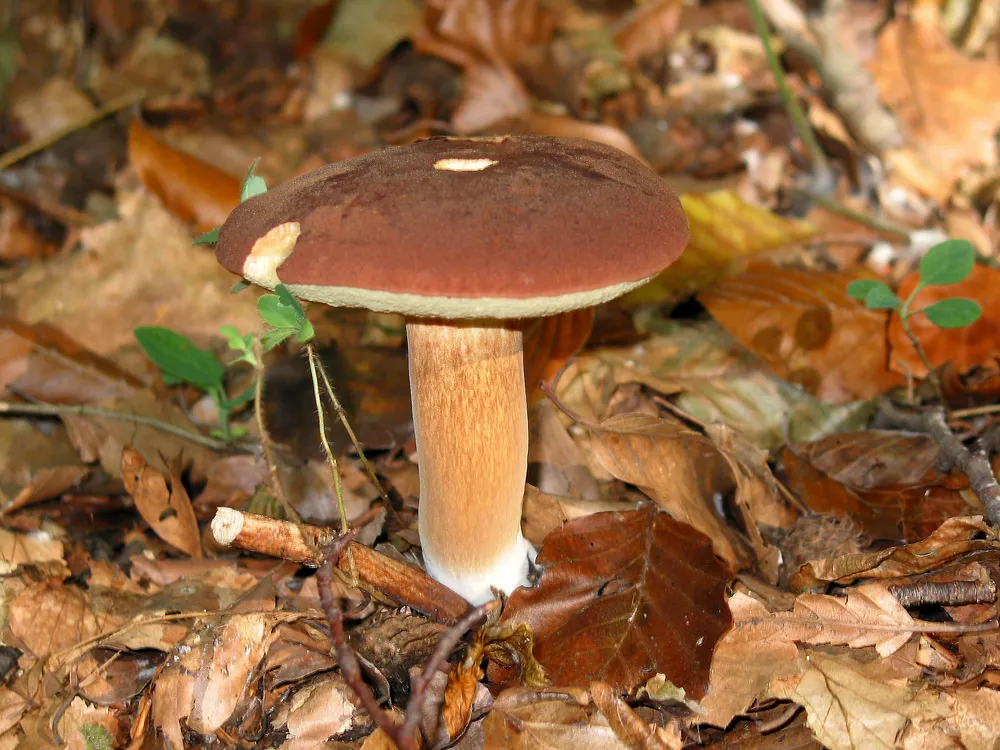
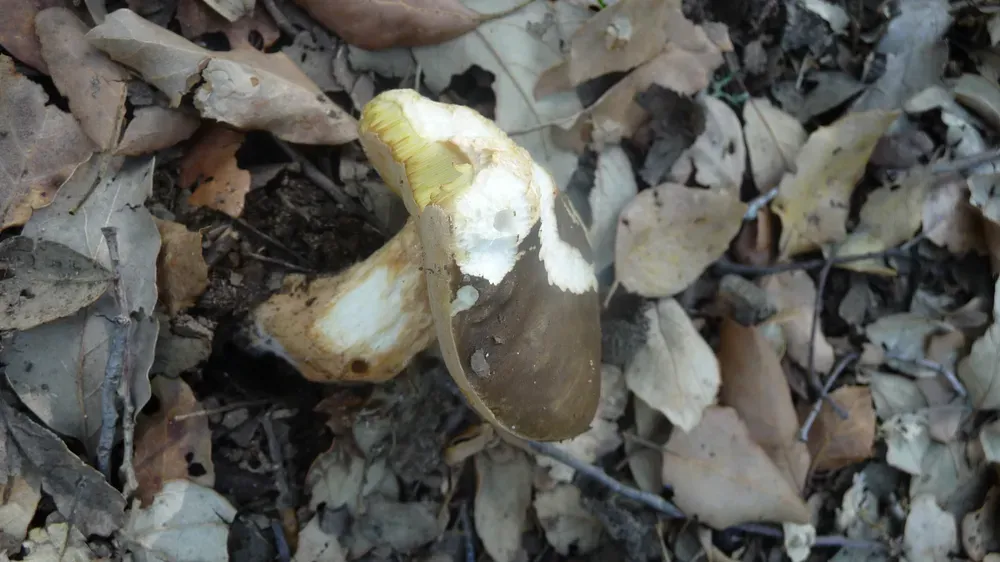
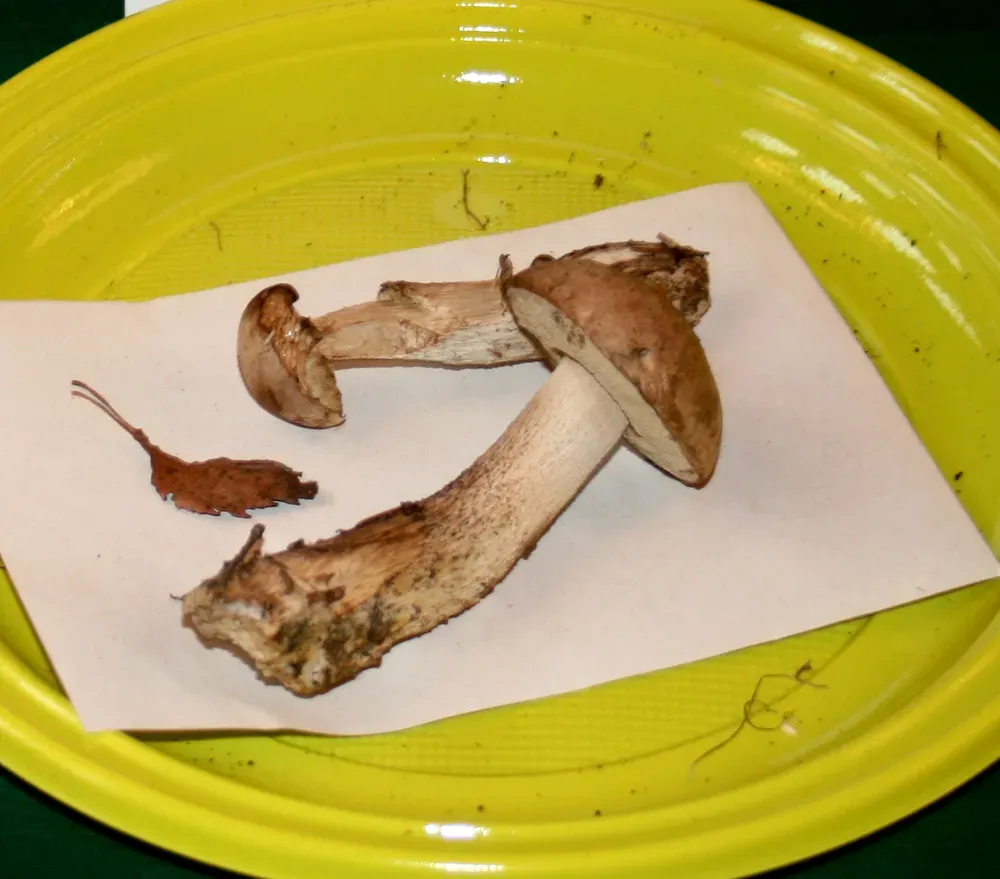
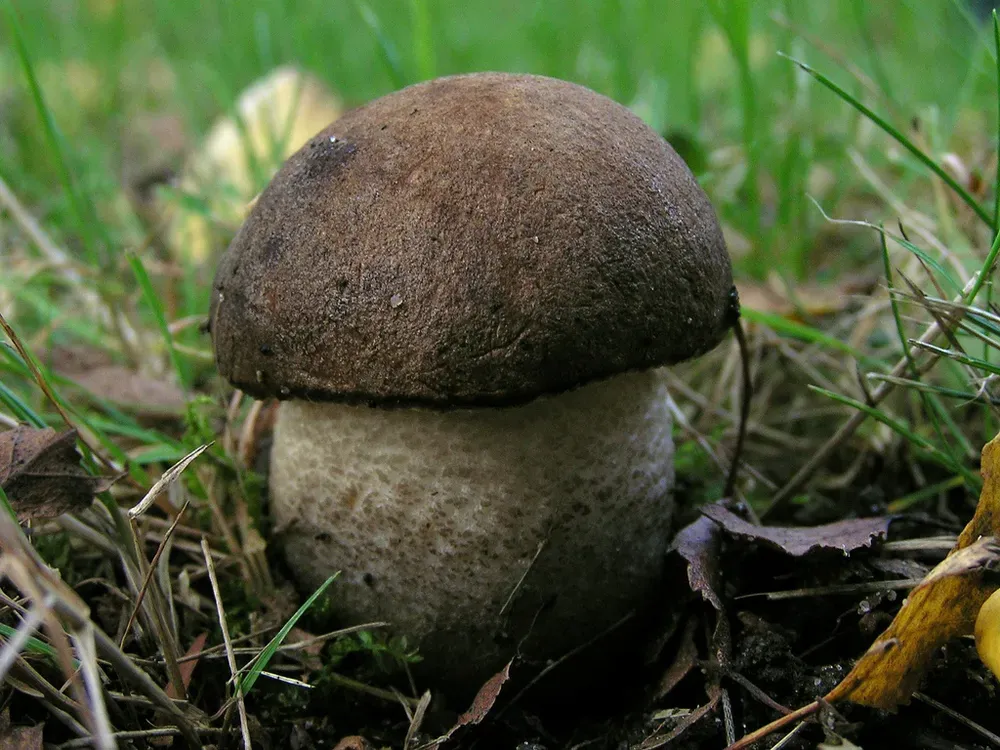
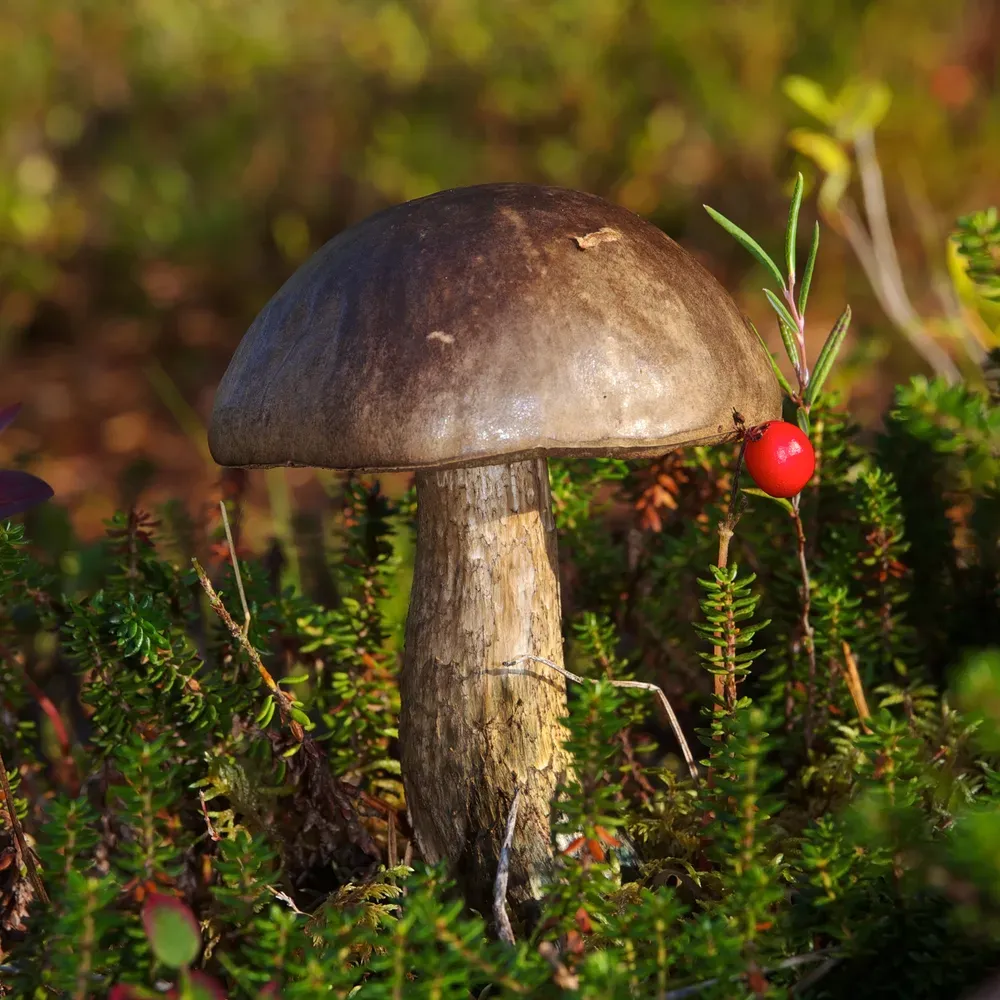
Mushrooms of the same genus and habitat — to study side by side and never mix up.
Related reading
 How to identify
Bronze bolete, the darkest of the porcini
An almost black cap, dense flesh and a southern temperament. Here's how to recognize the bronze bolete and whe…
February 25, 2026·4 min.webp) Science & taxonomy
Science & taxonomyTypes of porcini: a complete guide
Porcini isn't one species but a whole family of boletes. We sort out what kinds of porcini there are, how they…
February 19, 2026·5 min
Frequently asked questions
Can it be confused with porcini?
Yes, and that is no problem — both are edible. The bronze bolete is darker (chocolate), while porcini (Boletus edulis) ranges from light brown to fawn. The bronze bolete's stem net is darker and more distinct. Both have white flesh that does not change when cut. If you mix them up, no harm done — both are delicious.
Can it be confused with the bitter bolete?
The bitter bolete (Tylopilus felleus) also has a darkish cap, but its cut flesh turns pinkish, and the net on its stem is dark and coarse (on a pale stem). The bronze bolete's flesh does not change. The most reliable test is to touch your tongue to a crumb of the flesh: the bitter bolete is unbearably bitter, the bronze bolete is sweetish.
Can you pick the bronze bolete in Ukraine?
No. The species is listed in the Red Data Book of Ukraine. If you find one, leave it in nature, take a photo and report it via iNaturalist. Buying imported (from Italy, Spain) or cultivated mushrooms is allowed.
Where to look for it in Ukraine?
In warm oak and oak-hornbeam woods of the Ternopil and Khmelnytskyi regions and Prykarpattia. Most likely in sunlit clearings and at forest edges, on lime-rich soils. It does not grow in the north of the country or in pure conifer forests.
When does it fruit?
From June to October, peaking in July–September. It loves warm, moderately moist weather after long spells of rain. In very dry years it may not appear at all.
How is the bronze bolete different from the summer bolete?
The summer bolete (Boletus reticulatus) has a warm bronze-brown cap with fine cracks, but it is lighter than the bronze bolete. The bronze bolete's cap is a deep chocolate, darker, sometimes with an olive tinge.
Which trees does it form mycorrhiza with?
Mainly with oak (Quercus robur, Q. petraea); in Zakarpattia, with beech and hornbeam. It does not occur in conifer forests.
Does the flesh turn blue when cut?
No, it does not. If your mushroom has a dark bronze cap and its cut flesh turns blue, it is not Boletus aereus. You may have found a different bolete species, which is worth identifying carefully.
Is Bronze bolete edible or poisonous?
Does Bronze bolete have gills or pores?
What does the cap of Bronze bolete look like?
What does the stem of Bronze bolete look like?
Sources
- [1]Вікіпедія (українська)
- [2]Атлас грибів України, Зеров Д.К. (1979)
- [3]MycoBank Database
- [4]Index Fungorum
- [5]GBIF
- [6]iNaturalist Ukraine