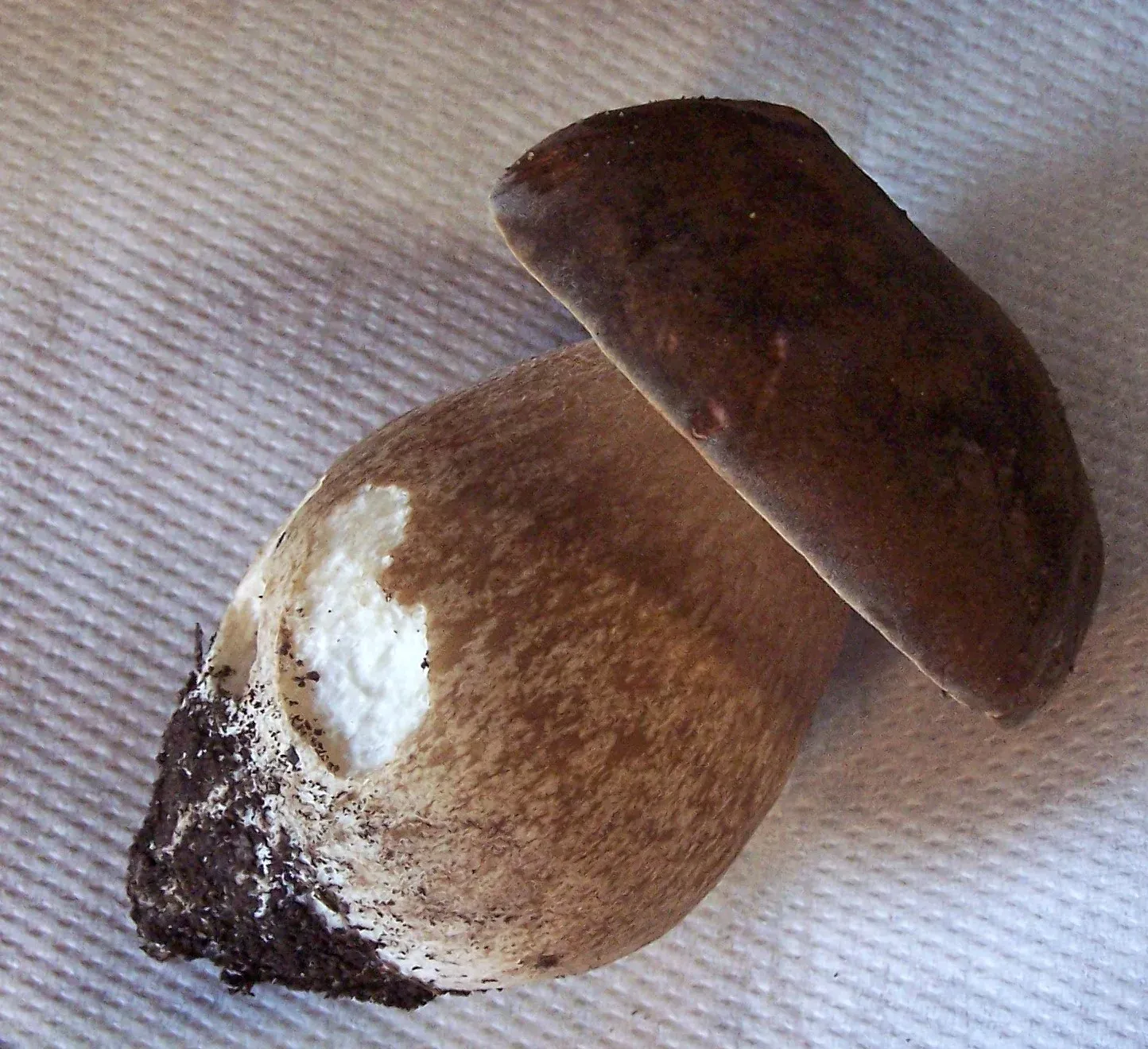
Among all the porcini kin, the bronze bolete (Boletus aereus, listed in our catalog as bronze bolete) stands out with the darkest outfit. Its cap can be almost black, with the warm sheen that gave the mushroom its name. In southern oak woods it's a true delicacy, sought after by the most discerning foragers.
It loves warmth and light, so it appears at the height of summer on sun-warmed forest edges. Its dense, especially fragrant flesh has made it one of the most prized boletes in European cooking.
Why it's so dark
The bronze color of the cap is the species' main hallmark. It ranges from dark chestnut to almost black, with a faint bronze sheen, especially in young mushrooms. Such a rich color sets it apart from its paler relatives even from a distance.
The dark cap is no accident but an adaptation to warmth and sun. The bronze bolete loves sun-warmed southern slopes and bright oak woods, where other boletes retreat into the shade. That's why your chances of finding it are highest in the warm regions of Ukraine.
For flavor and firmness of flesh, many connoisseurs rank it first among all the porcini.
What the bronze bolete looks like
You recognize it by a combination of features, not a single one. Look the mushroom over from top to bottom.
- Cap. Dark chestnut, bronze or almost black, often unevenly colored. The surface is matte, slightly velvety in young mushrooms.
- Stem. Thick and sturdy, pale against the dark cap, with a fine pale net pattern on the upper part.
- Pores. The tube layer underneath: white in young mushrooms, then yellowish, olive green in old ones. It's never pink.
- Flesh. Especially dense, white, with a rich nutty smell. It doesn't change color when cut.
The contrast between the dark cap and the pale stem is one of the most distinctive features of the species. The most reliable check is the same as for the rest of the family: a true porcini stays white when cut; it doesn't turn blue or red.
How it differs from other porcini
The easiest guides are cap color and the tree it grows with.
- Bronze bolete is the darkest, almost black, and favors warm southern oak woods.
- **Summer bolete** is paler, hazel brown, with a matte cap that cracks in the heat.
- **Pine bolete** is chestnut to wine-colored and lives under pines.
- **The classic porcini** is the all-rounder, medium in color.
In essence, the bronze bolete is the same wonderful porcini, just in its darkest outfit and with a fussier attitude toward warmth.
Where and when to look for it
The bronze bolete forms mycorrhiza with broadleaf trees, meaning it lives in a mutually beneficial partnership with their roots. Look for it under oak, beech and hornbeam, above all in warm regions.
The best spots are:
- old, bright oak woods in the south of the country;
- sun-warmed southern slopes and edges of broadleaf forest;
- grassy clearings among oaks and hornbeams;
- patches of mixed forest with pockets of oak.
It doesn't like dense, damp thickets; it needs warmth and sun. The season runs from June to October, with the main flush in July and August, the warmest time. The best time to go out is two or three days after a warm rain. An easy way to track these windows is our mushroom radar: it shows when moisture and warmth line up well for boletes to appear.
Caution never hurts
The dark cap sometimes throws beginners off, but the features of a porcini stay the same. The bitter bitter bolete gives itself away with a pink underside and a dark net on the stem; the bronze bolete has white or yellow pores and a pale net. If in doubt, leave it out.
Sources
- "Field Guide to the Fungi of Ukraine" (Kyiv, Naukova Dumka publishing house).
- Boletus aereus on GBIF, the global biodiversity database.
- Boletus aereus on MycoBank, the international fungal nomenclature database.
- Boletus aereus on Wikipedia.
Frequently asked questions
What is the bronze bolete?
It's the darkest kind of true porcini (*Boletus aereus*), with an almost black, bronze cap. It grows in warm oak woods and has especially dense white flesh that doesn't turn blue when cut.
What does the bronze bolete look like?
A dark chestnut, bronze or almost black matte cap, a thick pale stem with a fine net at the top, white or yellowish pores underneath and very dense white flesh. The contrast between the dark cap and pale stem is characteristic.
Why is the bronze bolete so dark?
The dark cap is an adaptation to warmth and sun. The species loves sun-warmed southern forest edges and bright oak woods, so its rich color helps it in hotter conditions than its paler relatives face.
Where does the bronze bolete grow?
In warm, bright oak woods under oak, beech and hornbeam, mostly in southern regions. It loves sun-warmed slopes, edges of and grassy clearings.
When should you pick the bronze bolete?
The season runs from June to October, with the main flush in July and August, the warmest time. The best time to go out is a few days after a warm rain; check our .
Does the bronze bolete turn blue when cut?
No. The flesh of a true porcini stays white when cut. If a mushroom turns blue or red, it's a different species, and you shouldn't take it.
How does the bronze bolete differ from the summer bolete?
Mainly by color. The bronze bolete is much darker, almost black, and fussier about warmth. is paler, hazel brown, and its cap cracks in the heat. Both grow under oak.
Is the bronze bolete edible, and is it tasty?
Yes, it's one of the most prized porcini. Many connoisseurs rank it first for the firmness of its flesh and its rich aroma. It's excellent both fresh and dried.
Mushrooms in this article
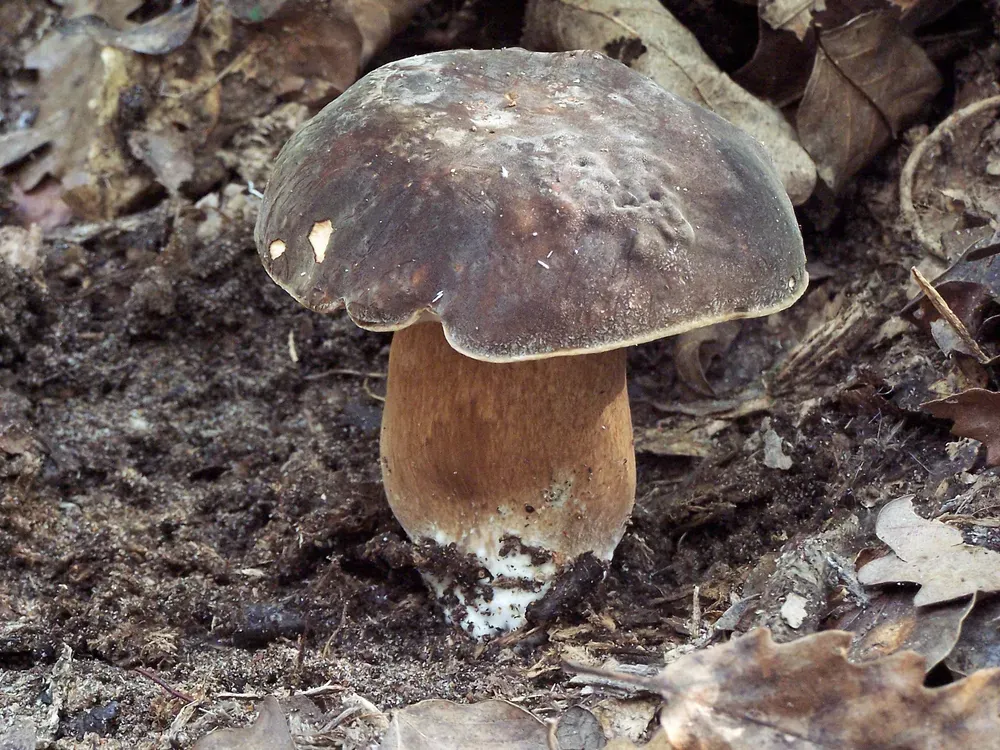
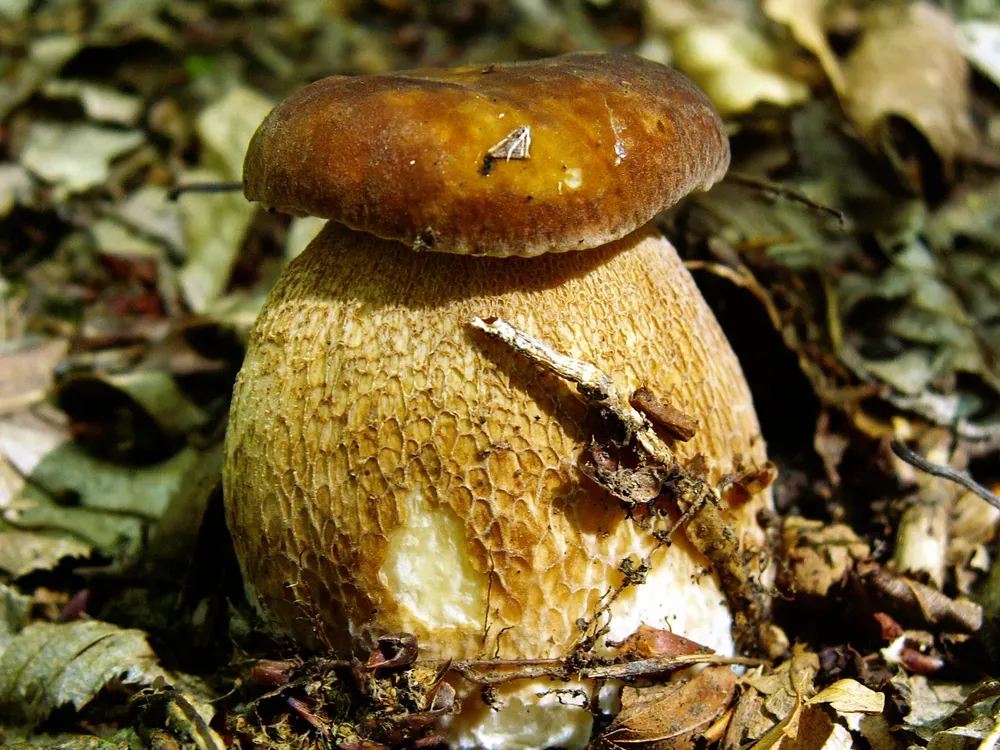
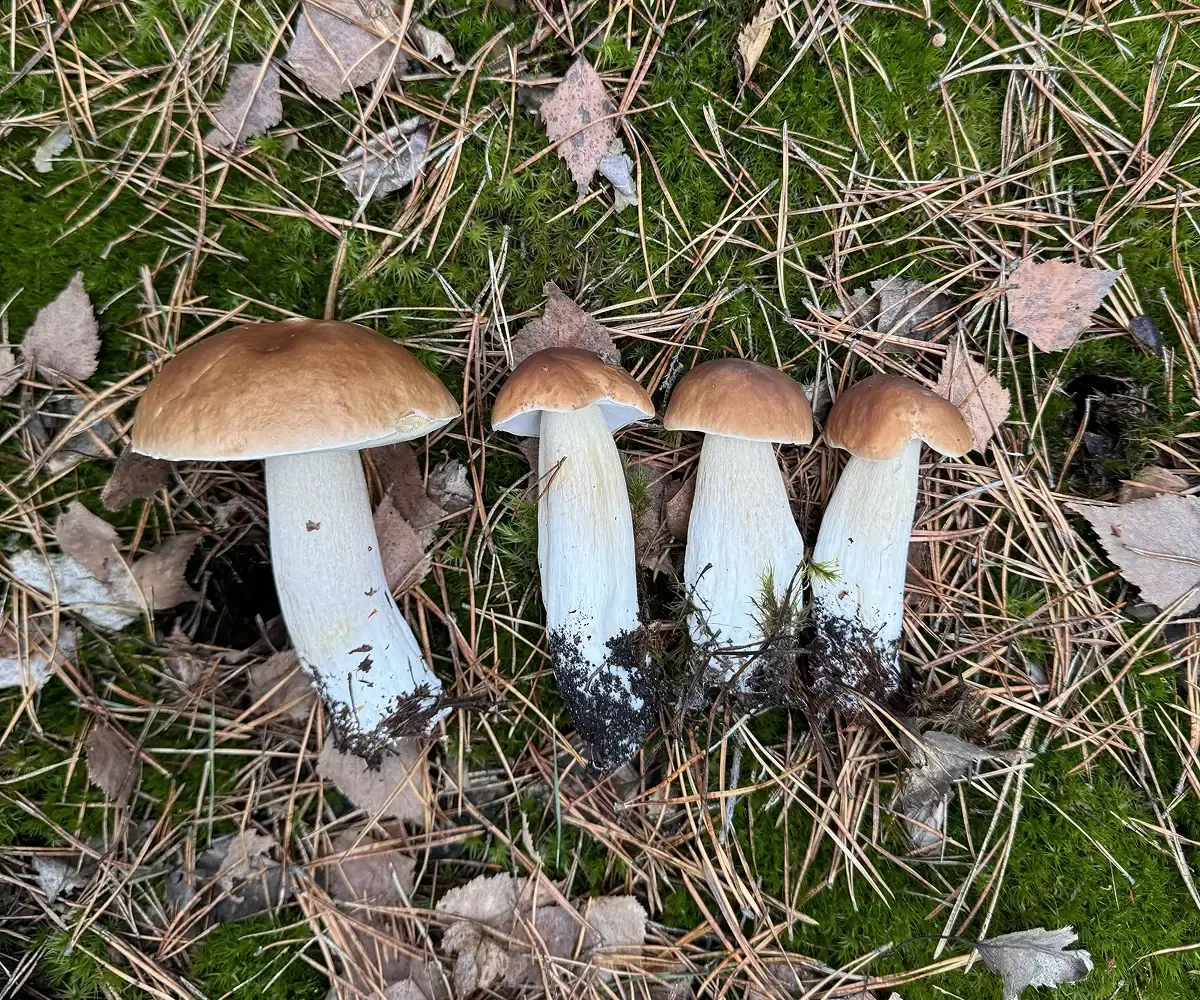
Related articles
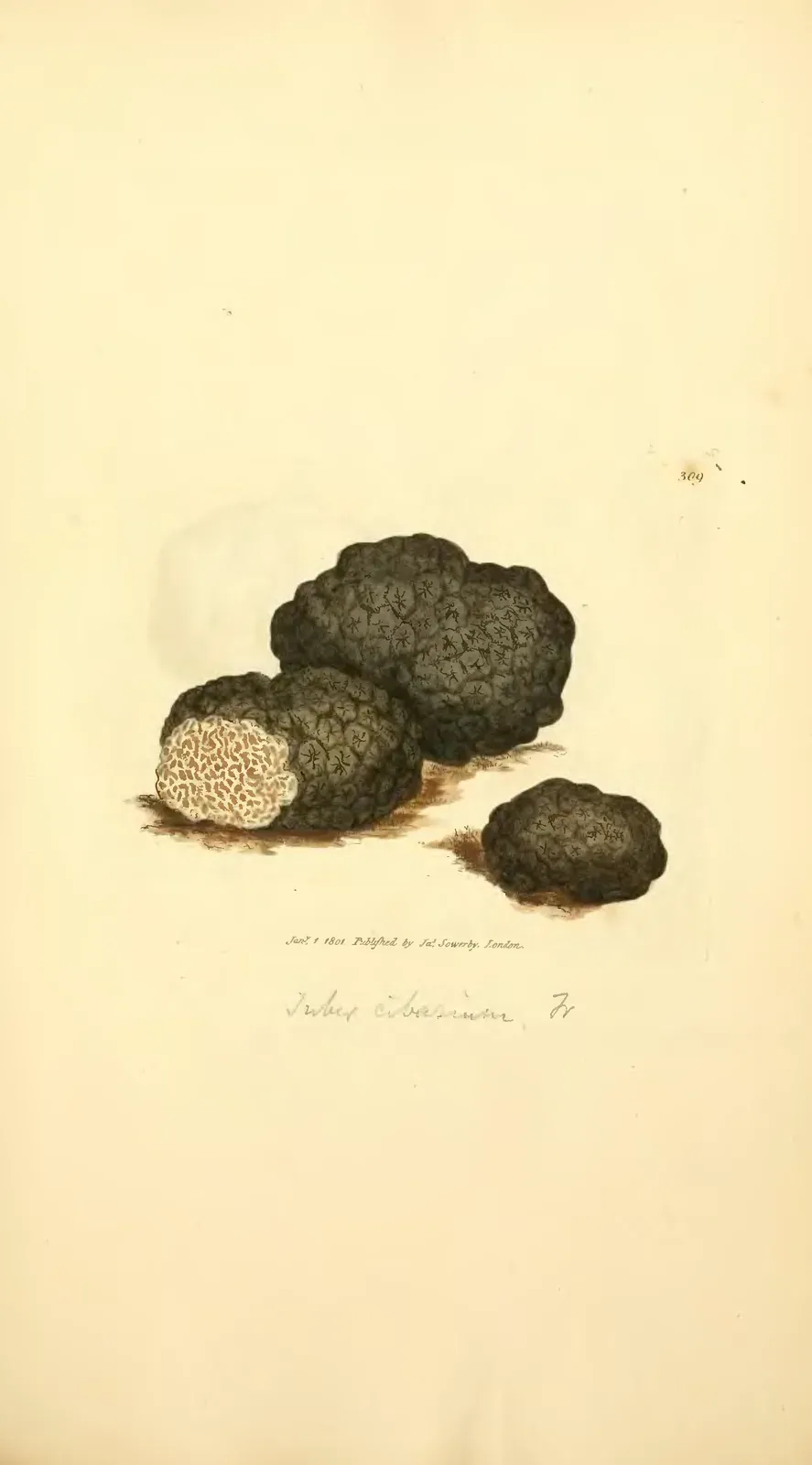 How to identify
Truffles in Ukraine: do they grow here, and where to look
Truffles aren't just a French delicacy. Several species grow in Ukraine too. Here's which ones, where they occ…
August 24, 2026·2 min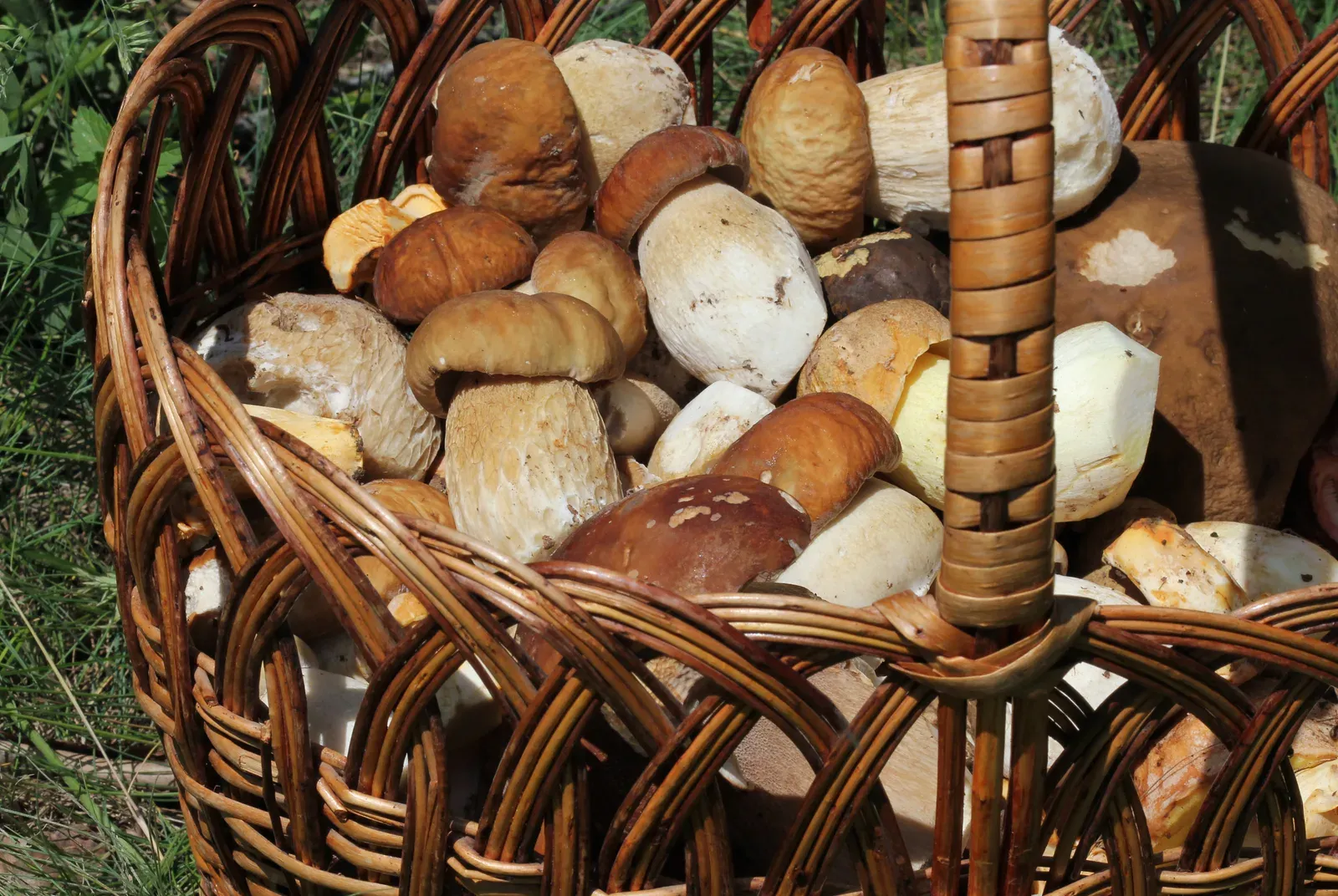 Recipes & cooking
How to store fresh mushrooms, and for how long
Fresh mushrooms spoil faster than you might think. Here's how long they keep in the fridge, how to store them…
August 21, 2026·4 min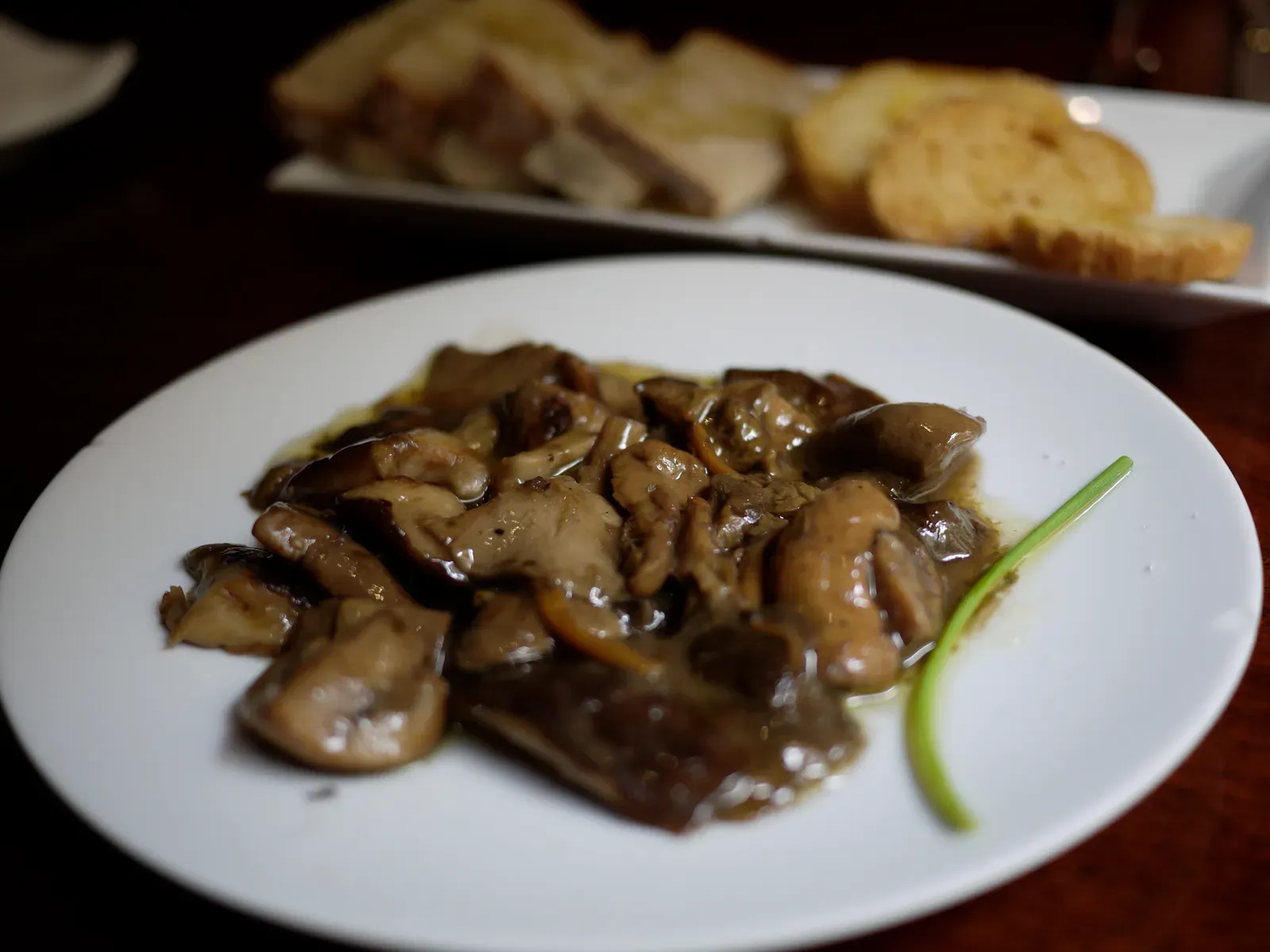 Recipes & cooking
How long to boil mushrooms
Boiling time depends on the type of mushroom and on what you're cooking next. Here's a clear cheat sheet: how…
August 22, 2026·4 min