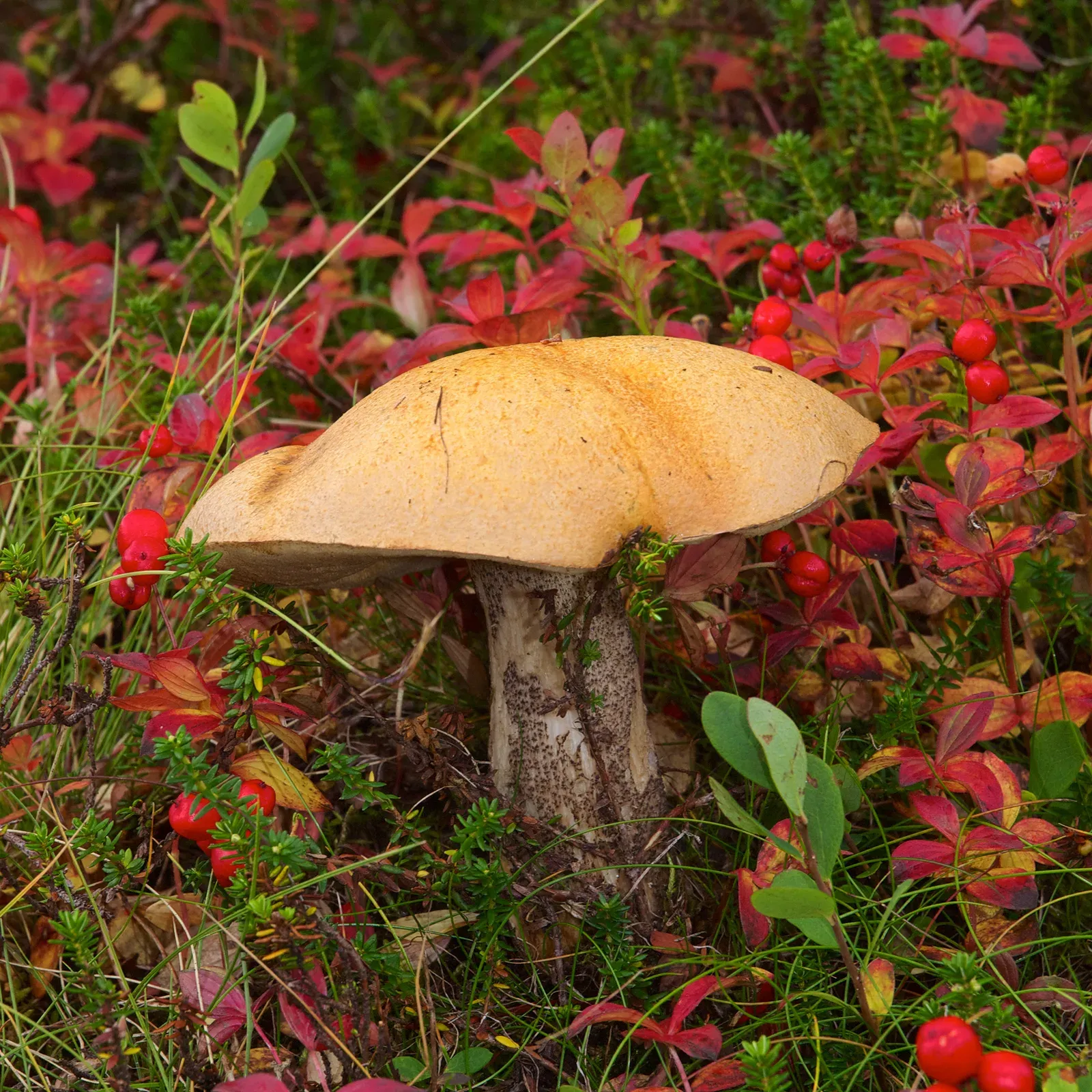
When a forager says “I picked some birch boletes,” they rarely specify which ones. And yet the “birch bolete” isn't a single mushroom but a whole family of similar species. Several species grow in our forests, and all of them are related, edible and live under birches.
Let's sort out this family step by step: which species of birch boletes are found in Ukraine, how they differ from one another, and how to learn to tell them apart. It doesn't matter much for your basket, but it's very useful for understanding the forest.
What all birch boletes have in common
All birch boletes belong to the scaber stalk genus (Leccinum), a close relative of the porcini. They're boletes with a few shared traits.
- a spongy tube layer under the cap, not gills;
- a long, slender stem covered with distinctive dark scales;
- a mycorrhizal partnership with birch;
- white flesh that darkens when cut in many species.
It's the scales on the stem and the birch nearby that unite the whole family. The species differ in their cap, where they grow and how dense their flesh is.
Brown birch bolete
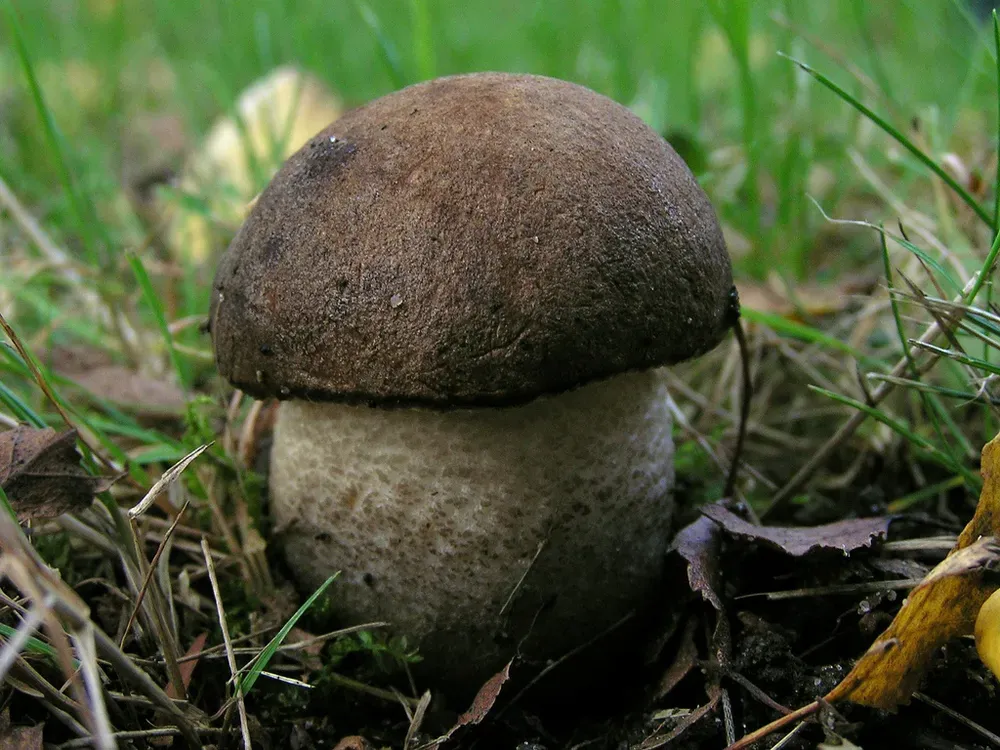
Brown birch bolete (Leccinum scabrum) is the very same classic birch bolete everyone knows. It's the most common species of the genus here.
Its cap is grayish brown, from light gray to almost chestnut, the stem is white with dark scales, and the flesh is white and hardly changes when cut. It grows in all kinds of birch woods from June to October. When young it's firm and tasty; when old it quickly turns soft.
If you find “just a birch bolete” in a birch wood, it's most likely the brown birch bolete.
Ghost bolete
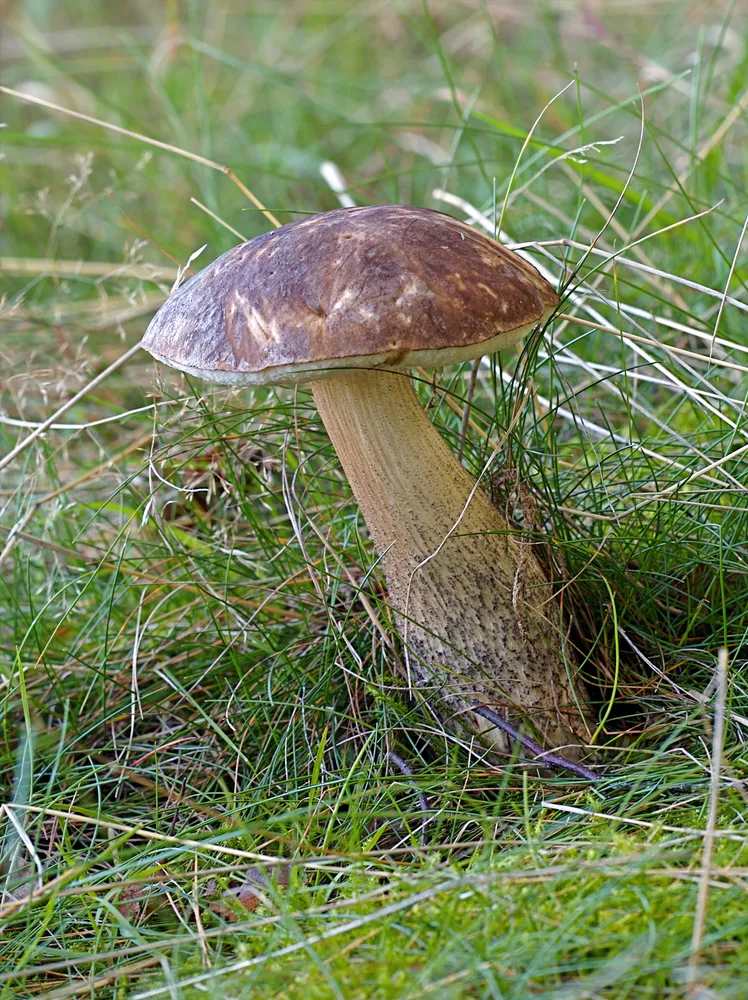
Ghost bolete (Leccinum holopus) is the pale birch bolete of damp places. It's easy to recognize by its light, almost white or greenish-white color.
It loves damp birch woods, bog edges, mossy hollows and moist forest edges. Its flesh is especially tender and watery, so the mushroom is fragile and quickly goes mushy.
The ghost bolete is edible but valued less than the brown birch bolete precisely because of its soft flesh. Pick it very young and cook it right away.
Mottled bolete
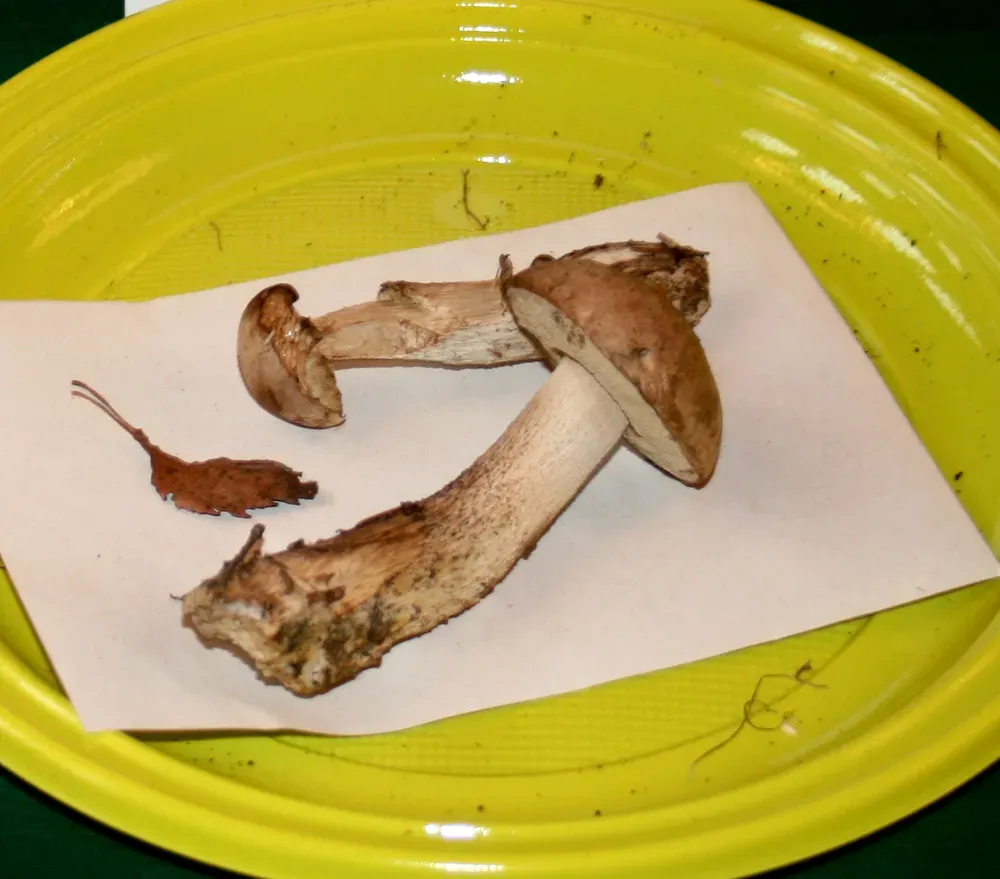
Mottled bolete (Leccinum variicolor) stands out for its mottled, unevenly colored cap: lighter and darker patches on a gray background, like streaks.
Another giveaway is the flesh, which often turns blue or green at the base of the stem when cut. It grows in damper birch woods, often next to the ghost bolete.
This species is firmer than the ghost bolete and well worth a place in your basket. People often don't even tell it apart from the ordinary birch bolete, since they taste very similar.
Leccinum melaneum
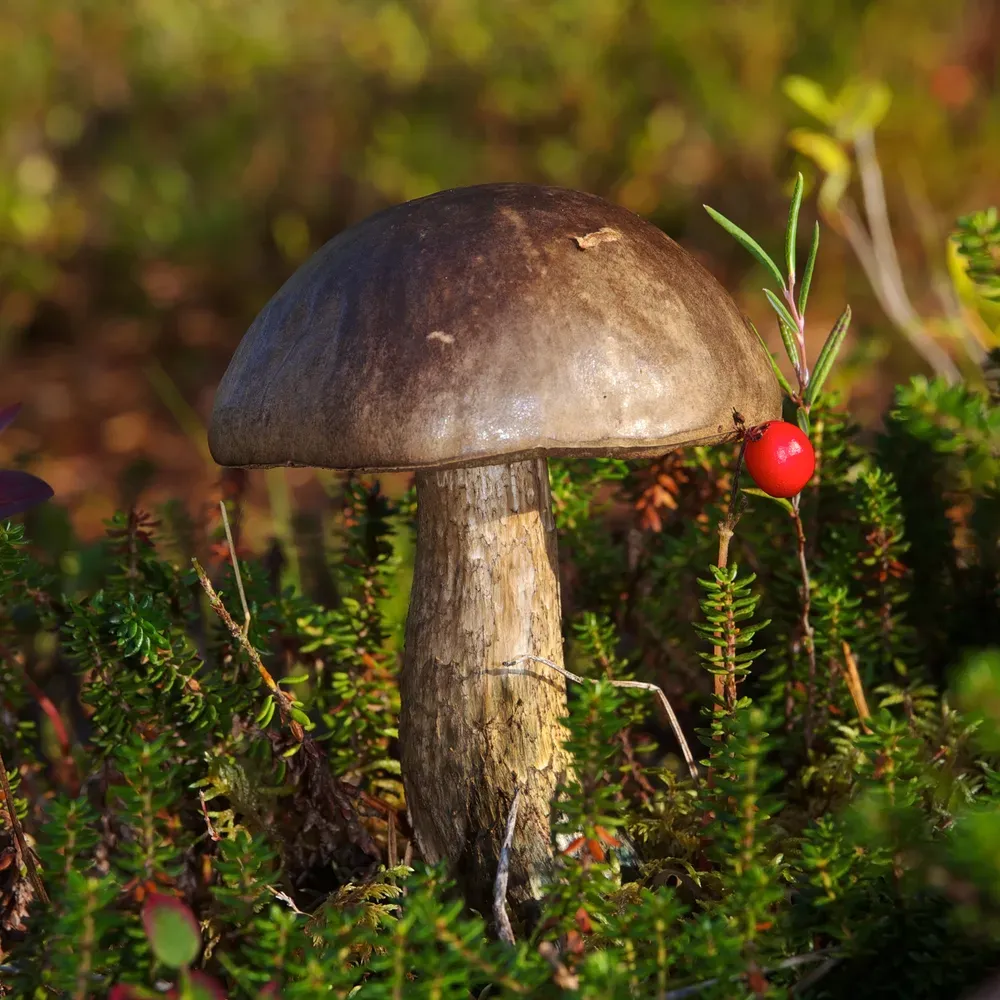
Leccinum melaneum — the “black birch bolete” in Ukrainian — is the dark birch bolete with an almost blackish-brown cap. It's the darkest of our birch boletes.
It's found in birch woods on poorer, sandy soils, often near pine. Its flesh is denser than the ghost bolete's, so the mushroom holds its shape well.
Because of its dark color it's sometimes simply called the “black mushroom.” It tastes every bit as good as the ordinary birch bolete.
Other relatives of the birch bolete
Alongside the birch boletes proper, the scaber stalk genus includes closely related mushrooms that are also often called birch boletes or treated separately:
- slate bolete, with especially dense flesh;
- blushing bolete, whose flesh turns pink when cut;
- red-capped scaber stalk, or “redhead,” which grows under aspen and has a bright orange-red cap.
All of them are edible. And to confidently tell a birch bolete from the dangerous bitter bolete, remember the lookalike's main giveaway: a bitter taste and a pinkish tube layer.
The weather will tell you exactly when to go out for birch boletes. Keep an eye on conditions with our mushroom radar: it shows when moisture and warmth line up well for mushrooms to appear.
Sources
- “Vyznachnyk hrybiv Ukrainy” (Identification Guide to the Fungi of Ukraine; Kyiv, Naukova Dumka publishing house).
- Leccinum scabrum in GBIF, the global biodiversity database.
- Leccinum in MycoBank, the international fungal nomenclature database.
- Leccinum scabrum on Wikipedia.
Frequently asked questions
How many species of birch bolete are there?
Several species grow in our forests: the , , , and a few rarer ones. All of them are related, edible and grow under birches.
How do birch bolete species differ from one another?
Mainly by cap color, where they grow and how dense their flesh is. The ghost bolete is pale and watery, Leccinum melaneum is dark and dense, the mottled bolete is patchy. What they share are the scales on the stem and the bond with birch.
Which birch bolete tastes best?
The most prized are the and the denser species, because they hold their shape better. is more tender and watery, so it's not quite as tasty.
How do you recognize the ghost bolete?
By its very pale, almost white or greenish-white color and tender, watery flesh. It grows in damp birch woods, along bog edges and in mossy hollows.
Are all birch boletes edible?
Yes, all true birch boletes are edible. There are no dangerous lookalikes among them, but you should watch out for the foul-tasting , which isn't a birch bolete but can look similar.
Is the red-capped scaber stalk a birch bolete too?
belongs to the same scaber stalk genus, but it grows under aspen and has a bright orange-red cap. It's usually set apart under its own name, “redhead,” although it's a close relative of the birch bolete.
Why do some birch boletes turn blue when cut?
It's a trait of certain species, such as : the flesh at the base of the stem turns blue or green. That's normal and doesn't mean the mushroom is dangerous.
Which birch bolete grows in damp places?
Above all, the : it loves damp birch woods, bog edges and mossy hollows. Growing alongside it there you'll often also find the .
Mushrooms in this article
Related articles
 Science & taxonomy
Bay bolete: health benefits and nutritional value
The bay bolete is a match for porcini in both flavor and nutrition. Here's why the bay bolete is good for you,…
August 20, 2026·2 min Science & taxonomy
Honey fungus: health benefits and risks
Honey fungus is a nourishing autumn mushroom, rich in protein and minerals. Here's why honey fungus is good fo…
August 20, 2026·2 min Recipes & cooking
How to store fresh mushrooms, and for how long
Fresh mushrooms spoil faster than you might think. Here's how long they keep in the fridge, how to store them…
August 21, 2026·4 min