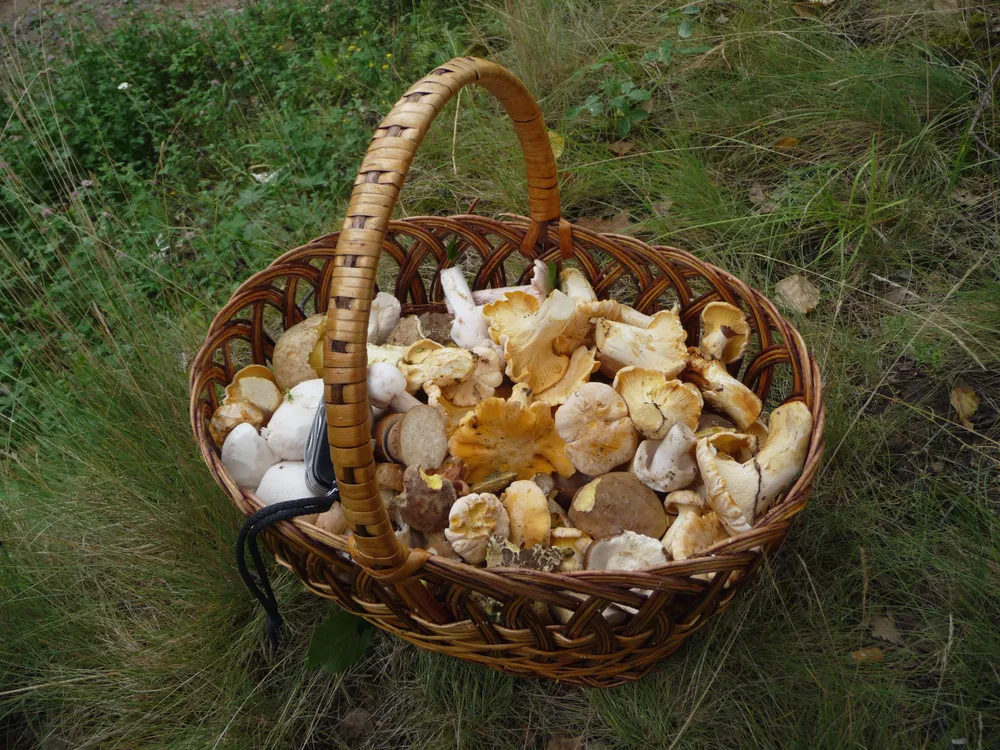
Volyn is one of the most mushroom-rich regions of Ukraine. It's Polissia land with sandy soils, endless pine forests, damp mixed woods and the lakes of the Shatsk area. These conditions are ideal for mushrooms, so locals come out of the forest with full baskets all summer and fall.
Let's look at which mushrooms grow in Volyn, when to head to the forest and where to search.
When to go mushroom hunting in Volyn
The Polissia climate is damp and mild, so the mushroom season here is long and steady — from June to October, peaking in the fall. Frequent rain and dew mean the lulls here are shorter than in the drier steppe regions. The best time to go is two or three days after rain; to catch the good windows, check the mushroom radar. We also have a separate article on Polissia, the most mushroom-rich region as a whole.
Which mushrooms grow in Volyn
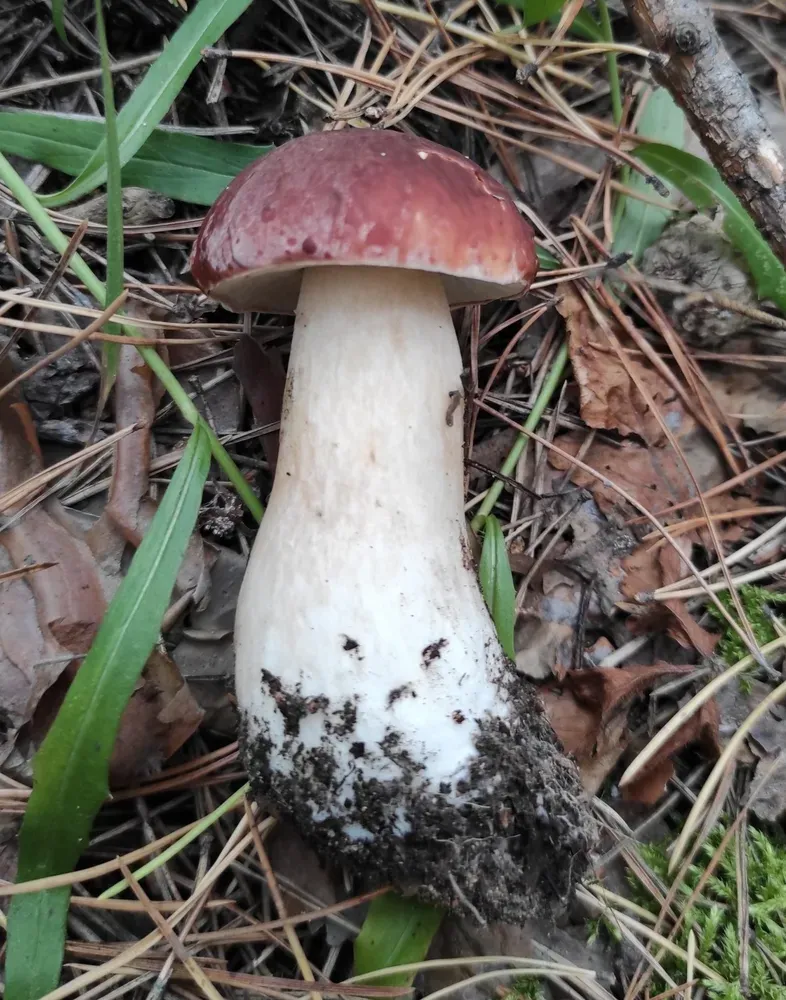
- Porcini. Pine bolete in the pine forests and porcini in the mixed woods are the pride of the region.
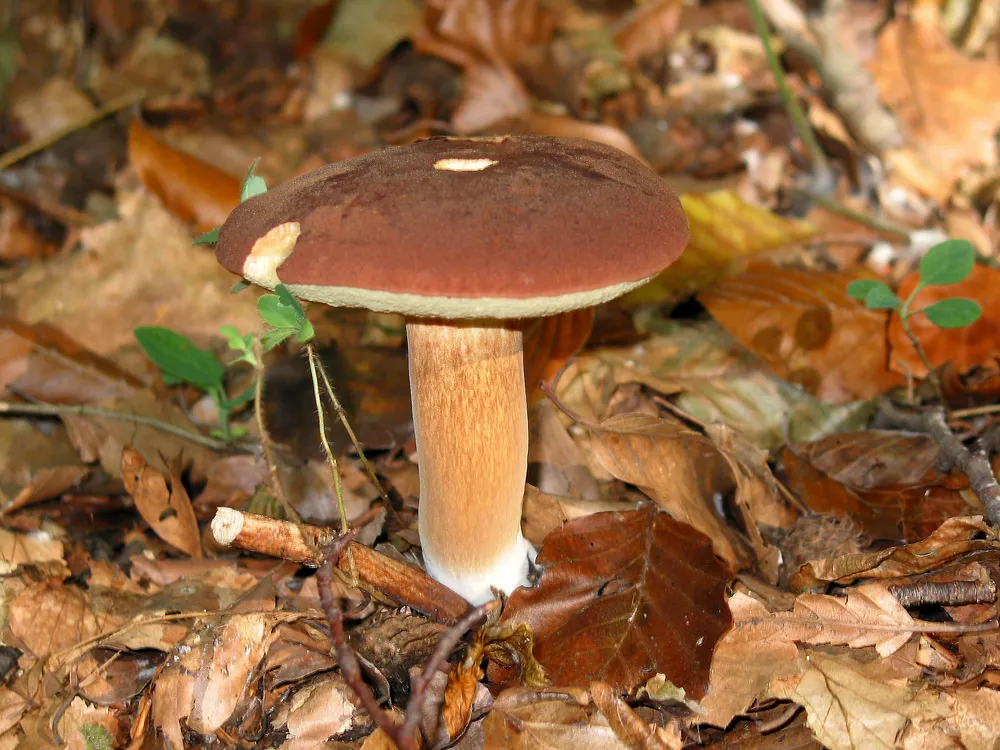
- Bay boletes. In the fall they're especially plentiful in pine forests; a bay bolete turns blue when cut — that's normal.
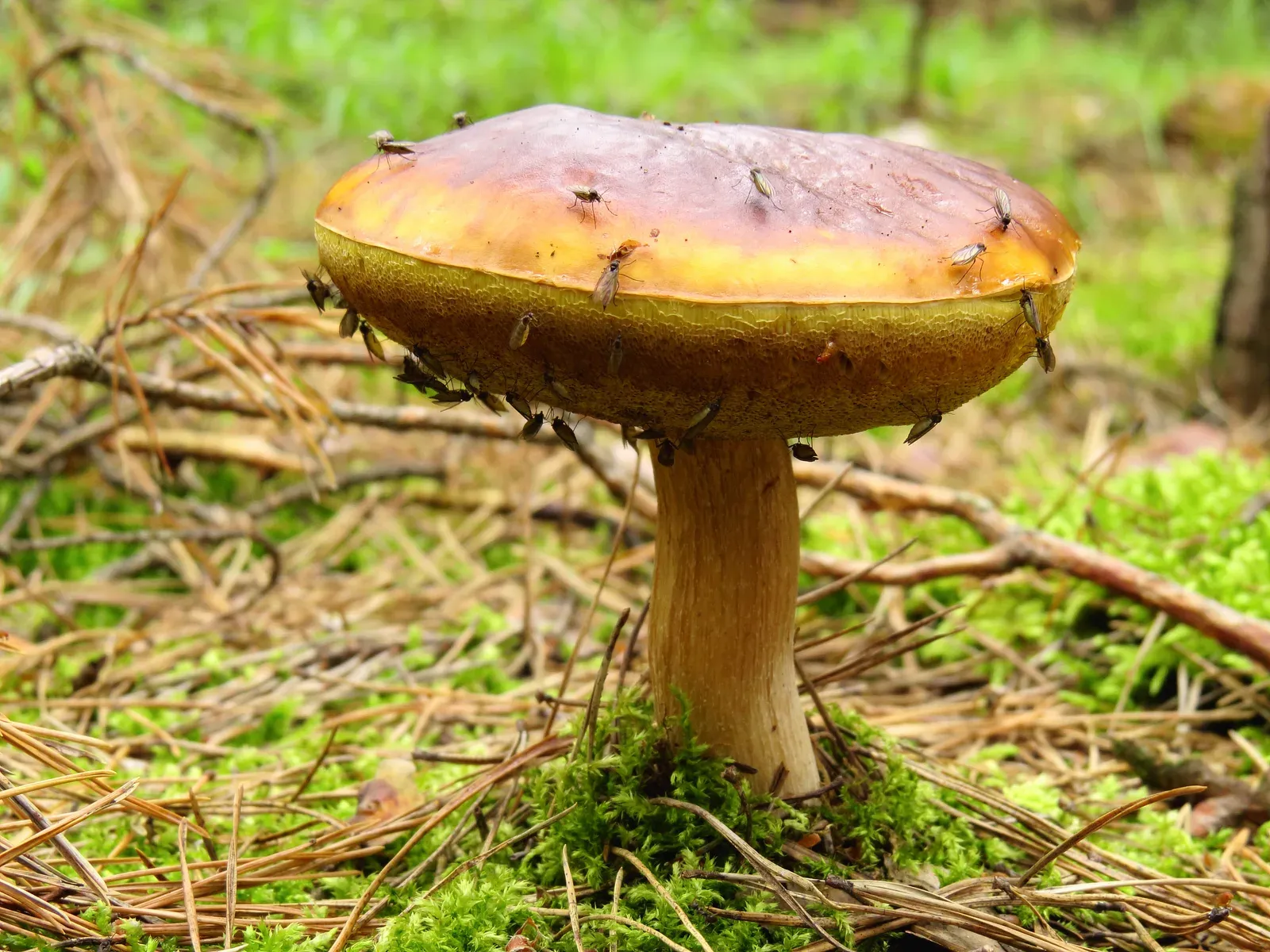
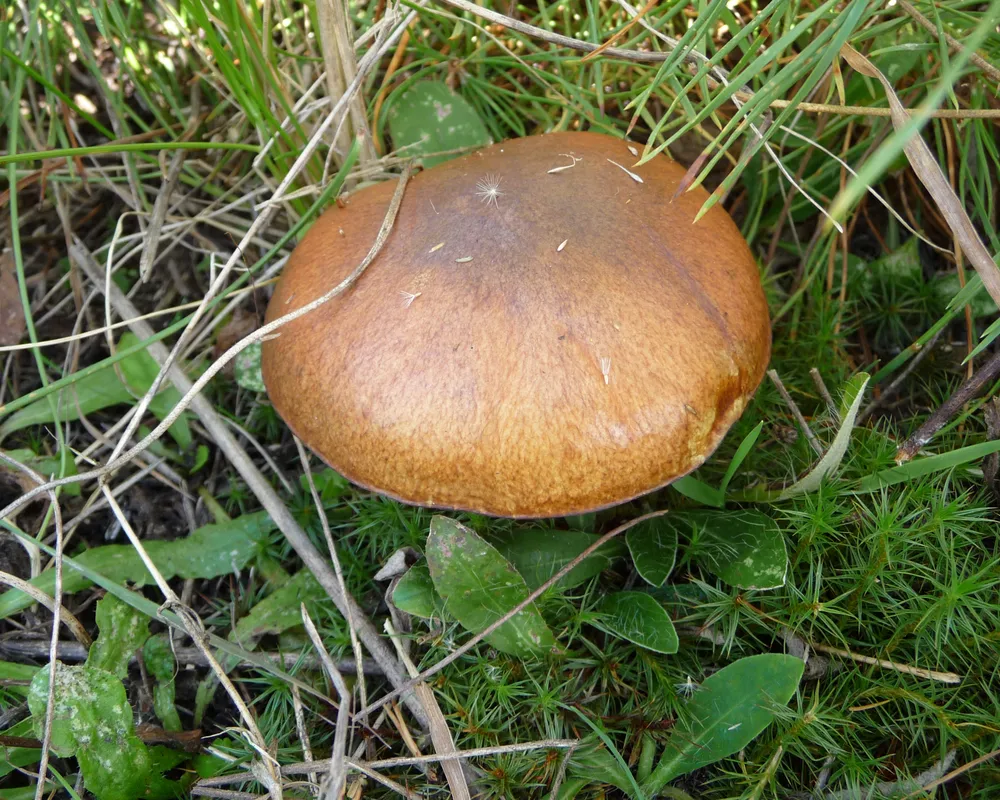
- Slippery jacks. Young pine stands produce bountiful flushes of slippery jacks.
- Chanterelles. Volyn's damp forests are chanterelle heaven all summer long.
- Honey fungus, brown birch boletes, saffron milk caps, brittlegills — everywhere in the fall.
Where to search: the main forest areas
- Polissia pine forests — porcini, bay boletes, slippery jacks, saffron milk caps.
- Damp mixed woods — chanterelles, brown birch boletes, porcini.
- The Shatsk area — forests around the lakes, rich in boletes and chanterelles.
- Boggy forest edges — moisture lingers here even in dry weather.
Tips for foraging in Volyn
- A rich region — but always check for lookalikes. We cover dangerous lookalike pairs in a separate article.
- Explore both pine forests and mixed woods — each gives you different species.
- Avoid the protected zones of Shatsk National Park — foraging is restricted there.
Sources
- “Key to the Fungi of Ukraine” (Kyiv, Naukova Dumka publishing house).
- Boletus pinophilus in GBIF, the global biodiversity database.
- Imleria badia in MycoBank, the international fungal nomenclature database.
- Mushroom hunting on Wikipedia.
Frequently asked questions
Which mushrooms grow in Volyn?
Porcini, bay boletes, slippery jacks, chanterelles, honey fungus, brown birch boletes and saffron milk caps. Volyn is one of the most mushroom-rich regions of Ukraine.
When does the mushroom season start in Volyn?
Thanks to the damp Polissia climate the season is long — from June to October, peaking in the fall. Chanterelles and porcini turn up all summer.
Where is the best mushroom foraging in Volyn?
In the pine forests of Polissia, the damp mixed woods and the woodlands around the Shatsk Lakes. Each forest type gives its own set of species.
Why is Volyn so good for mushrooms?
Because of the damp climate, sandy soils and endless pine and mixed forests. Frequent rain and dew keep the season steady.
When is the best time to head to the forest in Volyn?
Two or three days after rain. In the region's damp climate the lulls are short, so mushrooms appear often.
Which mushrooms dominate Volyn's pine forests?
Porcini (pine bolete), bay boletes, slippery jacks and saffron milk caps — they all love the sandy soil under pines.
Are there many chanterelles in Volyn?
Yes, the region's damp forests are ideal for chanterelles — they grow all summer and fall in mixed and broadleaf woods.
Can you forage for mushrooms anywhere in Volyn?
No, foraging is restricted in the protected zones of Shatsk National Park. Forage in ordinary forests, outside protected areas.
Mushrooms in this article
Related articles
 Recipes & cooking
How to store fresh mushrooms, and for how long
Fresh mushrooms spoil faster than you might think. Here's how long they keep in the fridge, how to store them…
August 21, 2026·4 min How to identify
Truffles in Ukraine: do they grow here, and where to look
Truffles aren't just a French delicacy. Several species grow in Ukraine too. Here's which ones, where they occ…
August 24, 2026·2 min Recipes & cooking
How long to boil mushrooms
Boiling time depends on the type of mushroom and on what you're cooking next. Here's a clear cheat sheet: how…
August 22, 2026·4 min