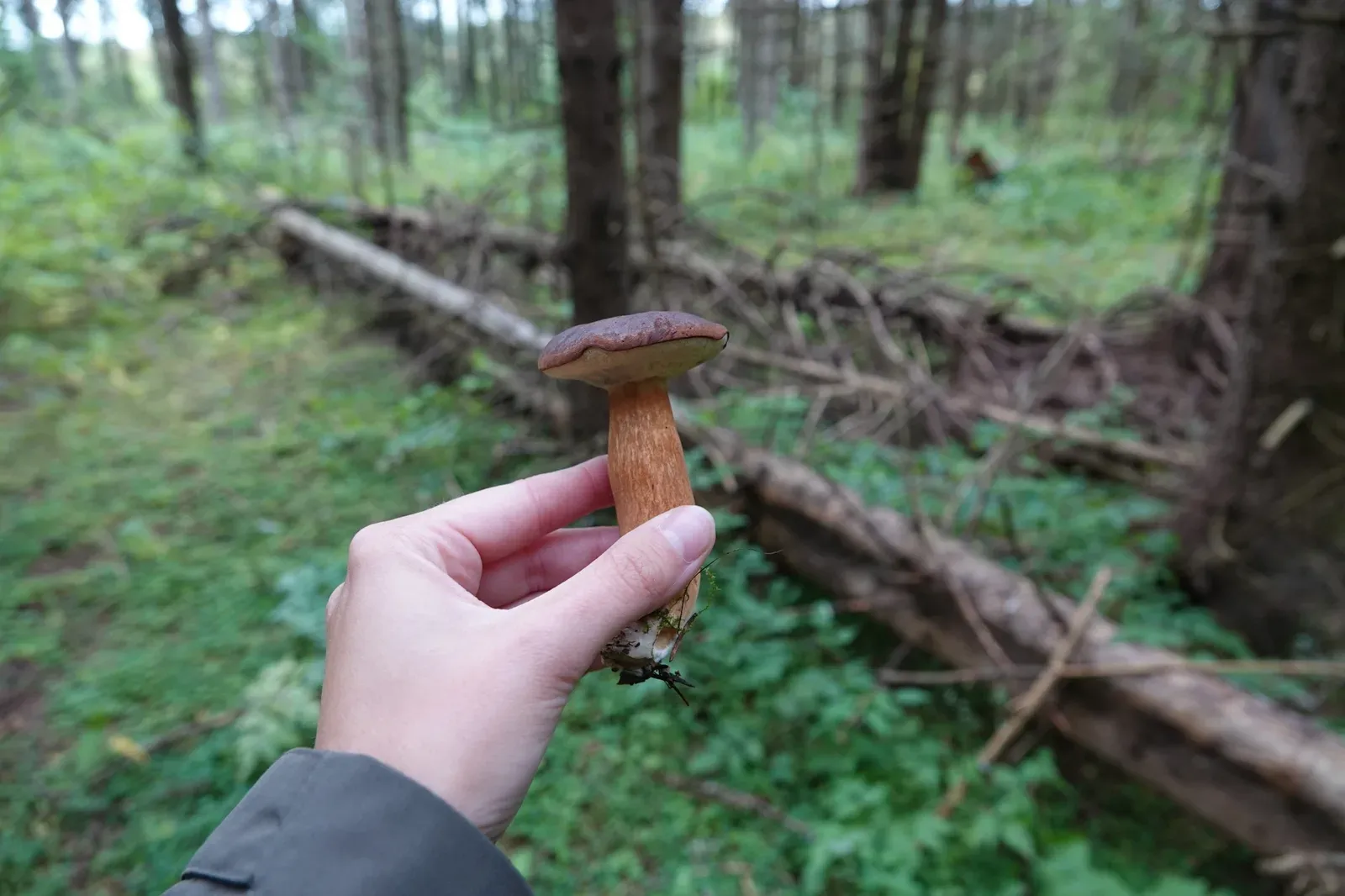
The bay bolete is a forager favorite, and for good reason: it's tasty, meaty, and turns up in abundance where porcini have already grown scarce. Best of all, its season runs long, right up to the first frosts, when the forest is almost empty.
Let's look at when the bay bolete grows, and in which forests and under which trees to search for it.
When the bay bolete grows
The first bay boletes appear as early as July, but the real peak comes in September-October. It's a fall mushroom: it handles the cool weather well and keeps fruiting as porcini fade. The last specimens turn up in November, until the first hard frosts.
Like all boletes, the bay bolete loves moisture after rain combined with warm soil. In fall, when the nights are cool and fog adds moisture, it comes up in especially big flushes. To catch the good windows, use the mushroom radar.
Where to look for bay boletes
The bay bolete prefers coniferous and mixed forests.
- Pine forests. The classic spot is under pines on sandy, acidic soils, often among moss.
- Mixed forests. It also turns up under spruces, oaks and beeches.
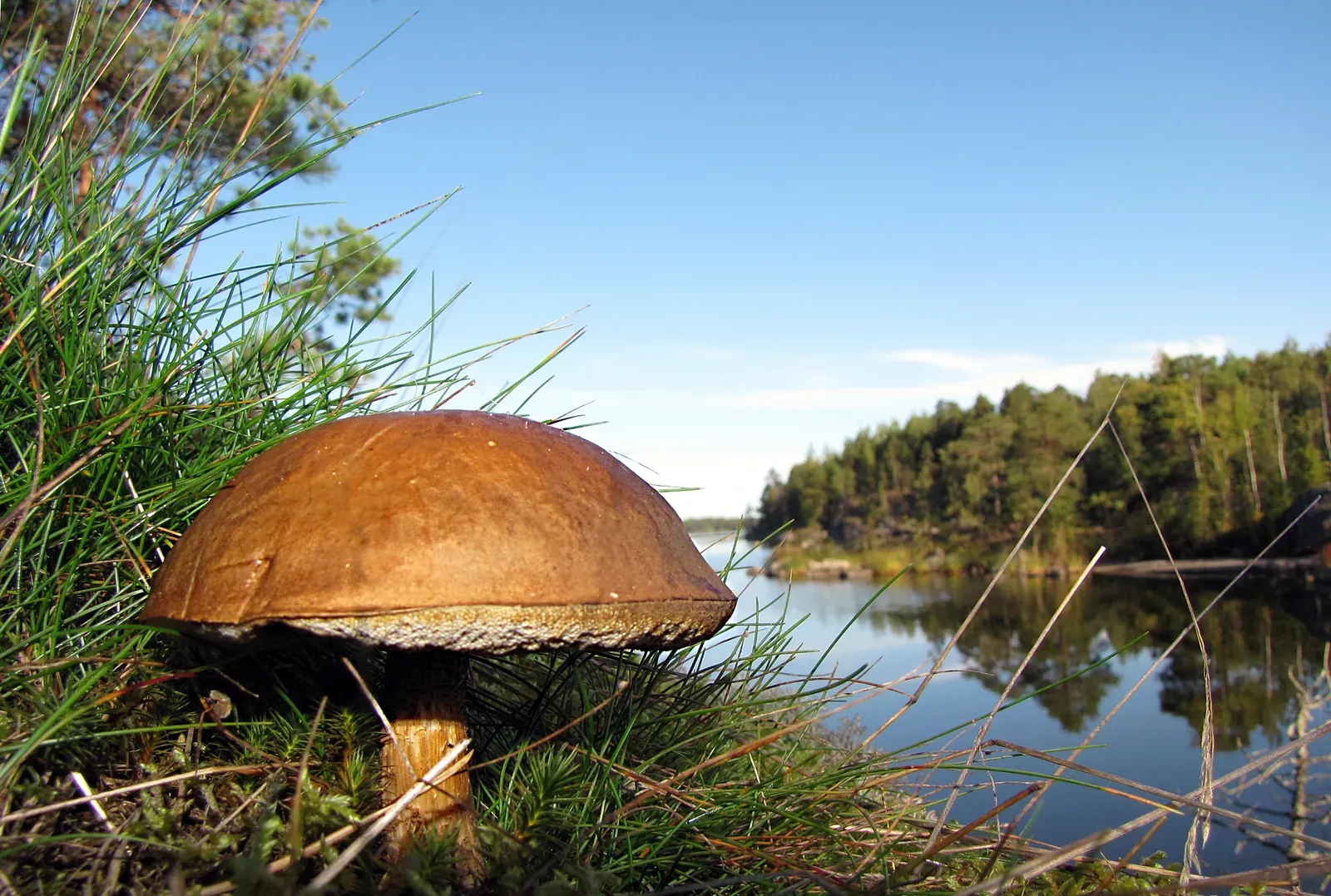
- Moss and old needles. It often hides in cushions of moss, with just its dark brown cap peeking out.
- The same spots every year. The mycelium lives for years, so remember your lucky clearings.
In fall there are more bay boletes than any other bolete, so in a pine forest they become the main prize.
How to recognize a bay bolete
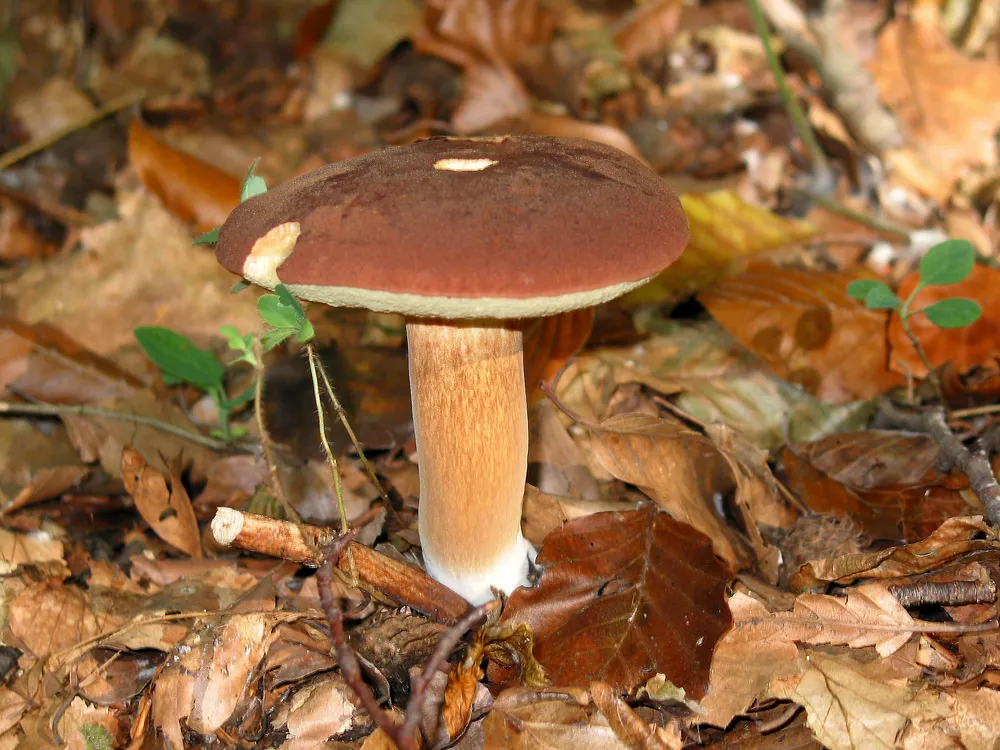
- Cap dark brown, chestnut, dry and velvety, slightly slimy in wet weather.
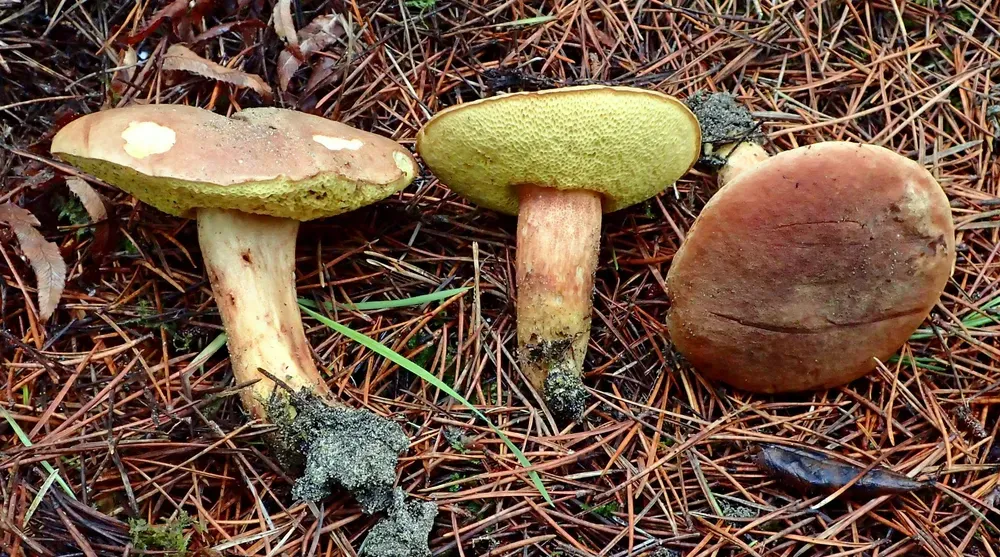
- Tube layer yellowish-greenish; when pressed it turns blue.
- Stem brownish, paler than the cap, with no net pattern.
- Flesh yellowish; when cut it turns blue — that's normal and safe.
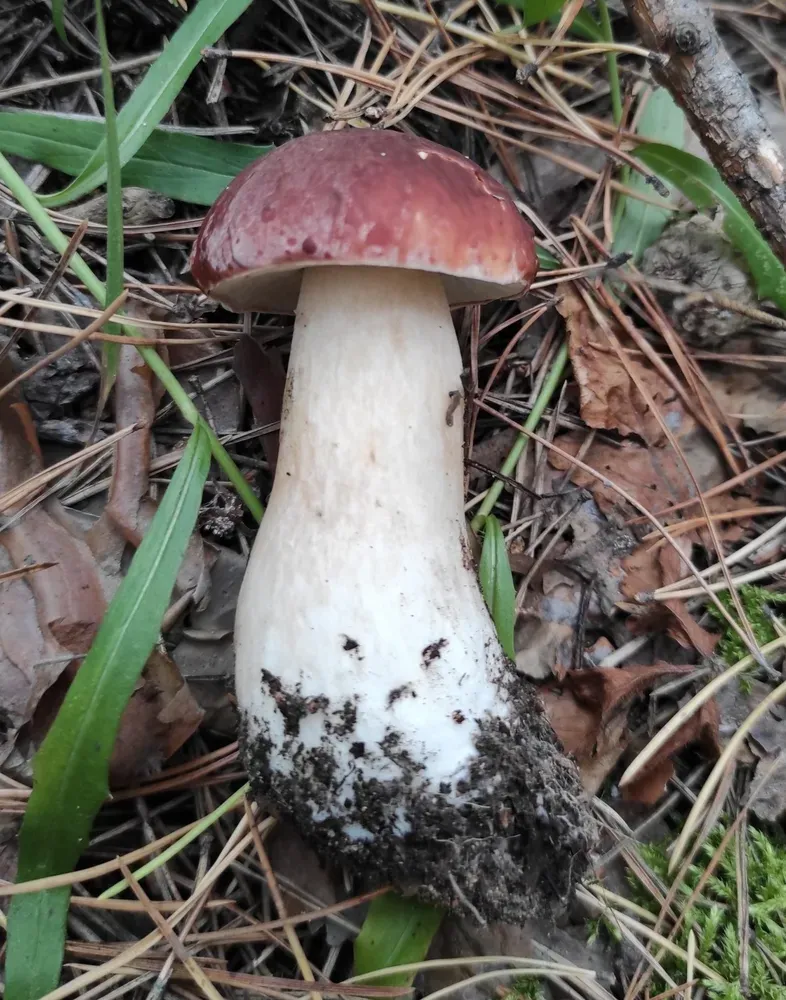
Don't be alarmed by the bluing: the bay bolete is edible, and turning blue when cut is natural for it. It's sometimes confused with porcini — we've written separately about how the bay bolete differs from porcini, and also about how it resembles Xerocomus ferrugineus.
What to keep in mind
- Bluing is normal. This is the main difference from poisonous boletes, whose flesh is different.
- Pick young ones. Old bay boletes go mushy and get wormy.
- Look in the moss. That's where, under the pines, it hides most often.
Sources
- “Key to the Fungi of Ukraine” (Kyiv, Naukova Dumka publishing house).
- Imleria badia on GBIF, the global biodiversity database.
- Imleria badia on MycoBank, the international fungal nomenclature database.
- Imleria badia on Wikipedia.
Frequently asked questions
When does the bay bolete grow?
The first ones appear in July, the peak is September-October, and the last turn up in November until the first hard frosts. It's mostly a fall mushroom.
Where should you look for bay boletes?
In coniferous and mixed forests, above all in pine forests on sandy soils, often in cushions of moss under the pines.
Which trees does the bay bolete grow under?
Most often under pines, but also under spruces, oaks and beeches in mixed forests.
Why does the bay bolete turn blue when cut?
It's the flesh's natural reaction to air, a harmless trait of the bay bolete specifically, not a sign of toxicity.
Why is the bay bolete better than porcini in fall?
It tolerates cold better and grows more abundantly in late fall, when porcini are scarce, so the bay bolete becomes the main fall prize.
How do you avoid confusing the bay bolete with other mushrooms?
Look for the dark brown velvety cap, flesh that turns blue, and a smooth stem with no net pattern. It has no deadly poisonous lookalikes.
How late into the frosts does the bay bolete grow?
Until the first hard frosts, usually in the first half of November in warmer regions.
Can you find bay boletes in the same spot every year?
Yes, the mycelium lives for many years, and good pine clearings yield a harvest for more than one season.
Mushrooms in this article
Related articles
 Science & taxonomy
Bay bolete: health benefits and nutritional value
The bay bolete is a match for porcini in both flavor and nutrition. Here's why the bay bolete is good for you,…
August 20, 2026·2 min Recipes & cooking
How to store fresh mushrooms, and for how long
Fresh mushrooms spoil faster than you might think. Here's how long they keep in the fridge, how to store them…
August 21, 2026·4 min How to identify
Truffles in Ukraine: do they grow here, and where to look
Truffles aren't just a French delicacy. Several species grow in Ukraine too. Here's which ones, where they occ…
August 24, 2026·2 min