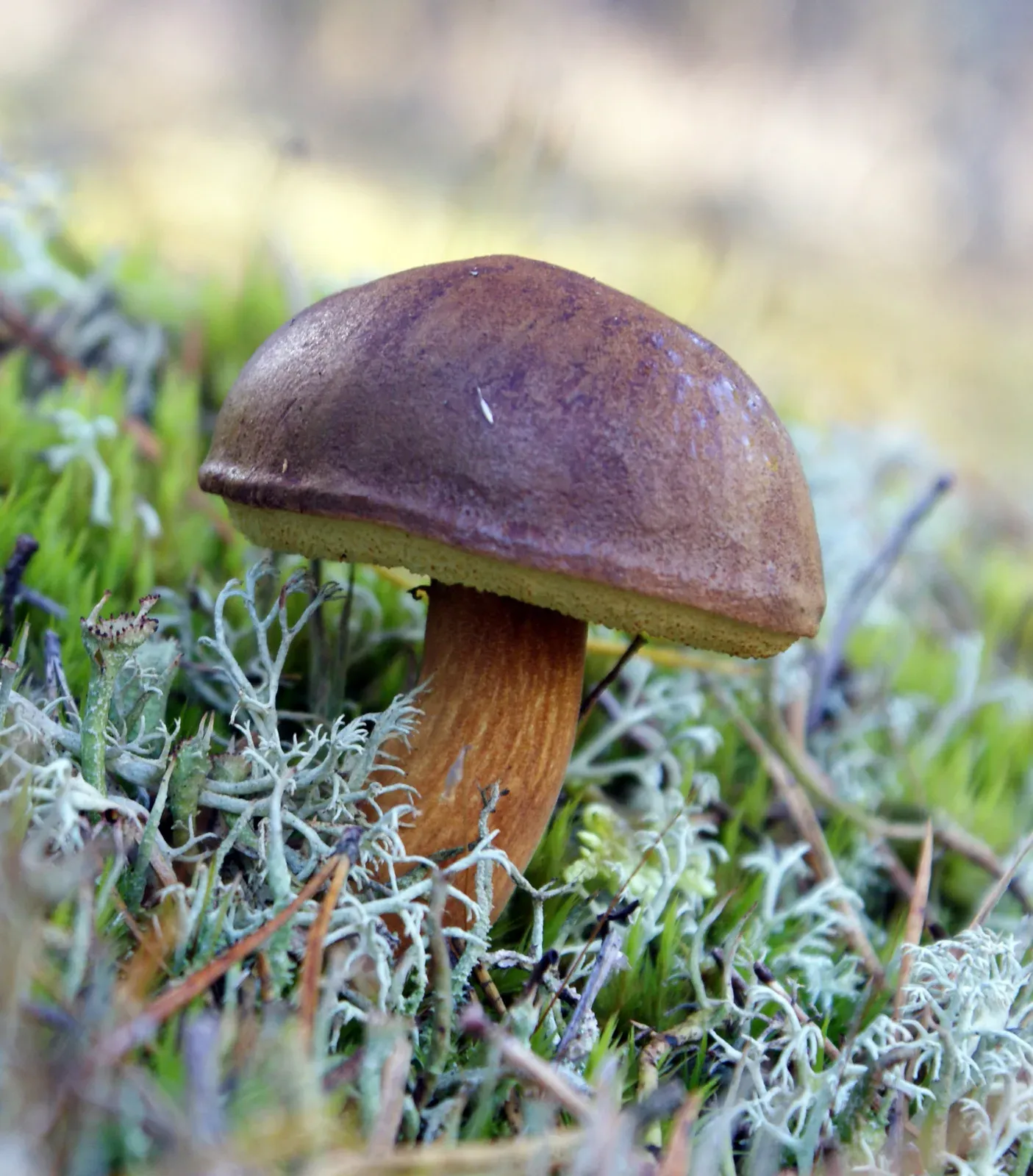
At the market you'll often hear: “Porcini, get your porcini.” And in the basket, next to the classic boletes, lie mushrooms with dark chestnut caps and a slightly different character. This is the bay bolete (Boletus badius, in our catalog the bay bolete), a close relative of porcini that is often sold under the same name.
It's not a scam or a mistake: the bay bolete really is tasty and prized. But for a practical forager it's useful to know that this is a separate species with its own key feature. Let's sort it out once and for all.
Is the bay bolete a porcini or not
The short answer: no, they're different species, though close relatives. True porcini (ceps) have white flesh that doesn't change color when cut. The bay bolete also belongs to the bolete family, but it's been split off as a different species, and its flesh turns blue when cut.
So why are they confused? Because both are tasty and aromatic, with a spongy underside to the cap and a thick stem. On the table the difference is barely noticeable, so in cooking they're often treated as equals. But in the forest it pays to tell them apart, so you can read your finds with confidence.
The main difference: bluing when cut
Remember one thing, and you'll never mix up these mushrooms. Press a finger on the tubular underside of the cap or cut the mushroom.
- Porcini. The flesh and pores stay white; the color doesn't change. This is a constant feature of the whole porcini group.
- Bay bolete. Where you press, the pores quickly turn blue, sometimes almost blue-green. The cut flesh turns blue too.
This bluing is completely harmless: the bay bolete is edible and tasty. But it's exactly what clearly sets it apart from true porcini. If a mushroom turns blue, it's definitely not a porcini, though in this case there's nothing to worry about.
Other differences worth a look
Besides bluing, there are a few more details that help tell the species apart.
- Cap. On the bay bolete it's evenly dark chestnut, smooth, and greasy in wet weather. On porcini the tone is warmer, from hazel to chestnut, depending on the variety.
- Stem. The bay bolete's stem is slender and brownish, with no distinct net pattern. On porcini it's thick and barrel-shaped, with a pale net pattern.
- Pores. On porcini they're white or yellow; on the bay bolete they're greenish yellow and turn blue when touched.
No net pattern on the stem plus bluing give you a reliable pair of features. To see the difference clearly, check out our side-by-side comparison of porcini and the bay bolete.
Where and when they overlap
The bay bolete favors conifer and mixed forests, so its most frequent neighbor is the pine bolete.
Look for it in the same places as porcini:
- old mossy pine forests;
- patches of mixed forest where pine grows alongside birch;
- sunny edges of conifer forest and sun-warmed sandy hills.
The bay bolete's season is later and longer: it fruits from July into late autumn, sometimes right up to the first frosts. The best time to go out is two or three days after a warm rain. An easy way to keep track of these windows is our mushroom radar: it shows when moisture and warmth line up just right for boletes to appear.
Is the bay bolete worth picking
Absolutely. The bay bolete is tasty, aromatic and great for drying, pickling and frying. Many foragers value it as highly as porcini, and to them the bluing when cut isn't a flaw, just a trait of the species.
The main thing is not to confuse the harmless bluing of the bay bolete with the bluing of dangerous boletes, such as the lurid bolete. In doubtful cases, go by the color of the pores and stem, and when you're not sure, better leave the mushroom in the forest.
Sources
- “Field Guide to the Fungi of Ukraine” (Kyiv, Naukova Dumka publishing house).
- Boletus badius in GBIF, the global biodiversity database.
- Imleria badia in MycoBank, the international fungal nomenclature database.
- Imleria badia on Wikipedia.
Frequently asked questions
Is the bay bolete a porcini?
No. It's a close relative of porcini, but a separate species. The main difference: the bay bolete's flesh and pores turn blue when cut or pressed, while those of true stay white.
How does the bay bolete differ from porcini?
The bay bolete turns blue when cut, has a slender stem with no distinct net pattern and an evenly dark chestnut cap. Porcini flesh doesn't turn blue, and the stem is thick with a pale net pattern.
Why does the bay bolete turn blue when cut?
It's a natural reaction of its flesh to air, and completely harmless. The bluing is caused by special compounds that oxidize at the cut. For the bay bolete it's a normal species trait, not spoilage.
Is the bay bolete edible?
Yes, the bay bolete is tasty and prized. It's dried, pickled and fried, and many foragers rank it on a par with porcini. Bluing when cut doesn't affect taste or safety.
Can the bay bolete be confused with a dangerous mushroom?
The bay bolete is safe, but dangerous boletes can turn blue too, such as the . So go by the color of the pores and stem, and in doubtful cases don't pick the mushroom.
Where does the bay bolete grow?
Mostly in under pine, less often under spruce and broadleaf trees. It loves old mossy pine forests and sun-warmed sandy hills.
When should you pick the bay bolete?
The season runs from July into late autumn, sometimes until the first frosts. It's one of the latest boletes. The best time to go out is a few days after a warm rain, guided by the .
Is porcini tastier than the bay bolete?
It's a matter of taste. Porcini have a more delicate, classic aroma; the bay bolete is a bit richer and darker when cut. In the kitchen both are wonderful, so many foragers pick them together.
How can you quickly tell the bay bolete from porcini in the forest?
Press the underside of the cap. If the pores turn blue, it's a bay bolete. If the color doesn't change and the stem has a pale net pattern, you're looking at true .
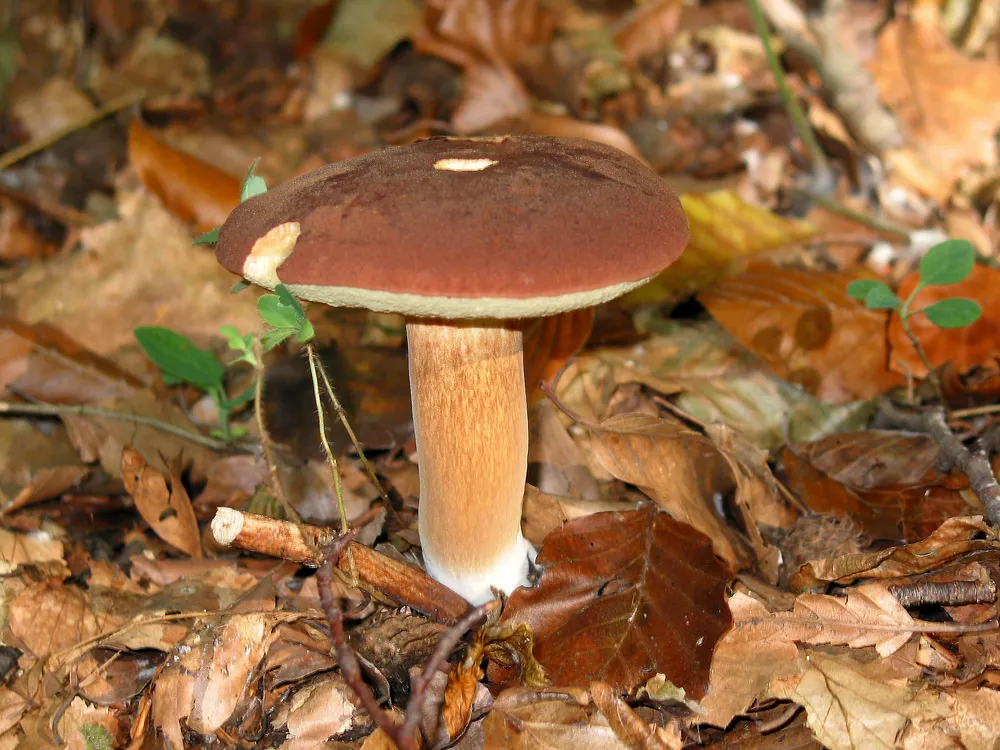
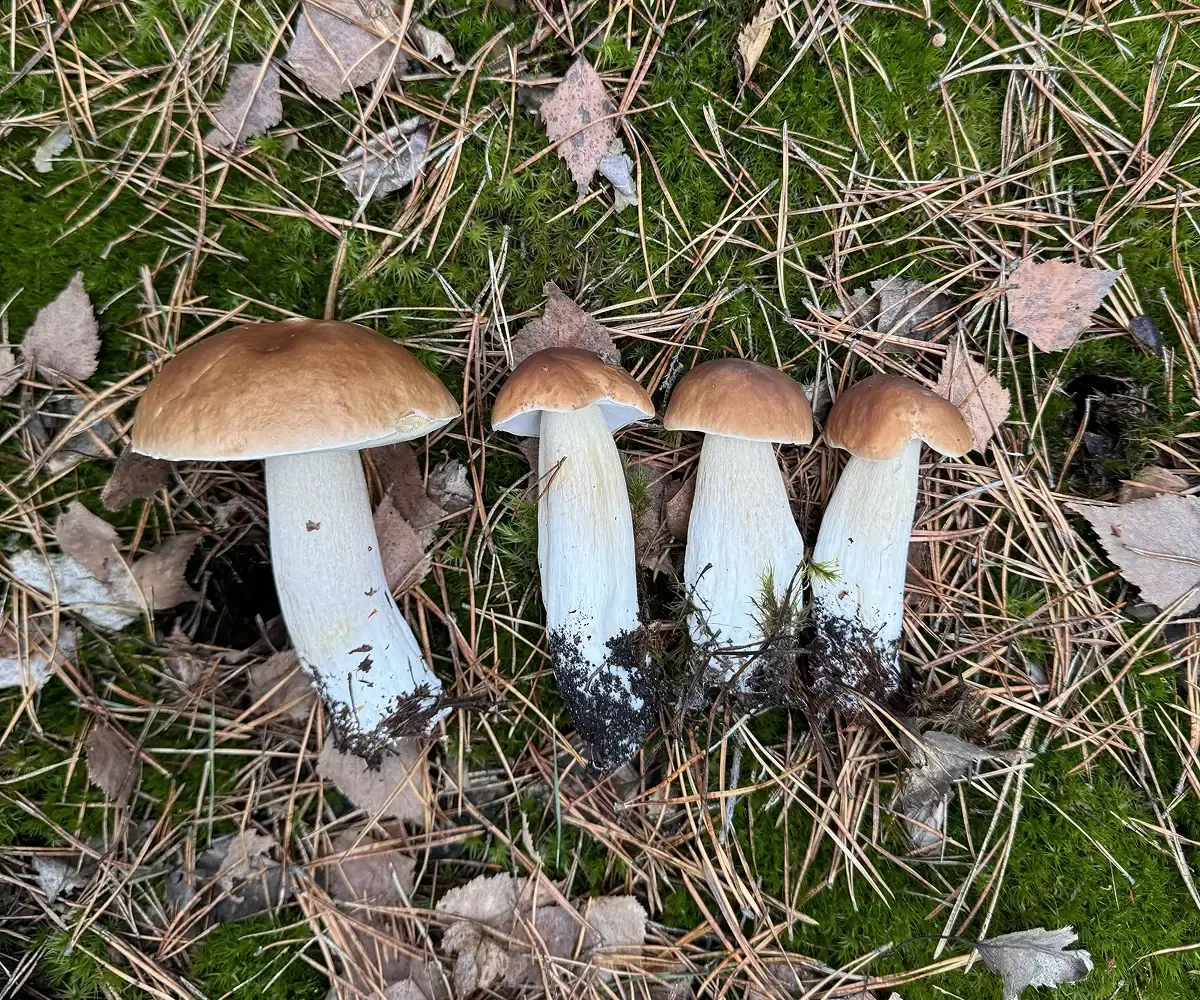
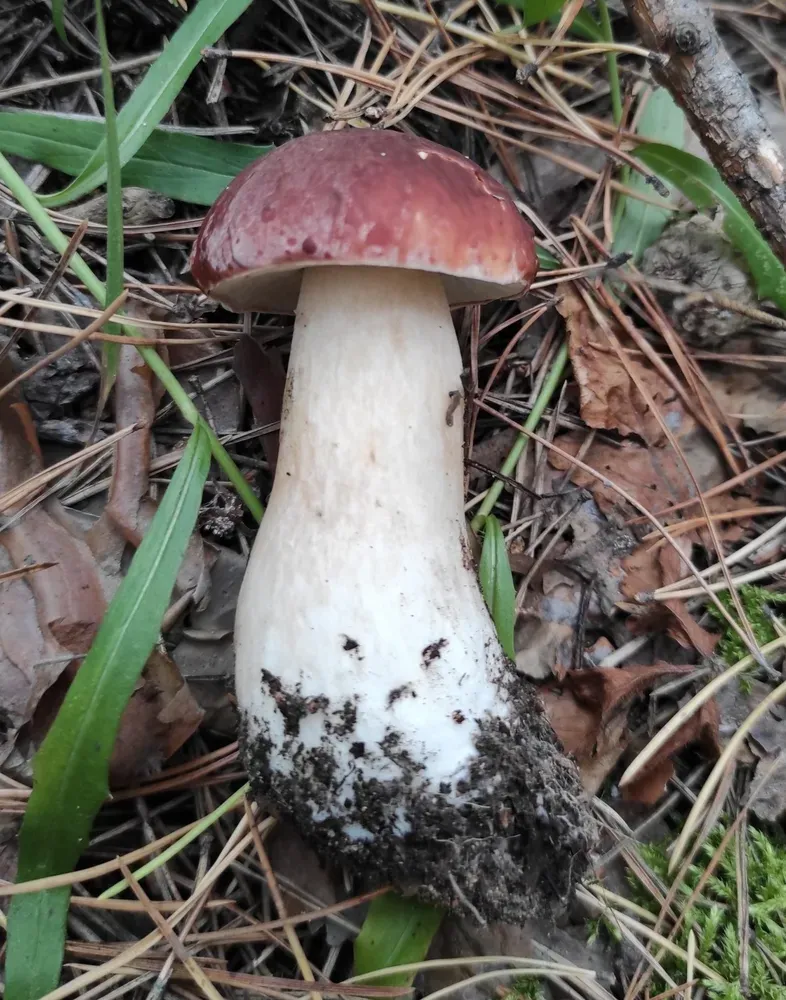
Mushrooms in this article
Related articles
 How to identify
Truffles in Ukraine: do they grow here, and where to look
Truffles aren't just a French delicacy. Several species grow in Ukraine too. Here's which ones, where they occ…
August 24, 2026·2 min Recipes & cooking
How to store fresh mushrooms, and for how long
Fresh mushrooms spoil faster than you might think. Here's how long they keep in the fridge, how to store them…
August 21, 2026·4 min Recipes & cooking
How long to boil mushrooms
Boiling time depends on the type of mushroom and on what you're cooking next. Here's a clear cheat sheet: how…
August 22, 2026·4 min