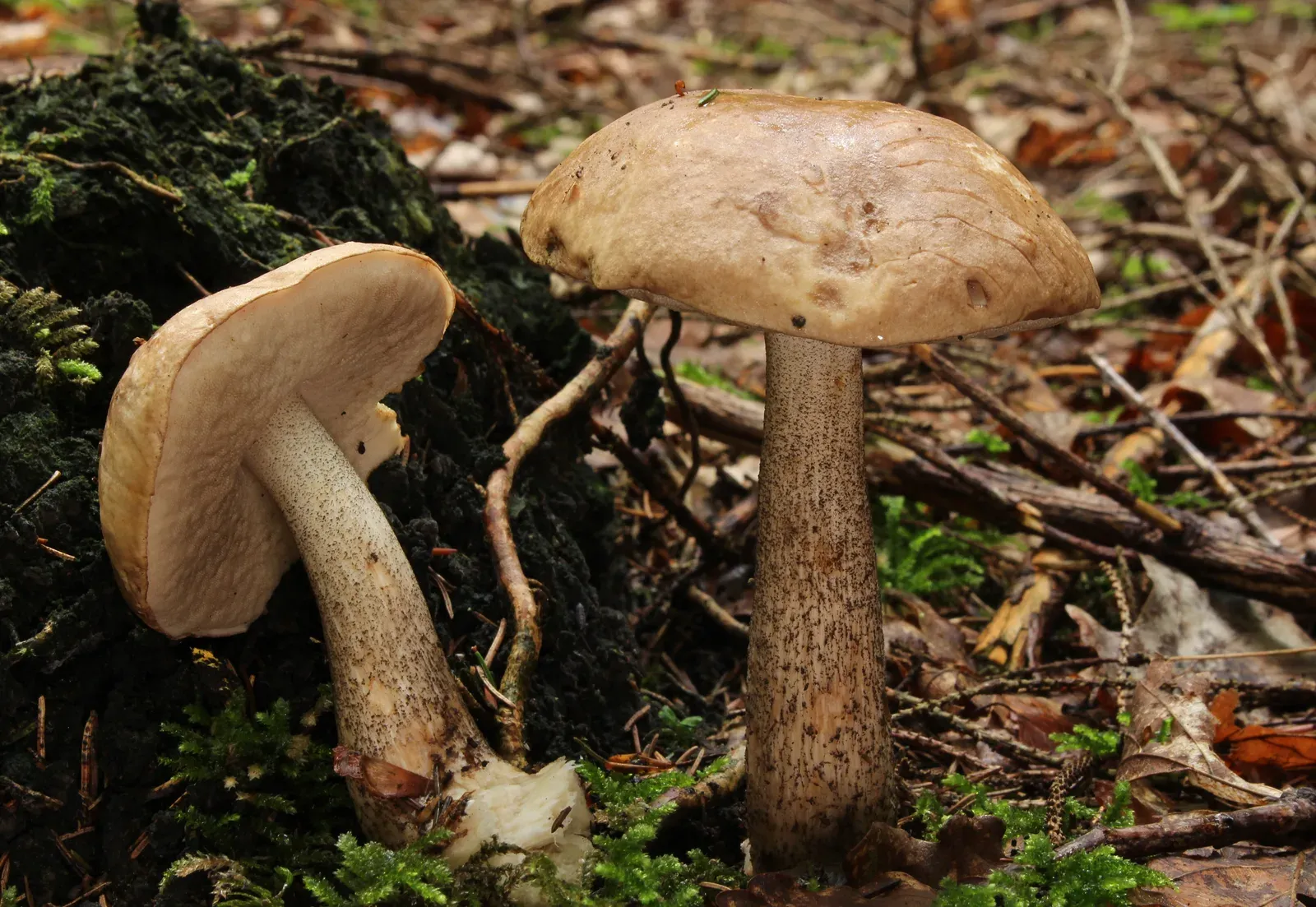
Of all the birch boletes, the brown birch bolete (Leccinum scabrum) is the best known. It’s the one most people picture when they hear “birch bolete”: a grayish mushroom on a slender stem somewhere under a birch at the forest edge.
It’s a reliable, common and tasty mushroom that people rarely get wrong. Let’s look at what it looks like, where and when to find it, what it’s good for in the kitchen and how not to confuse it with its bitter lookalike.
What the brown birch bolete looks like
It’s a classic pored mushroom of the genus Leccinum, with a few recognizable features.
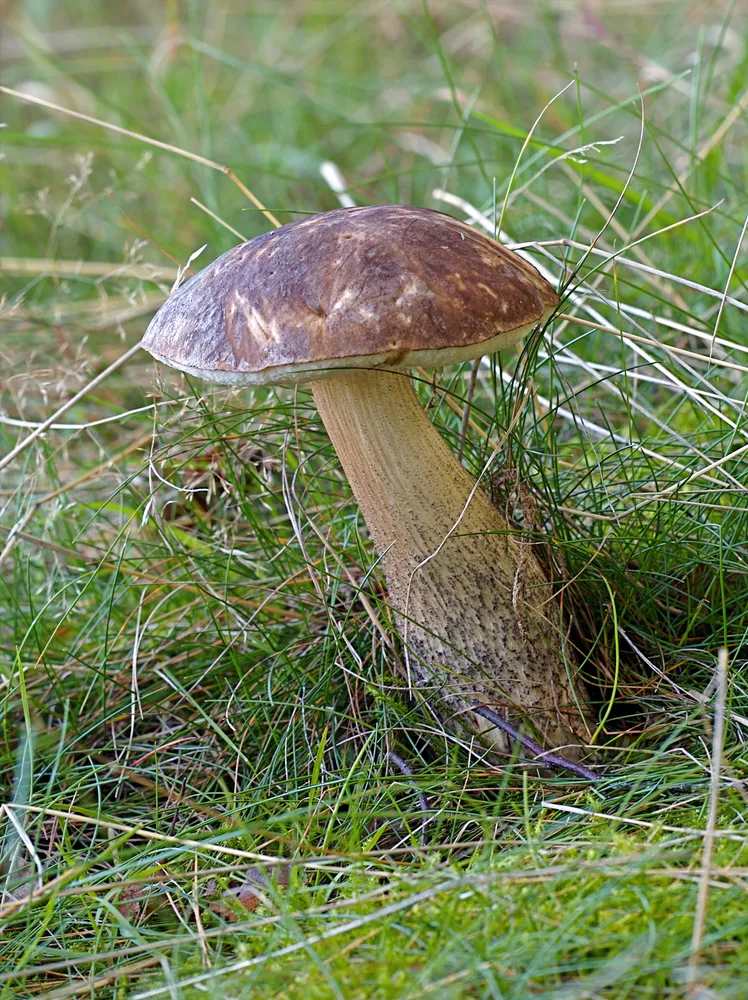
- Cap 5–15 cm, light gray to dark brown, hemispherical when young, later cushion-shaped. Slightly slimy in wet weather.
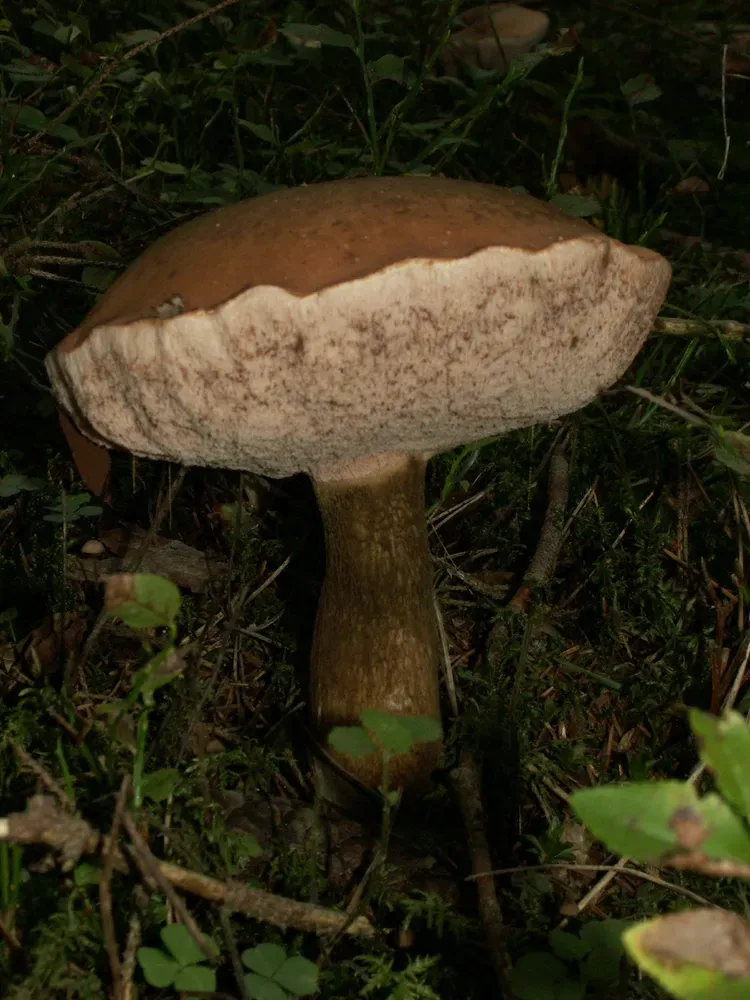
- Tubes whitish or grayish, turning dingy and sagging with age.
- Stem long, slender, white, covered with distinctive dark scales, like fine pen strokes.
- Flesh white, barely changing color when cut or turning slightly gray.
The most reliable sign is the scales on the stem combined with a birch nearby. That’s the brown birch bolete’s almost unmistakable signature.
Where and when to look for it
The brown birch bolete is loyal to birch. It forms mycorrhiza with this tree, so look for it wherever birches grow.
The best spots:
- deciduous forests and pure birch groves;
- mixed forests, where birch grows alongside pine and aspen;
- bright forest edges, clearings, forest roadsides and young plantations.
The season is long, from June to October. The first mushrooms appear in June, and the most generous flushes come in the second half of summer and early fall, especially after warm rains.
What it’s good for in the kitchen
The brown birch bolete is an all-purpose mushroom. When young, it’s firm, fragrant and suits almost any dish.
It’s fried with potatoes, added to soups, pickled and dried. There’s just one catch: it darkens noticeably during cooking, almost to black. This doesn’t affect taste or safety, but the dish turns out darker.
For the table, pick mainly young, firm mushrooms with a pale pore layer. Old specimens with sagging dark tubes become spongy and watery, so they’re best left in the forest.
How not to confuse it with the bitter bolete
The brown birch bolete has no deadly poisonous lookalikes, but there is one unpleasant similar mushroom.
It’s the bitter bolete, or Tylopilus felleus. It also has a scaly-looking stem, but differs in several ways: its tubes are pinkish rather than white, there’s a dark net on the stem, and the flesh turns pink when cut. Most importantly, it’s unbearably bitter, so even one such mushroom will ruin a whole dish.
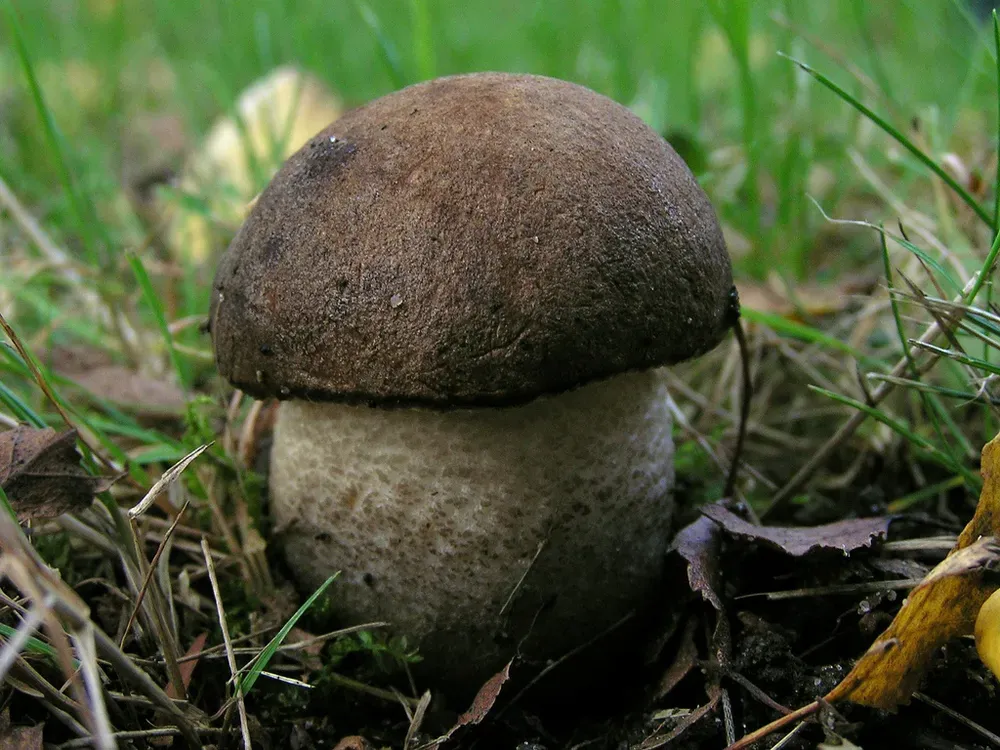
From its darker relative, Leccinum melaneum, the brown birch bolete differs by its lighter cap, but both are edible, so a mix-up here is no big deal.
To head into the forest just as the birch boletes start coming up, check our mushroom radar: it shows when moisture and warmth line up well for mushrooms to appear.
Sources
- “Identification Guide to the Fungi of Ukraine” (Kyiv, Naukova Dumka publishing house).
- Leccinum scabrum on GBIF, the global biodiversity database.
- Leccinum on MycoBank, the international fungal nomenclature database.
- Leccinum scabrum on Wikipedia.
Frequently asked questions
How do you recognize the brown birch bolete?
By its gray-brown cap, spongy pore layer underneath and long white stem with dark scales. The flesh is white and barely changes color when cut. It grows under birches.
Where does the brown birch bolete grow?
In and under birches, at forest edges, in clearings, along roads and in young plantations. Without birch it hardly ever turns up.
When should you pick the brown birch bolete?
The season runs from June to October. The first mushrooms come up in June, and the richest flushes are in the second half of summer and early fall, especially after warm rains.
Is the brown birch bolete edible?
Yes, it’s a good edible mushroom. Young brown birch boletes are fried, boiled, pickled and dried. Old specimens with spongy, watery flesh are better left behind.
Why does the brown birch bolete darken when cooked?
It’s a natural property of the flesh: it darkens on contact with air and heat. This doesn’t affect taste or safety. To keep them from darkening as much, cook them fresh and young.
What can the brown birch bolete be confused with?
The most dangerous similar mushroom is the , unbearably bitter but not poisonous. You can tell it by its pink pore layer, the dark net on its stem and its bitterness.
How does the brown birch bolete differ from Leccinum melaneum?
has a lighter gray-brown cap, while has an almost black-brown one and firmer flesh. Both are edible, so mixing them up is nothing to worry about.
Which birch boletes are best for the basket?
Young, firm mushrooms with a pale pore layer that isn’t sagging yet. They’re springy, less often wormy and hold their shape better during cooking.
Mushrooms in this article
Related articles
 How to identify
Truffles in Ukraine: do they grow here, and where to look
Truffles aren't just a French delicacy. Several species grow in Ukraine too. Here's which ones, where they occ…
August 24, 2026·2 min Recipes & cooking
How to store fresh mushrooms, and for how long
Fresh mushrooms spoil faster than you might think. Here's how long they keep in the fridge, how to store them…
August 21, 2026·4 min Recipes & cooking
How long to boil mushrooms
Boiling time depends on the type of mushroom and on what you're cooking next. Here's a clear cheat sheet: how…
August 22, 2026·4 min