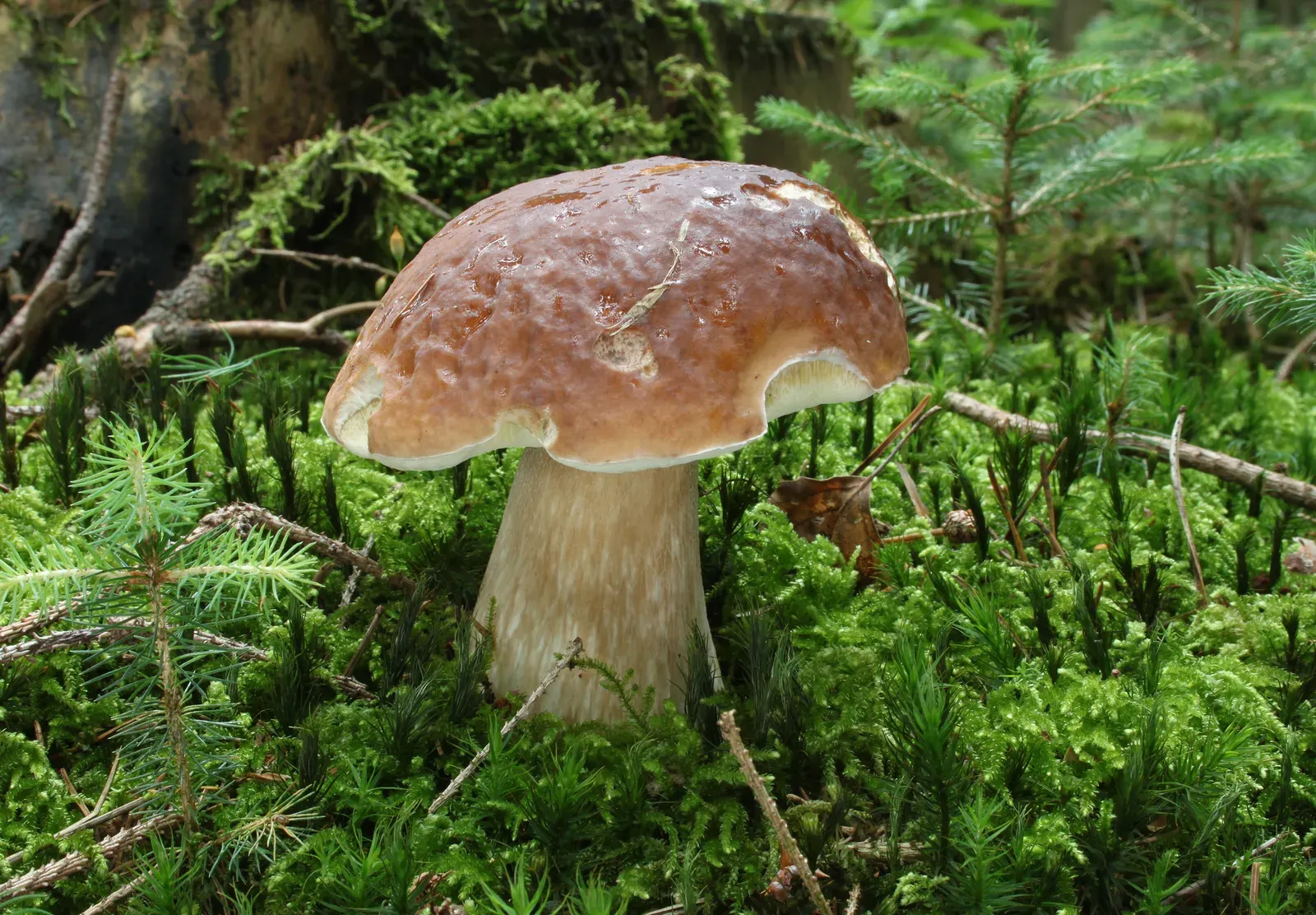
Among the porcini family there's one that stands out with a pale, almost honey-colored cap. It's the birch-loving bolete (Boletus betulicola, listed in our catalog as Boletus betulicola), a faithful companion of birches. While other boletes hide in the shade of oak woods or pinewoods, this one stands out in plain sight on a bright forest edge.
It's often not treated as a separate species but as a pale form of the classic porcini. For a hands-on forager, though, the distinction is simple and useful: know your birches, and you know where to look for this bolete.
Why it sticks to birches
Porcini live in a close partnership with trees called mycorrhiza: the mycelium wraps around the fine roots and trades nutrients with the tree. Each kind of porcini favors its own trees, and Boletus betulicola, as its name (“birch-dweller”) suggests, has chosen birch.
So don't look for it “anywhere in the forest,” but where there are birches: on bright forest edges, in birch groves, along roads lined with young birch. That's the shortest route to a full basket.
Interestingly, under the same birches you'll often find the brown birch bolete, a completely different mushroom with a dark velvety cap and a slender stem. They're hard to confuse, but they can grow very close together.
What Boletus betulicola looks like
You recognize it by a combination of features, not just one. Look the mushroom over from top to bottom.
- Cap. Pale: ochre, cream, honey, sometimes almost white in young mushrooms. Convex, cushion-shaped with age, with a smooth surface.
- Stem. Thick, barrel-shaped, pale, almost white, with a fine pale net in the upper part.
- Pores. The tube layer underneath: white in young mushrooms, then yellowish, olive green in old ones. It is never pink.
- Flesh. Firm, white, with a pleasant nutty smell. It does not change color when cut.
Because of its pale color it's sometimes nicknamed the “white white mushroom.” The most reliable check is the same as for the rest of the family: when cut, a true porcini stays white; it does not turn blue or red.
How it differs from other porcini
The easiest guides are the tree and the cap color.
- **Summer bolete** is darker, hazelnut brown, with a matte cap that cracks in the heat; it grows under oak and beech.
- **Pine bolete** is the darkest, chestnut-wine, and lives under pines.
- **The classic porcini** is the all-rounder: it turns up everywhere, with a medium color.
- Boletus betulicola is the palest and sticks to birches.
In essence it's the same wonderful porcini, just dressed in “birch” colors. In the kitchen they're all equally good.
Where and when to look for it
Boletus betulicola loves light and warmth. The best spots are:
- sunny edges of broadleaf forest with young birches;
- birch groves and grassy clearings;
- patches of mixed forest where birch grows alongside pine;
- the verges of old forest roads overgrown with birch.
It doesn't like dense, wet thickets; it needs warm ground and a bit of sun. The season runs from June to October, in flushes after warm rains. The best time to go is two or three days after rain, once the soil has warmed up again. An easy way to track these windows is our mushroom radar: it shows when moisture and warmth line up just right for boletes to appear.
Found one? Don't rush off. Boletes grow in families, and there are often a few more under the same birch.
Caution never hurts
Like all porcini, Boletus betulicola has a bitter look-alike, the bitter bolete. It gives itself away with pinkish pores under the cap and a dark net on the stem. The porcini has white or yellow pores and a pale net. And remember the golden rule: if you're not sure, don't pick it.
Sources
- “Key to the Fungi of Ukraine” (Kyiv, Naukova Dumka publishing house).
- Boletus betulicola in GBIF, the global biodiversity database.
- Boletus betulicola in MycoBank, the international fungal nomenclature database.
- Boletus edulis on Wikipedia.
Frequently asked questions
What is Boletus betulicola?
It's a pale kind of true porcini (*Boletus betulicola*) that grows alongside birches. It's often considered a pale form of the common porcini. It has an ochre-cream cap and white flesh that doesn't turn blue.
What does Boletus betulicola look like?
A pale, almost honey or cream cap, a thick pale stem with a fine net at the top, white or yellowish pores underneath and firm white flesh. Because of its pale color it's nicknamed the “white white mushroom.”
Where does Boletus betulicola grow?
On bright birch-lined forest edges, in groves and grassy clearings, and also in where birch grows alongside pine. It loves warm ground and a bit of sun.
When to pick Boletus betulicola?
The season runs from June to October, in flushes after warm rains. It's best to go two or three days after rain, guided by the .
How does Boletus betulicola differ from the brown birch bolete?
They're different mushrooms. Boletus betulicola has a thick barrel-shaped stem with a net and a pale cap, while the has a slender stem with dark scales and a darker velvety cap. The porcini's flesh is firmer.
Does Boletus betulicola turn blue when cut?
No. The flesh of a true porcini stays white when cut. If the mushroom turns blue or red, it's a different species, and you shouldn't take it.
How does Boletus betulicola differ from the summer and pine boletes?
Mainly by color and tree. Boletus betulicola is the palest and sticks to birches, the is hazelnut brown under oak, and the is dark wine-colored under pine. In the kitchen they're all equally good.
Is Boletus betulicola edible?
Yes, it's a full-fledged porcini, edible and prized. Pick young, firm specimens with white or light yellow pores; they're excellent both fresh and dried.
Mushrooms in this article
Related articles
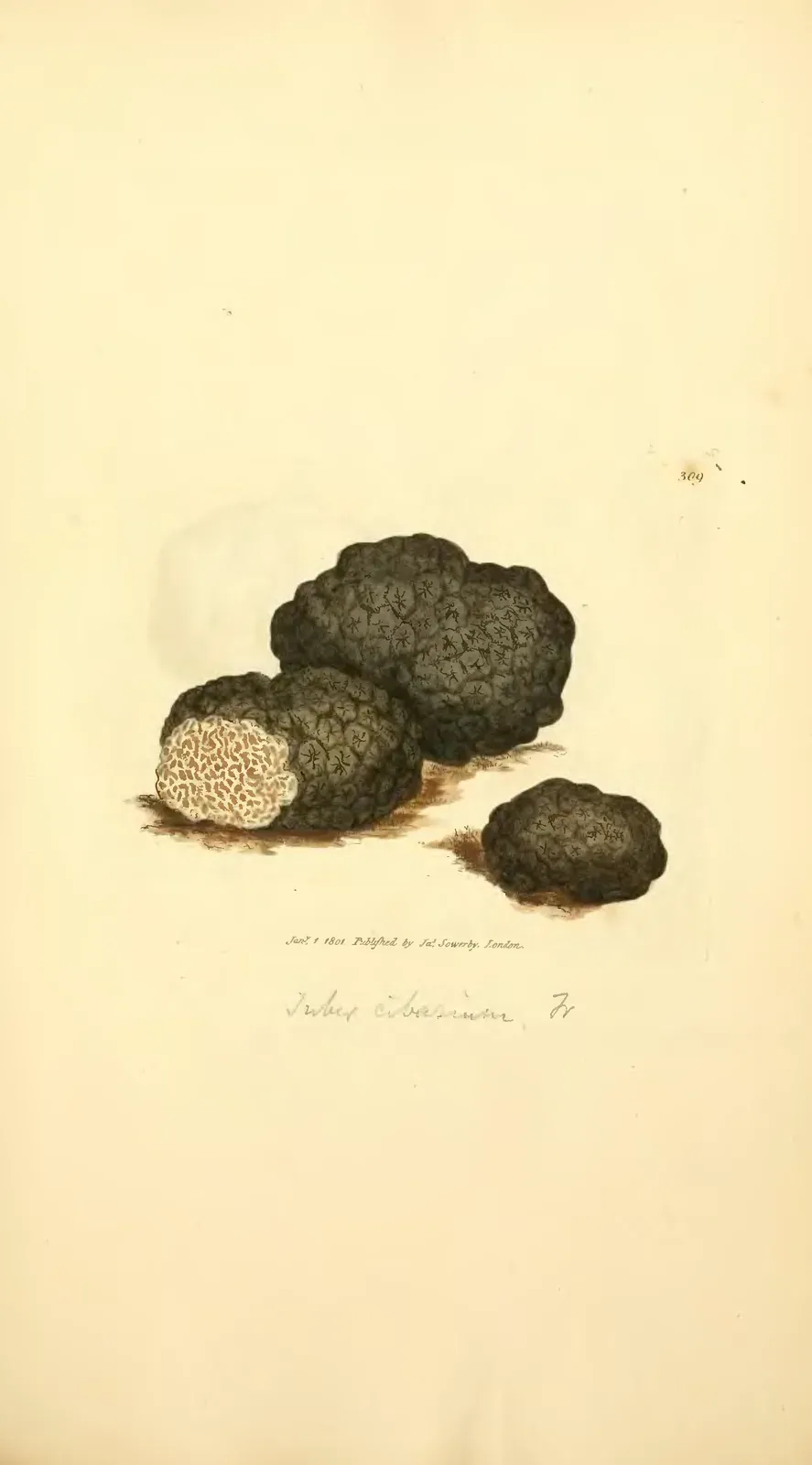 How to identify
Truffles in Ukraine: do they grow here, and where to look
Truffles aren't just a French delicacy. Several species grow in Ukraine too. Here's which ones, where they occ…
August 24, 2026·2 min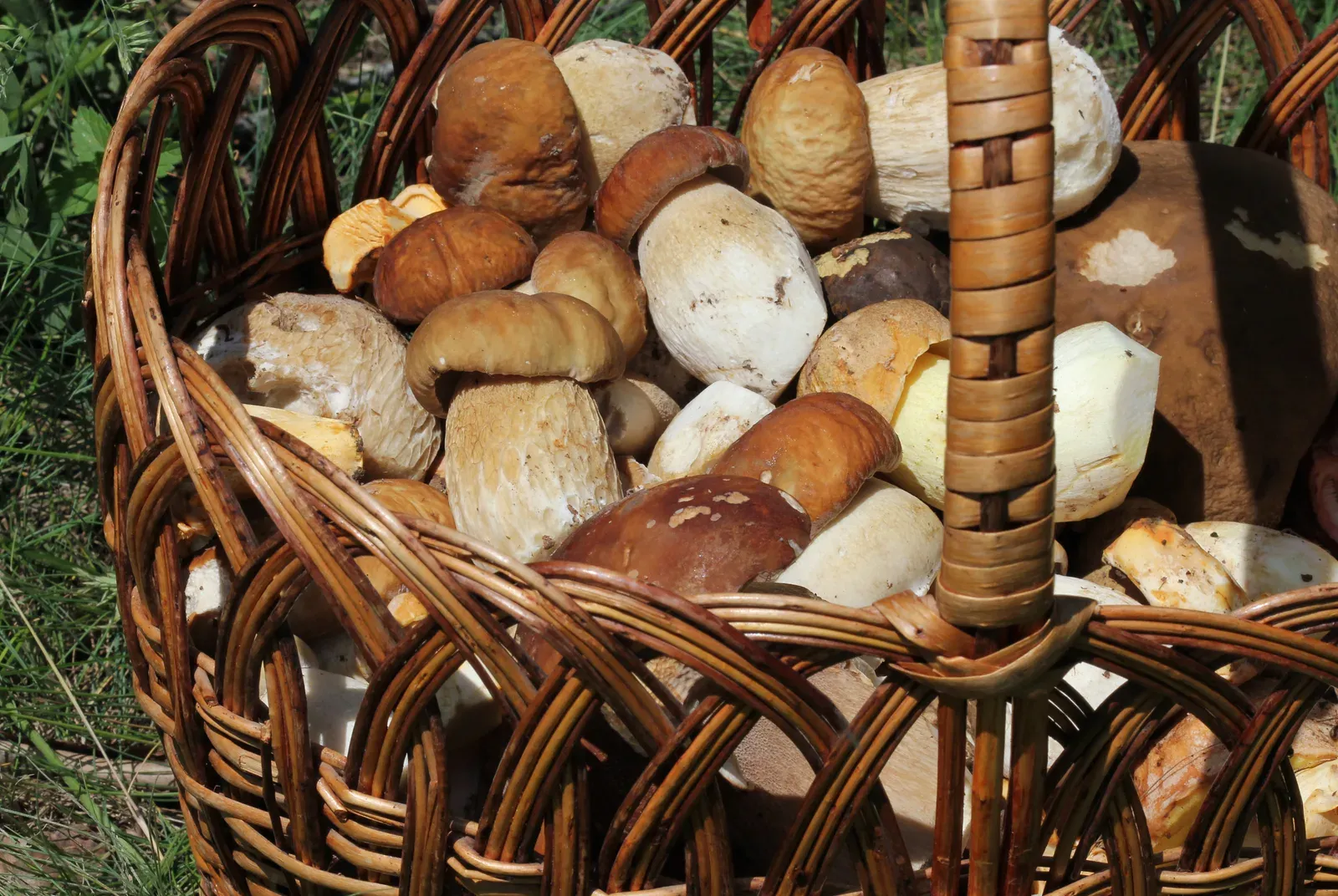 Recipes & cooking
How to store fresh mushrooms, and for how long
Fresh mushrooms spoil faster than you might think. Here's how long they keep in the fridge, how to store them…
August 21, 2026·4 min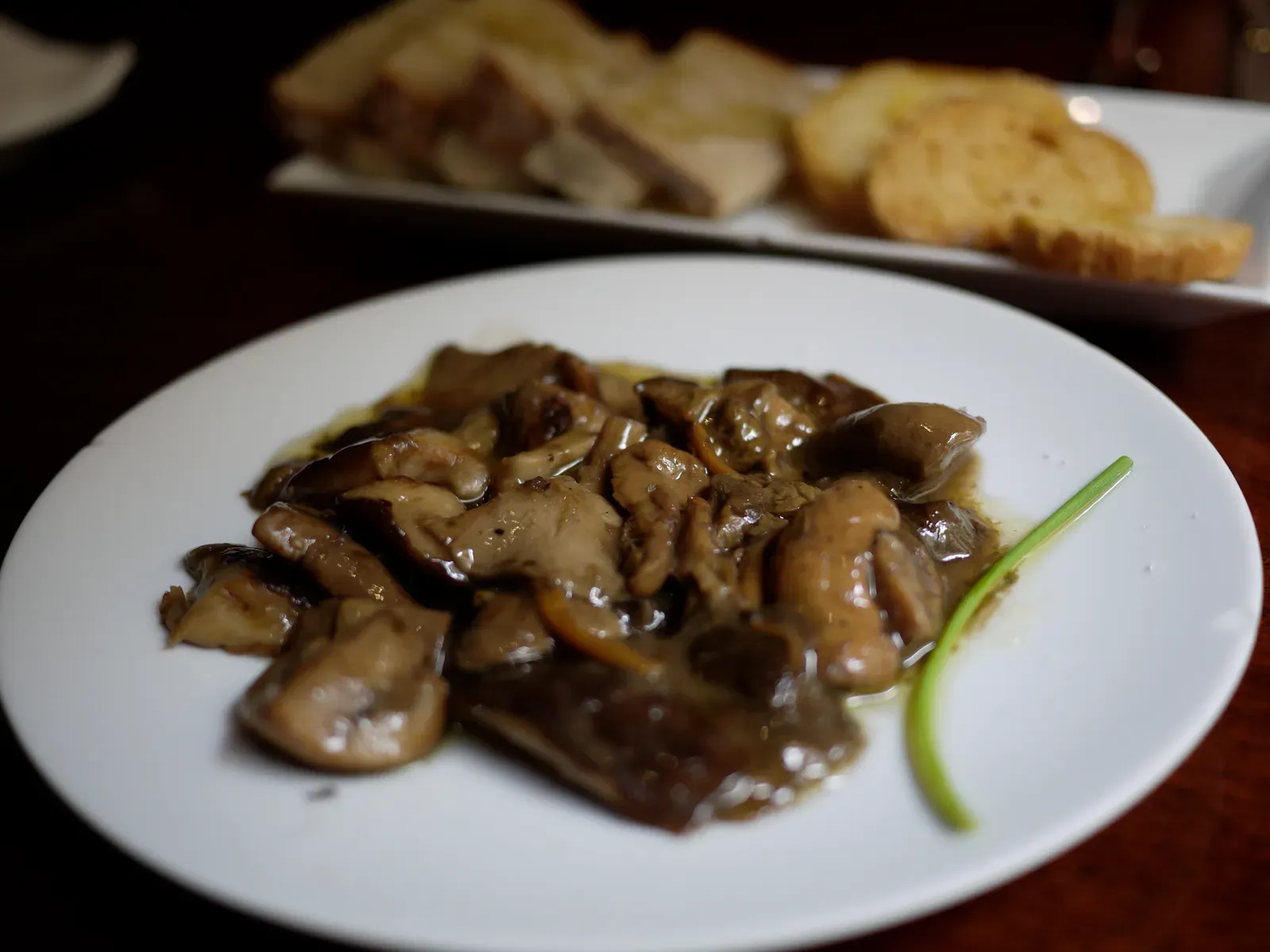 Recipes & cooking
How long to boil mushrooms
Boiling time depends on the type of mushroom and on what you're cooking next. Here's a clear cheat sheet: how…
August 22, 2026·4 min