
Stumbling upon mushrooms lined up in a neat circle in a forest or meadow is a sight that has amazed people for ages. Folk tradition called these circles "fairy rings" and credited them with magic. In truth, there's simple and beautiful fungal biology behind it.
Let's look at why mushrooms grow in a circle and how these rings form.
How a ring forms
It all starts with a spore that germinated at a single point. From there, the mycelium spreads out evenly in every direction, like ripples on water. The central, oldest part of the mycelium gradually exhausts the soil and dies off, while the living, active edge keeps moving outward.
The fruiting bodies — the mushrooms — appear right on this active edge. That's why they line up in a circle that grows bigger year after year.
Why the ring gets bigger every year
The mycelium's edge advances by a few centimeters to a few tens of centimeters a year. So a fairy ring expands season after season: the older the mycelium, the bigger the circle. Some meadow rings reach tens of meters across and are hundreds of years old.
Which mushrooms grow in rings
Rings are most often formed by meadow and forest mushrooms whose mycelium lives in the soil:
- Field mushrooms, parasols — in meadows and clearings.
- Fairy ring champignon — the classic "fairy ring" maker on lawns.
- Some Tricholoma (knights) and funnels — in the forest in fall.
Mycorrhizal mushrooms, which are tied to trees, usually don't form rings.
A mark on the grass
Often you can spot a ring even without mushrooms: the grass along the active edge can be darker and thicker (the mycelium releases nutrients) or, the other way around, yellowed. That's what gives away the underground circle. On how mycelium grows in general, we have a separate article.
Sources
- "Field Guide to the Mushrooms of Ukraine" (Kyiv, Naukova Dumka publishing house).
- Fairy ring on Wikipedia.
- Mycelium on Wikipedia.
Frequently asked questions
Why do mushrooms grow in a circle?
Because the mycelium spreads evenly in every direction from a single point, and mushrooms appear on its active outer edge — that's why they line up in a circle.
What is a fairy ring?
It's a circle of mushrooms that forms on the active edge of the mycelium. Folklore credited it with magic, but the cause is purely biological.
Why does the ring get bigger every year?
The mycelium's edge advances by a few centimeters a year, so the circle expands season after season. Old rings can be tens of meters across.
Which mushrooms form fairy rings?
Most often meadow and forest mushrooms whose mycelium lives in the soil — field mushrooms, parasols, fairy ring champignon, some Tricholoma (knights) and funnels.
Why does the grass in a ring look different?
The active edge of the mycelium changes the soil: the grass along it can be darker and thicker or, the other way around, yellowed, which gives away the underground circle.
Are fairy rings dangerous?
No, it's an ordinary natural phenomenon. Only the mushrooms themselves can be dangerous, if there are poisonous species among them, so they need to be identified.
Can you eat mushrooms from a fairy ring?
Yes, if it's an edible species (for example, fairy ring champignon or a field mushroom). What matters is identifying the mushroom with confidence, not the fact that it grows in a ring.
How long does a fairy ring live?
As long as the mycelium does — from a few years to centuries. The biggest meadow rings are hundreds of years old.
Related articles
 Science & taxonomy
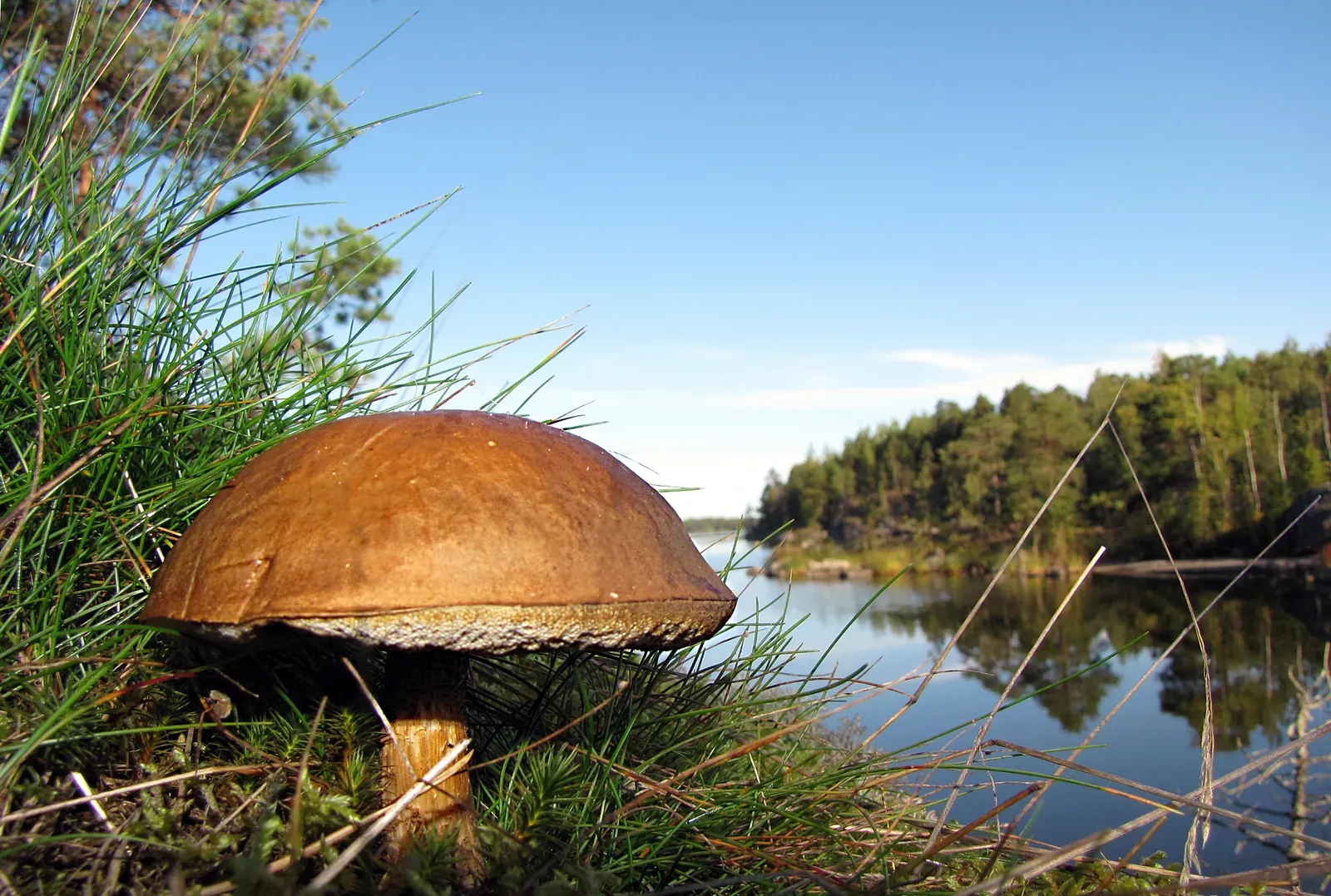
Bay bolete: health benefits and nutritional value
The bay bolete is a match for porcini in both flavor and nutrition. Here's why the bay bolete is good for you,…
August 20, 2026·2 min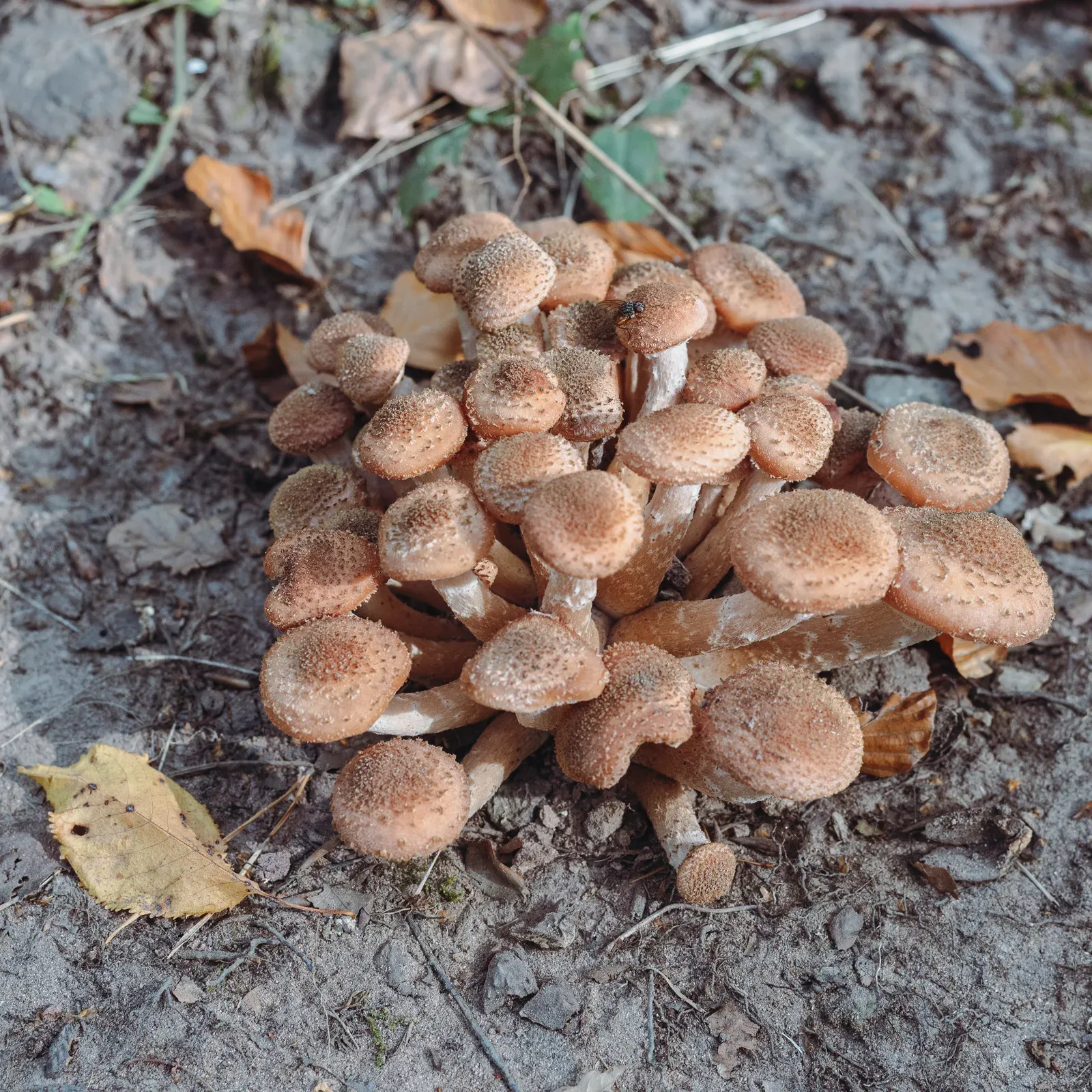 Science & taxonomy
Honey fungus: health benefits and risks
Honey fungus is a nourishing autumn mushroom, rich in protein and minerals. Here's why honey fungus is good fo…
August 20, 2026·2 min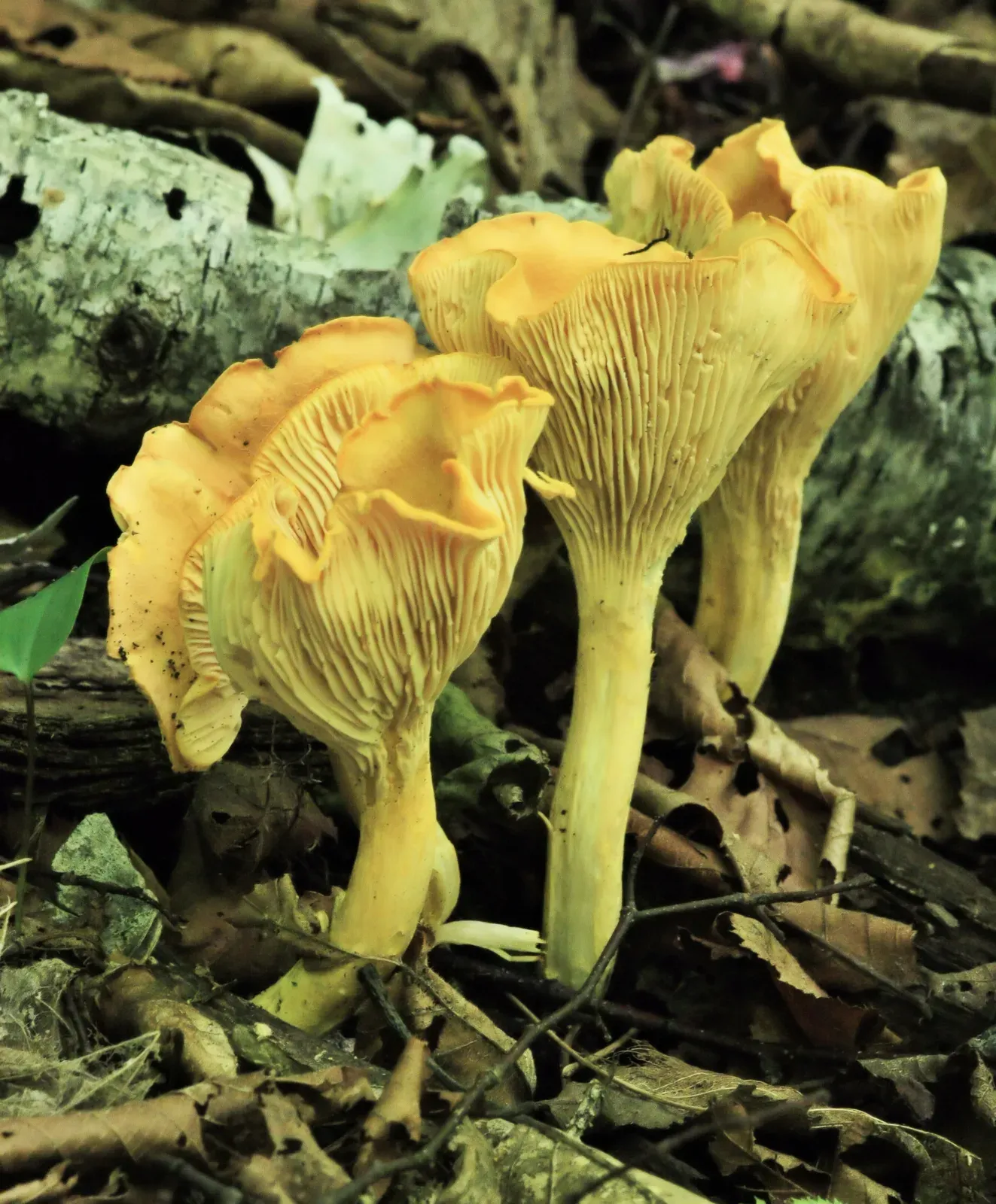 Science & taxonomy
Chanterelles: medicinal properties and health benefits
Chanterelles are credited with plenty of health-giving properties. Here's what really makes them valuable, wha…
August 23, 2026·2 min