.webp)
June only seems like one continuous month. For a forager it’s really two different periods: a cautious start, when the forest is just waking up, and a generous second half, when the real flush comes. If you know the difference, it’s easier to plan a successful outing.
Let’s look at what grows in early June, why the main peak more often falls in the second half of the month and what that depends on from year to year.
What grows in early June
The first half of June is usually more modest. The soil hasn’t warmed up everywhere yet, and spring moisture is running out in places. But a few things are already turning up.
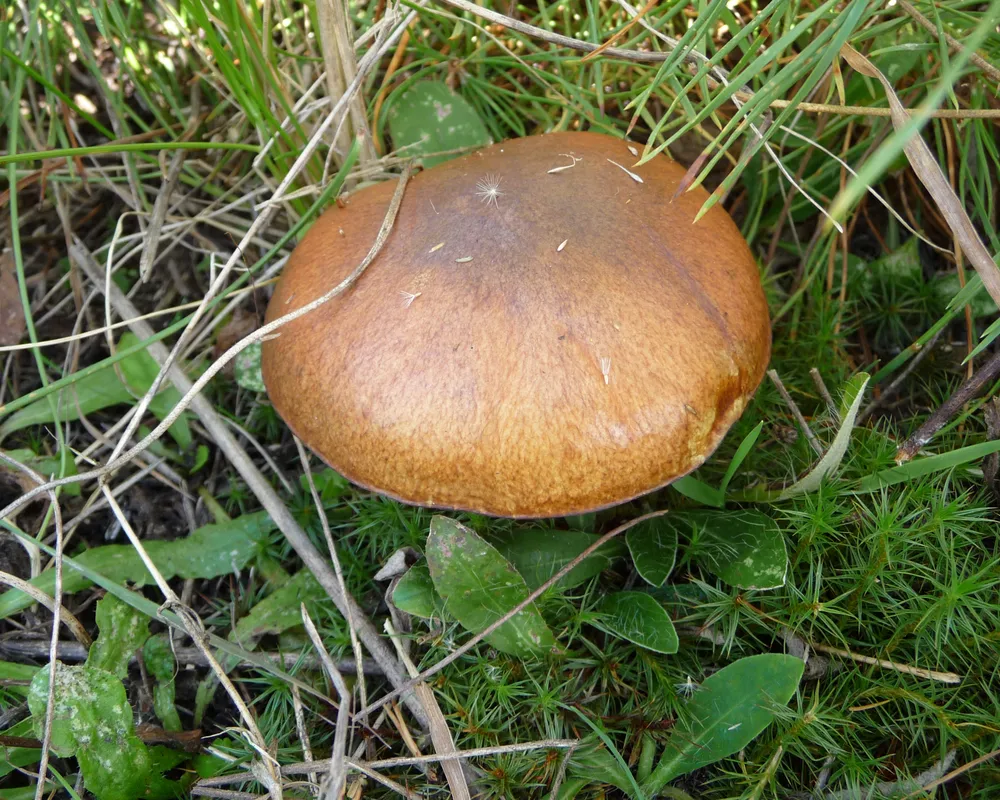
- **The first slippery jacks.** They respond to warmth faster than others and can appear in young pine stands as early as the start of the month.
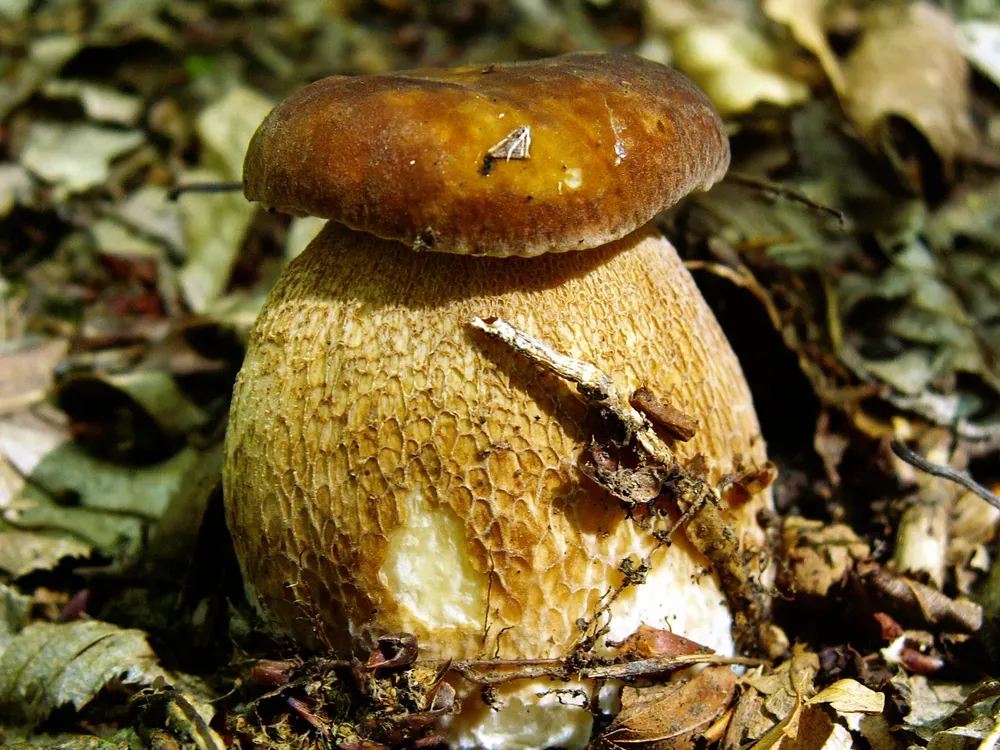
- **Scattered porcini.** The summer bolete sometimes comes up in the very first days of June, but more as singles than en masse.
- Brittlegills and Xerocomus boletes. Undemanding mushrooms that appear early, as soon as warm rains fall.
At the start of the month your basket is usually modest, but the mushrooms are young and clean. It’s a good time for scouting: check your spots and figure out where moisture is holding best this year.
Why the peak more often falls in the second half
By the middle and end of June several favorable factors come together, and that’s when the main flush arrives.
- The soil has fully warmed up. Most summer mushrooms love warmth, so they get going as it heats up.
- June thunderstorms join in. The second half of the month more often brings warm rains that trigger mass fruiting.
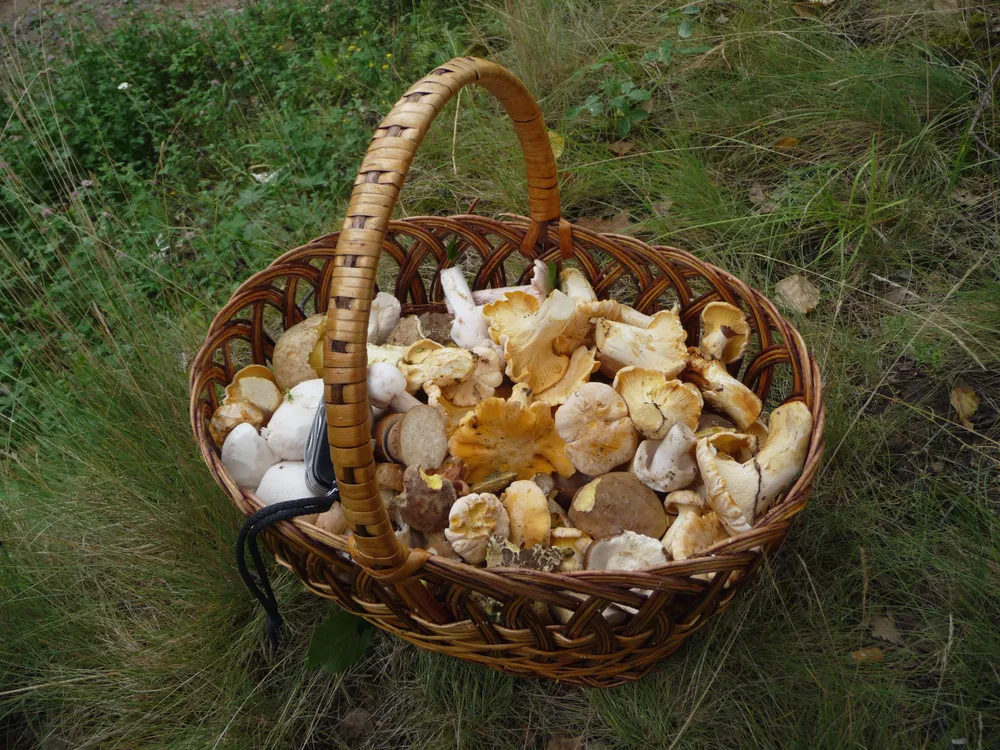
- **Then come chanterelles.** Their first big flush usually falls in exactly this period.
So if you can choose when to go, bet on the second half of June, especially a few days after a good thunderstorm.
Why it’s different every year
It’s important to understand that these guidelines are approximate. The mushroom calendar is set by the weather, not the date.
In a warm, wet year the peak can shift to early June, while in a cold, dry one it can be pushed back as far as July. Sometimes an early heatwave kills the first flush, and the forest only comes to life after the first July rains.
So it’s smarter to go by real conditions rather than a date on the calendar. That’s exactly what the mushroom radar helps with: it shows when moisture and warmth line up well this very year and in your region.
How not to miss the mushroom flush
A few simple habits will help you catch the peak, whenever it comes.
- Keep track of the rain. Note the day of a good thunderstorm and plan your outing for the third or fourth day after it.
- Go scouting. A short walk in the forest will show whether the mushrooms have started, even if your basket is still empty.
- Don’t get hung up on the date. Be ready to head out when the weather is right, not when a certain date arrives.
The bottom line is simple: early June is for scouting and the first mushrooms; the second half is the most likely peak. And the exact moment will always be shown by the weather and the mushroom radar.
Sources
- “Identification Guide to the Fungi of Ukraine” (Kyiv, Naukova Dumka publishers).
- Boletus reticulatus on GBIF, the global biodiversity database.
- Fungi on MycoBank, the international fungal nomenclature database.
- Mushroom hunting on Wikipedia.
Frequently asked questions
When is the real mushroom peak in June?
Most often the main flush comes in the second half of June, when the soil has fully warmed up and warm thunderstorms join in. But the exact timing depends on the weather each year.
What grows in early June?
The first , scattered , plus brittlegills and Xerocomus boletes. Your basket is more modest early in the month, but the mushrooms are young and clean.
Why is the peak more often in the second half of the month?
Because by mid-June several factors come together: warm soil, warm thunderstorms and the first big flush of . Together they produce mass fruiting.
Can the peak shift?
Yes. In a warm, wet year it can come as early as the start of June, while in a cold, dry year it’s pushed back to July. It’s the weather that decides, not the date.
Is it worth going to the forest in early June?
Yes, if only for scouting. You’ll check your spots, see where moisture is holding, and you may pick the first young mushrooms.
How can you tell the peak has arrived?
The most reliable way is a short scouting walk in the forest and keeping track of the rain. It’s also handy to check , which takes moisture and temperature into account.
How long does a mushroom flush last in June?
Usually a few days, sometimes up to one or two weeks if the weather stays warm and wet. After that, new rain is needed to set off the next flush.
Can you miss the peak?
You can, if you head out too late: mushrooms get overgrown and wormy. That’s why it’s important to keep track of the rain and not delay your outing after a thunderstorm.
Mushrooms in this article
Related articles
 Recipes & cooking
How to store fresh mushrooms, and for how long
Fresh mushrooms spoil faster than you might think. Here's how long they keep in the fridge, how to store them…
August 21, 2026·4 min How to identify
Truffles in Ukraine: do they grow here, and where to look
Truffles aren't just a French delicacy. Several species grow in Ukraine too. Here's which ones, where they occ…
August 24, 2026·2 min Recipes & cooking
How long to boil mushrooms
Boiling time depends on the type of mushroom and on what you're cooking next. Here's a clear cheat sheet: how…
August 22, 2026·4 min