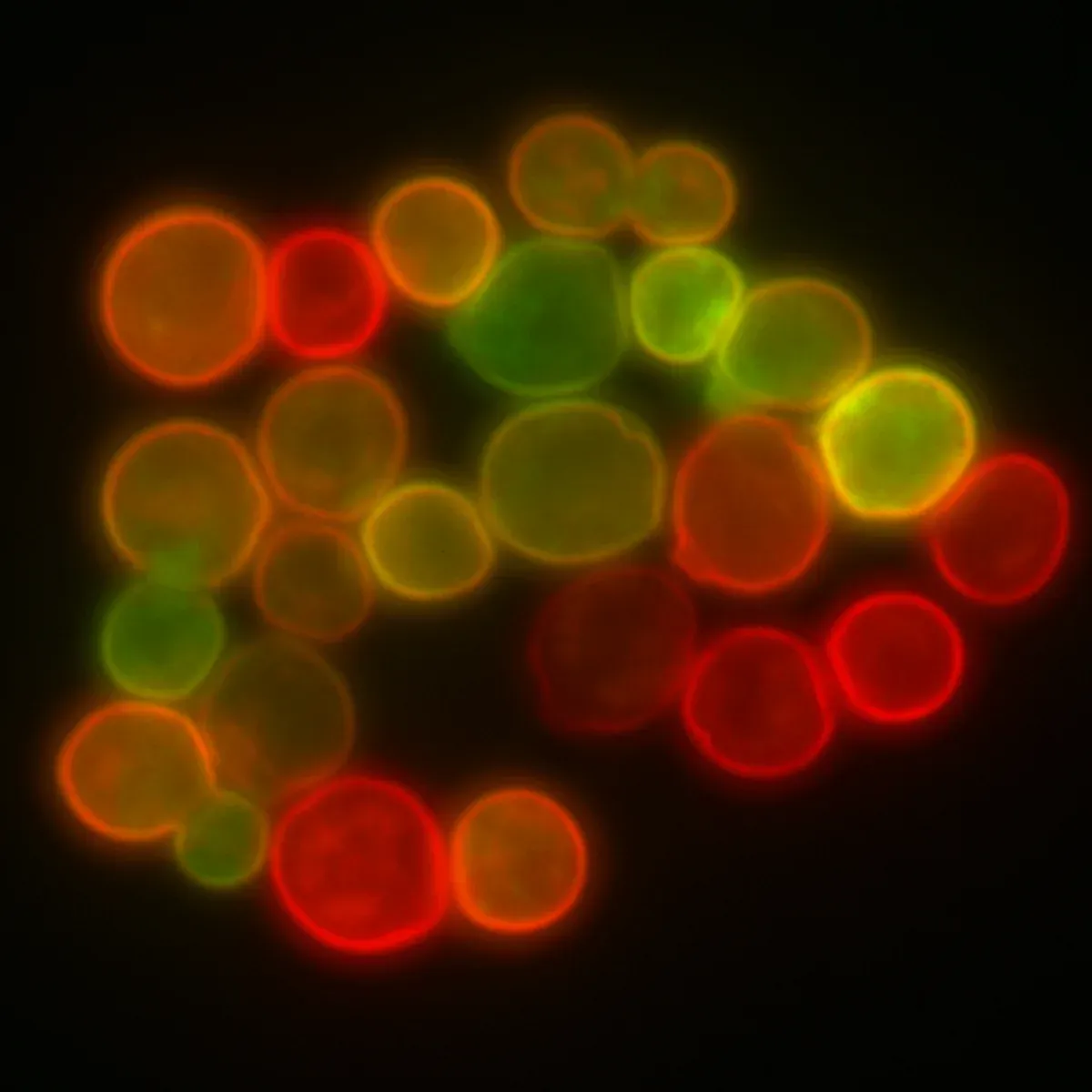
This question comes from school biology, but people really do type it a lot — often alongside the names of specific mushrooms: “is a slippery jack single-celled or multicellular”, “is a button mushroom…”. The short answer: most fungi are multicellular, but there's one important exception — yeasts.
Multicellular: almost all the mushrooms you know
The mushroom you cut in the forest is only the fruiting body of a large multicellular organism. Most of it hides in the soil or wood — that's the mycelium (the fungal network), a tangle of fine threads.
- These threads are called hyphae.
- Hyphae are made of many cells, often divided by cross-walls (septa).
- The fruiting body — cap and stem — is also built from tightly interwoven hyphae.
So porcini, slippery jacks, button mushrooms, honey fungus — they're all multicellular. We've covered how long mycelium lives in a separate article.
The single-celled exception: yeasts
The main exception is yeasts. They're true fungi, but they live as separate single cells that reproduce by budding. Yeasts are what make dough rise and ferment grape juice into wine.
So when someone asks “are fungi single-celled or multicellular”, the most accurate answer is: fungi can be both, but the vast majority of the species we forage are multicellular, and the single-celled ones are mainly yeasts.
Which kingdom fungi belong to
And one more question that often comes up: fungi are neither plants nor animals, but a separate kingdom of living things (Fungi). They don't photosynthesize like plants; they feed on ready-made organic matter like animals do — which is why they were set apart.
Sources
- “Identification Guide to the Fungi of Ukraine” (Kyiv, Naukova Dumka publishing house).
- Fungus, Hypha, Yeast on Wikipedia.
Frequently asked questions
Are fungi single-celled or multicellular?
Most fungi are multicellular: their body is a mycelium made of hyphae. But yeasts are single-celled fungi.
What are hyphae and mycelium?
Hyphae are the fine threads a fungus is made of. Their tangle in soil or wood is called the mycelium (the fungal network).
Are slippery jacks or button mushrooms single-celled?
No, they're multicellular. Among fungi, the single-celled ones are mostly yeasts, not cap mushrooms.
Are yeasts really fungi?
Yes. Yeasts belong to the fungal kingdom; they just live as separate cells that reproduce by budding.
Are fungi plants or animals?
Neither. Fungi are a separate kingdom of living things (Fungi): they don't photosynthesize but feed on ready-made organic matter.
What is a fruiting body?
It's the part of the fungus we see and pick (the cap and stem). The main organism — the mycelium — stays hidden in the substrate.
Related articles
 Science & taxonomy
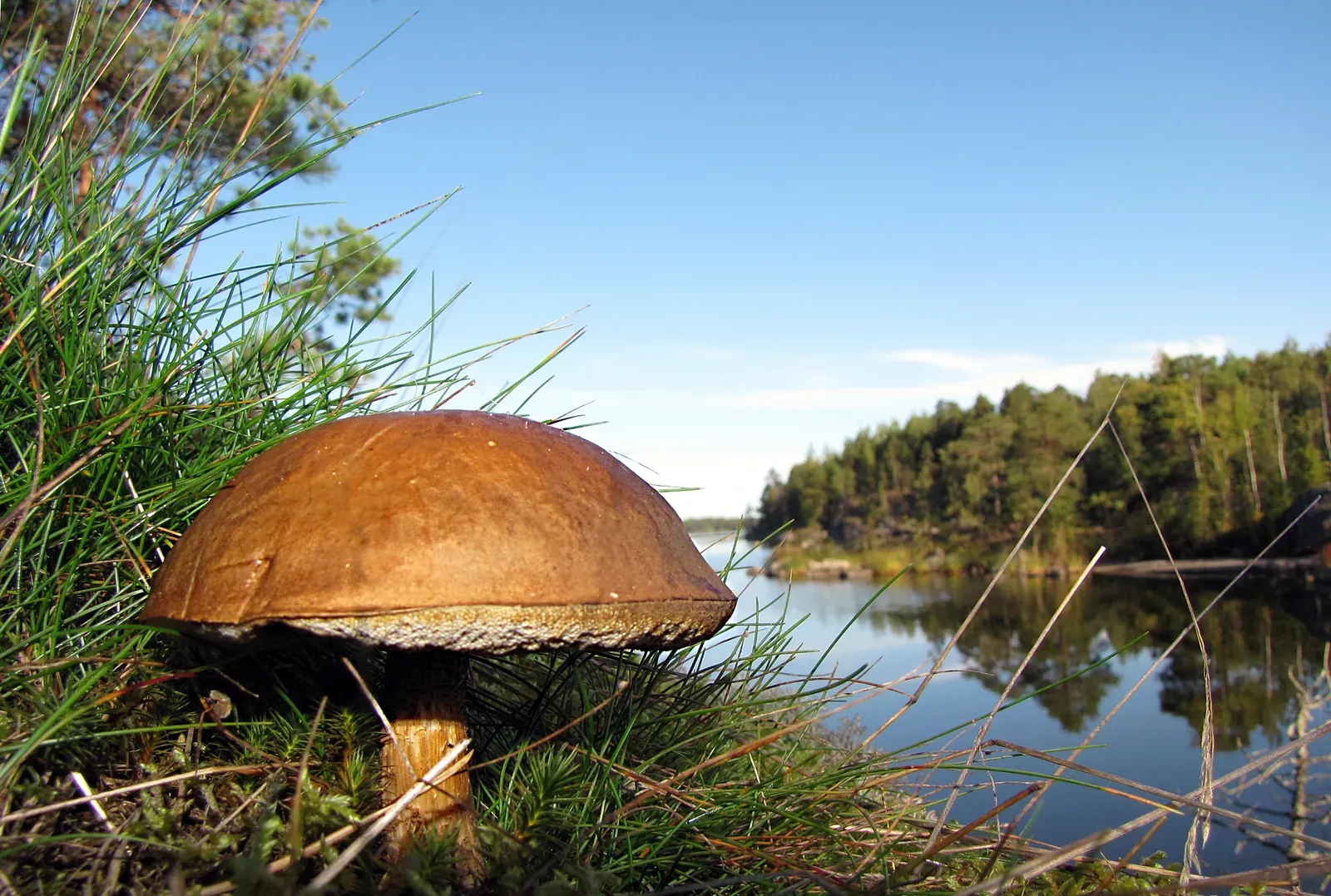
Bay bolete: health benefits and nutritional value
The bay bolete is a match for porcini in both flavor and nutrition. Here's why the bay bolete is good for you,…
August 20, 2026·2 min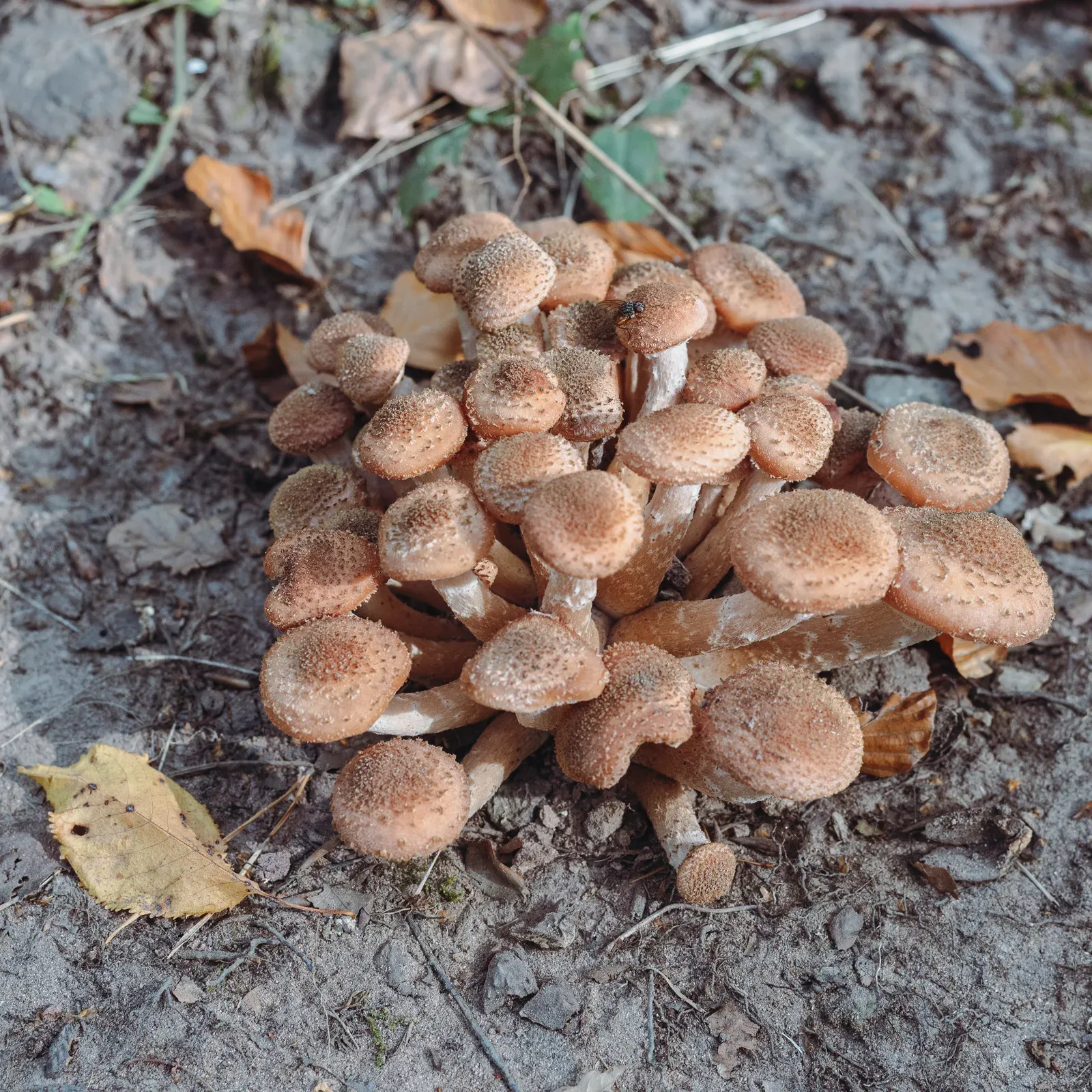 Science & taxonomy
Honey fungus: health benefits and risks
Honey fungus is a nourishing autumn mushroom, rich in protein and minerals. Here's why honey fungus is good fo…
August 20, 2026·2 min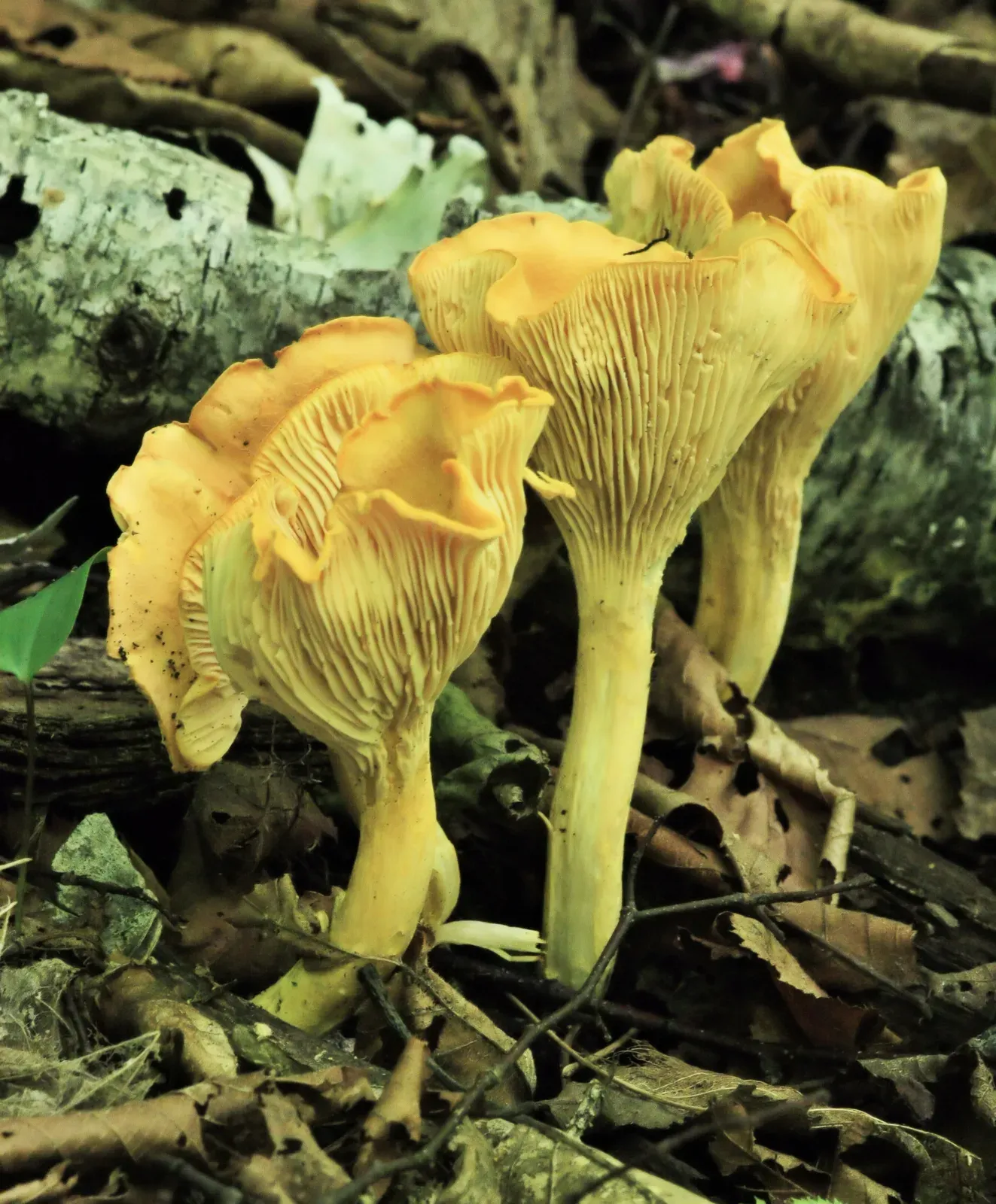 Science & taxonomy
Chanterelles: medicinal properties and health benefits
Chanterelles are credited with plenty of health-giving properties. Here's what really makes them valuable, wha…
August 23, 2026·2 min