
Schoolkids and grown-ups alike ask this: a mushroom grows out of the ground like a plant, but it isn't green and doesn't flower. So what is it? The short answer: fungi are neither plants nor animals, but a separate, third kingdom of life. Let's look at why, and how they differ from plants.
A kingdom of their own
Biologists really did once classify fungi as plants — because they stay in one place and don't run around. But the more scientists studied fungi, the clearer it became: these are completely different organisms. So they were placed in their own kingdom, Fungi, alongside the Plant and Animal kingdoms.
How fungi differ from plants
The main difference is in how they feed:
- Plants make their own food from sunlight (photosynthesis) thanks to green chlorophyll.
- Fungi have no chlorophyll and can't photosynthesize. Like animals, they feed on ready-made organic matter — absorbing nutrients from soil, wood, or through symbiosis with trees.
That's why fungi aren't green and can grow in the dark, for example in caves or cellars, where no plant would survive.
Why fungi are closer to animals
Although a mushroom looks like a plant on the outside, genetically and biochemically it is closer to animals:
- fungal cell walls are made of chitin — the same substance as a beetle's or crayfish's shell, rather than plant cellulose;
- fungi, like animals, feed on ready-made organic matter, not on light;
- they store energy not as starch, the way plants do, but as a substance similar to the one animals use.
So what is a mushroom
What we pick is only the fruiting body, an organ for scattering spores. The organism itself is the mycelium, a web of thin threads in the soil. And fungi reproduce not by seeds but by spores — more on that in the article how mushrooms reproduce.
Fungi are an ancient and amazing kingdom that still holds plenty of mysteries. We've gathered a few surprising facts in our piece interesting facts about mushrooms.
Sources
- Fungi on Wikipedia.
- Kingdom Fungi on GBIF, the global biodiversity database.
- Fungus in Encyclopaedia Britannica.
Frequently asked questions
Are mushrooms plants or animals?
Neither. Fungi are placed in a separate kingdom of life (Fungi) alongside plants and animals, because they differ too much from both.
Why aren't fungi classed as plants?
Because they have no chlorophyll and can't photosynthesize. A plant feeds on light, while a fungus, like an animal, absorbs ready-made organic matter. That's why fungi aren't green and can grow in the dark.
Why do people say fungi are closer to animals?
Because their cell walls are made of chitin — like an insect's shell — rather than plant cellulose. On top of that, fungi feed on ready-made organic matter and store energy the way animals do.
Can mushrooms grow without light?
Yes. Since fungi don't photosynthesize, they don't need light. They grow in dark caves, cellars and inside wood, as long as there's moisture and food.
What is a mushroom, really?
The mushroom we pick is only the fruiting body. The organism itself is the mycelium, a web of thin threads in soil or wood that lives for years.
How do mushrooms reproduce if they aren't plants?
Not by seeds but by microscopic spores. They fall from under the cap, are carried by the wind and, once they land in moist soil, germinate into a new mycelium.
Which kingdom do fungi belong to?
The kingdom Fungi. It's one of the main kingdoms of life, separate from plants and animals, with its own unique features of structure and nutrition.
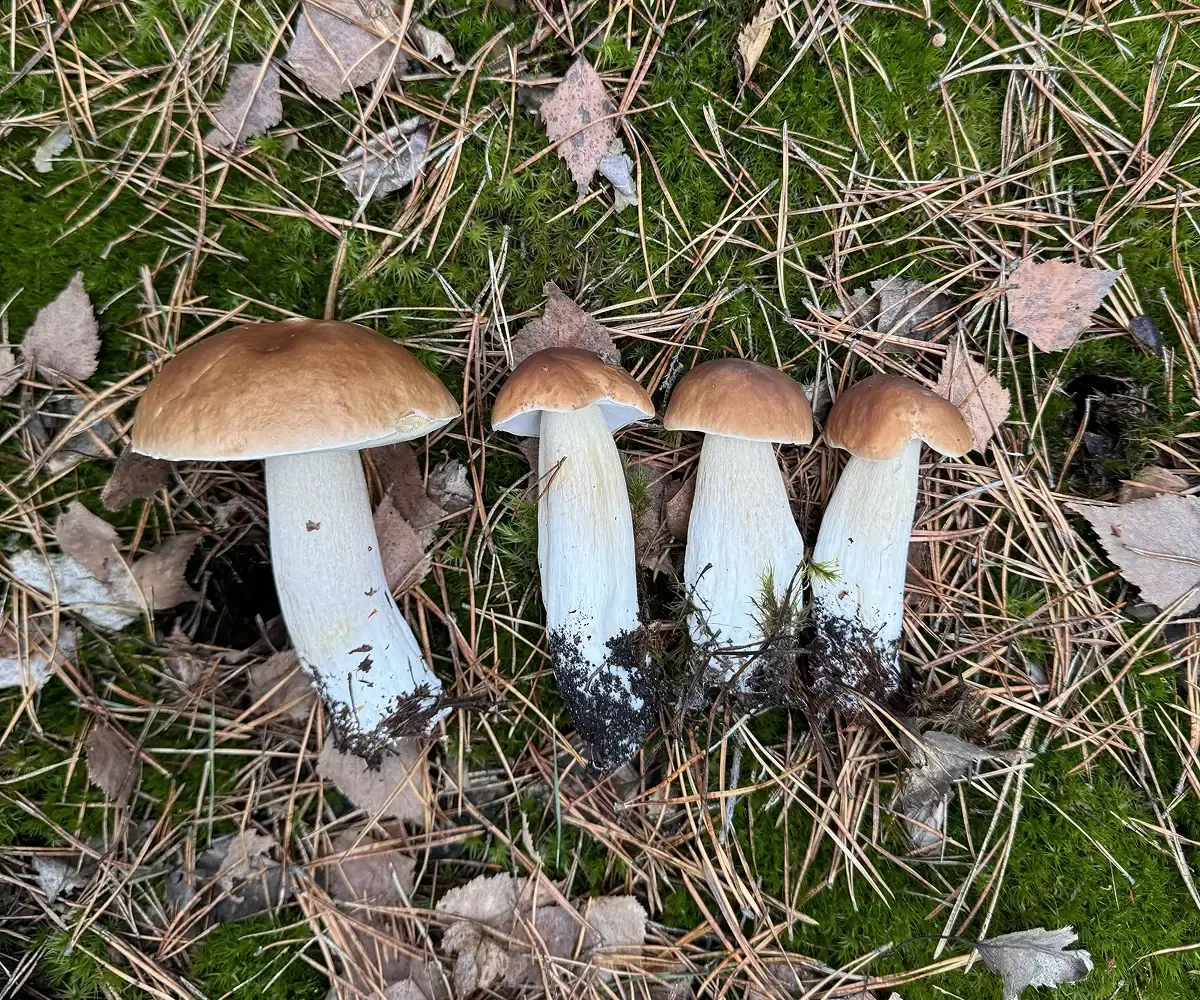
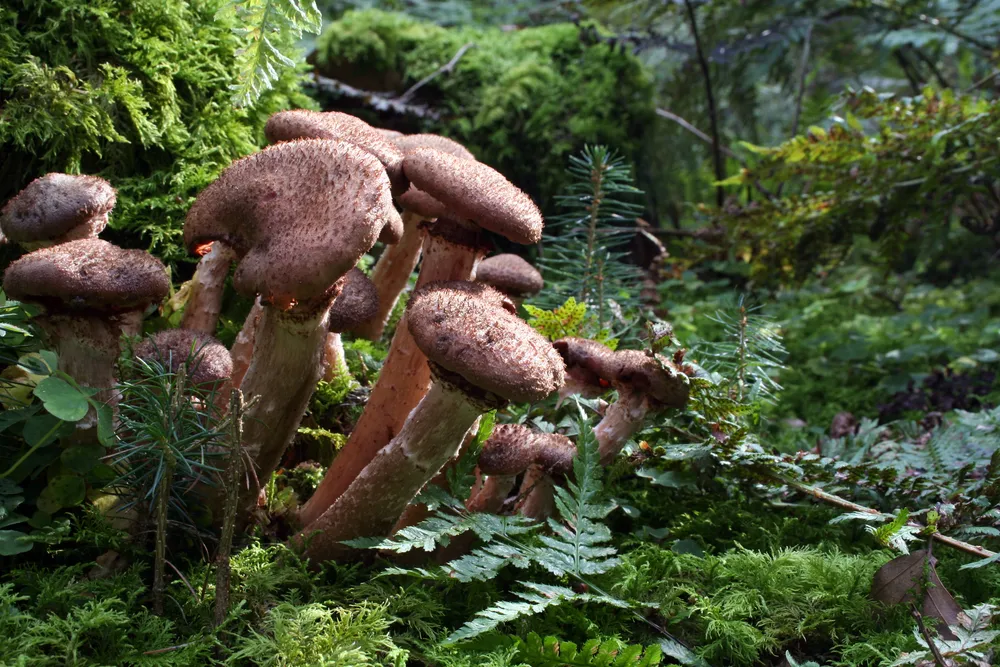
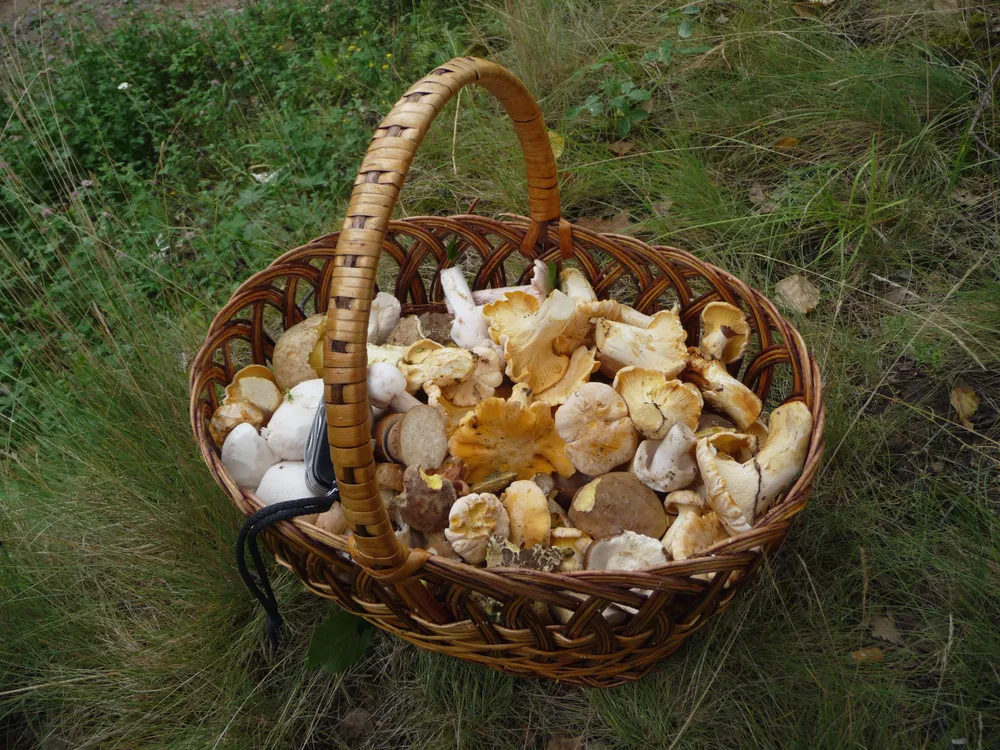
Mushrooms in this article
Related articles
 Science & taxonomy
Bay bolete: health benefits and nutritional value
The bay bolete is a match for porcini in both flavor and nutrition. Here's why the bay bolete is good for you,…
August 20, 2026·2 min Science & taxonomy
Honey fungus: health benefits and risks
Honey fungus is a nourishing autumn mushroom, rich in protein and minerals. Here's why honey fungus is good fo…
August 20, 2026·2 min Recipes & cooking
How to store fresh mushrooms, and for how long
Fresh mushrooms spoil faster than you might think. Here's how long they keep in the fridge, how to store them…
August 21, 2026·4 min