
Plants reproduce by seeds, animals give birth to young, and fungi have chosen their own path — spores. These are microscopic “seeds,” and a single mushroom releases millions or even billions of them. Let's look, in simple terms, at how this works and how a new mycelium grows from a spore.
What spores are
A spore is a tiny cell, thousands of times smaller than a poppy seed. It's for the sake of spores that a fungus grows a fruiting body at all: its whole cap is a spore “factory.”
Spores ripen on the underside of the cap, in the hymenophore:
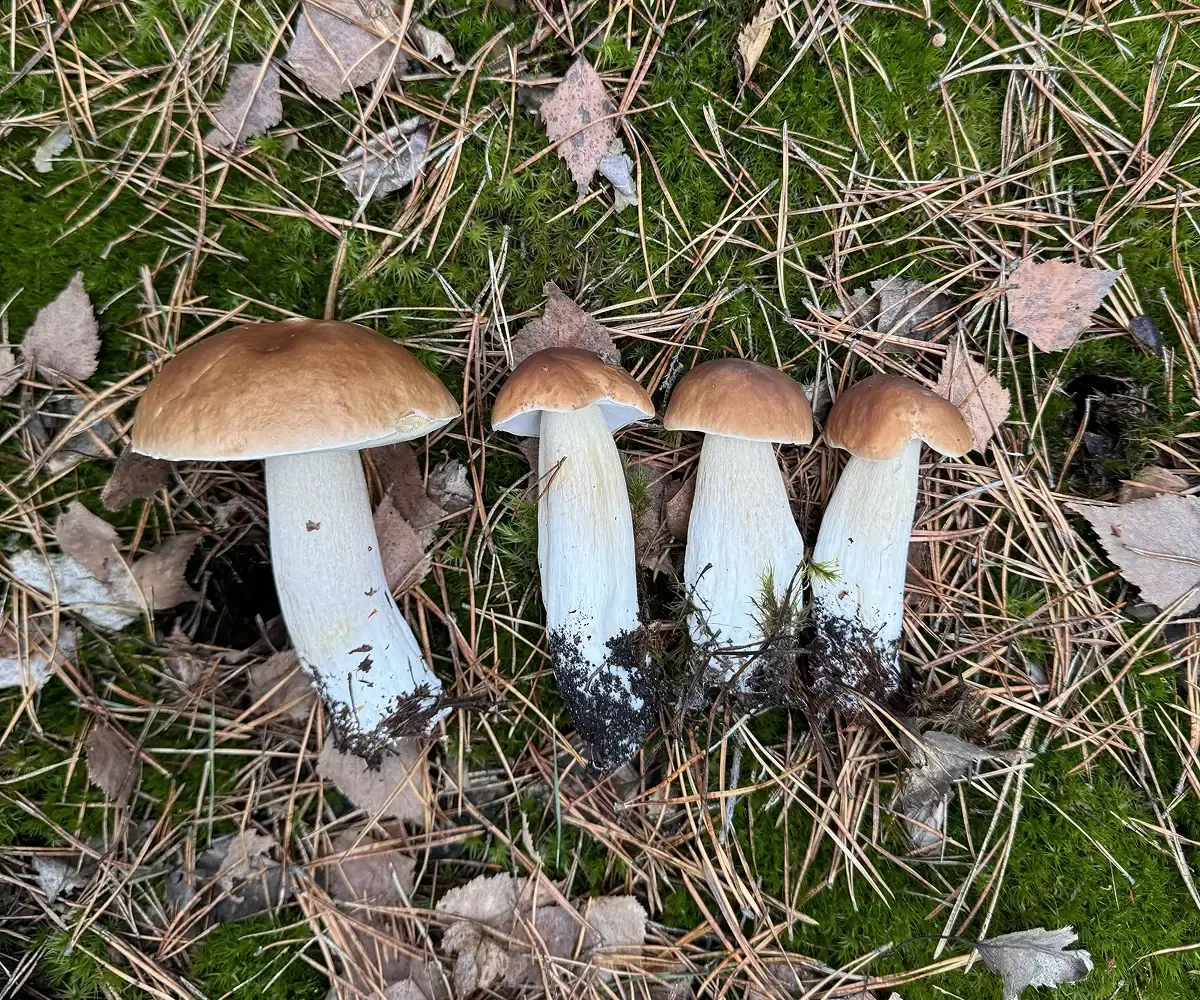
- in pored mushrooms (porcini, slippery jack) — in tiny tubes;
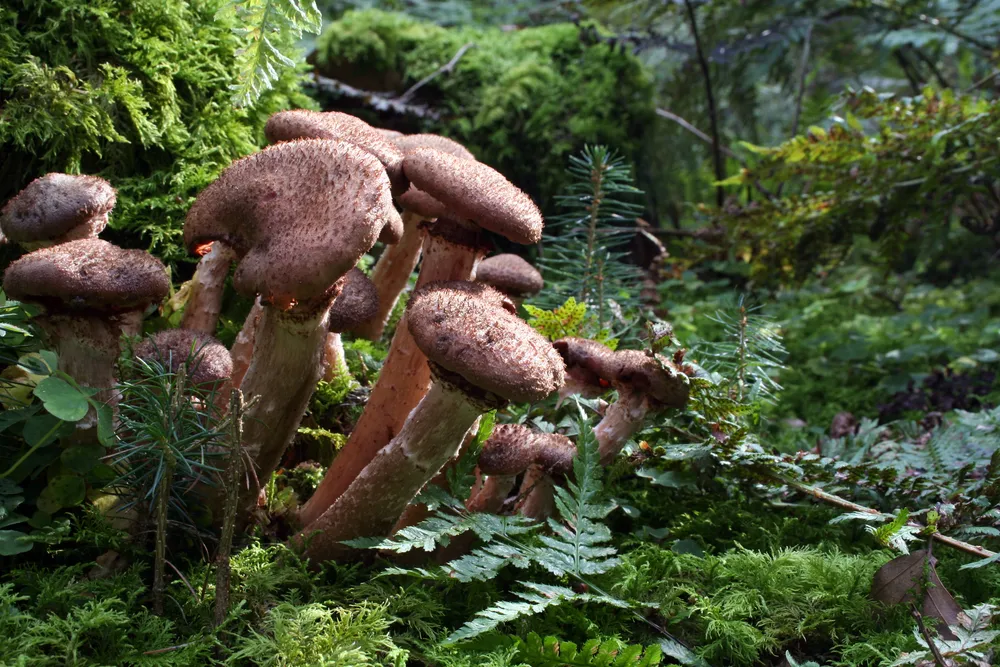
- in gilled mushrooms (honey fungus, brittlegills) — between the gills;
- in puffballs the spores ripen inside and burst out in a cloud when the mushroom matures.
How spores get around the forest
Ripe spores fall from under the cap and are carried by the wind — sometimes for kilometers. Other routes help too: spores cling to animals' paws and foragers' shoes, and insects and snails carry them around.
That's why mushrooms turn up in the most unexpected places: it's enough for just one spore out of billions to land in suitable conditions.
How a mycelium grows from a spore
Once it lands in moist, warm soil or wood, a spore germinates into a thin thread — a hypha. The threads branch, intertwine, fuse with threads from other spores and form a mycelium — the actual body of the fungus.
The mycelium grows in the soil for years, building up strength, and when moisture and warmth line up, it shoots up fruiting bodies. The cycle closes: the new mushrooms scatter spores again.
Why fungi are so successful
Reproducing by spores is remarkably effective. A single large mushroom releases billions of spores, so even if only a tiny fraction germinates, the mycelium still spreads. Thanks to this, fungi have lived on Earth for hundreds of millions of years and are found almost everywhere.
By the way, that's exactly why there's no point fearing you'll “destroy the mushrooms” by cutting them — more on that in the article how to pick mushrooms: cut or twist. And as for why fungi aren't plants or animals at all — see our piece are mushrooms plants or animals.
Sources
- Spore on Wikipedia.
- Fungi on GBIF, the global biodiversity database.
- Fungus reproduction in Encyclopaedia Britannica.
Frequently asked questions
How do mushrooms reproduce?
Mushrooms reproduce not by seeds but by microscopic spores. They ripen on the underside of the cap, fall out and are carried by the wind, and once they land in moist soil, they germinate into a new mycelium.
What are mushroom spores?
A spore is a tiny cell, thousands of times smaller than a poppy seed. A single mushroom releases millions and billions of spores. It's for their sake that a fungus grows a fruiting body at all.
How do spores turn into a mushroom?
A spore germinates in moist soil into a thin thread, a hypha. The threads branch and form a mycelium, which grows for years and then shoots up fruiting bodies — new mushrooms.
How do spores spread through the forest?
Mostly by wind — sometimes for kilometers. Spores also cling to animals' paws and foragers' shoes, and insects and snails carry them around. That's why mushrooms turn up in the most unexpected places.
How many spores does a single mushroom release?
A large mushroom releases billions of spores. Only a tiny fraction germinates, but that's enough for the mycelium to spread successfully.
Do mushrooms reproduce by mycelium?
Yes, besides spores, a fungus can also spread through the mycelium itself: it slowly grows outward in all directions from the center. But fungi reach new territory precisely thanks to spores.
Can you grow mushrooms from spores at home?
Yes, mushrooms (oyster mushrooms, for example) are grown from mycelium obtained from spores. At home people usually buy ready-made mycelium, because germinating spores properly is trickier.
Mushrooms in this article
Related articles
 Science & taxonomy
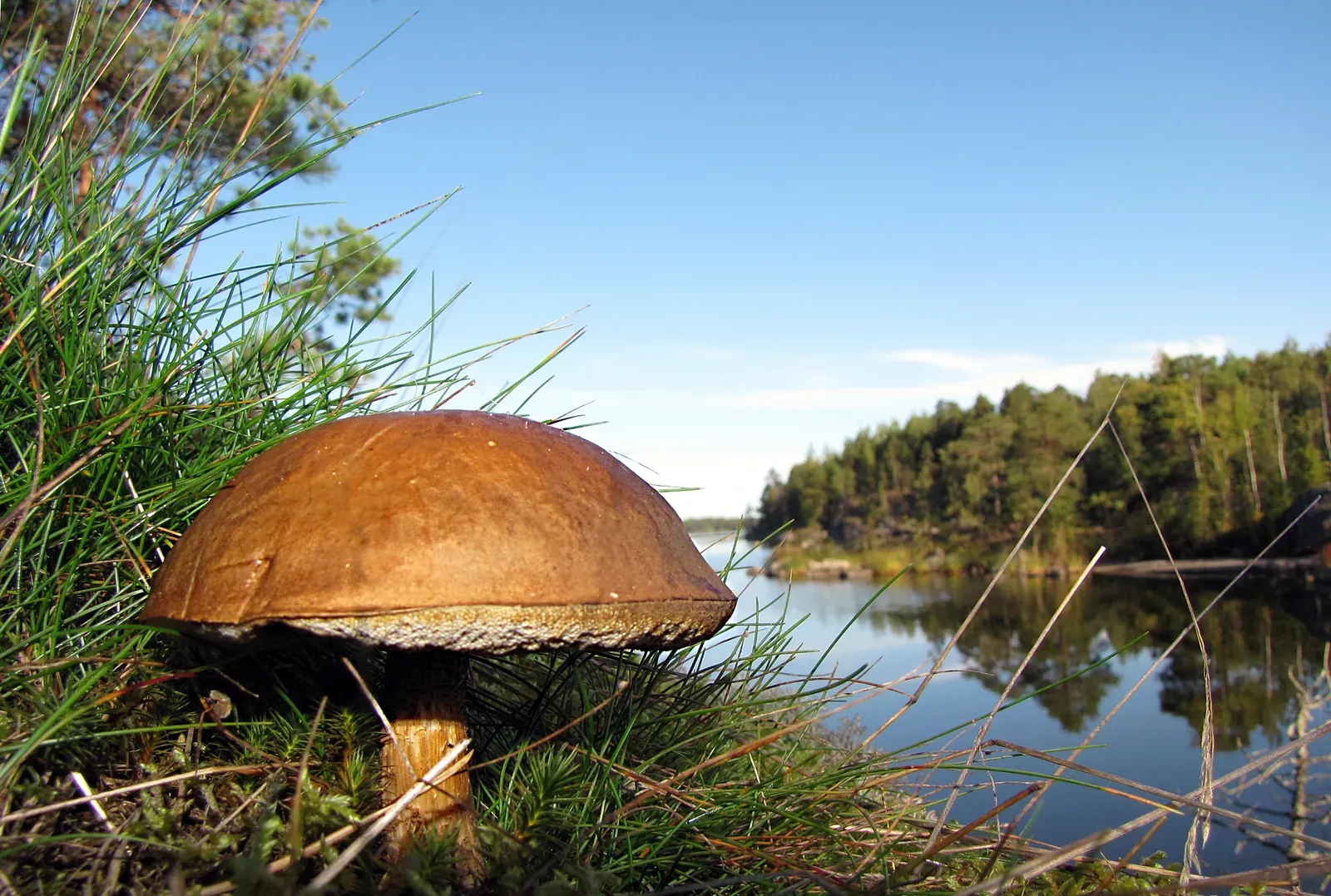
Bay bolete: health benefits and nutritional value
The bay bolete is a match for porcini in both flavor and nutrition. Here's why the bay bolete is good for you,…
August 20, 2026·2 min Science & taxonomy
Honey fungus: health benefits and risks
Honey fungus is a nourishing autumn mushroom, rich in protein and minerals. Here's why honey fungus is good fo…
August 20, 2026·2 min Recipes & cooking
How to store fresh mushrooms, and for how long
Fresh mushrooms spoil faster than you might think. Here's how long they keep in the fridge, how to store them…
August 21, 2026·4 min