
The first thing an experienced forager does on picking up an unfamiliar mushroom is turn it over and look under the cap. What's there, tubes or gills, immediately narrows things down and hints at which group the mushroom belongs to. This simple habit not only speeds up identification but also helps keep a dangerous species out of your basket.
Let's look at how pored mushrooms differ from gilled ones, how to see it, and why the morphology of the cap's underside matters so much.
What is a hymenophore
The underside of a mushroom cap, the part where the spores mature, is called the hymenophore. Its structure divides most mushrooms into two large groups.
- Tubular hymenophore. Under the cap are countless tightly packed tubes that together look like a sponge. Press it and the surface springs back.
- Gilled hymenophore. Underneath are thin gills that radiate from the stem to the edge of the cap, like spokes.
It's easy to check: turn the mushroom over and see whether it's a sponge or gills. You can tell them apart even by touch.
Pored mushrooms
Pored mushrooms, also called boletes, make up most of the most sought-after forest mushrooms.
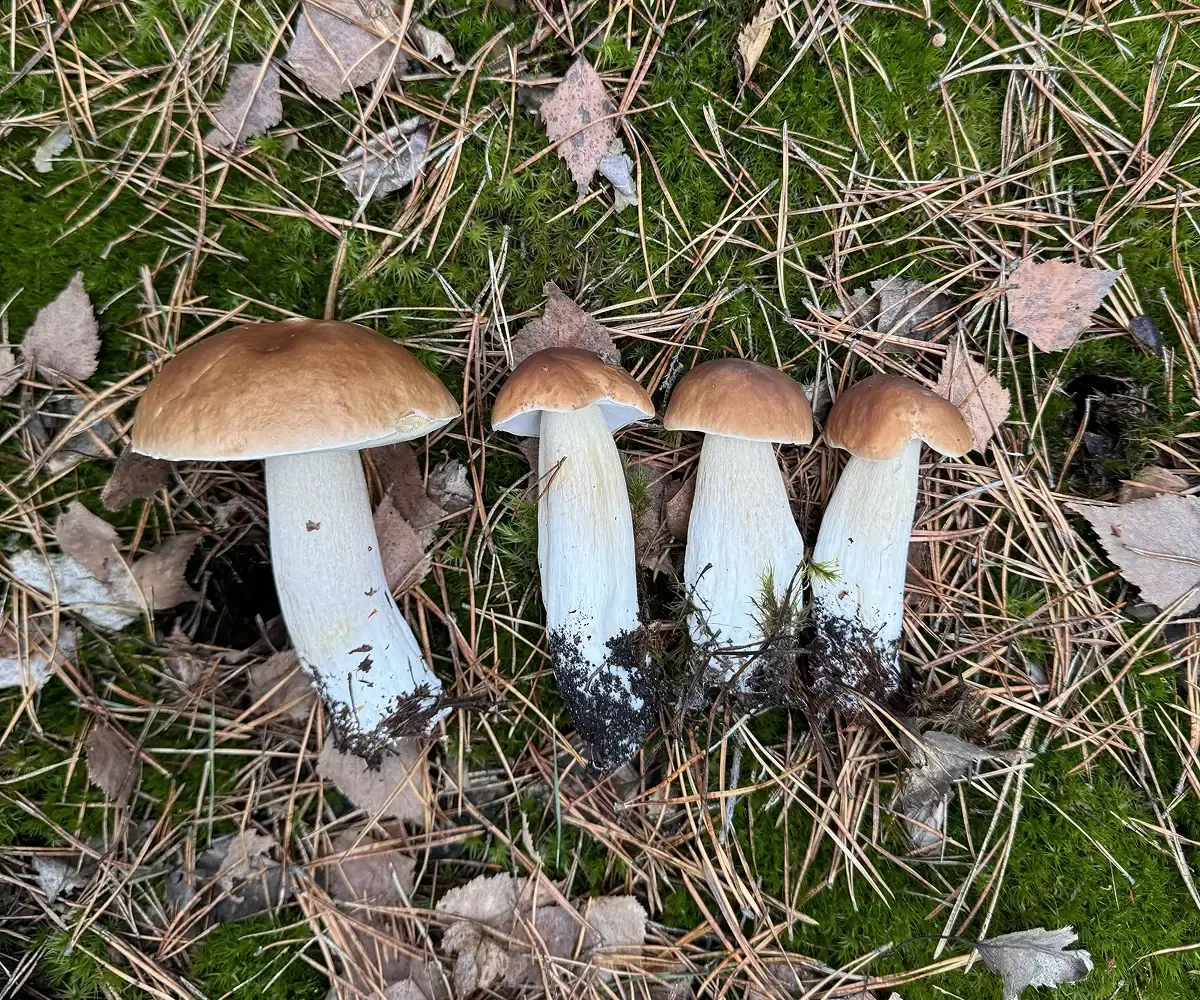
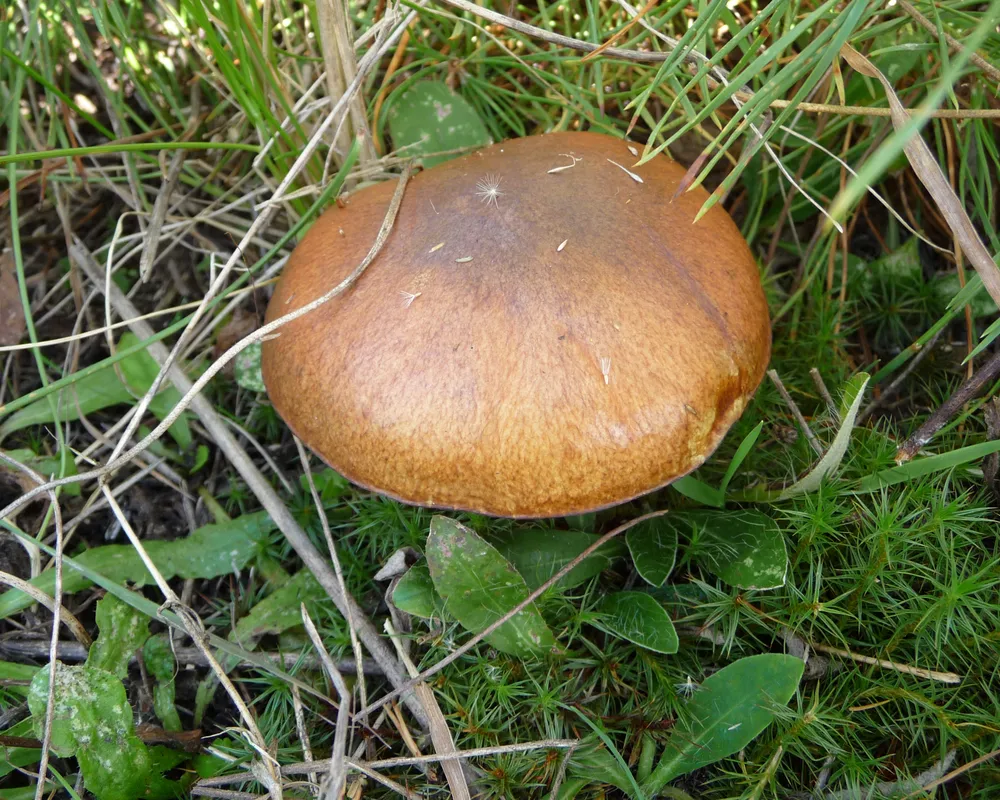
They include porcini, slippery jacks, birch boletes, aspen boletes, Xerocomus boletes. Their sponge separates easily from the cap, and the group itself is considered one of the safest for beginners: there are no deadly poisonous species among pored mushrooms, only a few bitter or mildly poisonous ones, such as the bitter bolete and Devil's bolete.
That's why beginners are often advised to start with pored mushrooms. In an old pored mushroom the sponge becomes loose and dark, a sign that the mushroom is past its prime.
Gilled mushrooms
Gilled mushrooms are more numerous and diverse, but this is exactly where the main danger hides.
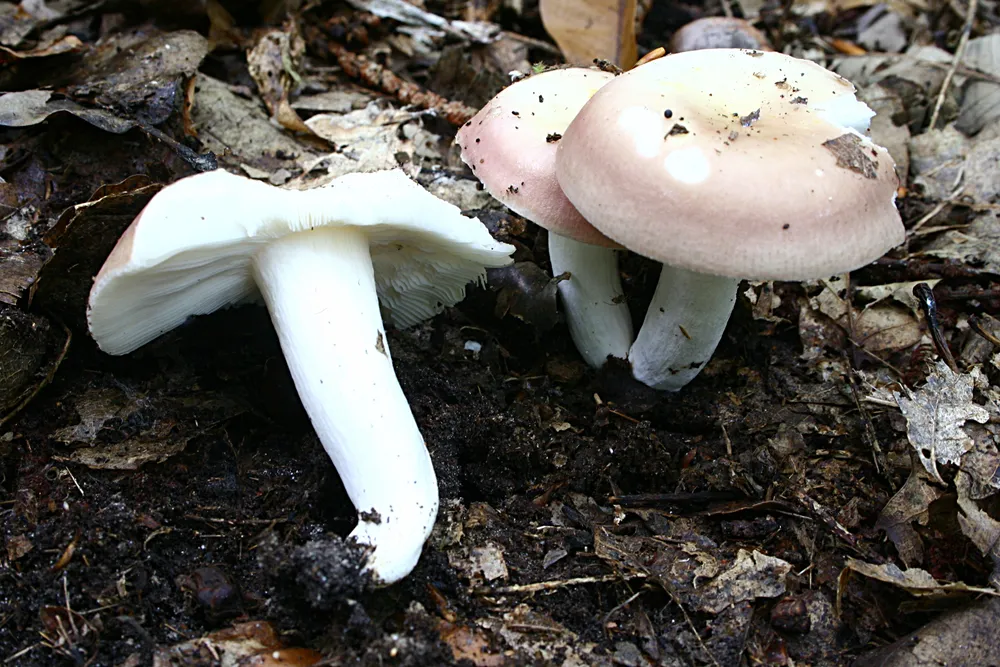
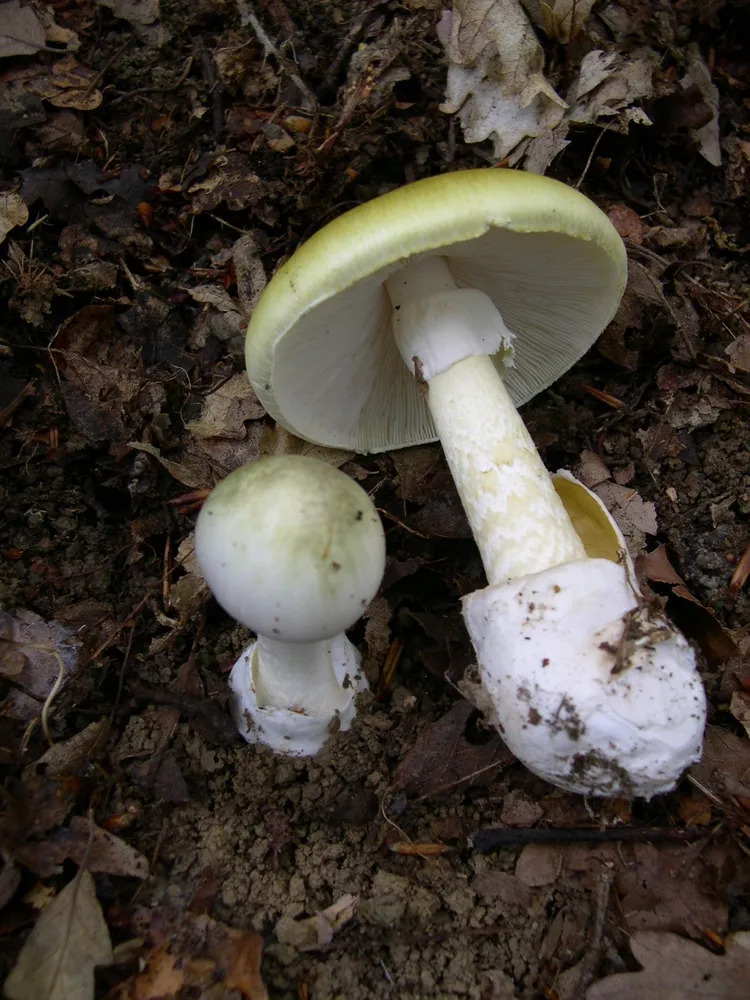
They include wonderful brittlegills, field mushrooms, honey fungus and knights, and all the deadly poisonous mushrooms, including the death cap and amanitas. That's why gilled mushrooms call for more attention: here the additional features decide it, such as gill color, a ring on the stem, a sac at the base.
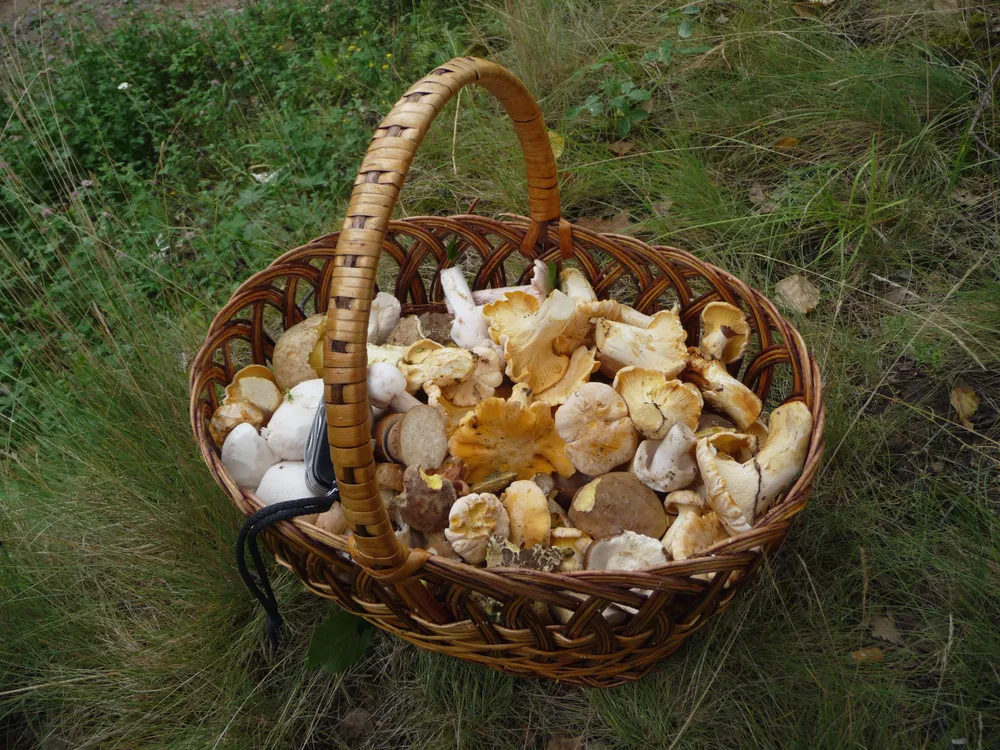
A special case is the chanterelle: underneath it has not true gills but thick, forked ridges that run down the stem. It's an in-between variant worth learning to recognize too.
Why it matters
Being able to tell the group in a second gives you several advantages at once.
- Narrows the search. Once you know the group, it's easier to identify the species by other features.
- Improves safety. There are no deadly species among pored mushrooms, so they're a safer place for a beginner to start.
- Shows ripeness. A loose, dark sponge on a pored mushroom is a sign that it's past its prime.
- Helps you learn. Morphology is the language that mushroom identification guides “speak.”
Of course, hymenophore structure alone doesn't determine edibility: there are excellent gilled mushrooms, and there are bitter pored ones. So after checking under the cap, always cross-check the remaining features using our safe foraging rules.
Sources
- “Identification Guide to the Fungi of Ukraine” (Kyiv, Naukova Dumka publishing house).
- Boletus edulis in GBIF, the global biodiversity database.
- Hymenium in MycoBank, the international fungal nomenclature database.
- Hymenium on Wikipedia.
Frequently asked questions
How do you tell a pored mushroom from a gilled one?
Turn the mushroom over and look under the cap. If there's a sponge made of countless tubes, the mushroom is pored. If there are thin radiating gills, like spokes, it's gilled.
Which mushrooms are pored?
Most of the prized forest boletes: , , birch boletes, aspen boletes, Xerocomus boletes. Their underside is spongy and separates easily from the cap.
Which mushrooms are gilled?
, field mushrooms, honey fungus, knights, chanterelles, as well as all amanitas and the . This is the largest and most diverse group of mushrooms.
Why are pored mushrooms safer for beginners?
Because there are no deadly poisonous species among pored mushrooms, only a few bitter or mildly poisonous ones, like the . All deadly mushrooms are gilled.
Is the chanterelle pored or gilled?
Neither, strictly speaking. The has thick, forked ridges underneath that run down the stem, an in-between variant between gills and a smooth surface.
Can you tell edibility from the hymenophore structure?
No. The structure only points to the group, not to edibility. Among gilled mushrooms there are both excellent and deadly ones, and among pored ones, bitter ones. You need to check other features too.
How can you tell a pored mushroom is past its prime?
In an old pored mushroom the sponge becomes loose, watery and dark, often greenish. That's a sign the mushroom is no longer worth taking.
Why look under the cap at all?
Because it's the fastest way to narrow down an identification and rule out dangerous options. Checking the hymenophore is the first step in recognizing an unfamiliar mushroom.
Mushrooms in this article
Related articles
 How to identify
Truffles in Ukraine: do they grow here, and where to look
Truffles aren't just a French delicacy. Several species grow in Ukraine too. Here's which ones, where they occ…
August 24, 2026·2 min Recipes & cooking
How to store fresh mushrooms, and for how long
Fresh mushrooms spoil faster than you might think. Here's how long they keep in the fridge, how to store them…
August 21, 2026·4 min Safety
False morel: why this spring mushroom is dangerous
The false morel looks like a morel, but it contains a poison. Here's how to recognize it, why it's dangerous a…
August 24, 2026·2 min