
Mushrooms only seem simple. In fact, they're one of the most amazing kingdoms of life — with their own records, mysteries and even “magic.” We've gathered a few facts that will change how you see an ordinary walk in the woods.
1. Fungi are closer to animals than to plants
Even though a mushroom grows out of the ground, it isn't a plant. Its cell walls are made of chitin — the same substance as a beetle's shell. And a fungus feeds on ready-made organic matter, like an animal, not on light. That's why fungi are placed in a kingdom of their own — more on that in the article are mushrooms plants or animals.
2. Some mushrooms glow at night
It's not a fairy tale: a few species of mushrooms really do glow in the dark with a soft greenish light. The phenomenon is called bioluminescence. The glow comes from the mycelium and young fruiting bodies, and it probably serves to attract insects that will spread the spores.
3. “Fairy rings” aren't magic
Sometimes mushrooms appear in a perfect circle in a clearing. Folk tradition called it a “witch's ring” and feared it. In fact, it's simple: the mycelium grows evenly outward from the center, and mushrooms appear along its young outer edge. Year after year the ring gets wider.
4. A fungus may be the largest organism on the planet
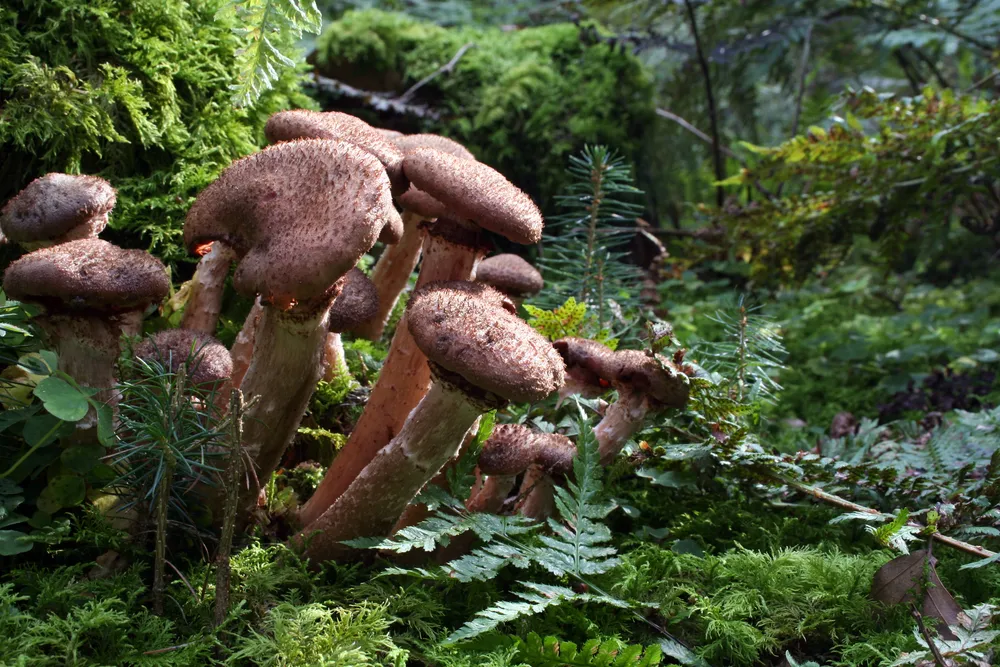
The largest known living thing on Earth isn't a whale or a tree, but a honey fungus mycelium in a forest in the USA. It stretches over thousands of hectares and weighs thousands of tons. Yes, the modest-looking honey fungus is a relative of a true giant.
5. One mushroom releases billions of spores
To reproduce, a mushroom releases billions of microscopic spores that the wind carries for kilometers. Only a tiny fraction sprout, but that's enough. How it works — in the article how mushrooms reproduce.
6. Mushrooms live in symbiosis with trees
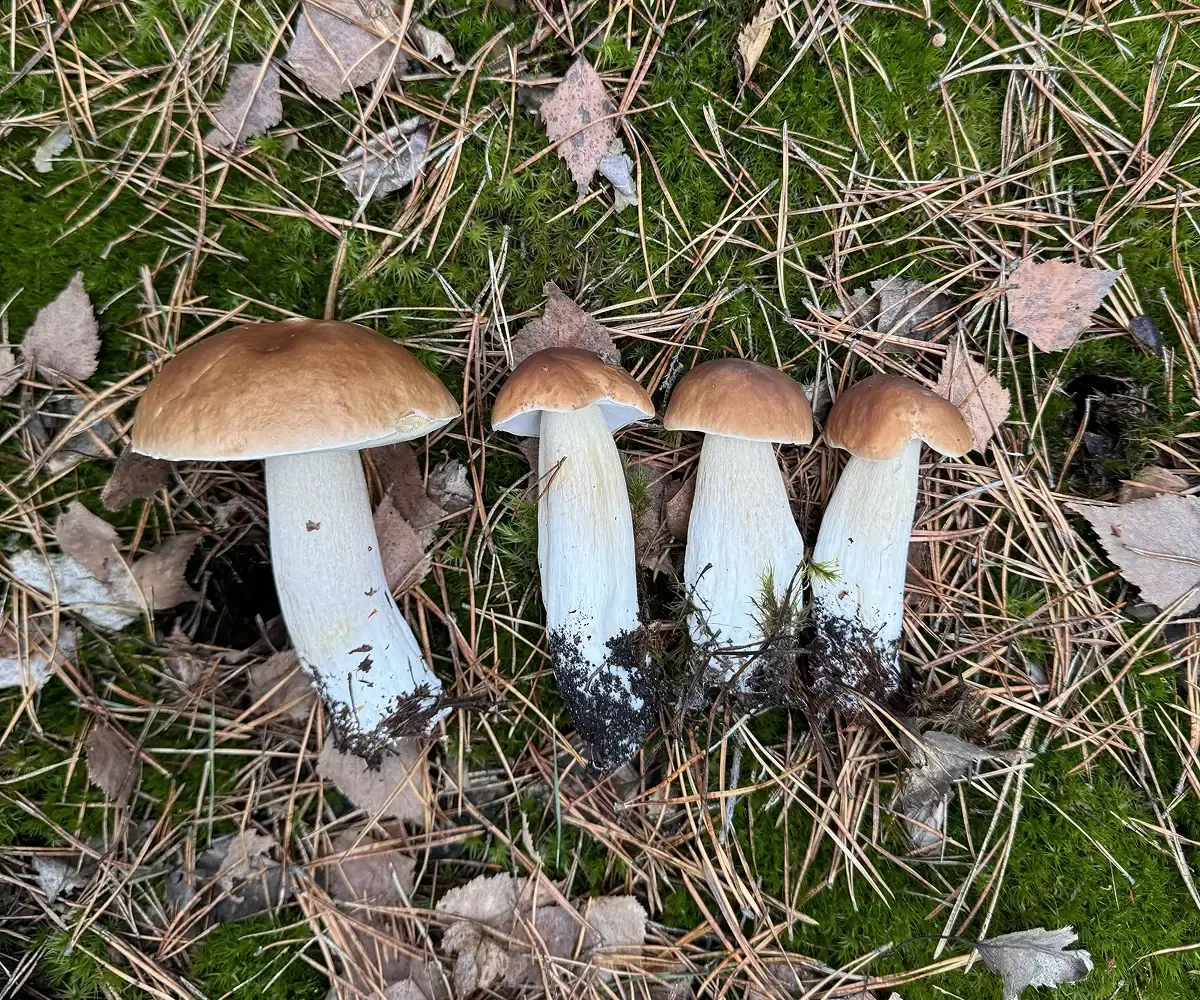
Most forest mushrooms are “friends” with trees: the mycelium wraps around the roots and trades nutrients with the tree. This partnership is called mycorrhiza. That's why porcini grow under oaks and birches, and slippery jacks only under pines.
7. Mycelium lives for decades
The mushrooms themselves live only a few days, but the mycelium beneath them lives for years and decades. It survives frost and drought in a dormant state and fruits again when moisture returns. That's why mushroom spots stay the same year after year.
Sources
- Fungi on Wikipedia.
- Bioluminescent fungi on Wikipedia.
- Armillaria in GBIF, the global biodiversity database.
Frequently asked questions
Why do some mushrooms glow at night?
A few species of mushrooms are bioluminescent — they glow with a soft greenish light. The glow comes from the mycelium and young mushrooms and probably attracts insects that spread the spores.
What is a fairy ring?
It's a circle of mushrooms in a clearing. It forms because the mycelium grows evenly outward from the center, and fruiting bodies appear along its young outer edge. Year after year the ring gets wider.
Which fungus is the largest organism on the planet?
A honey fungus mycelium in a forest in the USA is considered the largest living thing on Earth: it stretches over thousands of hectares and weighs thousands of tons. It's a relative of our autumn honey fungus.
Are mushrooms plants?
No. Fungi are a separate kingdom of nature. They have no chlorophyll, feed on ready-made organic matter, and their cell walls are made of chitin, like an insect's shell. That's why they're closer to animals.
What is mycorrhiza?
It's a symbiosis between mycelium and tree roots: the fungus gives the tree water and minerals, and the tree gives the fungus sugars. Because of this, many mushrooms grow only under certain tree species.
How long do a mushroom and its mycelium live?
The fruiting body itself lives only a few days, while the mycelium beneath it lives for years and decades. It survives winter and drought in a dormant state and sends up mushrooms again when moisture returns.
How many spores does a mushroom release?
A single large mushroom releases billions of microscopic spores that the wind carries for kilometers. Only a tiny fraction sprout, but that's enough to reproduce.
Mushrooms in this article
Related articles
 Science & taxonomy
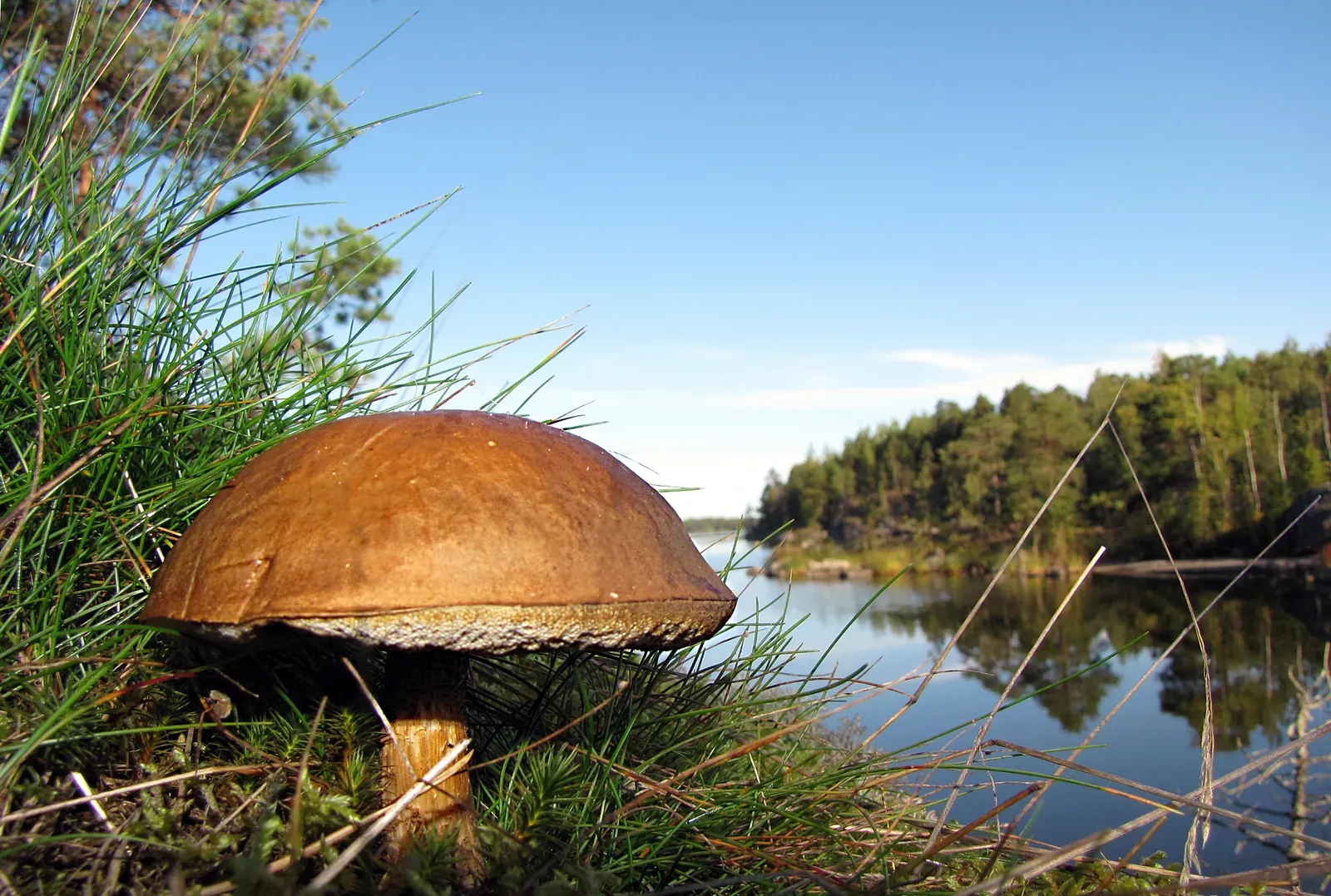
Bay bolete: health benefits and nutritional value
The bay bolete is a match for porcini in both flavor and nutrition. Here's why the bay bolete is good for you,…
August 20, 2026·2 min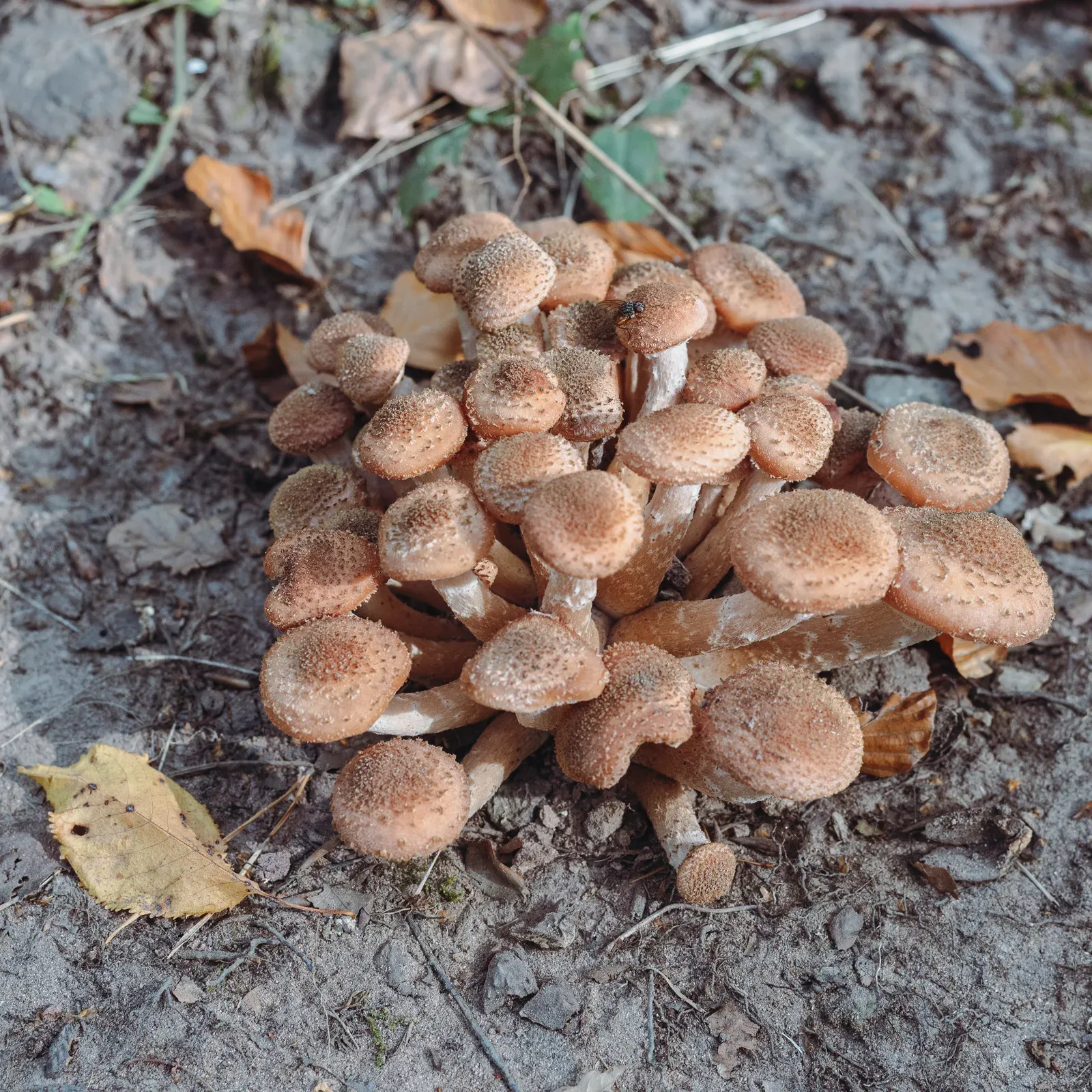 Science & taxonomy
Honey fungus: health benefits and risks
Honey fungus is a nourishing autumn mushroom, rich in protein and minerals. Here's why honey fungus is good fo…
August 20, 2026·2 min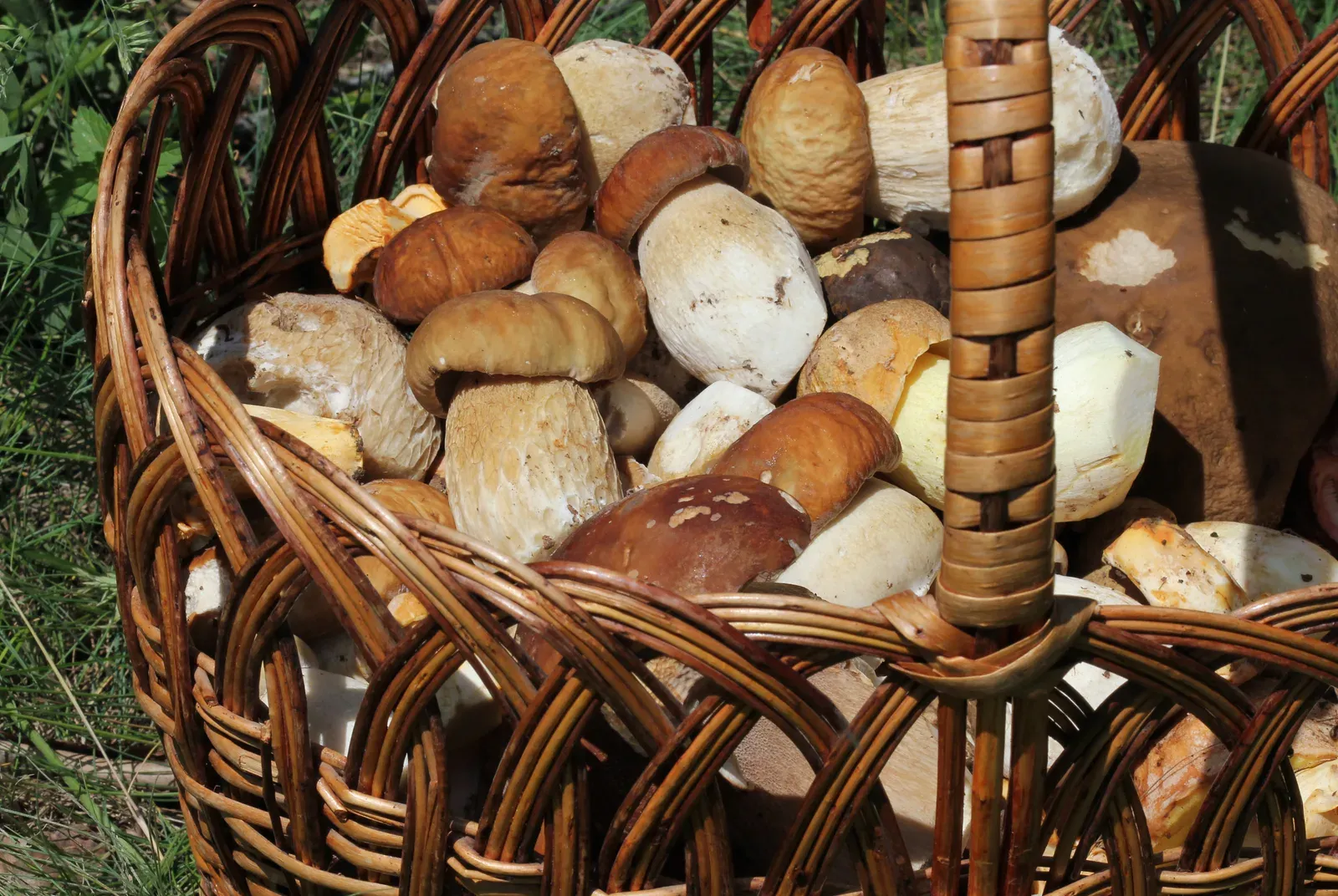 Recipes & cooking
How to store fresh mushrooms, and for how long
Fresh mushrooms spoil faster than you might think. Here's how long they keep in the fridge, how to store them…
August 21, 2026·4 min