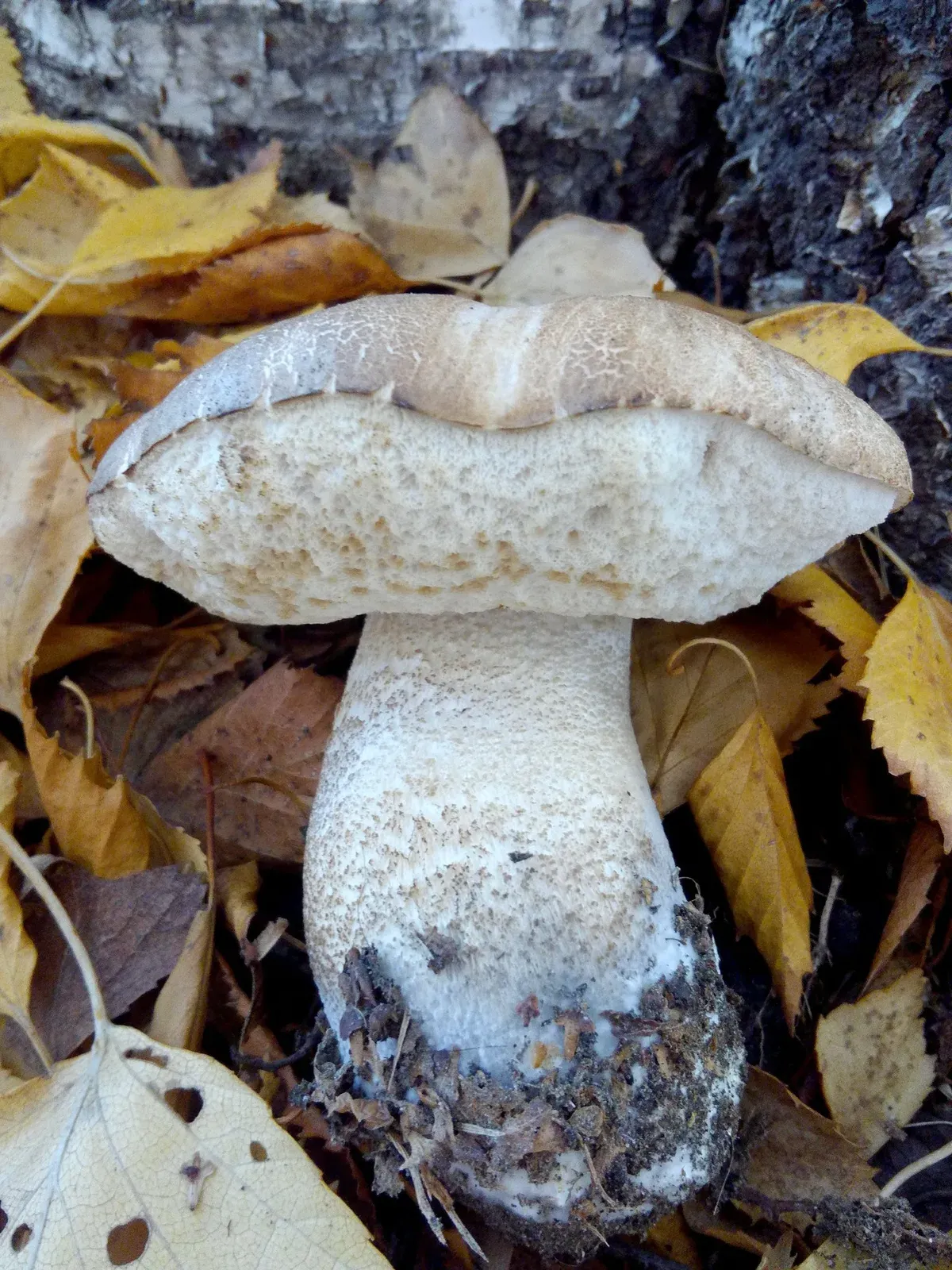
The scaber stalk (brown birch bolete) is considered one of the easiest mushrooms for beginners. It has no deadly lookalikes, and its telltale features are easy to spot once you know what to look for.
Let's go through all the key features of the birch bolete step by step: the cap, the tube layer, the stem and the flesh. And at the end, we'll remind you about the one unpleasant mushroom you can actually confuse it with.
Scales on the stem, the main giveaway
If you remember only one feature of the birch bolete, make it the stem.
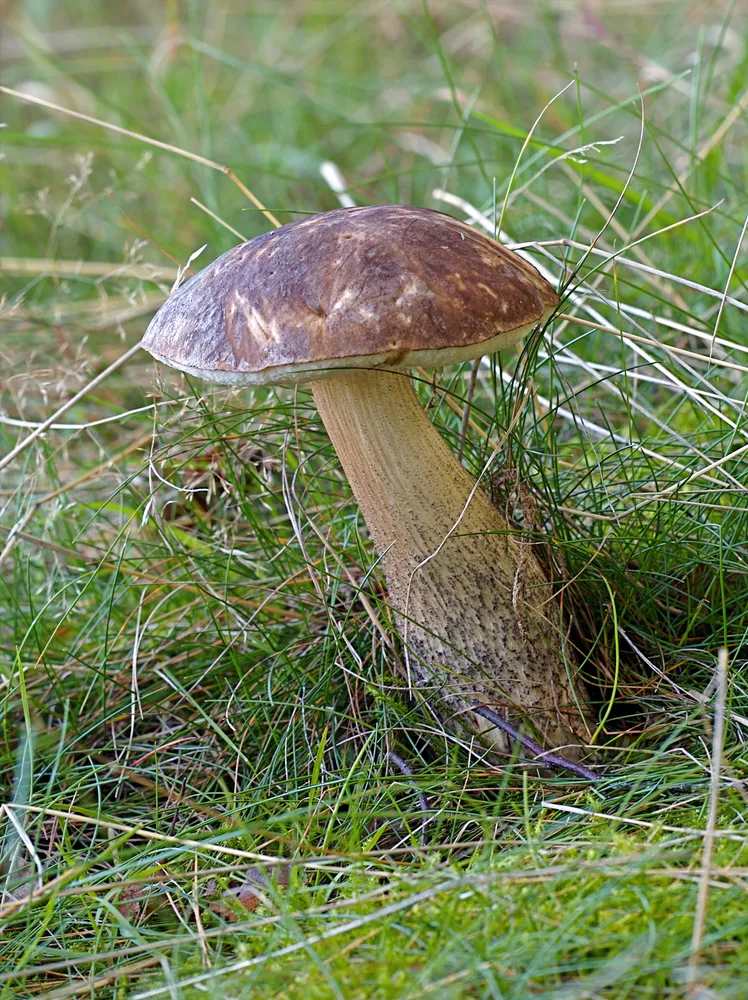
The birch bolete's stem is long, slender, white or grayish, and covered with distinctive dark scales, like tiny strokes or dashes. From bottom to top, these scales make the stem look “speckled.”
This very pattern is what sets the birch bolete apart from other mushrooms. No porcini-type bolete has it: porcini have a smooth stem with a pale net. So dark strokes on the stem are practically the birch bolete's signature.
Cap and tube layer
The second group of features concerns the cap.
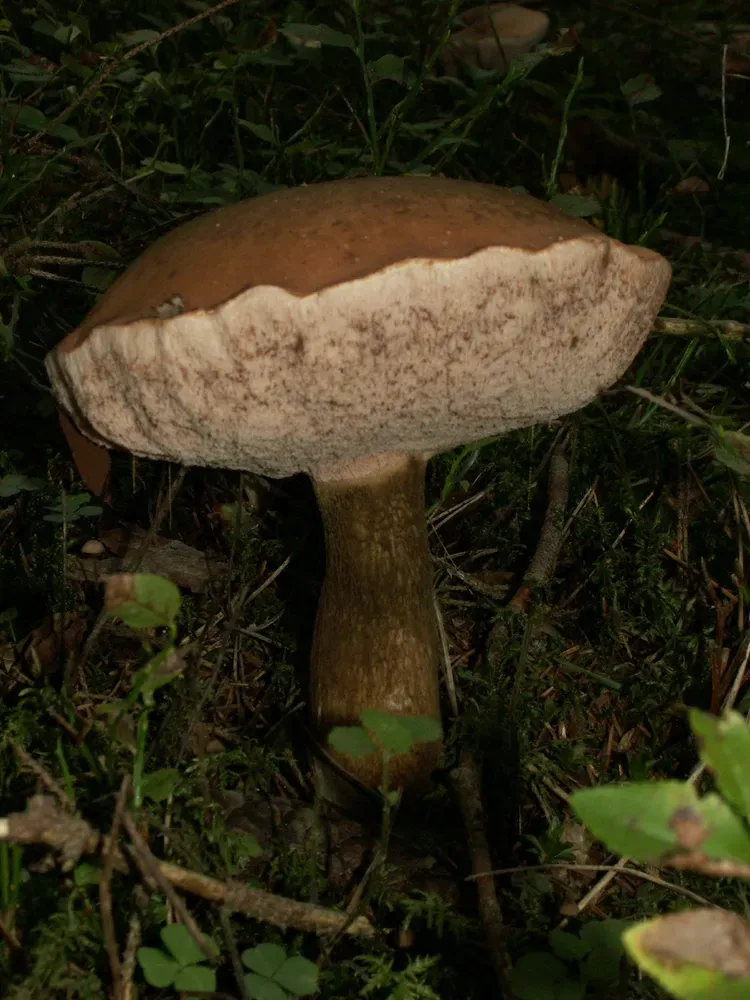
- Cap ranges from light gray to dark brown (almost black in some species), hemispherical when young, later cushion-shaped. Slightly slimy in wet weather.
- Under the cap you'll find not gills but a spongy tube layer made of tiny tubes. It's white when young, and with age it turns gray, gets dingy and sags.
A young birch bolete has a firm, still pale sponge. In an old mushroom it becomes soft, dark and wet, and such mushrooms are no longer picked.
Flesh and cut
The third check: make a cut.
The birch bolete's flesh is white and firm in young mushrooms. When cut, it hardly changes color or turns slightly gray. During cooking the birch bolete darkens noticeably, almost to black, but that's normal and safe.
Some species, such as the mottled bolete, may turn slightly blue at the base of the stem. This isn't a sign of danger either, just a feature of the species.
Where it grows, as an extra clue
Where it grows also helps you identify the mushroom. The birch bolete almost always sticks close to birch.
So if you find a bolete with a speckled stem under a birch at a deciduous or mixed forest edge, it's most likely a birch bolete. Having a birch nearby is one more argument in favor of a birch bolete.
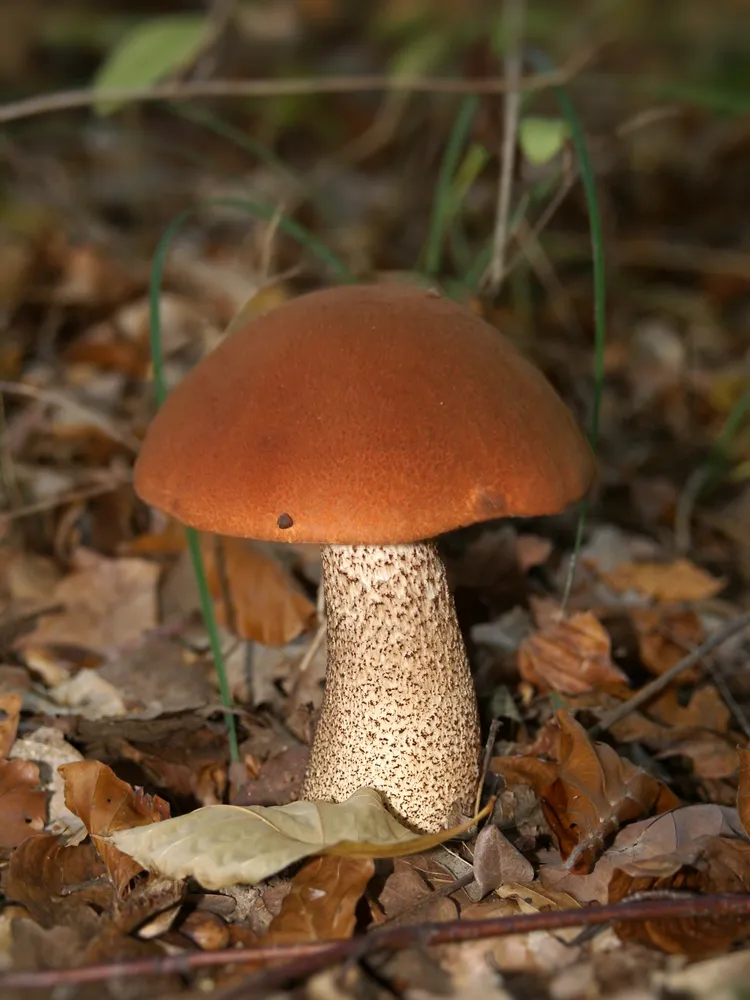
Its close relative, the red-capped scaber stalk, is similar in structure but stands out with a bright orange-red cap and grows mainly under aspen.
The one lookalike to watch out for
The birch bolete has no poisonous lookalikes, but there is one unpleasant mushroom.
That's the bitter bolete, also called the gall bolete. It also has a scaly-looking stem and a similar build, but it gives itself away with three traits: its tube layer is pinkish (not white or gray), the stem has a dark net, and it tastes unbearably bitter. There's no poison in it, but even one such mushroom will ruin a whole dish with its bitterness.
A simple rule: if the sponge has a pink tinge and the stem has a net instead of strokes, it's not a birch bolete. When all the features match, you can confidently put the mushroom in your basket. And to head to the forest exactly when birch boletes are coming up, rely on our mushroom radar.
Sources
- “Vyznachnyk hrybiv Ukrainy” (Identification Guide to the Fungi of Ukraine; Kyiv, Naukova Dumka publishing house).
- Leccinum scabrum in GBIF, the global biodiversity database.
- Leccinum in MycoBank, the international fungal nomenclature database.
- Leccinum scabrum on Wikipedia.
Frequently asked questions
How do you recognize a birch bolete?
By three features: a spongy tube layer under the cap, a white stem with distinctive dark scales, and white flesh that barely changes when cut. It grows under birches.
What is the main feature of the birch bolete?
Dark scales on the stem, like tiny strokes. No porcini has them, so a speckled stem is an almost unmistakable signature of the birch bolete.
Does a birch bolete have gills under the cap?
No. Under the cap, a birch bolete has a spongy tube layer of tiny tubes, not gills. It's white when young, and with age it turns gray and sags.
Why does birch bolete flesh darken?
It's a natural property: birch bolete flesh darkens on contact with air and heat. It has no effect on taste or safety, only on the color of the dish.
How do you tell a birch bolete from a bitter bolete?
The has a pinkish tube layer, a dark net on the stem instead of strokes, and an unbearably bitter taste. The has a white or gray sponge, and its stem is covered with dark scales.
Does the birch bolete have poisonous lookalikes?
It has no deadly poisonous lookalikes. The only unpleasant similar mushroom is the foul-tasting , which is not poisonous but ruins a dish with its bitterness.
Where does the birch bolete grow most often?
Under birches in and , at forest edges, in clearings and along roads. Having a birch nearby is an extra clue for identifying it.
Is it safe if a birch bolete turns blue when cut?
Yes. Some species, such as the , turn slightly blue at the base of the stem. That's a feature of the species, not a sign of poison.
Mushrooms in this article
Related articles
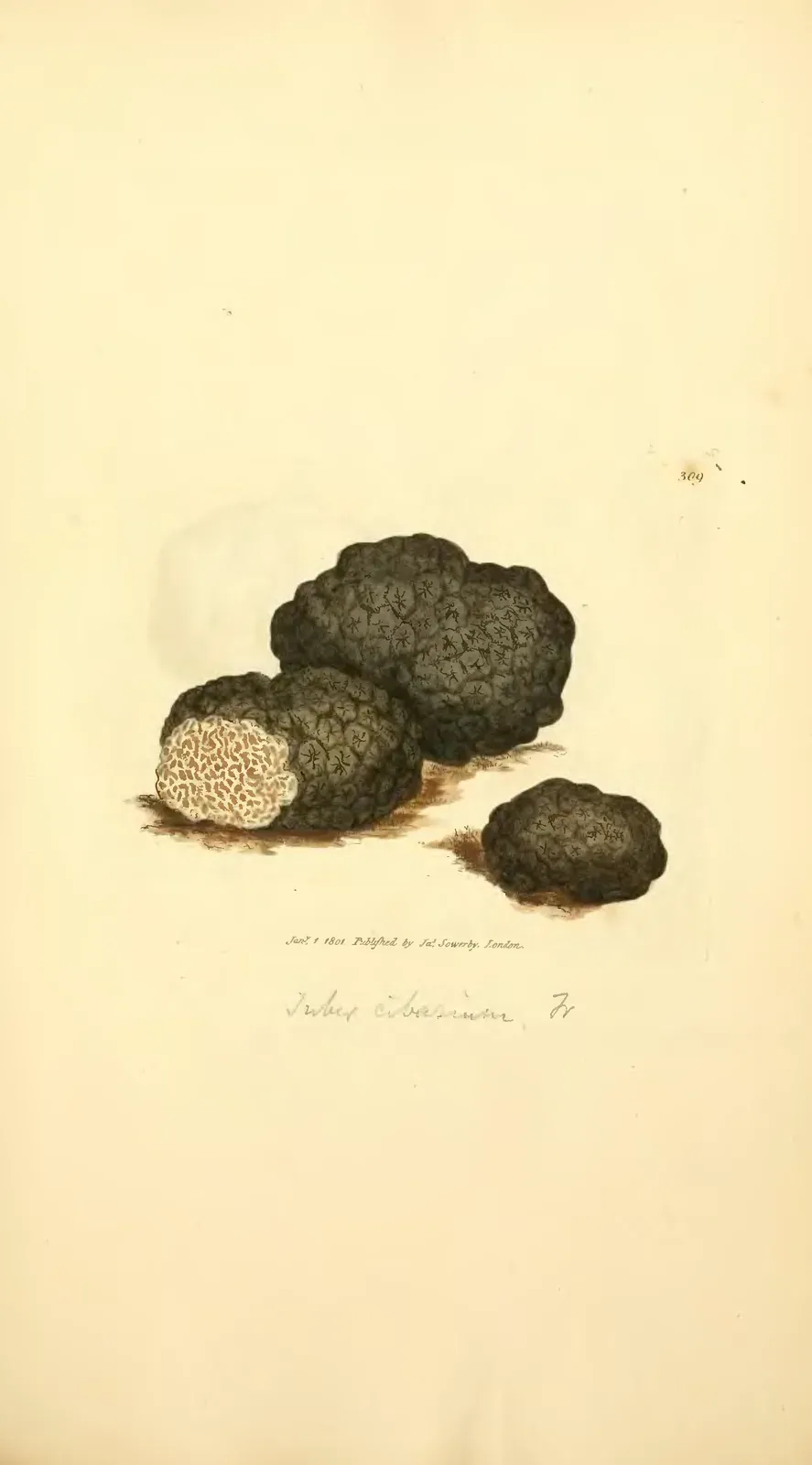 How to identify
Truffles in Ukraine: do they grow here, and where to look
Truffles aren't just a French delicacy. Several species grow in Ukraine too. Here's which ones, where they occ…
August 24, 2026·2 min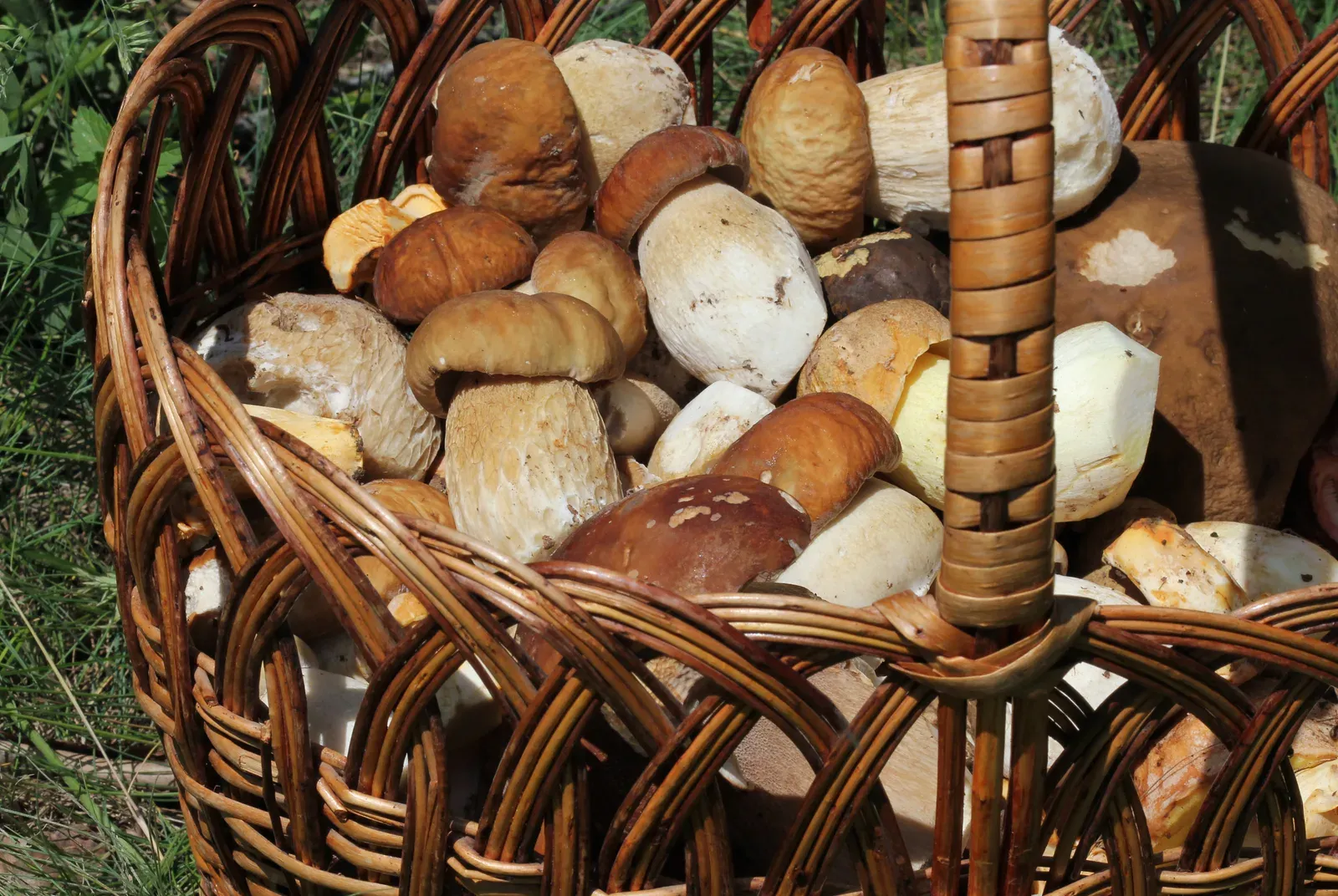 Recipes & cooking
How to store fresh mushrooms, and for how long
Fresh mushrooms spoil faster than you might think. Here's how long they keep in the fridge, how to store them…
August 21, 2026·4 min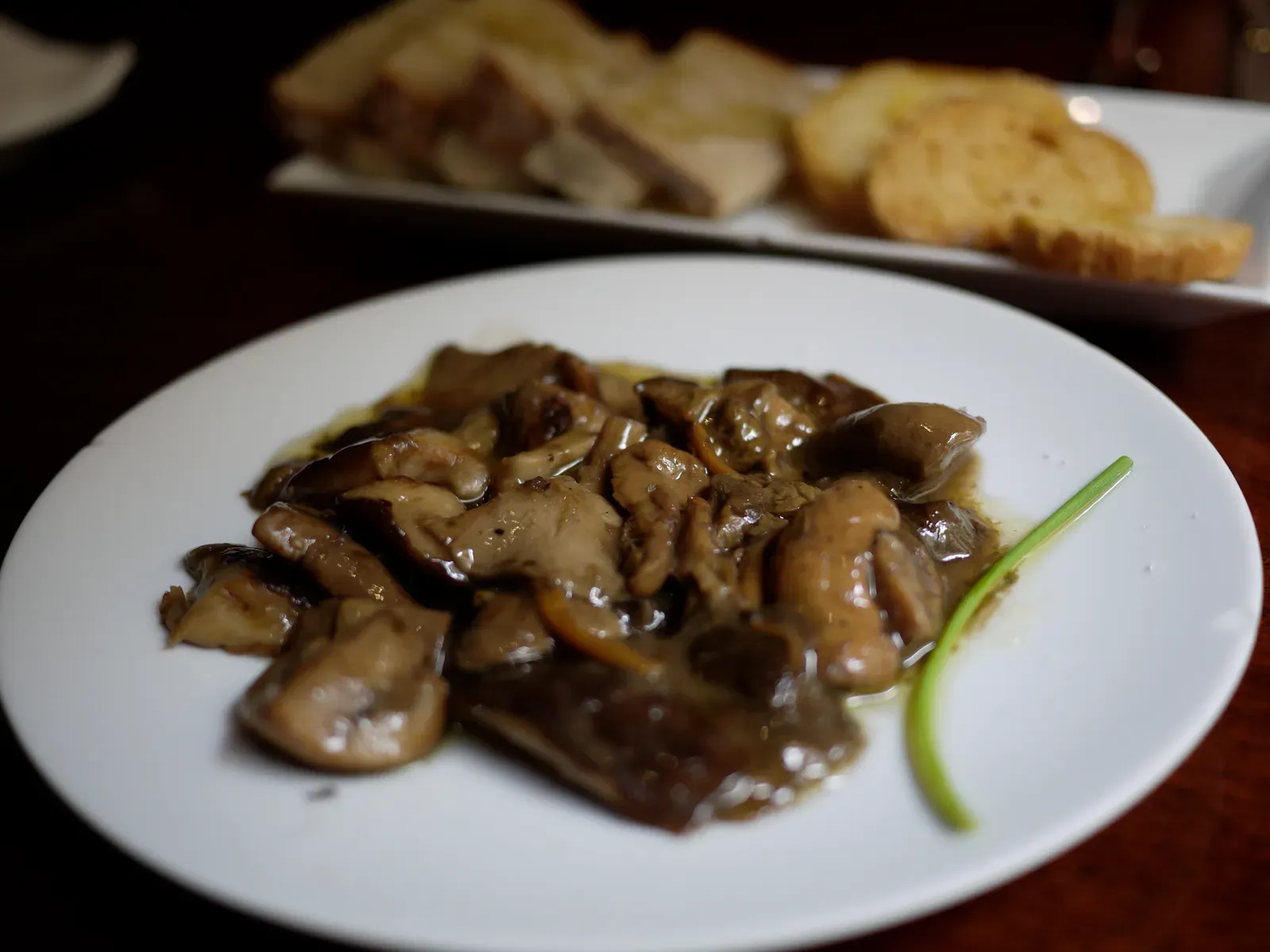 Recipes & cooking
How long to boil mushrooms
Boiling time depends on the type of mushroom and on what you're cooking next. Here's a clear cheat sheet: how…
August 22, 2026·4 min