It often goes like this: one forager comes back with a full basket and another with an empty one, though both went out on the same day. Often the difference is that the first one knew which forest to choose. Most mushrooms live in symbiosis with particular trees, so picking the right forest is half the battle.
Let’s look at what to search for in June in coniferous, deciduous and mixed forest, and why the last one is most often the most generous.
Coniferous forest: slippery jacks and pine
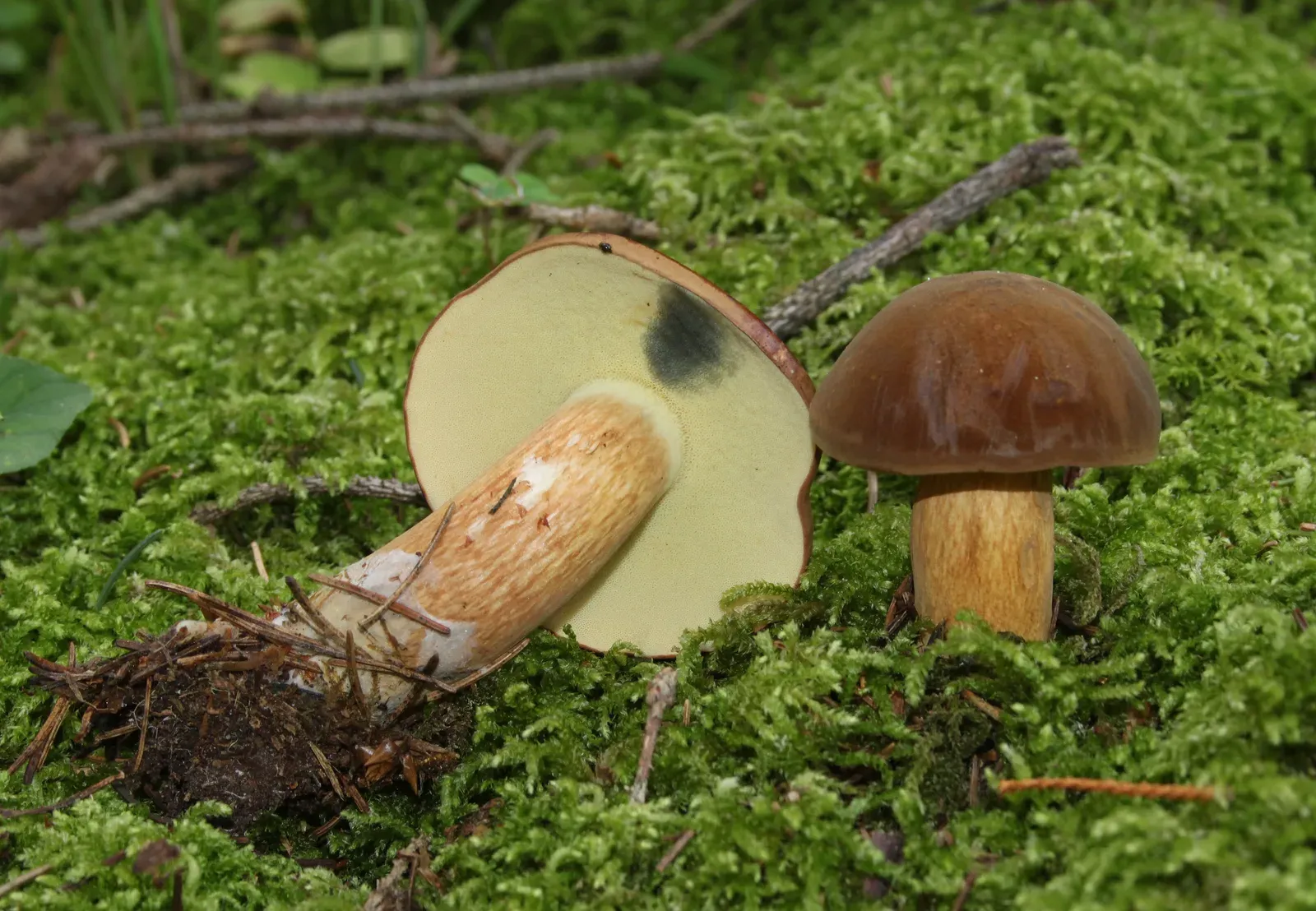
Coniferous forest, above all pine woodland, is first and foremost the kingdom of slippery jacks in June.
- **Slippery jack.** It lives in symbiosis with pine, so after rain it pops up in dense clusters in young pine stands.
- Xerocomus boletes and brittlegills. You’ll find them in mossy hollows, where moisture lingers longer.
- Chanterelles. In pine woods they grow in damp, mossy patches.
Look for mushrooms not in dense thickets carpeted with old needles, but on sunny forest edges, in clearings and along forest roads, where the soil warms up. In autumn the pine bolete joins them, but in June the main prize of the pine woods is slippery jacks.
Deciduous forest: porcini and birch boletes
Deciduous forest with oaks, beeches and birches gives you the most prized mushrooms in June.
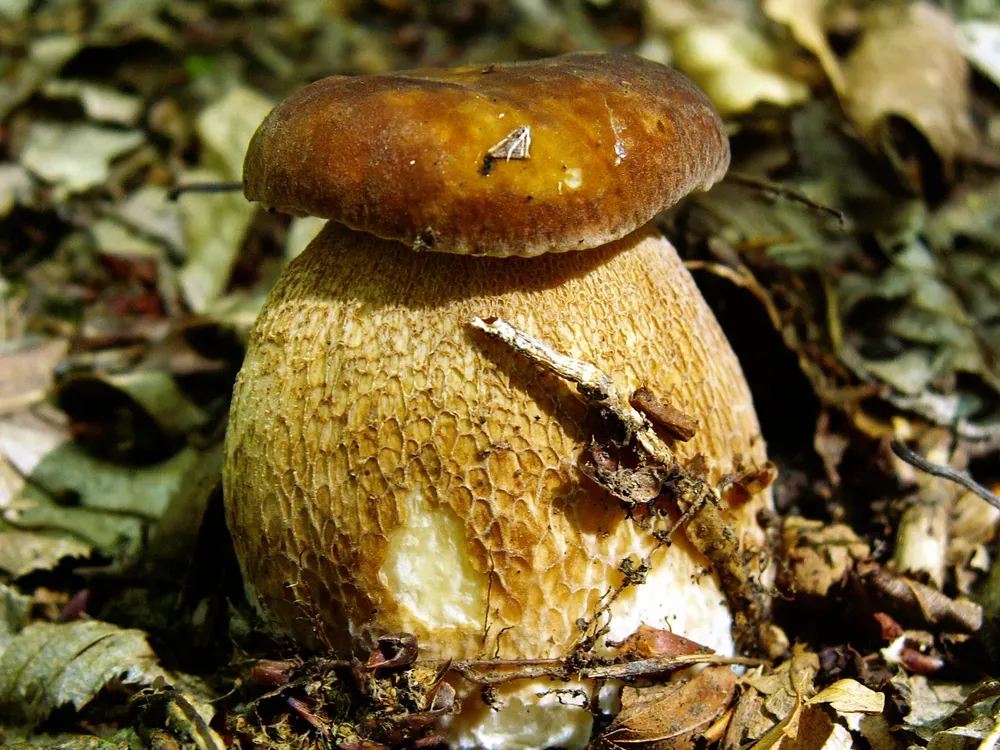
- **Summer bolete.** Boletus reticulatus loves oak and beech and appears on sunny forest edges and in clearings.
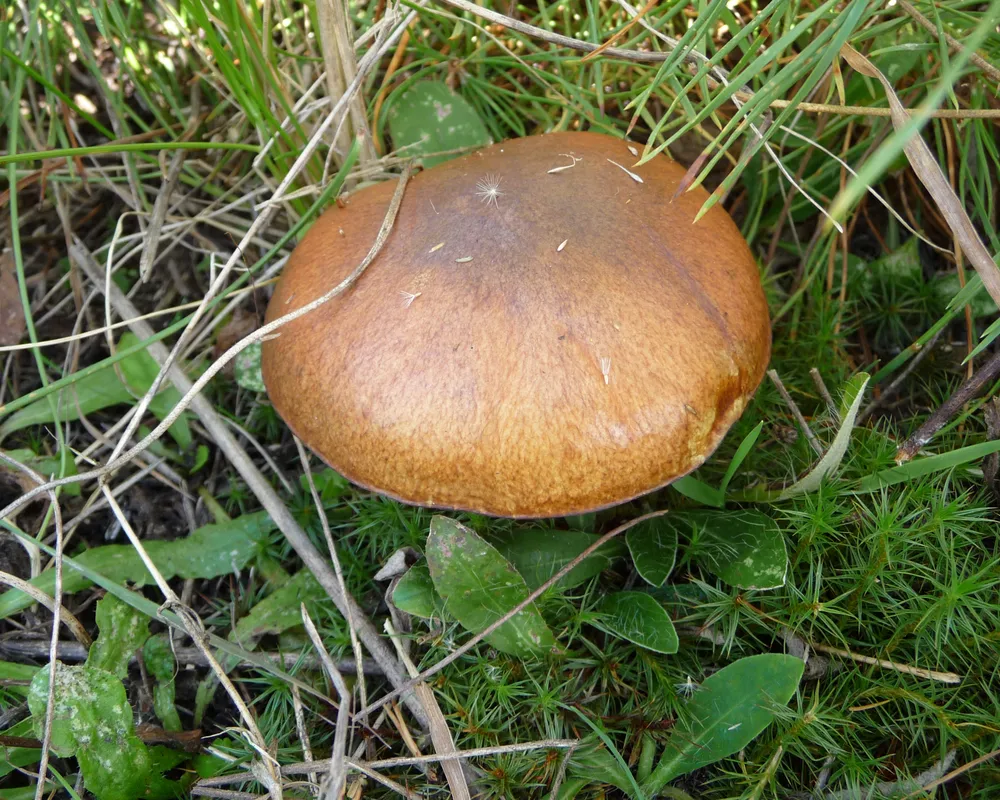
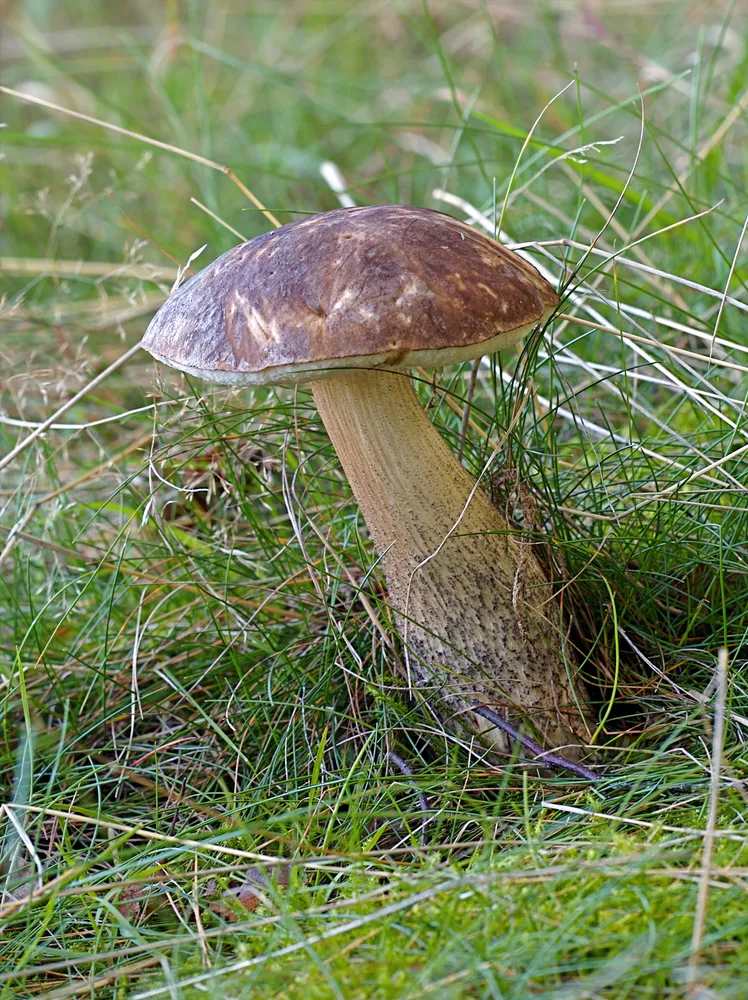
- **Brown birch bolete.** It grows near birches, in light groves and on grassy patches.
- Brittlegills and chanterelles. They turn up almost everywhere under deciduous trees.
Deciduous forest warms up faster than coniferous, so the first wave of prized mushrooms more often arrives here.
Mixed forest: the richest choice
Mixed forest, where pine, birch and oak grow side by side, is usually the most generous in June. The reason is simple: it brings together partner trees for many mushrooms at once.
In one such forest, on a single outing, you can gather slippery jacks under the pines, porcini under the oaks, birch boletes under the birches, and chanterelles in mossy clearings.
That’s why, when you don’t know where to go, mixed forest is almost always a good choice: it protects you from an empty basket, because there are usually at least some mushrooms here.
How to match the forest to the weather
Choose the type of forest not only by the mushrooms but by the weather too.
- In the heat, go to shady deciduous forest. Moisture lingers longer under a dense canopy.
- After heavy rain, go to pine woodland. Sandy soil drains excess water quickly, so slippery jacks don’t rot.
- When in doubt, go to mixed forest. It gives you the best chance of at least some haul.
And to find out when it’s worth heading out at all, check the mushroom radar: it will tell you when moisture and warmth line up well in your region.
Sources
- “Identification Guide to the Fungi of Ukraine” (Kyiv, Naukova Dumka publishers).
- Boletus reticulatus on GBIF, the global biodiversity database.
- Fungi on MycoBank, the international fungal nomenclature database.
- Mushroom hunting on Wikipedia.
Frequently asked questions
Which forest is best for mushrooms in June?
Most often , because it has partner trees for many mushrooms at once: pine, birch and oak. It gives you the best chance of a good haul.
What grows in coniferous forest in June?
Above all , which live in symbiosis with pine, plus Xerocomus boletes, brittlegills and chanterelles in mossy spots. Look on sunny forest edges and along roads.
What should you look for in deciduous forest?
under oaks and beeches, near birches, plus brittlegills and chanterelles. Deciduous forest warms up faster, so mushrooms appear here early.
Why do mushrooms grow under particular trees?
Most forest mushrooms live in symbiosis with trees, exchanging nutrients with their roots. That’s why the slippery jack sticks to pine, the birch bolete to birch, and porcini to oak.
Where should you go if you don’t have your own spots?
To mixed forest. Thanks to the variety of trees there are almost always at least some mushrooms here, so the chance of coming back with an empty basket is the lowest.
Which forest should you choose in the heat?
Shady or : moisture lingers longer under a dense canopy, and mushrooms don’t dry out as quickly.
Where should you go after heavy rain?
To pine woodland. Sandy soil drains excess water quickly, so slippery jacks and other mushrooms here don’t rot even after heavy downpours.
Can you find porcini in coniferous forest in June?
In summer, porcini turn up more often in deciduous and mixed forests. In purely coniferous forest, their time, the pine bolete, comes mostly closer to autumn.
Mushrooms in this article
Related articles
 Recipes & cooking
How to store fresh mushrooms, and for how long
Fresh mushrooms spoil faster than you might think. Here's how long they keep in the fridge, how to store them…
August 21, 2026·4 min How to identify
Truffles in Ukraine: do they grow here, and where to look
Truffles aren't just a French delicacy. Several species grow in Ukraine too. Here's which ones, where they occ…
August 24, 2026·2 min Recipes & cooking
How long to boil mushrooms
Boiling time depends on the type of mushroom and on what you're cooking next. Here's a clear cheat sheet: how…
August 22, 2026·4 min