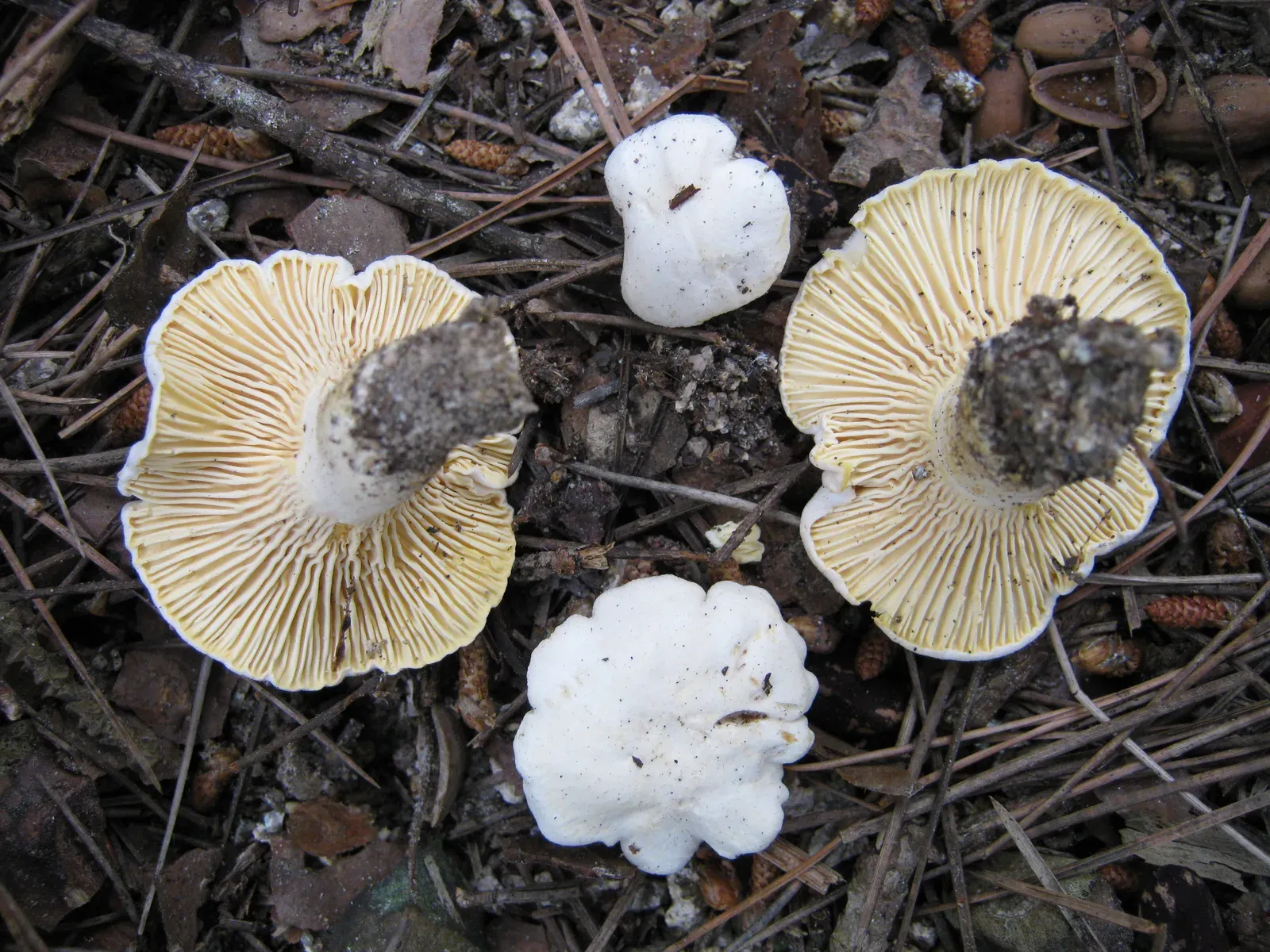
If you've picked mushrooms in August, you know the disappointing feeling: you cut a beautiful porcini, and it's riddled with worms. In June this happens much less often. Early mushrooms are often surprisingly clean, and that's one of the reasons experienced foragers value early summer so much.
Let's look at why June mushrooms are almost never wormy, which ones resist larvae best, and how to bring a clean basket home from the forest.
Why there are fewer worms in early summer
The “worms” in mushrooms are actually insect larvae, mainly of fungus flies and fungus gnats. The adult insect lays eggs in the mushroom, and they hatch into larvae that bore through the flesh.
In June there are still relatively few of these insects. After winter their numbers are only starting to grow, so the pressure on mushrooms is low. On top of that, nights are cooler in early summer, and in the cool, larvae develop more slowly.
But by August the insects have multiplied, the heat speeds up larval development, and the same mycelium now yields mostly worm-eaten mushrooms. That's why June, with its cool nights and few insects, gives the cleanest harvest.
Which mushrooms resist worms best
Not all mushrooms are equally tempting to larvae. Some hardly ever get wormy, whatever the month.
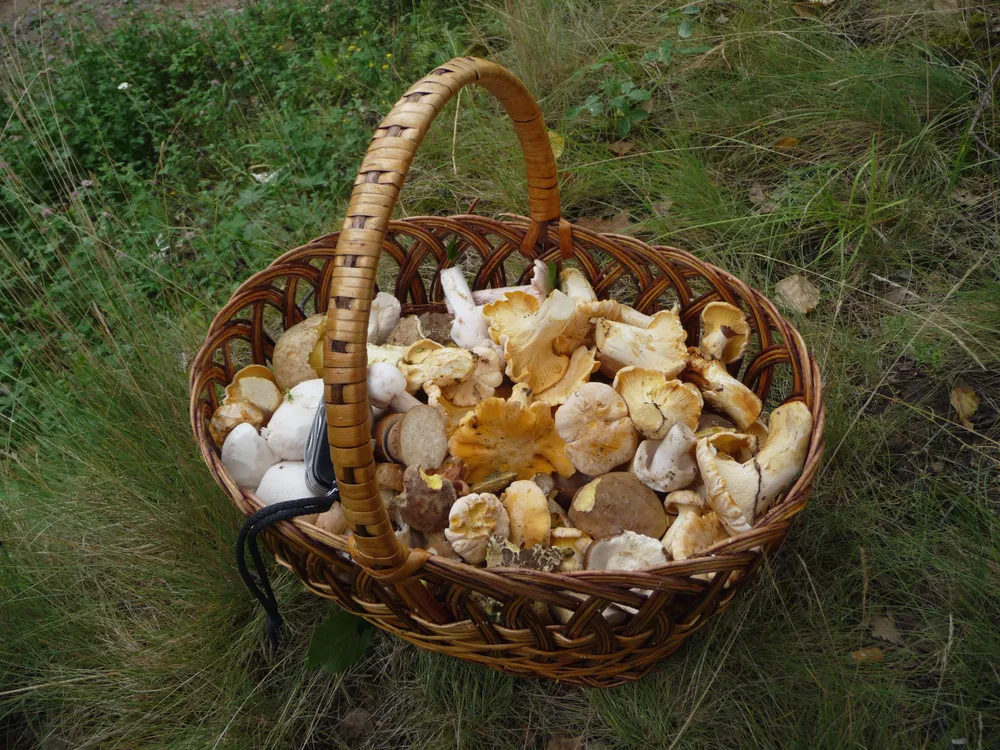
- **Chanterelle.** The champion of cleanliness. Its flesh contains natural substances that repel larvae, so the chanterelle is almost never wormy, even in the heat.
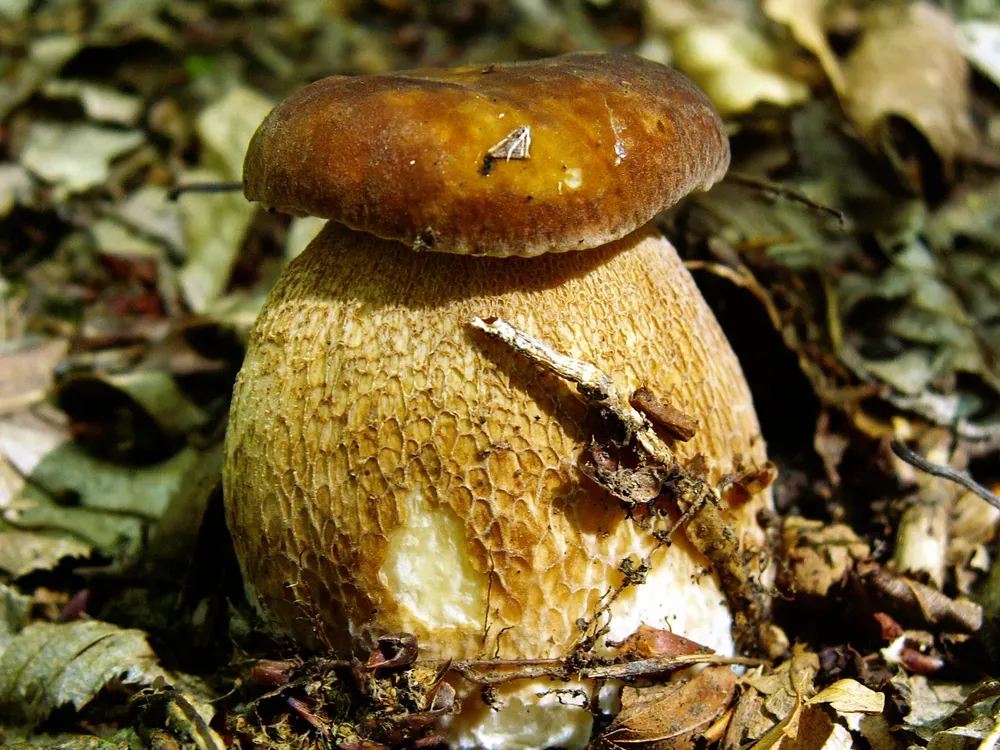
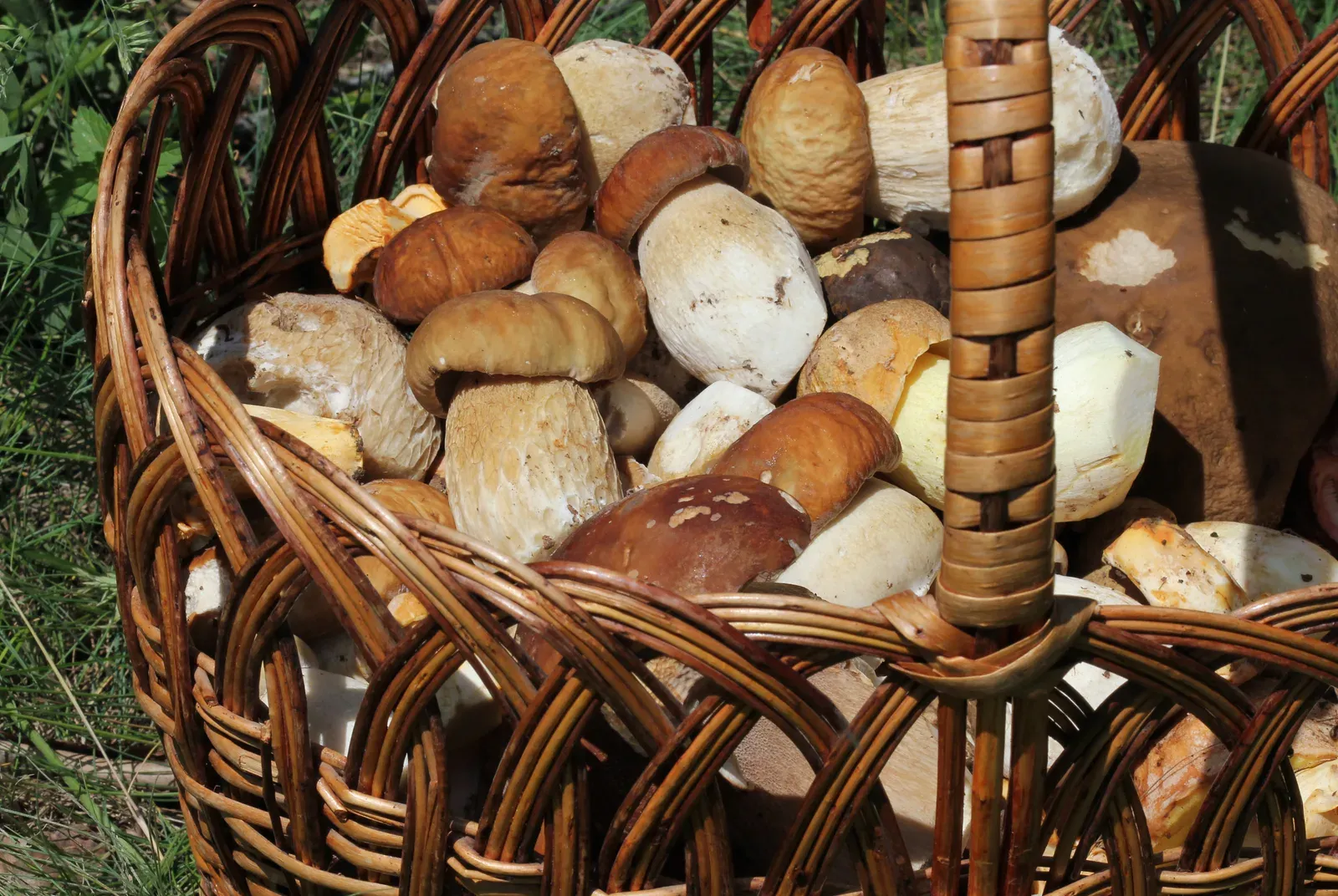
- **Porcini.** Larvae move into a young porcini with firm flesh more slowly, especially in June.
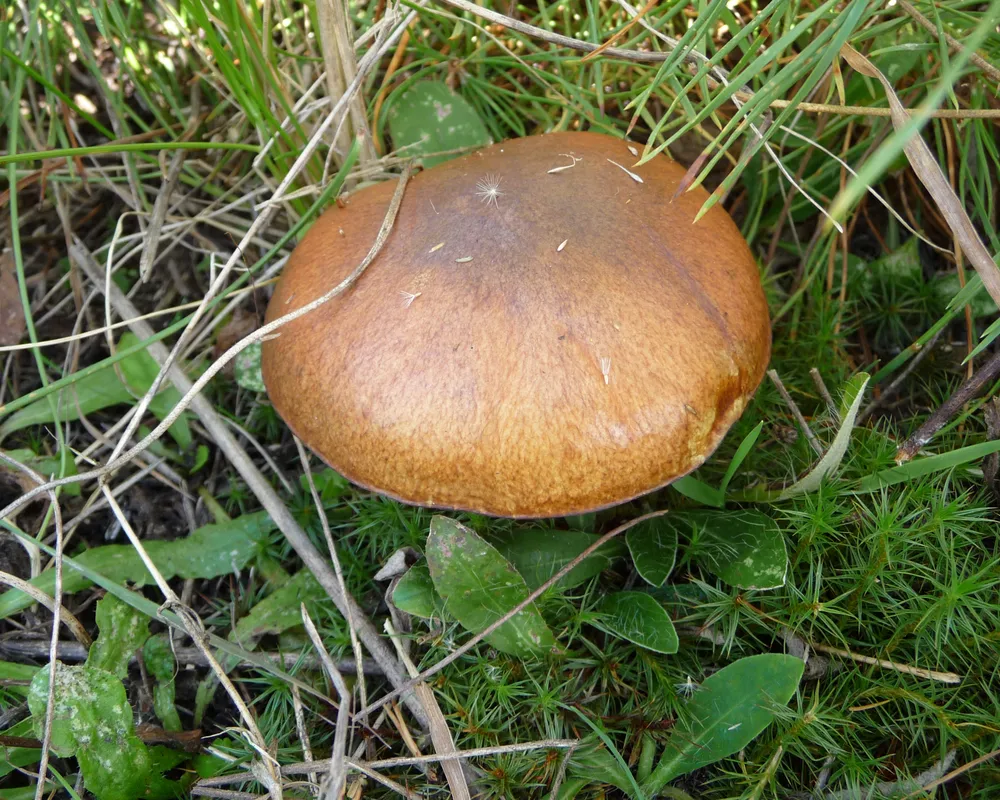
- **Slippery jack.** The slippery jack, on the contrary, gets wormy quickly because of its tender flesh, so it's best picked very young.
The general rule: the firmer and drier a mushroom's flesh, the more slowly worms bore through it. That's why firm young specimens are always cleaner than old, soggy ones.
How to gather a clean basket
A few simple habits will help you bring fewer wormy mushrooms home from the forest.
- Pick young mushrooms. Larvae work their way from the bottom up, so old mushrooms are almost always worm-eaten, while young ones are often still clean.
- Check on the spot. Break the stem near the base: if you see dark tunnels and little holes, the mushroom is wormy and better left behind.
- Don't put doubtful mushrooms in with the rest. Larvae crawl from mushroom to mushroom in the basket, so one bad apple spoils the whole barrel.
- Go out in the morning. It's cool overnight, the mushrooms are fresh, and the larvae are less active.
Why a few tunnels are nothing to fear
If a nice mushroom turns out to have a few worm holes, don't rush to throw the whole thing away. Often it's enough to trim off the affected part and use the rest.
This is common practice: a porcini with a little worm damage near the base is perfectly usable if you cut out the stem and keep the clean cap. Only throw away badly affected mushrooms, where there are more tunnels than flesh.
Overall, the best way to avoid wormy mushrooms is to go out at the right time. The first flush after a warm rain gives the cleanest specimens, so keep an eye on the weather with the mushroom radar and don't put off your outing.
Sources
- “Key to the Fungi of Ukraine” (Kyiv, Naukova Dumka publishing house).
- Cantharellus cibarius in GBIF, the global biodiversity database.
- Fungi in MycoBank, the international fungal nomenclature database.
- Mushroom hunting on Wikipedia.
Frequently asked questions
Why are mushrooms almost never wormy in June?
Because in early summer there are still few fungus flies and gnats, whose larvae bore through mushrooms, and cool nights slow their development. By August there are more insects, so there are more wormy mushrooms too.
Which mushrooms get wormy least?
Above all, the : its flesh contains substances that repel larvae. Young with firm flesh are also more resistant.
Why is the chanterelle never wormy?
Its flesh contains natural compounds that repel insect larvae. That's why the chanterelle stays clean even in warm weather, when other mushrooms get wormy.
Which mushroom gets wormy fastest?
: larvae move into its tender flesh very quickly. So it's best picked very young and processed the same day.
How do you check a mushroom for worms?
Break the stem near the base. If you see dark tunnels and little holes, the mushroom is wormy. Larvae work their way from the bottom up, so the stem base tells you a lot.
Can you eat a slightly wormy mushroom?
Often, yes. Just trim off the affected part, usually the bottom of the stem, and use the clean cap. Only badly worm-eaten mushrooms get thrown away.
Why shouldn't you put wormy mushrooms in with the rest?
Because larvae crawl from mushroom to mushroom right in the basket and spoil even clean specimens. So it's better not to take doubtful mushrooms at all.
How do you gather the cleanest mushrooms?
Go out in the morning, soon after a warm rain, pick young firm specimens, and check each one on the spot. The best time is shown by the .
Mushrooms in this article
Related articles
 Recipes & cooking
How to store fresh mushrooms, and for how long
Fresh mushrooms spoil faster than you might think. Here's how long they keep in the fridge, how to store them…
August 21, 2026·4 min How to identify
Truffles in Ukraine: do they grow here, and where to look
Truffles aren't just a French delicacy. Several species grow in Ukraine too. Here's which ones, where they occ…
August 24, 2026·2 min Recipes & cooking
How long to boil mushrooms
Boiling time depends on the type of mushroom and on what you're cooking next. Here's a clear cheat sheet: how…
August 22, 2026·4 min