_(2).webp)
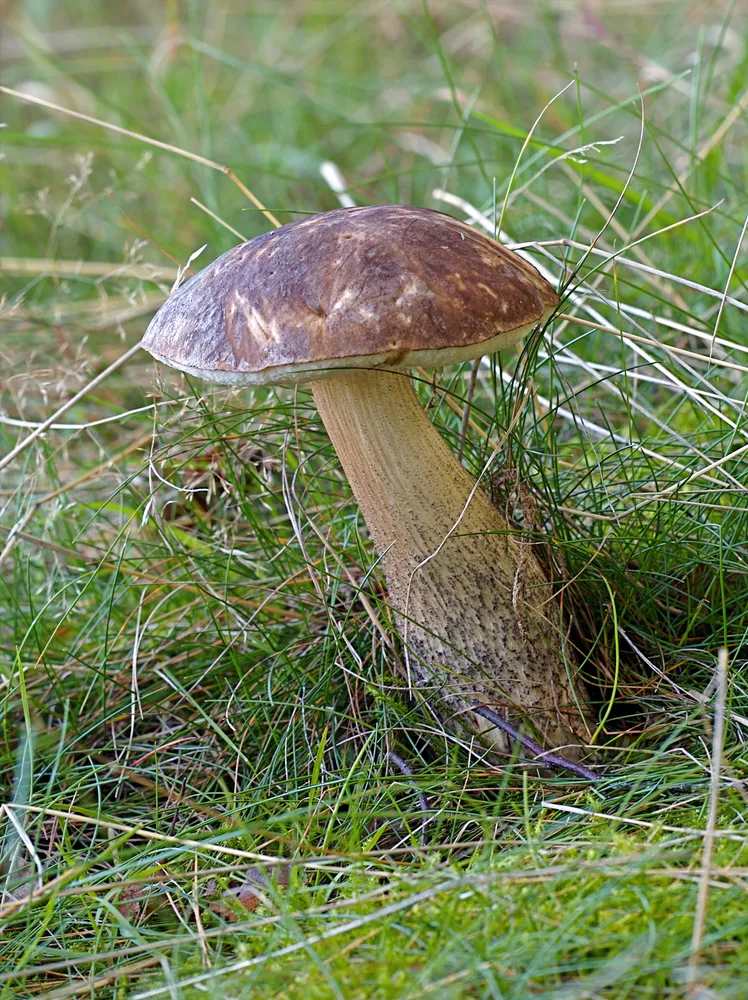
The brown birch bolete (Leccinum scabrum) is recommended to beginners for good reason: it's one of the safest mushrooms to pick. It has no deadly poisonous lookalikes, so poisoning yourself with it is almost impossible.
Still, one unpleasant lookalike does exist, and it's the one that spoils foragers' moods and meals. Let's look at what the brown birch bolete can be confused with, which mushroom is the trickiest, and how to keep your basket safe.
The bitter bolete, the main lookalike
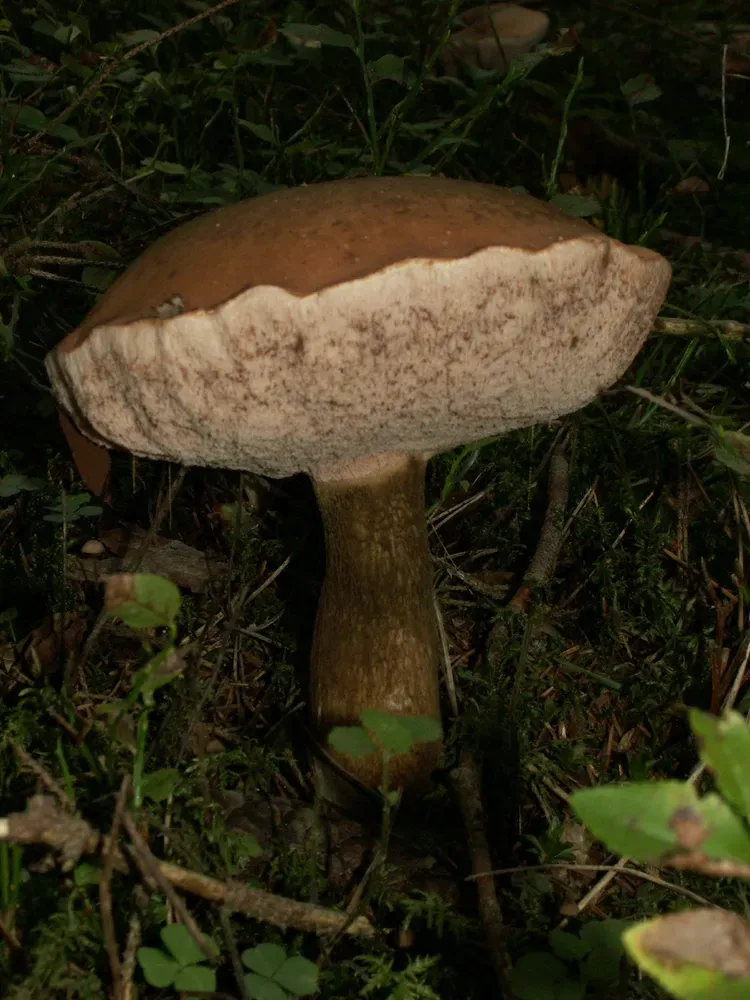
The best-known and most annoying lookalike of the brown birch bolete is the bitter bolete, also called the gall bolete (Tylopilus felleus).
It really does resemble a birch bolete: a pored mushroom with a brownish cap and a scaly stem. A beginner can easily take it for a brown birch bolete, especially from a distance. But there are a few reliable differences.
- The pore surface of the bitter bolete is pinkish or dirty pink, not white or gray.
- On the stem there's a distinct dark network, not fine scale-like streaks.
- The flesh often turns slightly pink when cut.
- The taste is unbearably bitter, and that's the main giveaway.
The bitter bolete is not poisonous; it can't poison you. But even one of these mushrooms makes a whole pot bitter, so it can easily ruin your harvest.
How to tell a brown birch bolete from a bitter bolete
To avoid mistakes, it's enough to check a few things.
- Look at the pores. A white or gray pore surface means brown birch bolete; a pinkish one means bitter bolete.
- Examine the stem. Fine dark streaks mean brown birch bolete; a coarse dark network means bitter bolete.
- Touch the tip of your tongue to a small piece (without swallowing). The bitterness will give the bitter bolete away instantly.
The last method is the most reliable, because the bitter bolete's bitterness leaves no room for error. A doubtful mushroom is best thrown out right away.
Other similar mushrooms
Besides the bitter bolete, the brown birch bolete can occasionally be confused with a few other mushrooms, but all these cases are harmless.
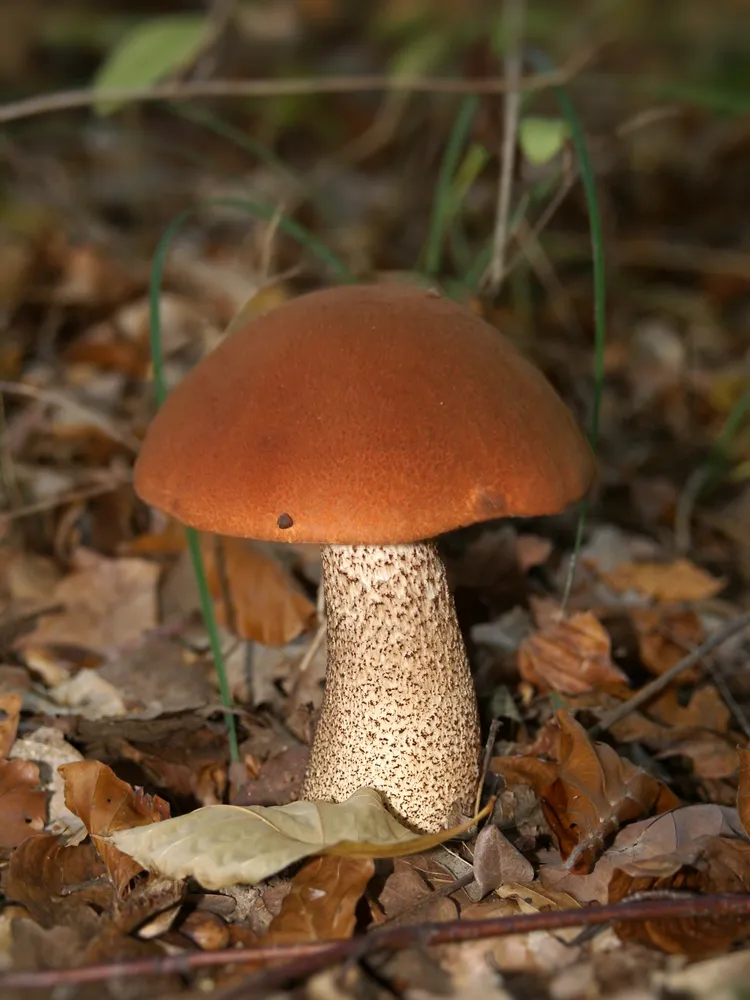
- The red-capped scaber stalk, also called the orange aspen bolete, has a similar build but a bright orange-red cap and flesh that turns blue. Also edible.
- A young porcini is sometimes confused with the brown birch bolete, but it has a thick stem with a pale network. Also edible, and even more prized.
- Different species of birch boletes themselves get mixed up with each other, but they're all edible, so a mistake here is no big deal.
So the only truly unwanted lookalike is the bitter bolete. The other similar mushrooms are either edible or even more prized than the brown birch bolete itself.
Simple safety rules
To keep picking brown birch boletes pleasant and safe, stick to a few habits.
- Don't take a mushroom if its pores have a pink tint and its stem has a network instead of streaks.
- In doubt? Touch the tip of your tongue to it: the bitterness will instantly give away a bitter bolete.
- Take only young, firm mushrooms; old brown birch boletes go mushy and are more often wormy.
- Not completely sure? Don't put the mushroom in your basket. One mistake isn't worth the risk.
The brown birch bolete forgives beginners a lot, but caution with mushrooms is never wasted. And to head into the forest right when the birch boletes are coming up, use our mushroom radar: it shows when moisture and warmth line up well for mushrooms to appear.
Sources
- “Identification Guide to the Fungi of Ukraine” (Kyiv, Naukova Dumka publishing house).
- Tylopilus felleus on GBIF, a global biodiversity database.
- Leccinum on MycoBank, the international fungal nomenclature database.
- Tylopilus felleus on Wikipedia.
Frequently asked questions
Does the brown birch bolete have poisonous lookalikes?
The has no deadly poisonous lookalikes. The only unpleasant similar mushroom is the , which is unbearably bitter but not poisonous.
How do you tell a brown birch bolete from a bitter bolete?
The has a pinkish pore surface, a coarse dark network on the stem, and an unbearably bitter taste. The brown birch bolete has white or gray pores, and its stem is covered in fine dark streaks.
Can you get poisoned by the bitter bolete?
No, the bitter bolete is not poisonous and doesn't cause serious poisoning. But because of its unbearable bitterness, even one mushroom makes a whole dish inedible.
How can you check that it's a brown birch bolete and not a bitter bolete?
Look at the pores and the stem, and if in doubt, touch a small piece to the tip of your tongue without swallowing. The bitterness will instantly give away the .
Can you confuse a brown birch bolete with a red-capped scaber stalk?
Yes, because they're close relatives. But the has a bright orange-red cap and flesh that turns blue. It's edible too, so this mistake is harmless.
Why is the bitter bolete so bitter?
It's a natural trait that protects the mushroom from being eaten. The bitterness doesn't go away even after boiling and only gets stronger, which is why the bitter bolete isn't eaten.
Is it dangerous to confuse a young brown birch bolete with porcini?
No, is edible and even more prized than the brown birch bolete. They're easy to tell apart by the porcini's thick stem with a pale network.
What should I do if I'm not sure about a mushroom?
Don't put it in your basket. The forager's golden rule: if you're not sure, don't pick it. One mistake isn't worth risking a ruined dish or your health.
Mushrooms in this article
Related articles
 Recipes & cooking
How to store fresh mushrooms, and for how long
Fresh mushrooms spoil faster than you might think. Here's how long they keep in the fridge, how to store them…
August 21, 2026·4 min How to identify
Truffles in Ukraine: do they grow here, and where to look
Truffles aren't just a French delicacy. Several species grow in Ukraine too. Here's which ones, where they occ…
August 24, 2026·2 min Safety
False morel: why this spring mushroom is dangerous
The false morel looks like a morel, but it contains a poison. Here's how to recognize it, why it's dangerous a…
August 24, 2026·2 min