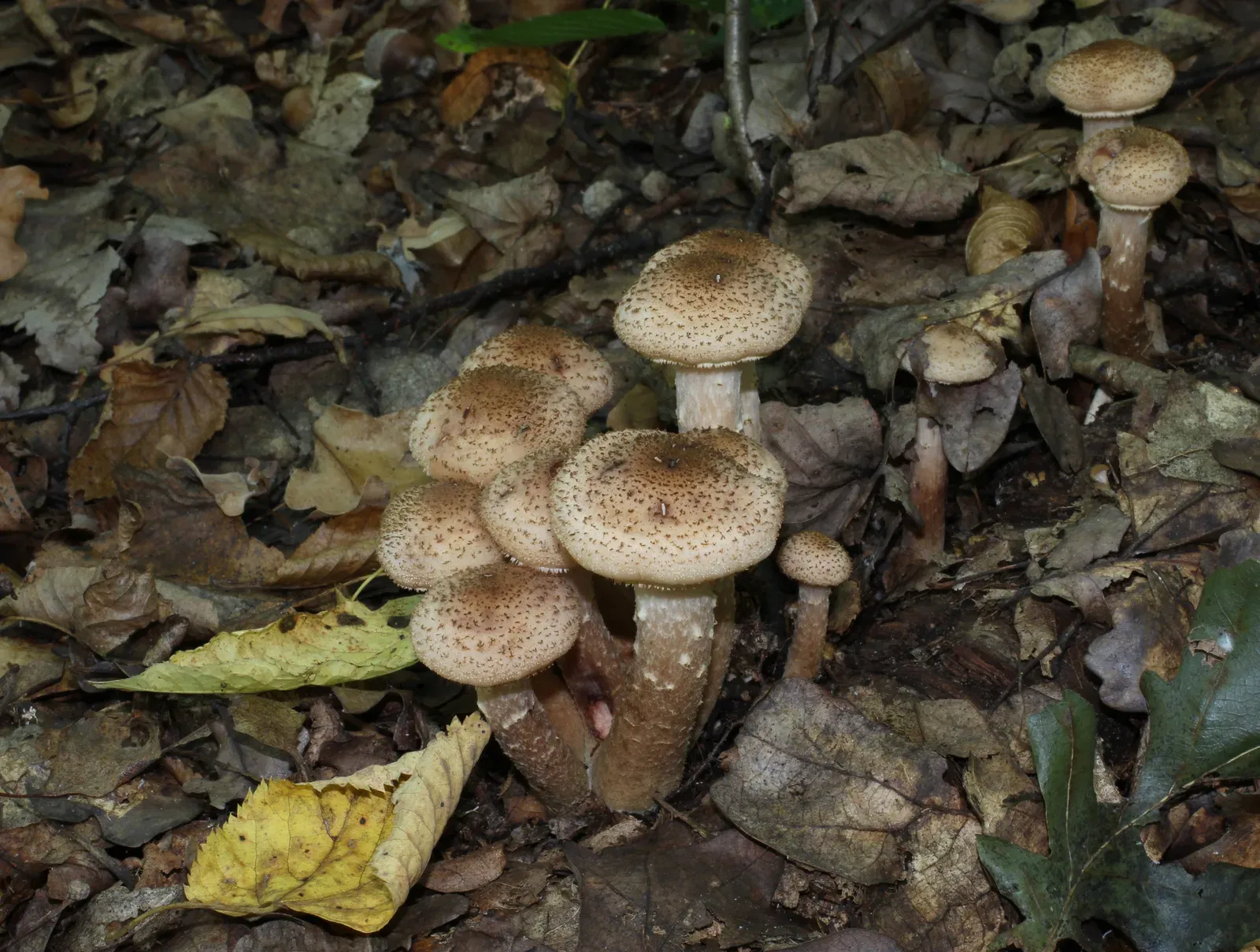
“We picked *openky*” — “No, those are *pidpenky*.” Sound familiar? There's actually nothing to argue about: both names mean the same mushrooms that grow in dense clusters by stumps and at the base of trees.
Let's see where the two words came from.
One name, one mushroom
Both *openky* and *pidpenky* come from the word *penok* (“stump”): mushrooms that grow *o-penky* (around the stump) or *pid-penky* (at the base, under the stump). These aren't two different species but two versions of a folk name for one and the same mushroom.
- *Openky* is the standard literary form used by dictionaries and field guides.
- *Pidpenky* is a colloquial, regional variant common in everyday speech.
So it's more correct to say *openky*, but if people understood you, no harm done.
Which mushrooms we're talking about
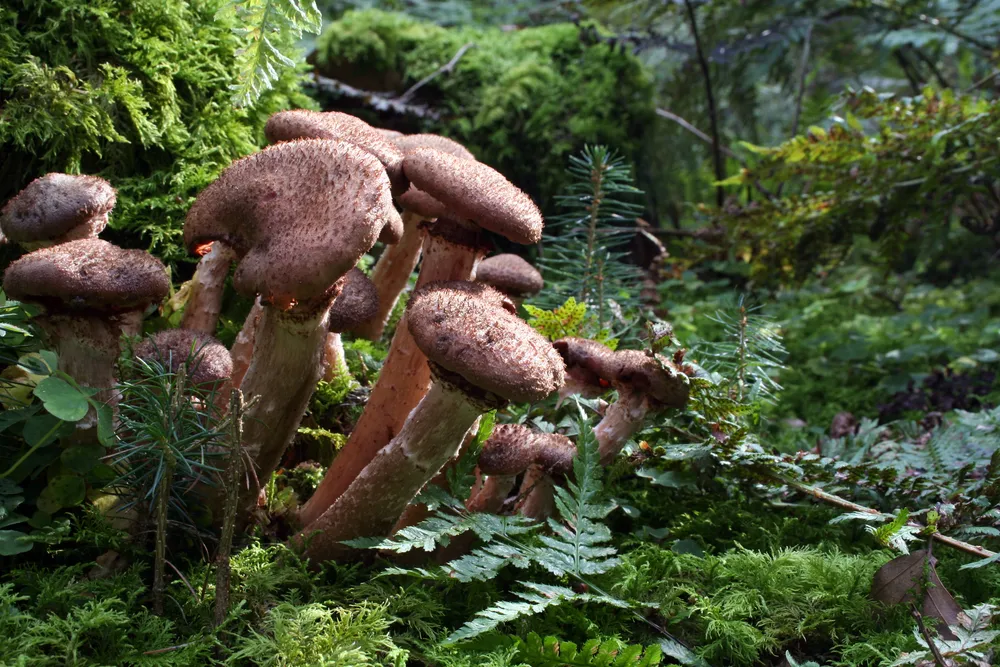
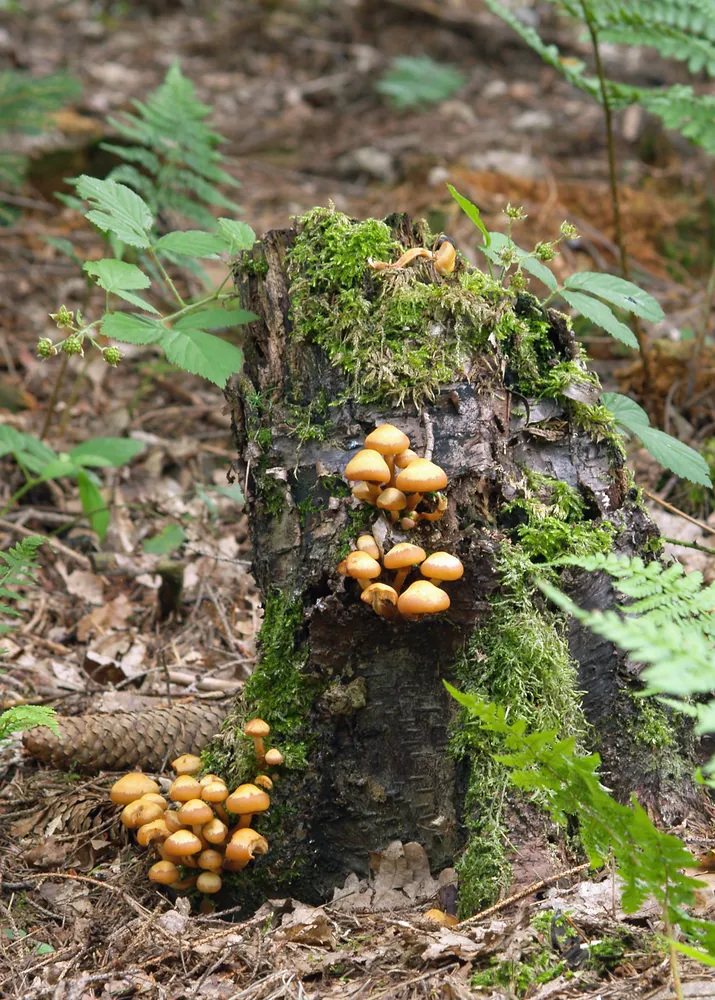
Most often, both *openky* and *pidpenky* refer to autumn honey fungus — honey fungus (Armillaria mellea), which fruits en masse in late summer and autumn. But there are several kinds of *openky*: summer, winter, meadow. For the full overview, see our guide to honey fungus species.
What matters is safety, not the name
Whatever you call them, honey fungus has dangerous false lookalikes. Before you put them in your basket, check the features: gill color, the ring on the stem, where it grows. We've written separately about how to tell true honey fungus from false. And when honey fungus season starts — read about it in our seasonal piece.
Sources
- “Identification Guide to the Fungi of Ukraine” (Kyiv, Naukova Dumka publishing house).
- Dictionary of the Ukrainian Language (SUM), entries *openok* and *openky*.
- Armillaria mellea in GBIF, the global biodiversity database.
Frequently asked questions
Openky or pidpenky — which is correct?
The standard form is *openky*. *Pidpenky* is a colloquial, regional variant of the same name. Both words mean the same mushrooms.
Are they different mushrooms?
No. They're two folk versions of the name for mushrooms that grow in clusters by stumps. Most often it means autumn honey fungus.
Why is the mushroom called that?
From the word *penok* (“stump”): honey fungus grows around stumps and at the base of trees, often right on the wood.
What kinds of *openky* are there?
Autumn, summer, winter and meadow. They differ in season and host tree, but all grow in characteristic clusters.
Are all *openky* edible?
No. There are dangerous false honey fungi. Always check the ring on the stem, the gill color and where it grows before you take a mushroom.
When to pick honey fungus?
Autumn honey fungus comes up en masse from late August through October, and some species even in winter during thaws.
Mushrooms in this article
Related articles
 How to identify
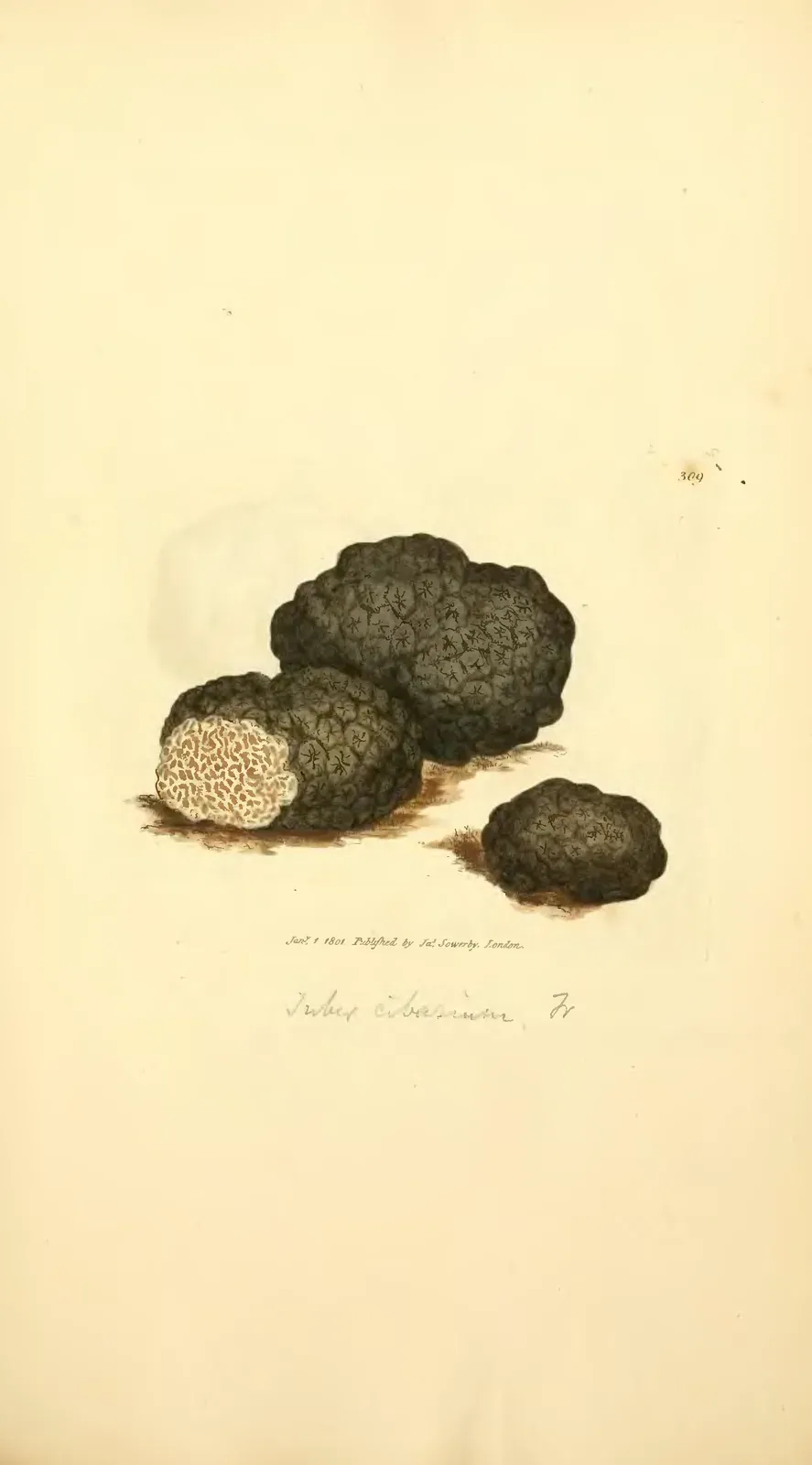
Truffles in Ukraine: do they grow here, and where to look
Truffles aren't just a French delicacy. Several species grow in Ukraine too. Here's which ones, where they occ…
August 24, 2026·2 min Recipes & cooking
How to store fresh mushrooms, and for how long
Fresh mushrooms spoil faster than you might think. Here's how long they keep in the fridge, how to store them…
August 21, 2026·4 min Recipes & cooking
How long to boil mushrooms
Boiling time depends on the type of mushroom and on what you're cooking next. Here's a clear cheat sheet: how…
August 22, 2026·4 min