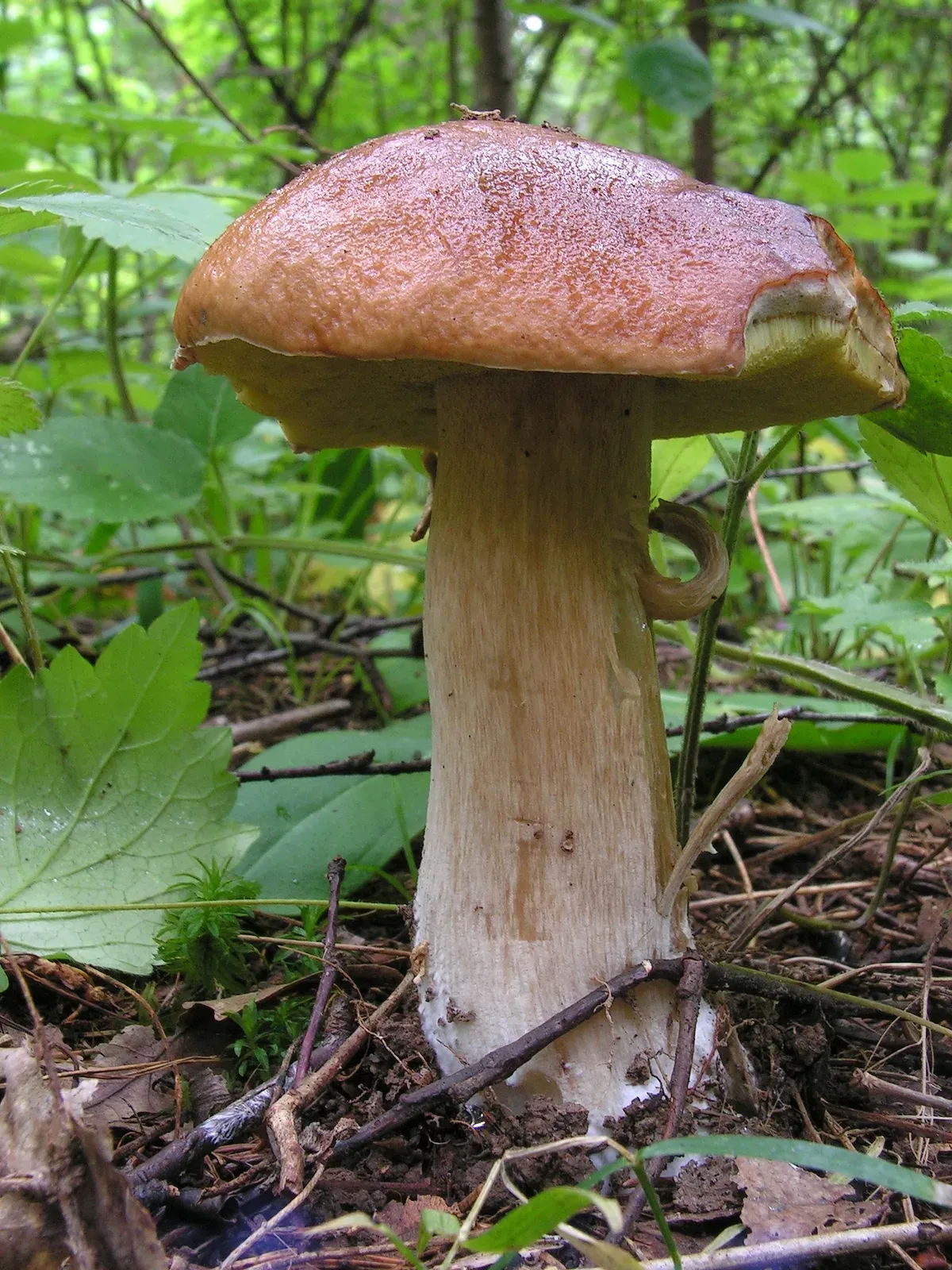
Of all forest mushrooms, there's one that many people go foraging for in the first place. It's the porcini (Boletus edulis, also known simply as the cep or king bolete), a mushroom that needs no introduction. Sturdy, fragrant, with firm white flesh, it long ago earned the title of king of the Ukrainian forest.
Its Ukrainian name, “bilyi” (white), comes not from the cap color but from the flesh: it stays white both fresh and dried, unlike other mushrooms that darken. It's exactly this staying power and distinct nutty flavor that make the porcini prized above all others.
Why “king of the forest”
The porcini combines what rarely comes together in one species: superb flavor, high nutritional value and complete recognizability. It's hard to confuse with anything dangerous if you know a few simple features.
On top of that, the porcini grows almost all over Ukraine, in many kinds of forest and over a fairly long season. It isn't as fussy about tree species as narrowly specialized mushrooms, so you'll find it in both oak woods and pinewoods. For a beginner it's a great first mushroom: easy to spot, tasty and relatively safe.
What the true porcini looks like
You recognize the porcini by a combination of features, not just one. Look it over from top to bottom.
- Cap. Convex in young mushrooms, cushion-shaped with age. Color ranges from light hazelnut to dark chestnut; the surface is smooth, slightly sticky in damp weather.
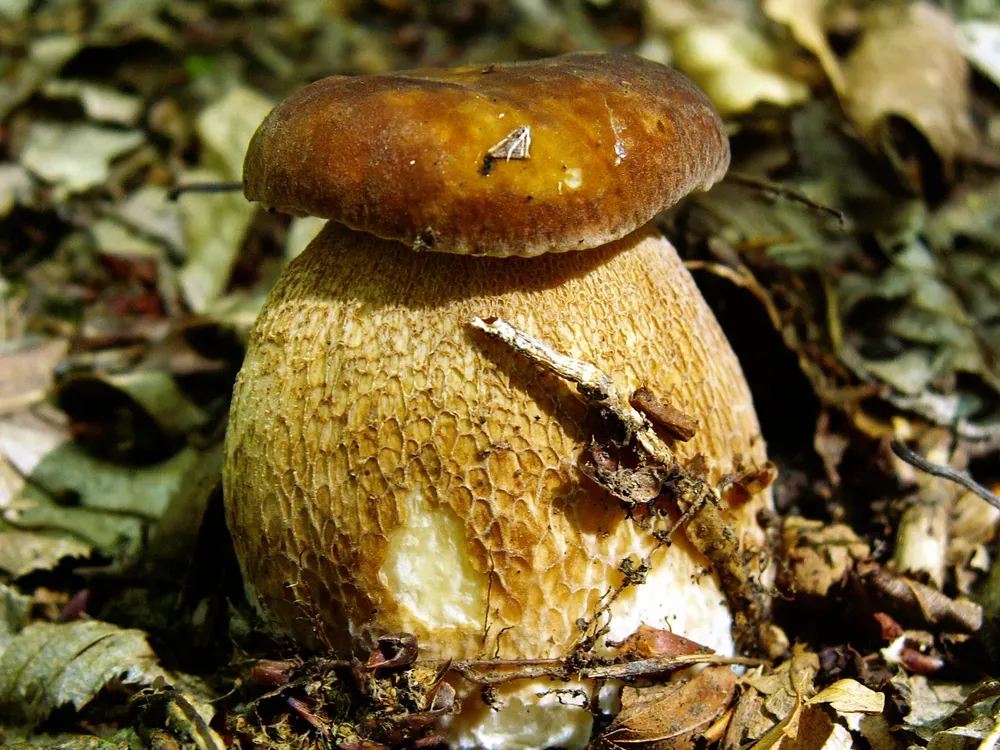
- Stem. Thick, sturdy, often barrel-shaped, light brown. The upper part is covered with a pale net pattern.
- Pores. The tube layer under the cap: white in young mushrooms, turning yellow with age and olive green in old ones.
- Flesh. Firm, white, with a pleasant nutty smell. It does not change color when cut.
The most reliable check at home: cut the mushroom. In a true porcini the flesh stays white; it does not turn blue or red. If the cut has turned blue, you're looking at a different species, and it pays to be careful.
Porcini are a whole family
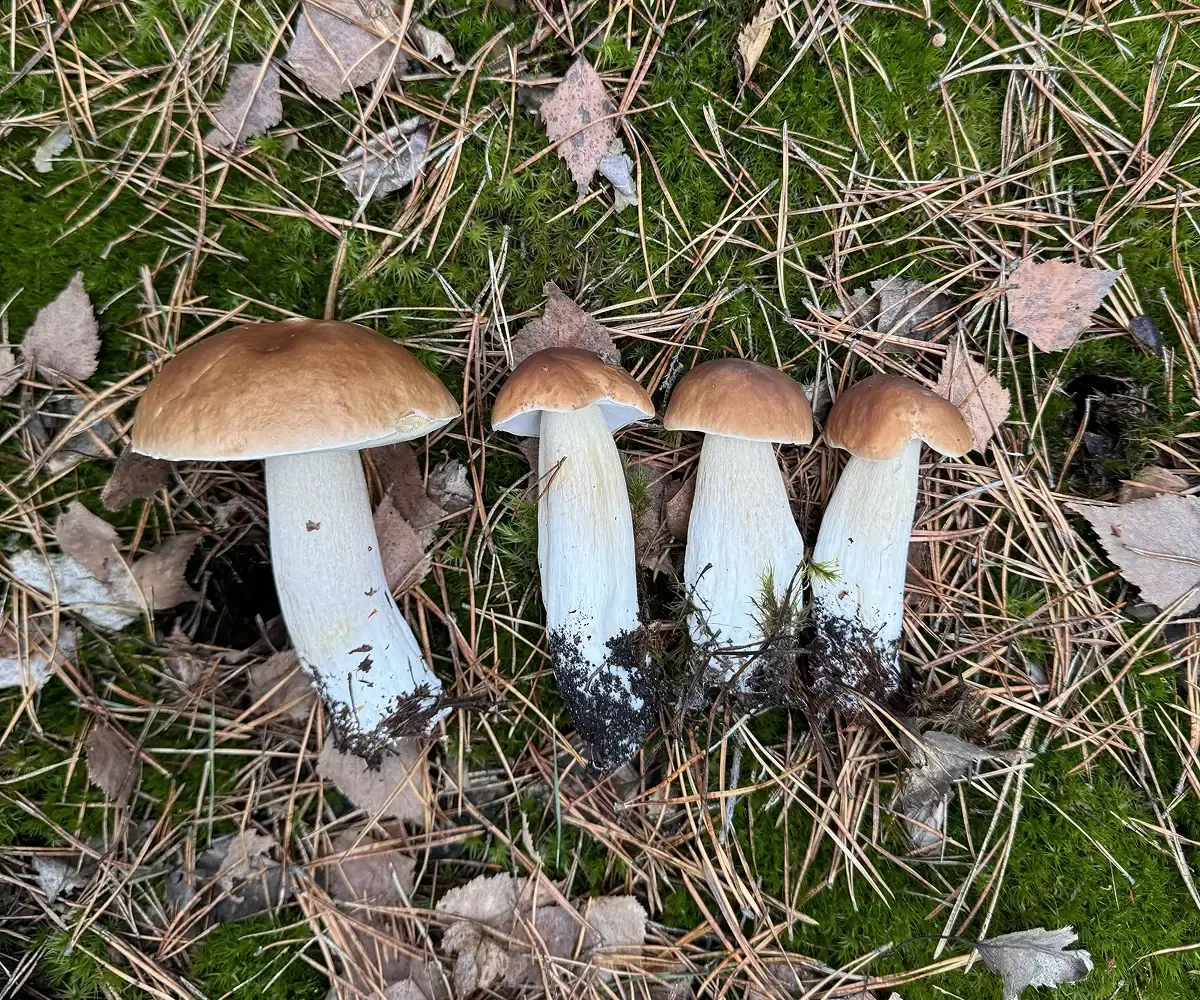
What we call porcini is actually several closely related boletes. They are all kin, with white flesh that doesn't turn blue and superb flavor, but they differ in their trees and season.
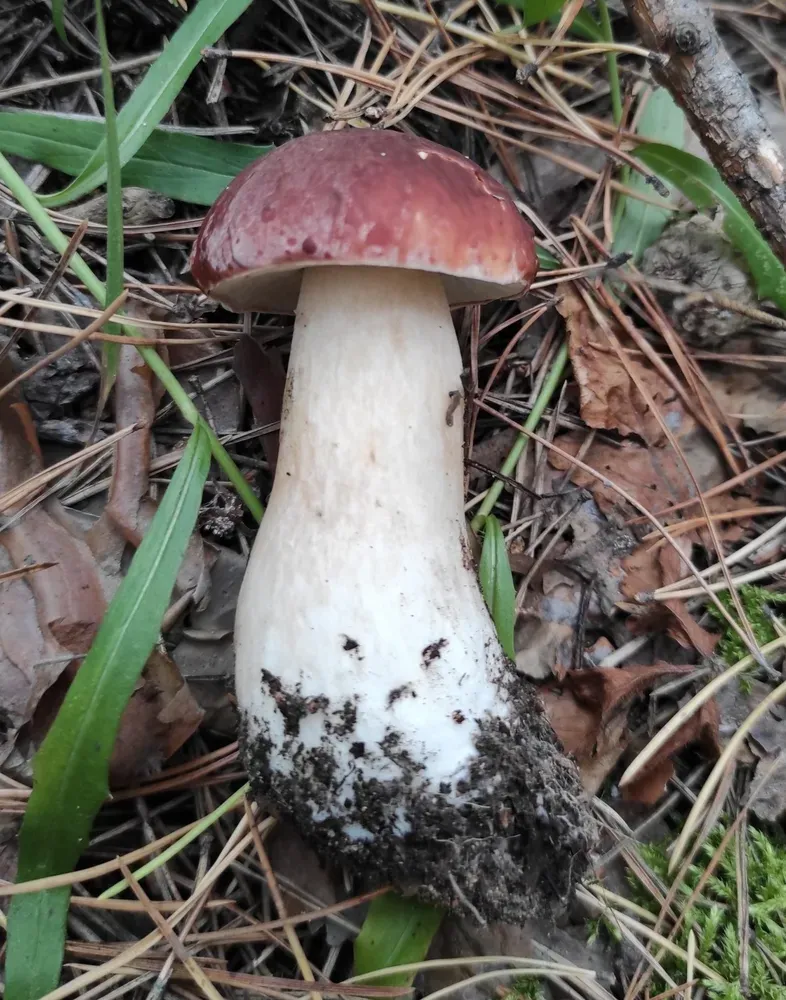
The earliest to appear is the summer bolete, also known as the reticulated bolete, which loves broadleaf forests. In autumn it gives way to the dark-capped pine bolete of conifer woods. And the classic true porcini turns up in both. So “porcini” is more of a group than a single species.
Where and when to look for it
The porcini is linked to trees through mycorrhiza, meaning it lives in a mutually beneficial partnership with their roots. So look for it near specific trees: oak, birch, pine, spruce, beech and hornbeam.
It turns up in bright broadleaf, mixed and conifer forests, on forest edges, in clearings and along old forest roads. The porcini doesn't like dense, wet thickets; it needs warmth and a bit of light.
The season runs from June to October, with the main flush in late summer and early autumn. The best time to go is two or three days after a warm rain, once the ground has warmed up. Rather than guessing, keep an eye on conditions with our mushroom radar: it shows when moisture and warmth line up just right for boletes to appear.
Caution never hurts
The porcini has a harmless but annoying look-alike, the bitter bolete. It's so bitter that it ruins the whole dish. Telling them apart is easy: the bitter bolete has pinkish pores under the cap and a dark net on the stem. The porcini has white or yellow pores, never pink.
There are also more dangerous look-alikes that turn blue when cut. So the golden rule stays the same: if you're not sure, don't pick it. One doubtful mushroom isn't worth the risk.
Sources
- “Key to the Fungi of Ukraine” (Kyiv, Naukova Dumka publishing house).
- Boletus edulis in GBIF, the global biodiversity database.
- Boletus edulis in MycoBank, the international fungal nomenclature database.
- Boletus edulis on Wikipedia.
Frequently asked questions
What is porcini?
It's a bolete, one of the most prized edible mushrooms (*Boletus edulis* and close relatives). Its Ukrainian name “bilyi” (white) comes from its flesh, which stays white even after drying, unlike mushrooms that darken.
What does the true porcini look like?
It has a convex hazelnut-to-chestnut cap, a thick barrel-shaped stem with a pale net at the top, white or yellowish pores underneath and firm white flesh that doesn't turn blue when cut.
Why is porcini called “white mushroom” in Ukrainian?
Because of the color of its flesh, not its cap. The cut surface and the dried mushroom stay pale, while many other mushrooms darken in the air. Hence “white.”
Where does porcini grow?
In bright broadleaf, mixed and conifer forests under oak, birch, pine, spruce and beech. It loves forest edges, clearings and sun-warmed slopes, and avoids dense, wet thickets.
When to pick porcini?
The season runs from June to October, with the main flush in late summer and early autumn. It's best to go a few days after a warm rain.
Does porcini turn blue when cut?
No. In a true porcini the cut flesh stays white. If the mushroom turns blue or red, it's a different species, and you shouldn't take it.
Is it easy to confuse porcini with something dangerous?
It's most often confused with the bitter bolete, which is bitter but harmless. Dangerous look-alikes usually turn blue when cut or have pink or red pores. White or yellow pores and a white cut are good signs of porcini.
How many kinds of porcini are there?
Several closely related boletes: the true porcini, the pine bolete, the summer bolete, Boletus betulicola and the bronze bolete. They are all related and equally prized, so foragers often don't sort them in the basket.
Mushrooms in this article
Related articles
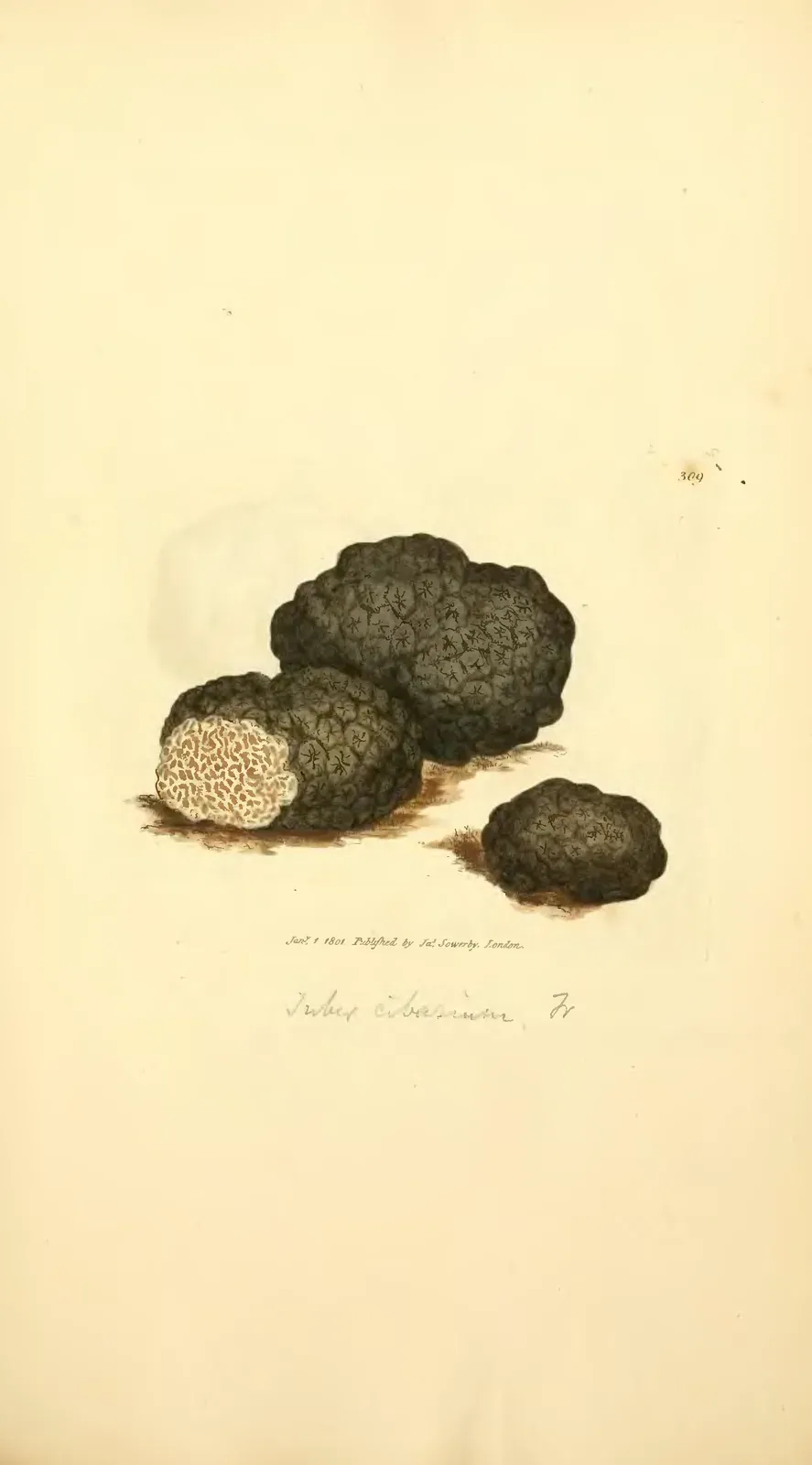 How to identify
Truffles in Ukraine: do they grow here, and where to look
Truffles aren't just a French delicacy. Several species grow in Ukraine too. Here's which ones, where they occ…
August 24, 2026·2 min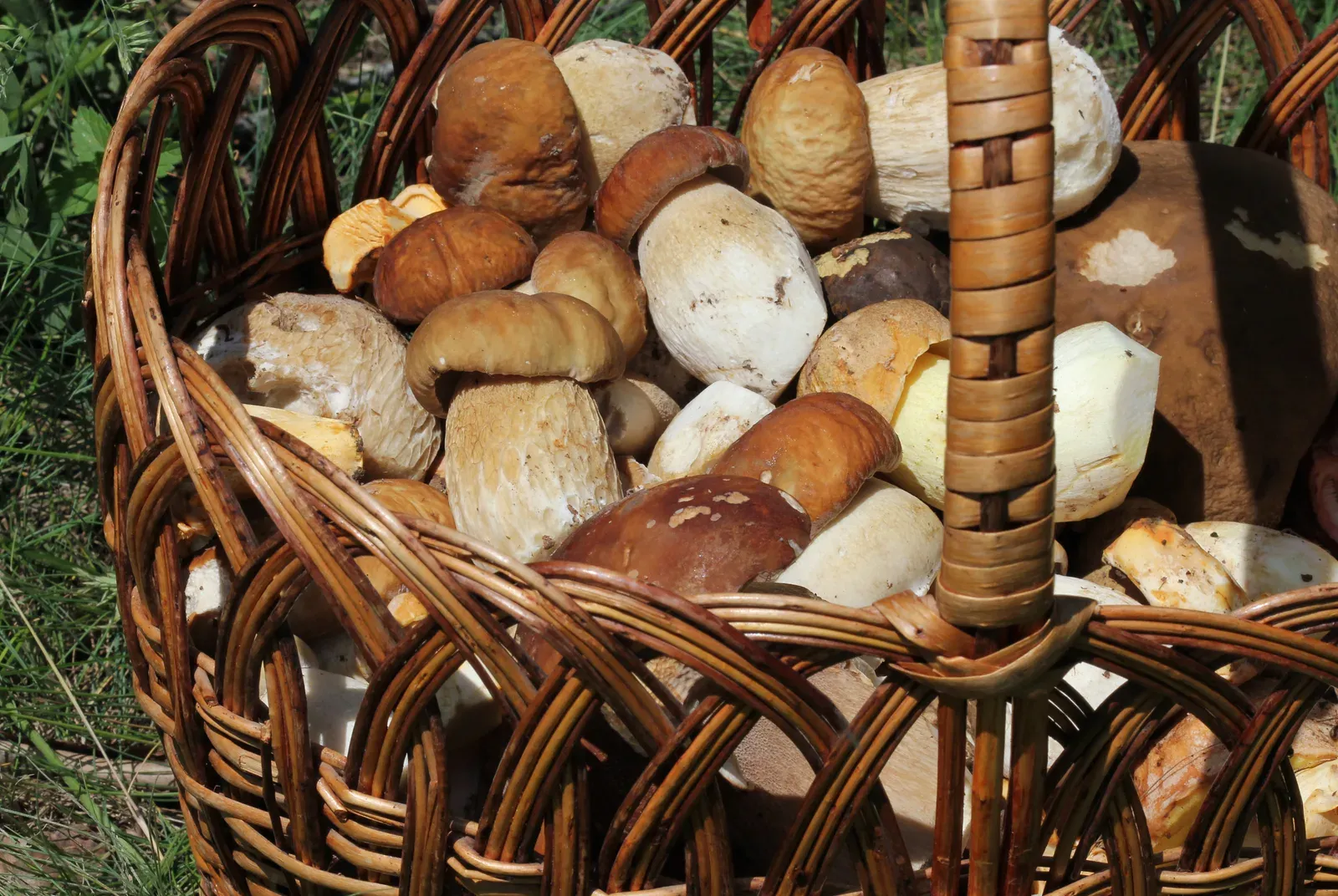 Recipes & cooking
How to store fresh mushrooms, and for how long
Fresh mushrooms spoil faster than you might think. Here's how long they keep in the fridge, how to store them…
August 21, 2026·4 min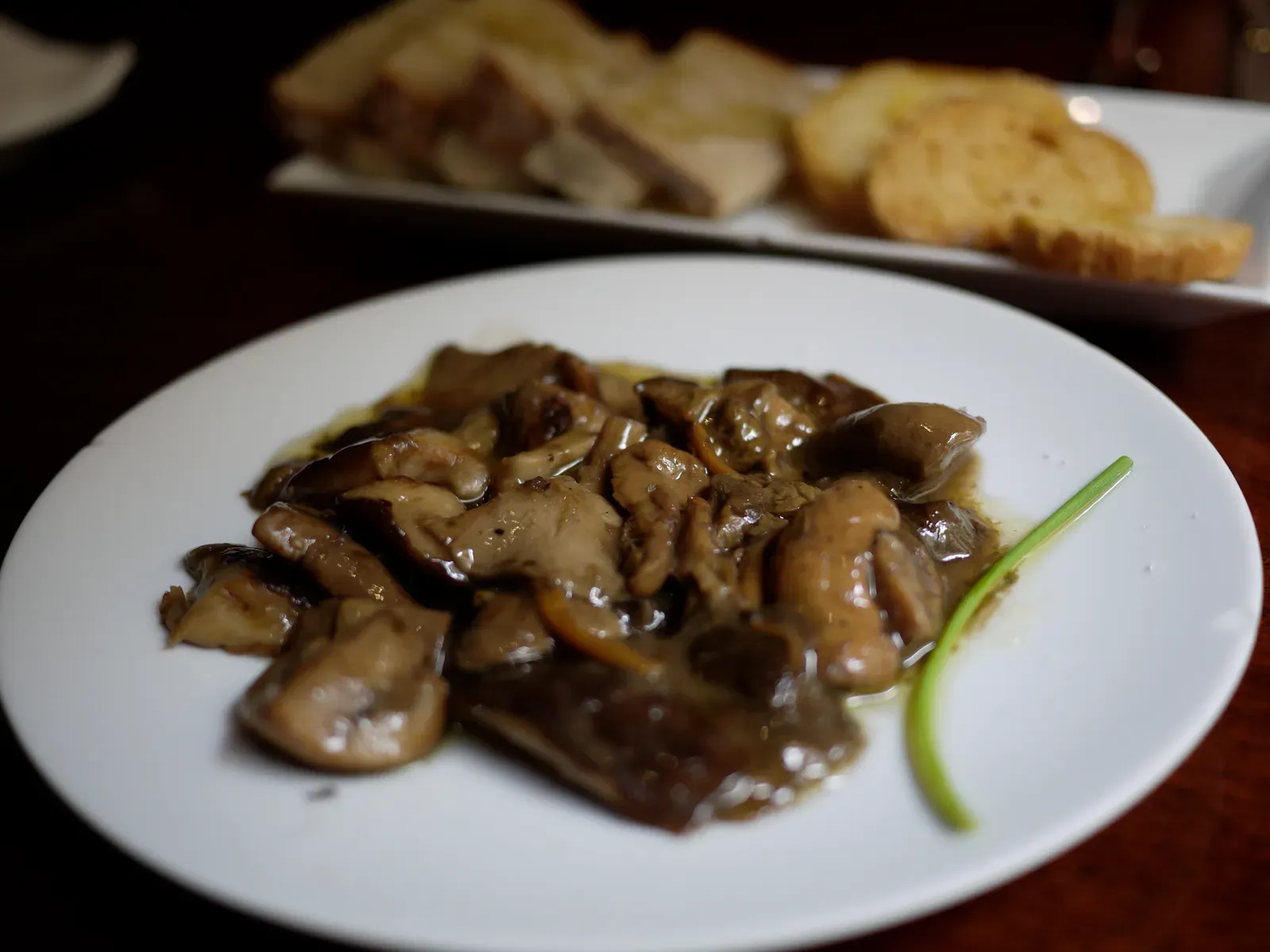 Recipes & cooking
How long to boil mushrooms
Boiling time depends on the type of mushroom and on what you're cooking next. Here's a clear cheat sheet: how…
August 22, 2026·4 min