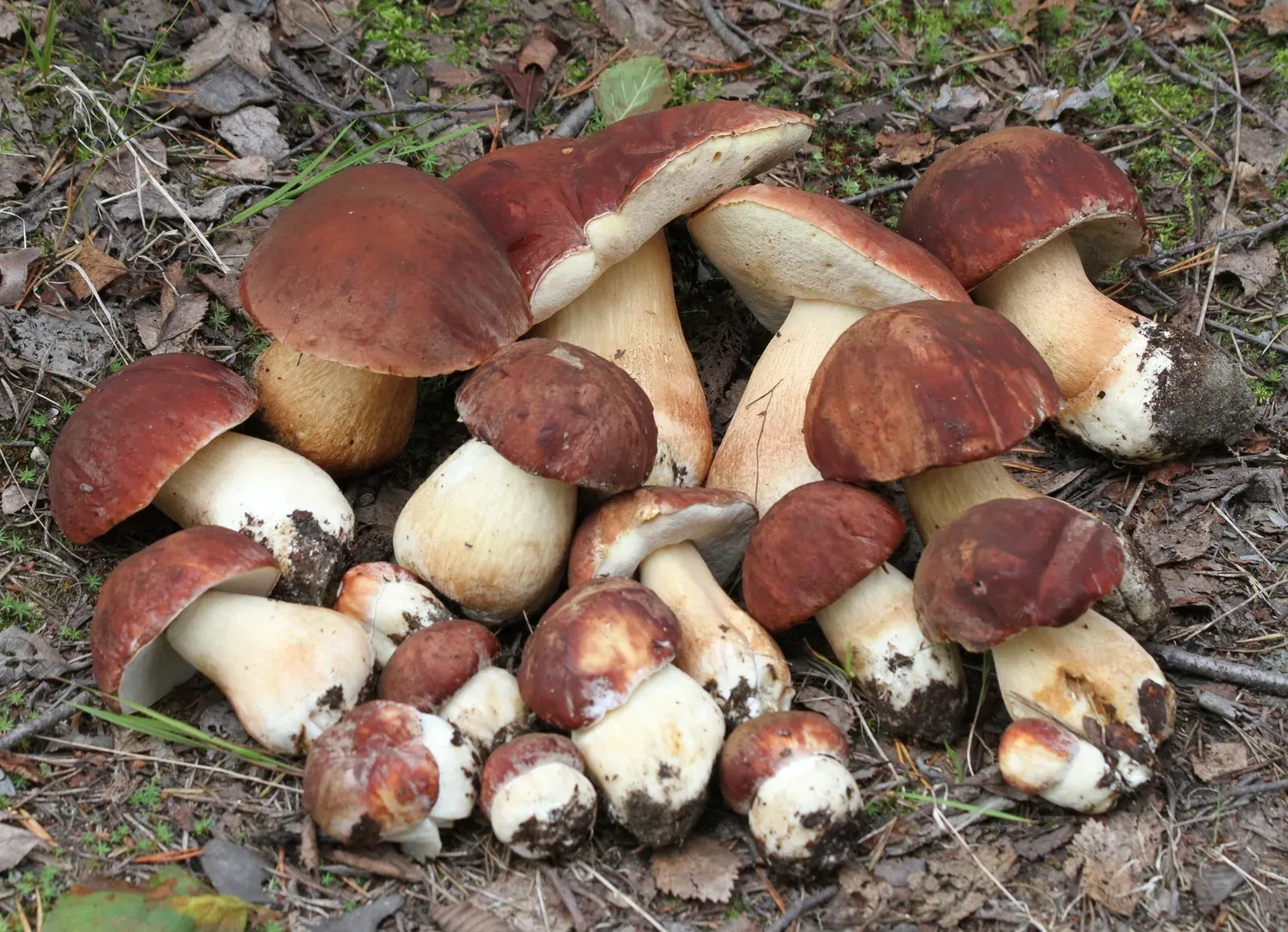
Many people think porcini is a single species. In fact, the name covers several closely related boletes, and they differ noticeably: in cap, stem, host trees and when they appear. The two most often compared are the summer one and the autumn one.
The summer one is the summer bolete (Boletus reticulatus, in our catalog Summer bolete), which comes up first. The autumn one is most often the pine bolete, a dark-capped dweller of pine forests. Let's go through the differences one by one.
The summer bolete, first of the season
The summer bolete wakes up earliest, as early as late May or June. It's easy to recognize by a combination of features.
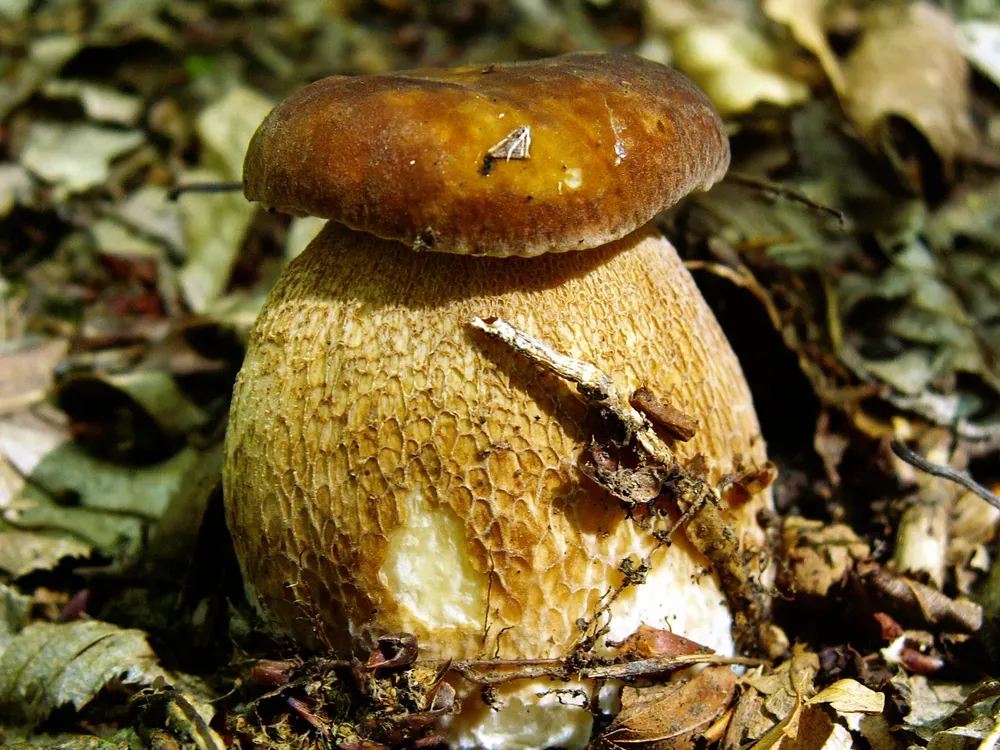
The cap is a warm nutty chestnut, matte and slightly velvety. In hot weather it typically cracks into small “squares,” like dried-out clay. The stem is light brown and covered in a pale net almost along its whole length, which is the key proof of the species.
It grows in broadleaf woods, most often under oak, beech and hornbeam, on sunny forest edges and warm slopes. Look for it in bright broadleaf forests.
The autumn pine bolete
The autumn pine bolete comes up later, with its flush falling in late summer and autumn. It's just as firm and fragrant, but it looks different.
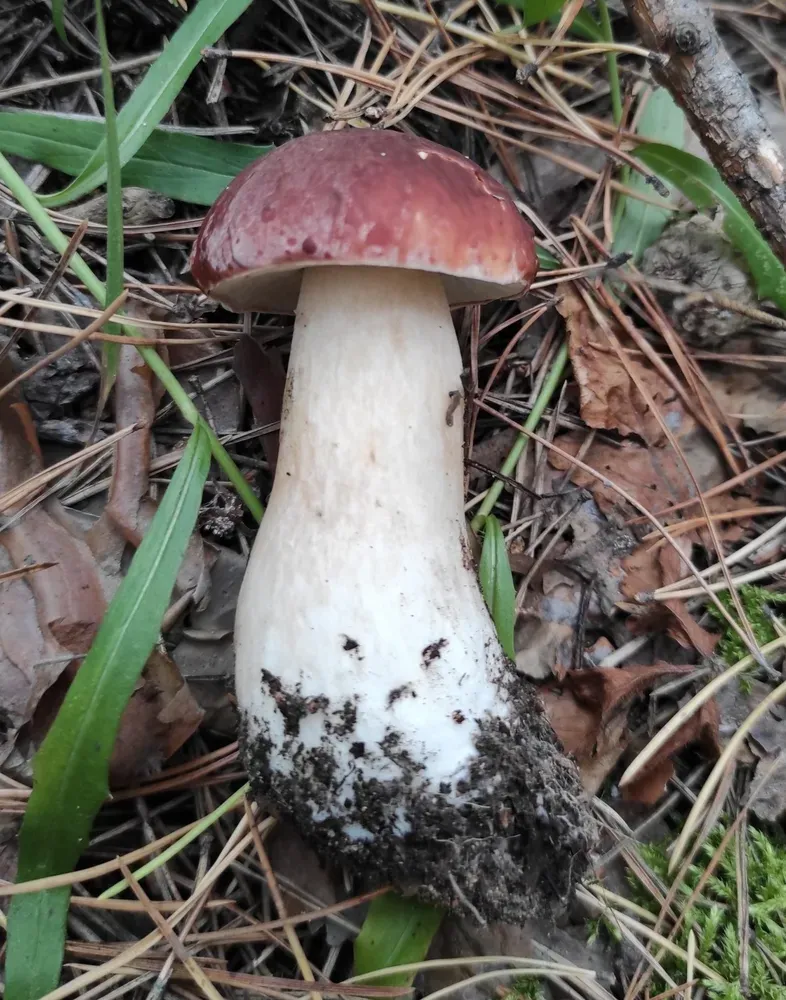
The cap is darker, chestnut-brown with a wine or purple tint, and it's smooth and often moist to the touch, without the cracked mosaic. The stem has a net too, but it's fine and visible only in the upper part, not along the whole length.
The main difference is the trees. The pine bolete partners with conifers, growing under pine and spruce in pine forests, not in oak woods. So if you look for the summer one under oak, look for the autumn one under pine.
Side by side
To make the difference stick, here are the key features side by side.
- Timing. Summer: from late May; autumn pine: from late summer and through autumn.
- Cap. Summer: matte, cracking in hot weather; autumn: smooth, moist, darker with a wine tone.
- Net. Summer: pale, along the whole stem; autumn: fine, only at the top.
- Trees. Summer: oak, beech, hornbeam; autumn: pine, spruce.
- Forest. Summer: bright broadleaf woods; autumn: coniferous pine forest.
What they share is what matters most: white flesh that doesn't turn blue when cut, a wonderful nutty flavor and high food value. Both are true porcini, just from different seasons and different forests.
What about the other boletes
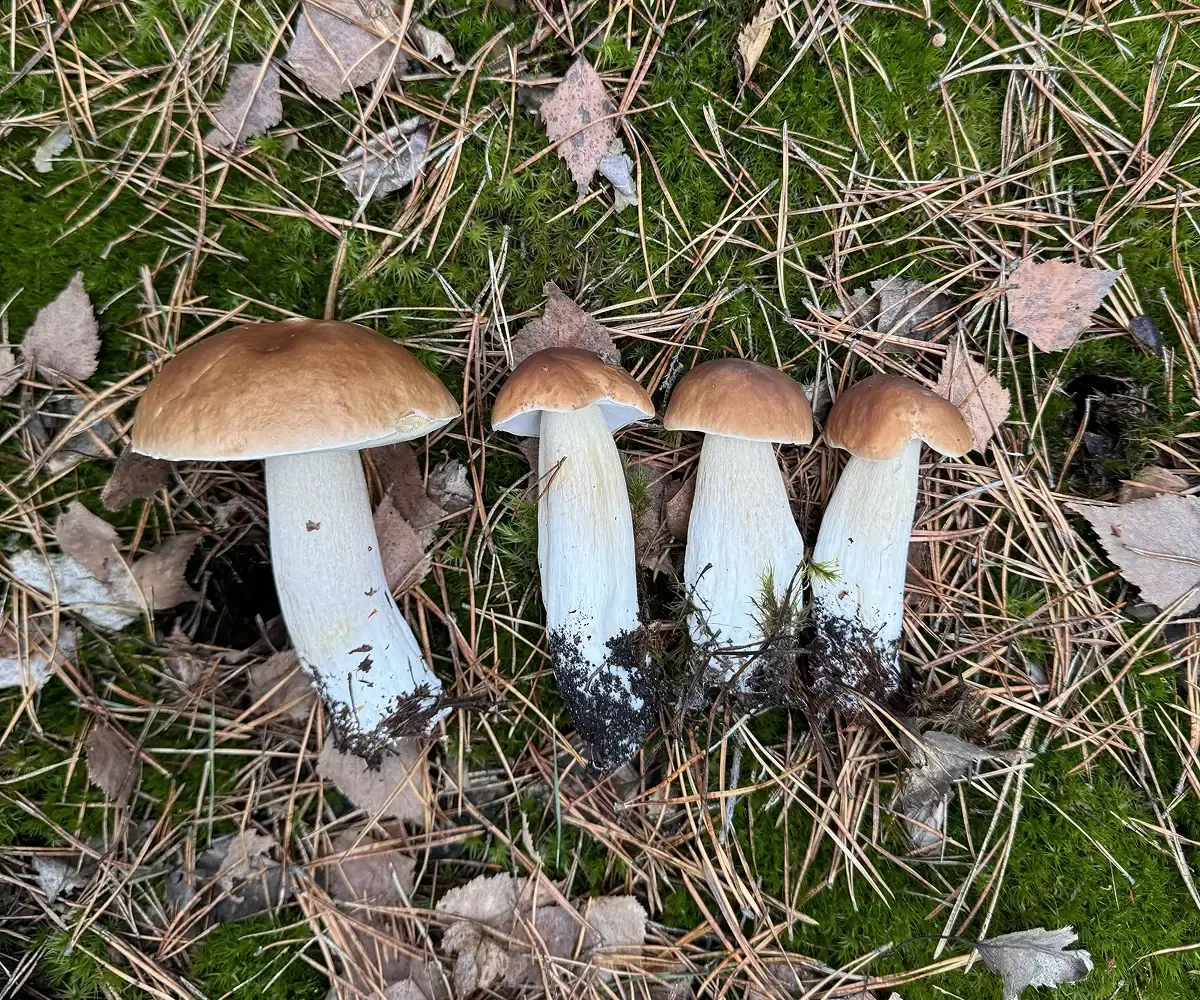
The family doesn't end with the summer and pine boletes. There's also the classic porcini, often simply called the king bolete: it turns up in both broadleaf and coniferous forests and has a smooth brown cap. They're all close relatives, so some foragers don't even sort them apart in the basket.
What matters to a forager is something else: all true porcini have white flesh that doesn't turn blue and a pale pore surface that yellows with age. As long as these features are there, you have a prized edible mushroom in front of you, whether it's the summer or the autumn one.
As for timing and place, nature itself will tell you. An easy way to follow when each flush is coming is our mushroom radar: it shows when conditions are coming together nicely for boletes.
Sources
- “Field Guide to the Fungi of Ukraine” (Kyiv, Naukova Dumka publishing house).
- Boletus reticulatus in GBIF, the global biodiversity database.
- Boletus pinophilus in MycoBank, the international fungal nomenclature database.
- Boletus edulis on Wikipedia.
Frequently asked questions
How does the summer porcini differ from the autumn one?
The summer one comes up earlier (from late May), has a matte, cracking cap and a pale net along the whole stem, and grows under oak and beech. The autumn pine bolete appears in autumn, has a smooth, darker cap and a net only at the top of the stem, and grows under conifers.
How many porcini species are there?
Several closely related boletes: the summer bolete, the autumn pine bolete, the classic porcini and a few other forms. They're all related, have white flesh that doesn't turn blue, and are considered prized edible mushrooms.
Which tastes better, the summer or the autumn porcini?
Both are wonderful. The summer one is prized for arriving first, still clean and firm; the autumn one for its rich aroma. In flavor they're almost a match for each other.
Why is the autumn porcini called the pine bolete?
Because it partners with conifers, above all pine and spruce, and grows in pine forests. The summer one, by contrast, prefers broadleaf woods, oak and beech.
How do you tell these boletes apart by the cap?
The summer one has a matte, velvety cap that cracks into squares in hot weather. The pine bolete's cap is smooth, often moist, darker, with a wine or purple tint.
Do both have a net on the stem?
Yes, but it differs. On the summer one it's pale and runs almost the whole length of the stem. On the pine bolete it's finer and visible mostly in the upper part.
What do all porcini have in common?
Firm white flesh that doesn't turn blue when cut, a pale pore surface under the cap that yellows with age, and a distinct nutty aroma. These are the signs of a true porcini, whatever the season.
When does each porcini have its flush?
The summer one from late May through July, with a follow-up in autumn; the autumn pine bolete mostly from late summer and through autumn. An easy way to keep track of good foraging days is the .
Mushrooms in this article
Related articles
 How to identify
Truffles in Ukraine: do they grow here, and where to look
Truffles aren't just a French delicacy. Several species grow in Ukraine too. Here's which ones, where they occ…
August 24, 2026·2 min Recipes & cooking
How to store fresh mushrooms, and for how long
Fresh mushrooms spoil faster than you might think. Here's how long they keep in the fridge, how to store them…
August 21, 2026·4 min Recipes & cooking
How long to boil mushrooms
Boiling time depends on the type of mushroom and on what you're cooking next. Here's a clear cheat sheet: how…
August 22, 2026·4 min