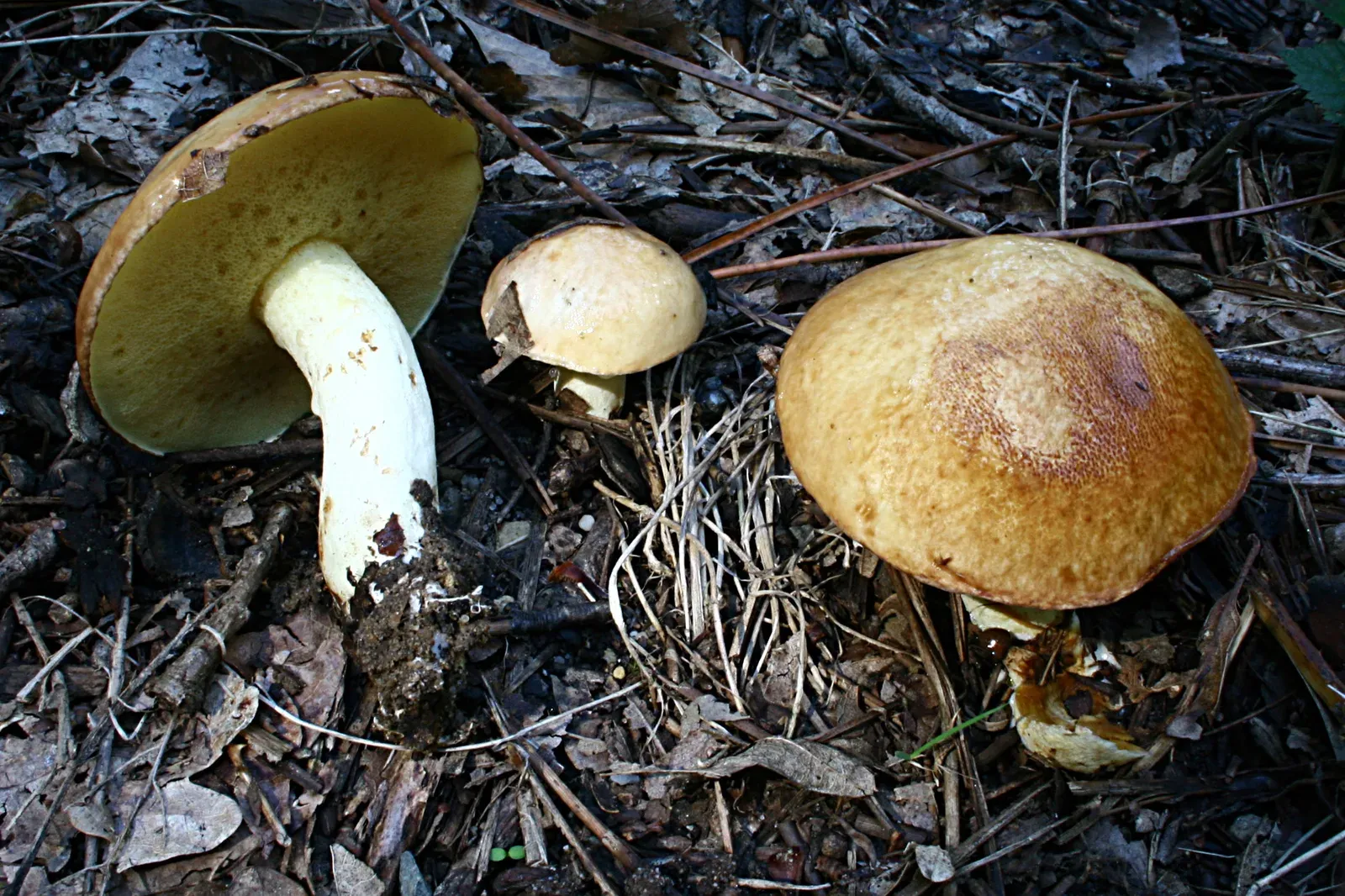
The slippery jack is a generous mushroom, but it has one annoying trait: it's a chore to clean. The slimy skin sticks to your hands, your knife and everything it touches, and your fingers turn black afterward. That's why many foragers even avoid slippery jacks, though there's no need to.
In fact, cleaning slippery jacks is quick work once you know a few simple tricks. The main one is so simple it changes everything. Let's walk through the whole process step by step.
The golden rule: don't wash before cleaning
The most common beginner mistake is washing the slippery jacks the moment you get home. Don't do it.
Wet skin gets even slimier, the mushroom slips out of your hand and the knife slides. A dry cap, on the other hand, is easy to clean: the skin gives way and peels off in strips. So the rule is simple: clean them dry first, then wash.
Ideally, tackle your slippery jacks right after the forest, before they sit around and get even stickier. A fresh, dry mushroom gives way fastest.
How to remove the slimy skin
The process itself isn't hard; the key is getting the hang of it on the first few mushrooms.
- Hold the mushroom cap side up.
- Use a knife to lift the edge of the slimy skin near the rim of the cap.
- Press the skin against the blade with your thumb and pull toward the center; it will come off in a strip.
- Repeat all the way around until the cap is clean and matte.
On young slippery jacks the skin comes off especially easily, almost as a single whole "cap". On old ones it's harder, which is why they're usually not picked anyway. While you're at it, check the stem and cap for maggots and cut away any damaged parts.
How to keep your hands from turning black
The slime and skin pigments stain your fingers a dark brown, almost black color that's hard to wash off later. Here are a few ways to deal with it.
- Gloves. The easiest option is to work in thin household gloves.
- A dry cloth. Keep a cloth or paper towel nearby and wipe the slime off your hands and knife now and then.
- Oil or vinegar. If your fingers have already darkened, it helps to rub them with vegetable oil or a little lemon juice or vinegar, then wash with soap.
These little things save your nerves and make cleaning much more pleasant.
When you can leave the skin on
Not all slippery jacks need a full cleaning.
Drier relatives, such as the bovine bolete or the velvet bolete, have skin that barely peels, so a wipe and a rinse is enough. But the classic slimy slippery jacks are better peeled, especially if you plan to fry or pickle them.
For drying, the skin is often left on, since it will dry out anyway and there's no point in extra fuss. Let what you're going to cook guide you here.
After cleaning
Rinse the cleaned slippery jacks in cold water to wash off leftover pine needles and sand, and get straight to cooking or preserving. Slippery jacks spoil quickly, so don't leave them for long, even in the fridge.
If you've picked a lot, don't put it off: we cover how to fry, pickle and dry them separately. And when you head out for a new batch, check the weather with our mushroom radar: it shows when moisture and warmth line up well for mushrooms to appear in coniferous and mixed forests.
Sources
- "Key to the Fungi of Ukraine" (Kyiv, Naukova Dumka publishing house).
- Suillus luteus on GBIF, a global biodiversity database.
- Suillus on MycoBank, an international fungal nomenclature database.
- Suillus luteus on Wikipedia.
Frequently asked questions
How do you clean slippery jacks quickly?
Clean them dry, before washing. Lift the edge of the slimy skin near the rim of the cap with a knife and pull toward the center, pressing with your thumb. The skin will come off in strips, and on young mushrooms almost in one piece.
Why shouldn't you wash slippery jacks before cleaning?
Because wet skin gets even slimier, the mushroom slips out of your hand and the knife slides. A dry cap is much easier to clean, so washing is left for later.
Do you need to peel all slippery jacks?
No. With slimy it's better to remove the skin, especially for frying and pickling. But the drier or the only need a wipe and a rinse.
Why do your hands turn black after slippery jacks?
Because of the slime and skin pigments, which stain your skin dark brown. It's harmless, but the stains are hard to wash off, so working in gloves is more convenient.
How do you clean your hands after peeling slippery jacks?
Rub your fingers with vegetable oil or a little lemon juice or vinegar, then wash with soap. Easiest of all is to wear thin gloves from the start.
Can you clean slippery jacks the next day?
Better not to wait. Within a day slippery jacks get even stickier, turn maggoty more often and spoil. Fresh, dry mushrooms right after the forest are the easiest to clean.
Do you peel slippery jacks for drying?
Usually not. For drying, the skin is often left on, since it will dry out anyway and there's no point in extra fuss. It's removed mainly for frying and pickling.
How should you store slippery jacks before cleaning?
For as short a time as possible. Slippery jacks spoil quickly, so get to them right after you're back from the forest. If you have to wait, keep the mushrooms in the fridge for no more than a day.
Mushrooms in this article
Related articles
 Recipes & cooking
How to store fresh mushrooms, and for how long
Fresh mushrooms spoil faster than you might think. Here's how long they keep in the fridge, how to store them…
August 21, 2026·4 min Recipes & cooking
How long to boil mushrooms
Boiling time depends on the type of mushroom and on what you're cooking next. Here's a clear cheat sheet: how…
August 22, 2026·4 min How to identify
Truffles in Ukraine: do they grow here, and where to look
Truffles aren't just a French delicacy. Several species grow in Ukraine too. Here's which ones, where they occ…
August 24, 2026·2 min