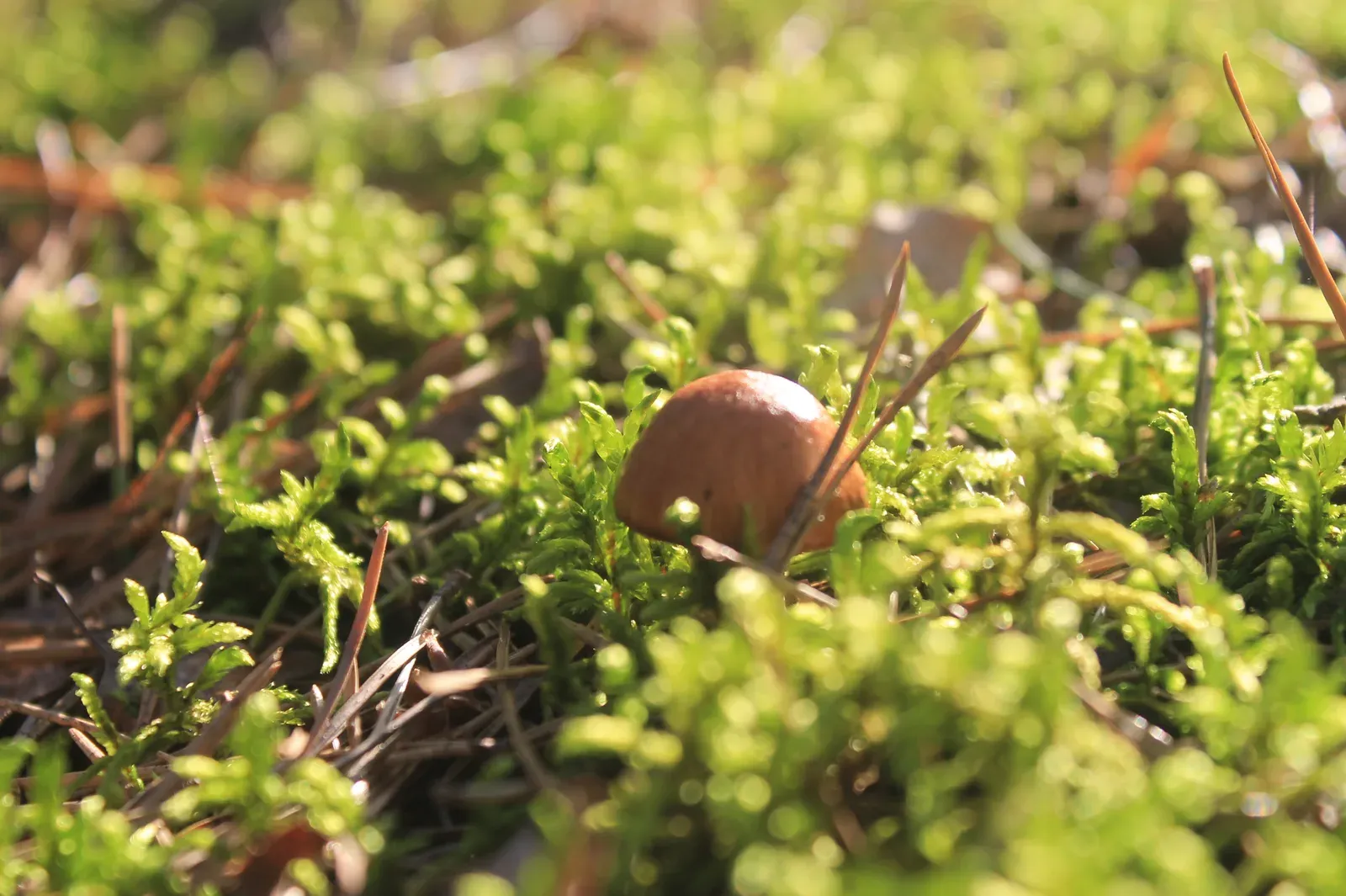
An experienced forager doesn't wander a pine forest at random. They read the trees. The slippery jack (Suillus luteus and its close relatives) doesn't grow on its own, but in a close partnership with the roots of conifers. Know these trees, and you'll know where to stop.
This bond is called mycorrhiza: the mycelium wraps around the tree's fine roots and trades nutrients with it. That's exactly why a slippery jack will never grow in the middle of a broadleaf grove or an open field with no conifers nearby.
Why slippery jacks are tied to trees
Mycorrhiza is a partnership that benefits both sides. The mycelium gives the tree water and minerals from the soil, and in return gets the sugars the tree makes in sunlight. Without this partnership, the fruiting body, meaning the mushroom itself that we cut, simply won't appear.
For us, this means one simple thing. Don't look for slippery jacks “somewhere in the forest,” look under specific conifers. It's the shortest route to a full basket and the first thing that sets an expert apart from a casual passerby.
The slippery jack's main trees
Years of observation have produced a clear list of favorites. Here they are, from most common to less common.
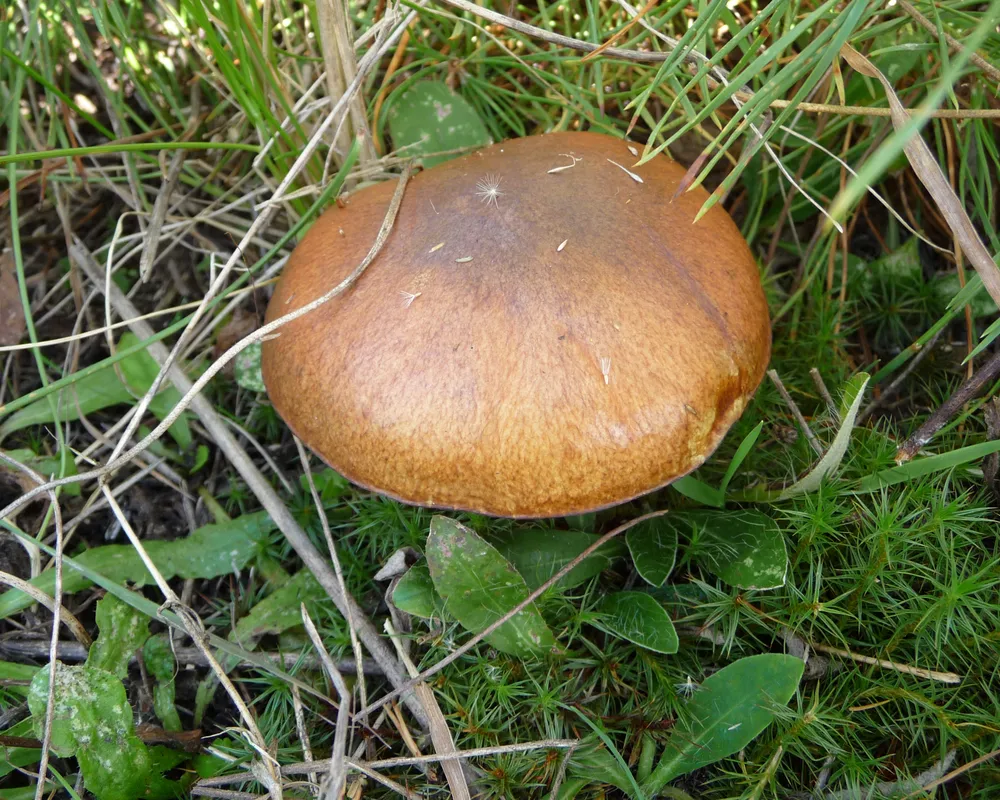
- Scots pine. The main tree for most Suillus species. Under pines you'll find the slippery jack, weeping bolete and Suillus placidus, as well as the bovine bolete.
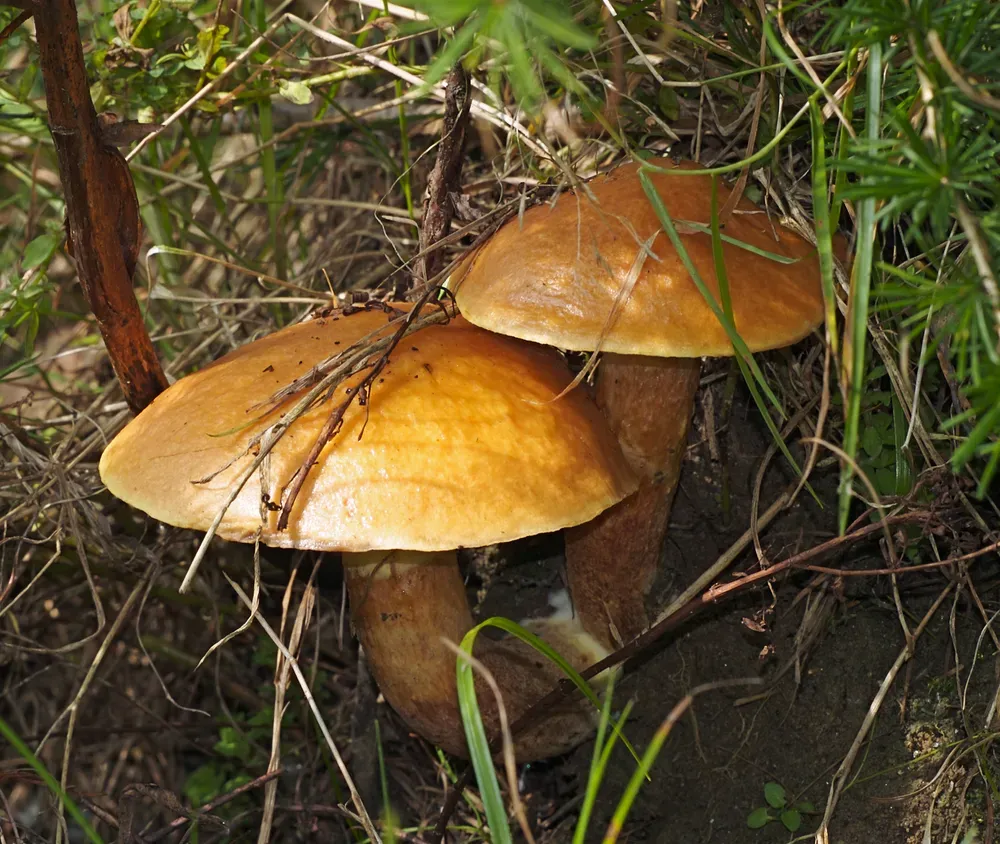
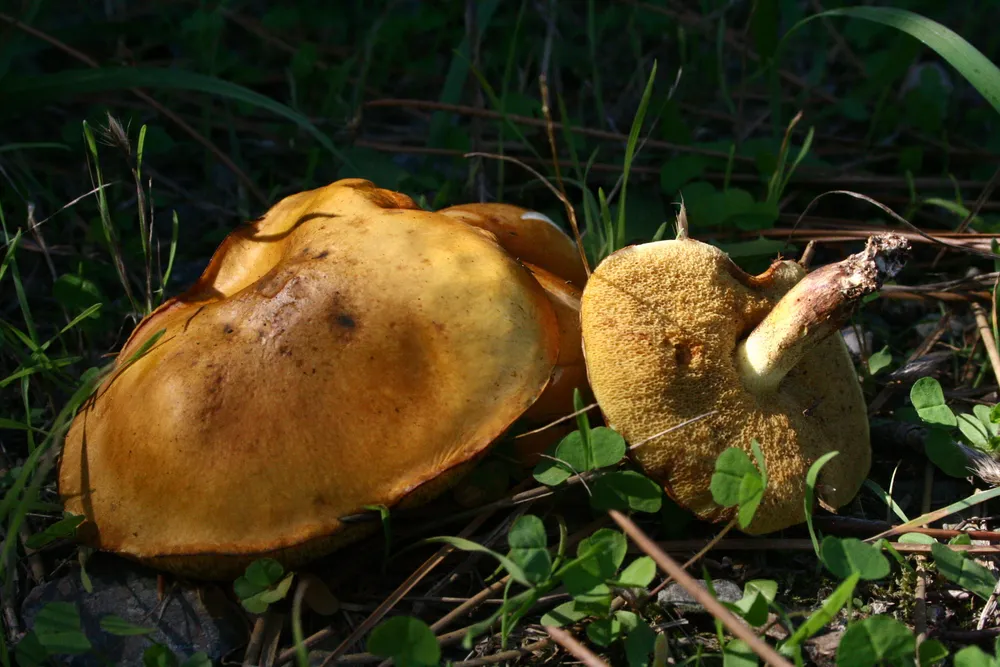
- Larch. Its faithful companion is the bright larch bolete, along with the grayish sticky bolete.
- Stone pines (Siberian and Swiss pine). Some Suillus species turn up under them in plantations and parks.
If there are pine needles and cones underfoot, or the soft fallen needles of larch, you're in the right territory. That's your signal to stop and look carefully at the ground.
Not just the tree, but the spot
The tree species is only half the story. The other half is the conditions slippery jacks like to grow in. They don't like dense, dark thickets, because they're drawn to light and warmth.
The best spots are:
- young pine stands and pine plantations;
- bright edges of coniferous forest and sun-warmed sandy hills;
- grassy verges of forest roads and paths among pines;
- clearings and glades where the sun reaches the ground well.
In mixed forest, look for islands of pine among other trees. The best finds often turn up right at the border where pine meets birch.
How to read the forest in practice
When you enter a stretch of forest, don't look at your feet right away. First, raise your head and identify the trees around you. Spotted young pines on light, sandy soil? Slow down.
Slippery jacks love edges, forest margins, glades. Not the dense thicket and not the bare field, but the zone the sun can reach. Check the bases of pines, the edges of paths, and places where the ground warms up.
Found one mushroom? Don't hurry off. Slippery jacks grow in families, and there are often a few more within a few steps, under the same trees.
And one more thing: timing. The tree and the spot tell you where to look, and the weather tells you when to go. Slippery jacks appear just a day or two after a warm rain. An easy way to keep track of this is our mushroom radar: it shows when moisture and warmth line up well for mushrooms to appear.
Sources
- “Key to the Fungi of Ukraine” (Kyiv, Naukova Dumka publishers).
- Suillus luteus on GBIF, the global biodiversity database.
- Suillus on MycoBank, the international fungal nomenclature database.
- Suillus luteus on Wikipedia.
Frequently asked questions
Which trees do slippery jacks grow under most often?
Most often under pine, the partner of most species. Some, such as the and , stick to larch. Suillus species also turn up under stone pines.
Why don't slippery jacks grow in open fields?
Because they live in partnership with the roots of conifers, a bond called mycorrhiza. Without a partner tree, the mycelium doesn't form fruiting bodies, so you won't find slippery jacks in an open field.
Do slippery jacks grow in broadleaf forests?
Not on their own. Slippery jacks are drawn to conifers. In , look for them where there are islands of pine or larch among the broadleaf trees.
What is mycorrhiza, in simple terms?
It's a friendship between a fungus and a tree that benefits both. The mycelium wraps around the roots and supplies the tree with water and minerals, and gets sugars in return. It's this partnership that lets the mushroom itself grow.
Where in a pine forest should you look for slippery jacks first?
On bright forest edges, sun-warmed sandy hills, grassy clearings and along forest roads under pines. Slippery jacks love the border between shade and sun, not the dense thicket.
Is it true that slippery jacks grow in families?
Yes. Once you've found one, search everything within a few steps. There are often several more under the same pines, because they're fed by the same mycelium.
How can you quickly tell if a forest is good for slippery jacks?
Look at the trees. If you're surrounded by young pines or larches on light, sandy soil, the spot is promising. In a dense broadleaf grove with no conifers, searching for slippery jacks is pointless.
When is the best time to go out for slippery jacks?
A day or two after a warm rain, when the ground is warm. An easy way to follow the weather is our , which shows the days that are good for mushrooms to appear.
Mushrooms in this article
Related articles
 Recipes & cooking
How to store fresh mushrooms, and for how long
Fresh mushrooms spoil faster than you might think. Here's how long they keep in the fridge, how to store them…
August 21, 2026·4 min Recipes & cooking
How long to boil mushrooms
Boiling time depends on the type of mushroom and on what you're cooking next. Here's a clear cheat sheet: how…
August 22, 2026·4 min How to identify
Truffles in Ukraine: do they grow here, and where to look
Truffles aren't just a French delicacy. Several species grow in Ukraine too. Here's which ones, where they occ…
August 24, 2026·2 min