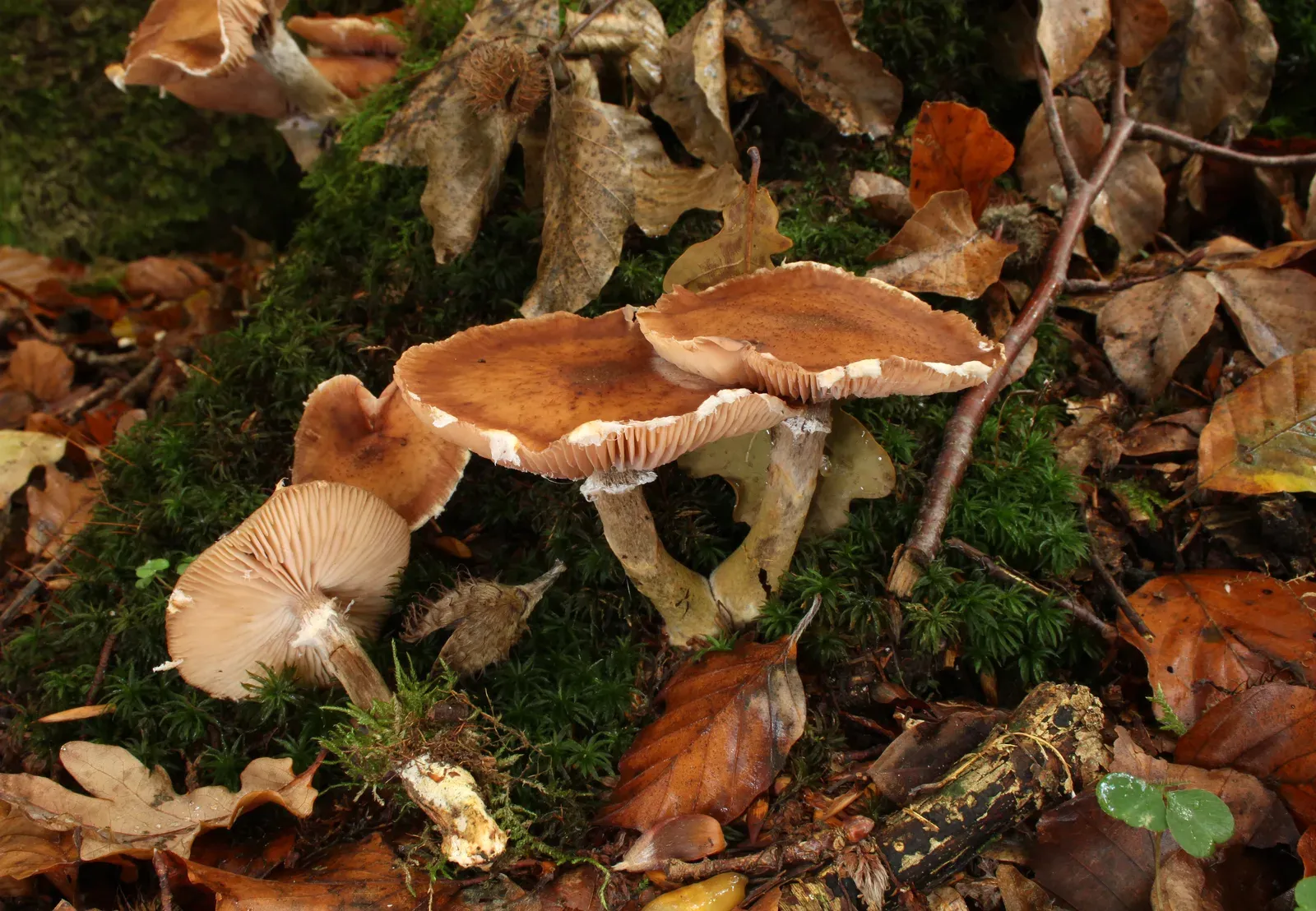
There's a reason people say of honey fungus: “empty one day, a full bucket the next.” These mushrooms don't come up one by one but in big, tight-knit clusters, and they grow so fast that within a couple of days a stump is covered in a solid carpet. Let's look at how many days honey fungus takes to grow, when to expect it after rain and why it seems to “shoot up” all at once.
How many days honey fungus takes to grow
Honey fungus grows faster than most forest mushrooms. From the moment tiny caps on thin stems appear on a stump to fully grown mushrooms takes just 3–5 days.
They don't grow singly but in colonies: the mycelium wraps around dead wood and sends up dozens of fruiting bodies at once. So honey fungus is either there or it isn't — there's hardly ever an in-between.
How many days after rain honey fungus appears
Autumn honey fungus is very sensitive to moisture and cool temperatures. It usually appears 7–10 days after a good rain, once the damp, mildly warm weather of late August to September settles in.
The classic trigger is a warm, damp night after the first autumn rains. More on how it depends on rainfall in the article when to go mushroom picking after rain.
Why honey fungus seems to grow overnight
At the height of a flush, young honey fungus stretches up very fast, especially at night in the cool and damp. A forager who saw only tiny “pinheads” on a stump yesterday finds a ready cluster there the next morning. It's not magic, just ordinary nighttime growth — the same as with porcini.
How long honey fungus lives
A honey fungus fruiting body doesn't live long — about a week. Young ones with a rounded cap and a “skirt” on the stem are the tastiest. After that the cap opens up and flattens, and the mushroom turns tough and dries out.
Since honey fungus grows in flushes, timing matters: one flush lasts one or two warm, damp weeks, and then it needs fresh rain. We explained why in the article why mushrooms grow in flushes.
What affects growth speed
- Cool and damp. Honey fungus loves +10…+15 °C and humid air; in this weather it comes up most abundantly.
- The state of the wood. The more dead stumps and fallen trunks there are, the richer the colony.
- Time of season. Autumn honey fungus peaks in September and early October, until the first serious frosts.
And remember the main danger: honey fungus has poisonous lookalikes. We explained in detail how to tell them apart in the article false honey fungus: how to tell it from the real thing.
Sources
- “Vyznachnyk hrybiv Ukrainy” (Guide to the Fungi of Ukraine; Kyiv, Naukova Dumka publishing house).
- Armillaria mellea in the GBIF database, the global biodiversity database.
- Honey fungus on Wikipedia.
Frequently asked questions
How many days does honey fungus take to grow?
Honey fungus grows fast: from tiny caps to fully grown mushrooms takes just 3–5 days. It grows in colonies, so it appears and matures all together, in whole clusters.
How many days after rain does honey fungus grow?
Autumn honey fungus usually appears 7–10 days after a good rain, once the damp, moderately cool weather of late August and September settles in. The trigger is a warm, damp night.
Is it true that honey fungus grows overnight?
At the height of a flush, young honey fungus stretches up very fast, especially at night. So a forager who saw tiny “pinheads” in the evening finds a ready cluster in the morning. It's ordinary nighttime growth, not a myth.
How long does honey fungus live?
A honey fungus fruiting body lives about a week. The tastiest are young ones with a rounded cap and a ring on the stem. Later the cap opens up, and the mushroom turns tough and dries out.
Why is honey fungus sometimes everywhere and sometimes nowhere?
Because it grows in flushes: after rain the mycelium sends up dozens of fruiting bodies at once, then “rests” until the next one. One flush lasts one or two weeks, and then it needs fresh rain.
At what temperature does honey fungus grow best?
Autumn honey fungus likes it cool — about +10…+15 °C and humid air. In this weather it comes up most abundantly, while the first frosts gradually end the season.
When should you pick honey fungus so it's young?
It's best to pick honey fungus with a rounded, still unopened cap and a “skirt” on the stem. These are young, firm and the tastiest. Old ones with a flat cap are tough and dry.
Can honey fungus be confused with poisonous mushrooms?
Yes, honey fungus has dangerous lookalikes — false honey fungus. You tell them apart by gill color, whether there's a ring on the stem, and where they grow. Details in our article on false honey fungus.
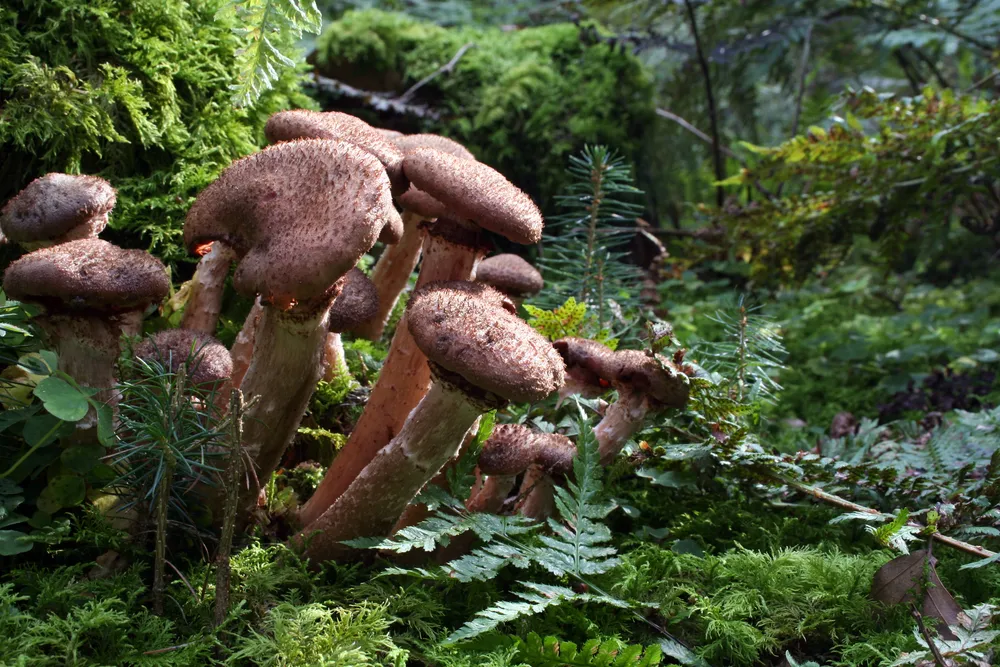
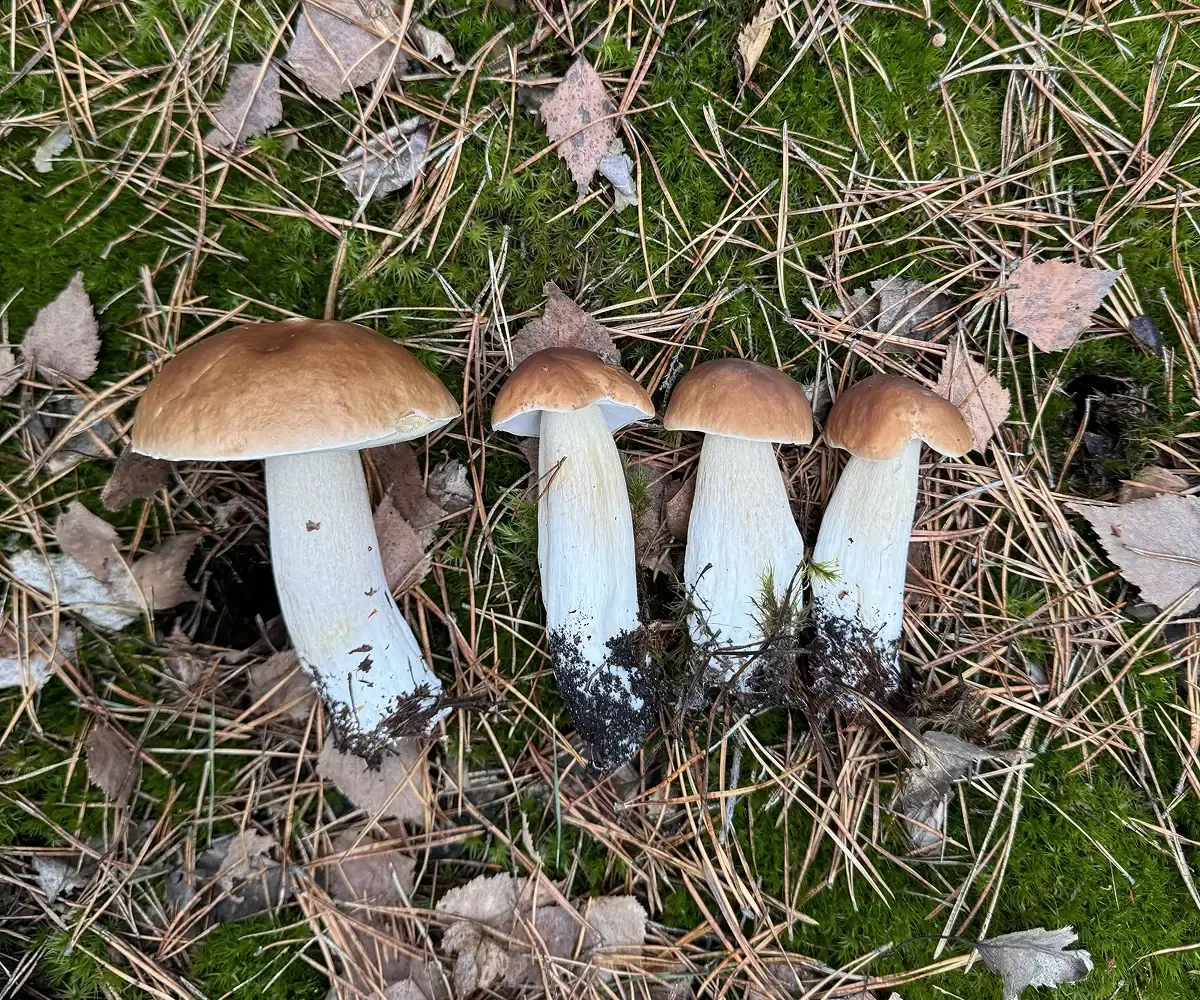
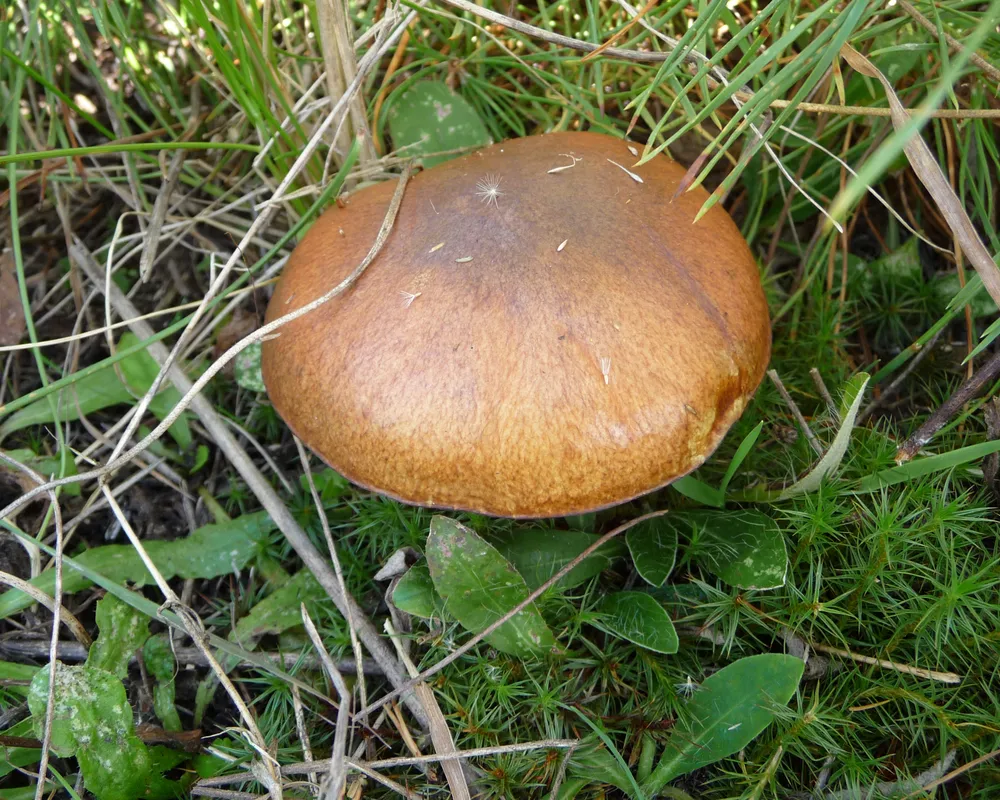
Mushrooms in this article
Related articles
 Recipes & cooking
How to store fresh mushrooms, and for how long
Fresh mushrooms spoil faster than you might think. Here's how long they keep in the fridge, how to store them…
August 21, 2026·4 min How to identify
Truffles in Ukraine: do they grow here, and where to look
Truffles aren't just a French delicacy. Several species grow in Ukraine too. Here's which ones, where they occ…
August 24, 2026·2 min Recipes & cooking
How long to boil mushrooms
Boiling time depends on the type of mushroom and on what you're cooking next. Here's a clear cheat sheet: how…
August 22, 2026·4 min