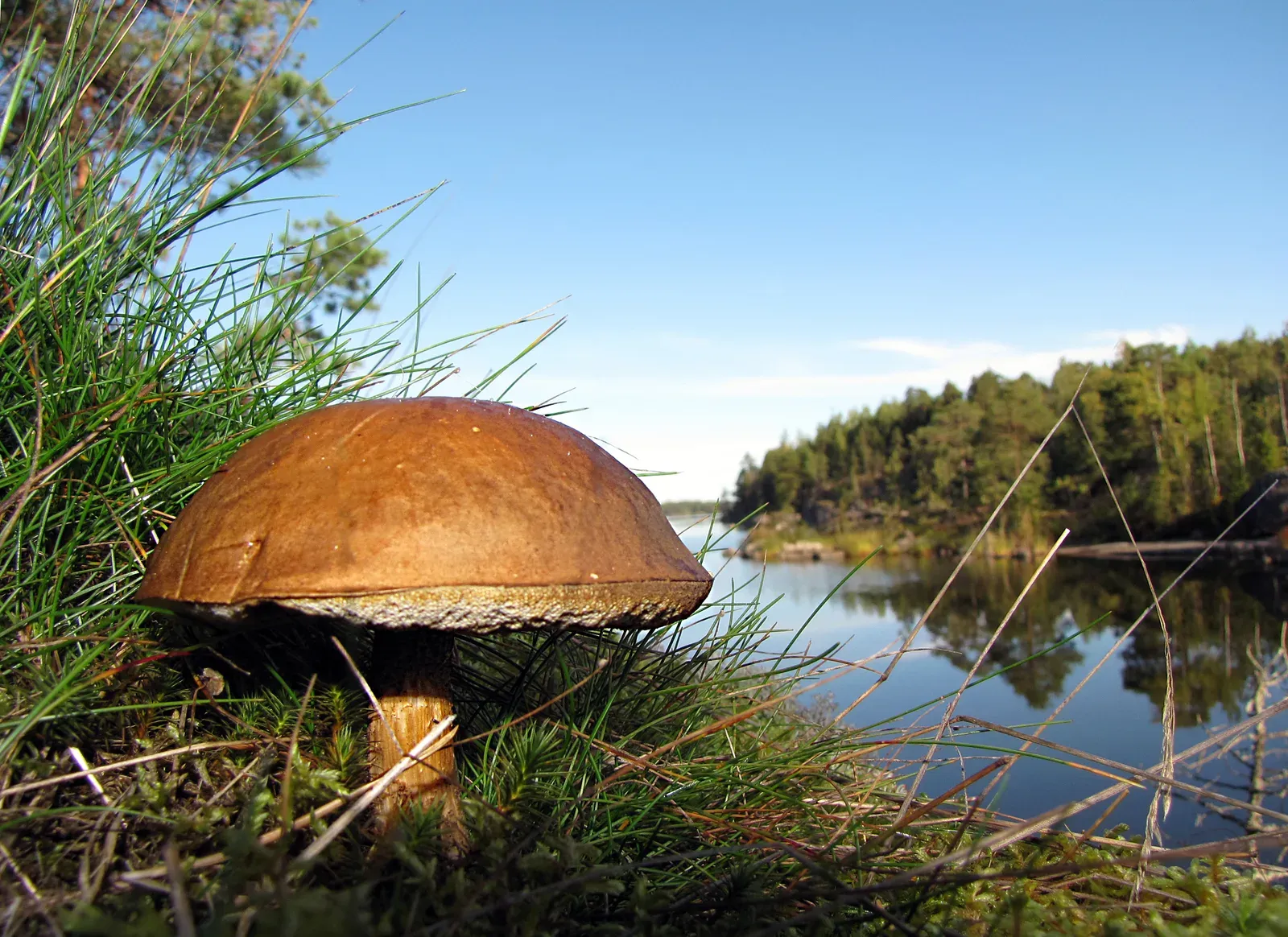
The end of October is the time to say goodbye to boletes. Porcini, bay boletes, red-capped scaber stalks and brown birch boletes, which filled baskets all summer and autumn, gradually fade out. But they don’t disappear all at once: until sustained frosts arrive, the last boletes still turn up — and they are the cleanest of the whole season.
Let’s look at how far into the frosts boletes grow, which ones hold on the longest and where to look for them in late autumn.
How far into the frosts boletes grow
Boletes fruit as long as the soil isn’t frozen and daytime temperatures stay above zero. They tolerate light night frosts, but after the first sustained frosts that freeze the soil, boletes quickly disappear.
In most regions this falls at the end of October to early November, and in Ukraine’s warm southern and western regions the last boletes turn up even later. Catching these windows is easier with the mushroom radar.
Which boletes hold on the longest
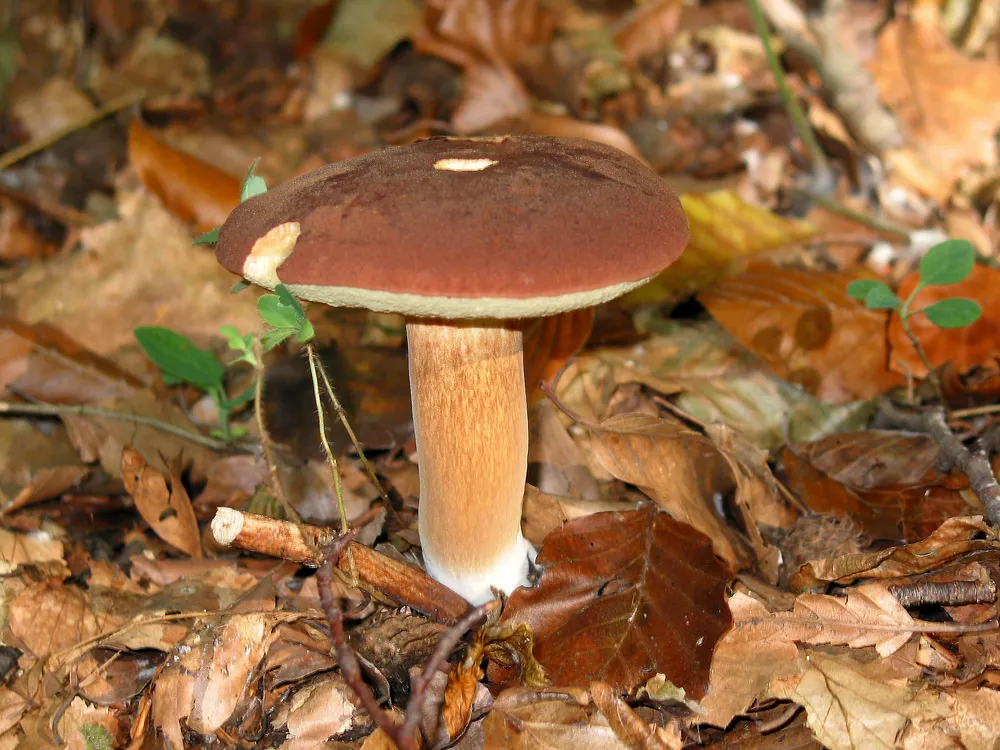
- Bay bolete. The most cold-hardy; the bay bolete grows right into November in pine forests.
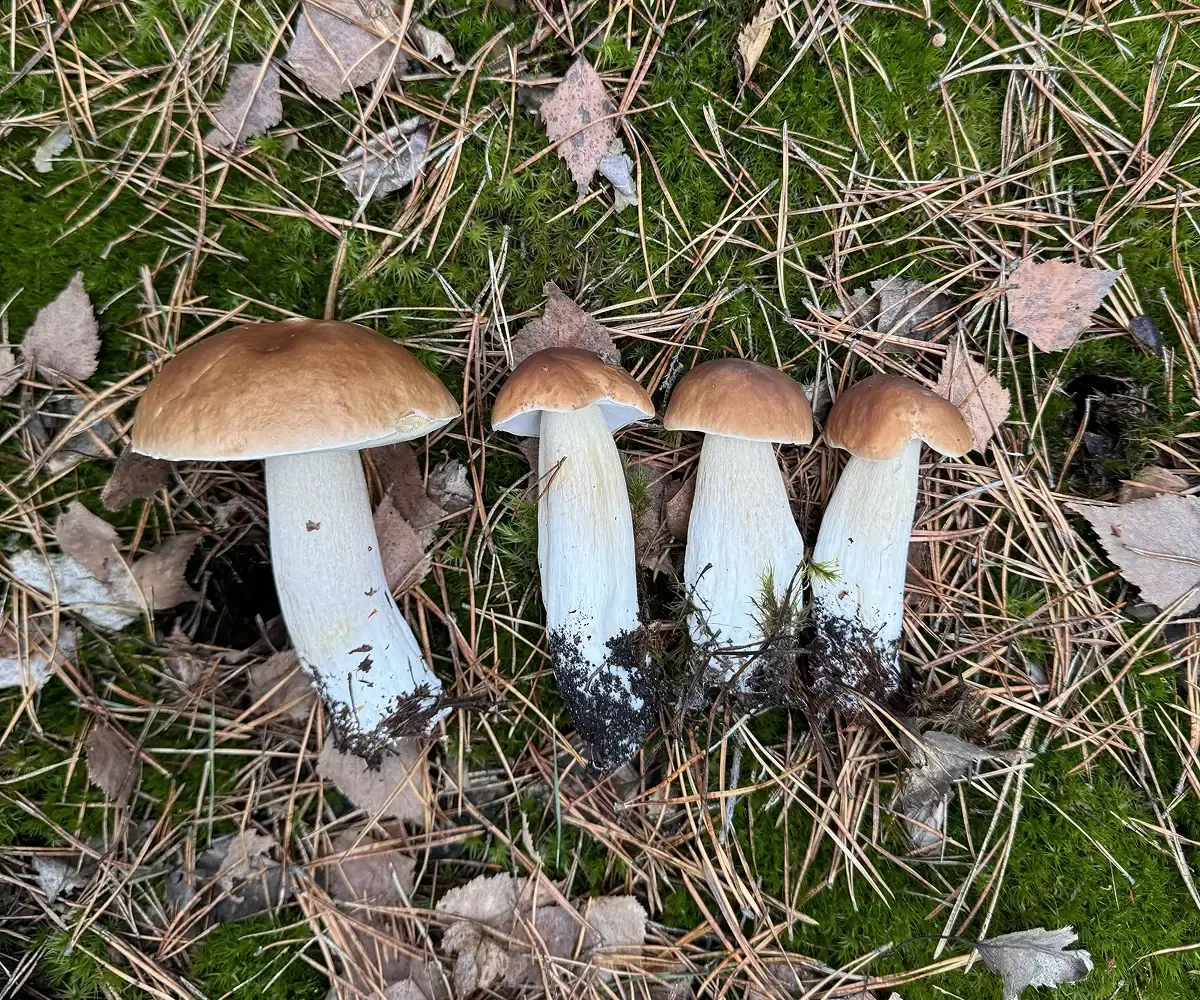
- Porcini. The last, third flush of porcini comes in a warm October; we cover porcini flushes separately.
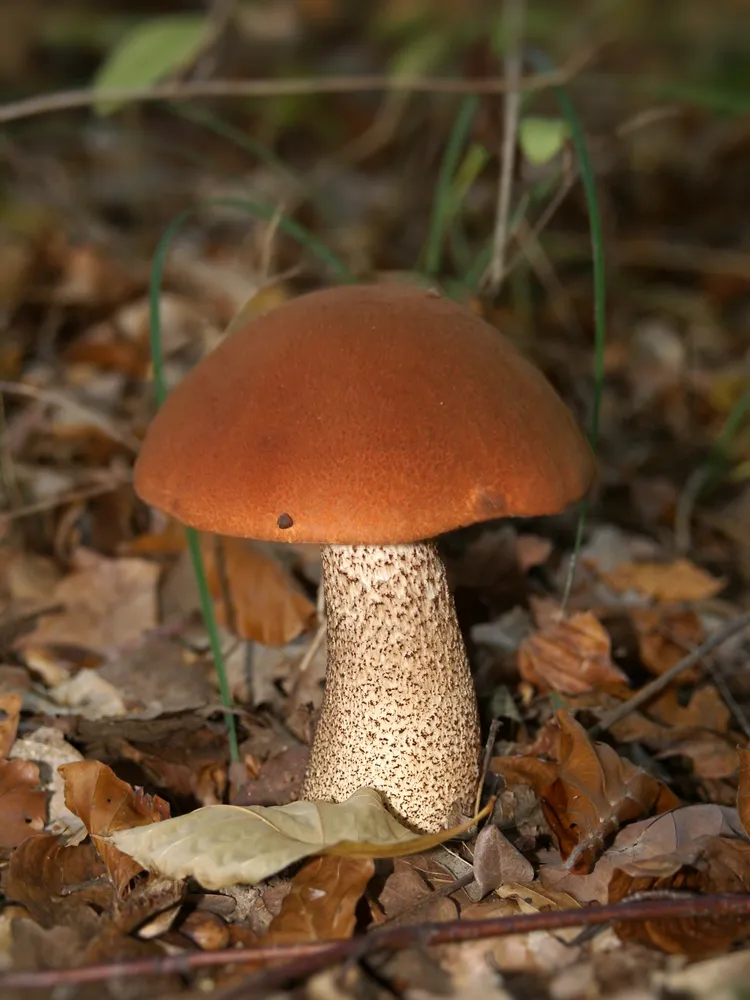
- Red-capped scaber stalk and brown birch bolete. They turn up less and less often, but sturdy late specimens still stand until the frosts.
Why late boletes are the cleanest
Cool weather has a big advantage: there are hardly any insects left, so late-autumn boletes are almost never wormy. Finding a young porcini or bay bolete in November almost always means a clean, firm mushroom. They’re also denser and better for drying.
Where to look for boletes in late autumn
- Warm, sunny spots. South-facing slopes, forest edges and clearings, where the soil is warmer.
- Pine forests. This is where the bay bolete holds on the longest.
- Under fallen leaves. Late boletes often hide in the leaf litter — turn over the leaves in promising spots.
When sustained frosts hit, the mushroom season ends, and winter mushrooms take over — velvet shank and oyster mushrooms.
Sources
- “Key to the Fungi of Ukraine” (Kyiv, Naukova Dumka publishing house).
- Imleria badia, Boletus edulis in GBIF, the Global Biodiversity Information Facility.
- Boletus edulis in MycoBank, the international fungal nomenclature database.
- Bolete on Wikipedia.
Frequently asked questions
How far into the frosts do boletes grow?
As long as the soil isn’t frozen and days stay above zero. Boletes tolerate light frosts, but after the first sustained frosts they quickly disappear — usually at the end of October to early November.
Which bolete holds on the longest?
The bay bolete: it is the most cold-tolerant and turns up in pine forests right into November.
Are there porcini in late autumn?
Yes, the last, third flush of porcini comes in a warm October. Late porcini are scarcer, but very clean and firm.
Why are late boletes almost never wormy?
In autumn there are hardly any insects, so their larvae don’t spoil the mushrooms. That’s why late-autumn boletes are the cleanest of the whole season.
Where should you look for boletes in late autumn?
In warm, sunny spots — south-facing slopes, forest edges and clearings — and for bay boletes, in pine forests, often under fallen leaves.
Can you find boletes in November?
Yes, during warm spells and in Ukraine’s southern and western regions, the last bay boletes and porcini turn up in November too, until sustained frosts set in.
What grows after the boletes are gone?
Winter mushrooms take over — Flammulina (velvet shank) and oyster mushrooms, which fruit in cool weather and during thaws.
Is it worth drying late boletes?
Yes, late-autumn boletes are dense and clean, so they’re great for drying — it’s your last chance to stock up.
Mushrooms in this article
Related articles
 Recipes & cooking
How to store fresh mushrooms, and for how long
Fresh mushrooms spoil faster than you might think. Here's how long they keep in the fridge, how to store them…
August 21, 2026·4 min How to identify
Truffles in Ukraine: do they grow here, and where to look
Truffles aren't just a French delicacy. Several species grow in Ukraine too. Here's which ones, where they occ…
August 24, 2026·2 min Recipes & cooking
How long to boil mushrooms
Boiling time depends on the type of mushroom and on what you're cooking next. Here's a clear cheat sheet: how…
August 22, 2026·4 min