.webp)
Many foragers are sure that porcini are an August and September catch. But in fact the first boletes turn up much earlier: already in June the forest gives up its first flush, and you can find truly handsome, firm specimens. You just need to know which porcini to look for at the start of summer.
Let's look at why the June bolete is special, which forests it appears in first, and what weather is worth heading out in.
Which porcini grows in June
There are several species of porcini, and they don't all appear at once. First up at the start of summer is the summer bolete, also known as Boletus reticulatus. This is the one you're most likely to find in June.
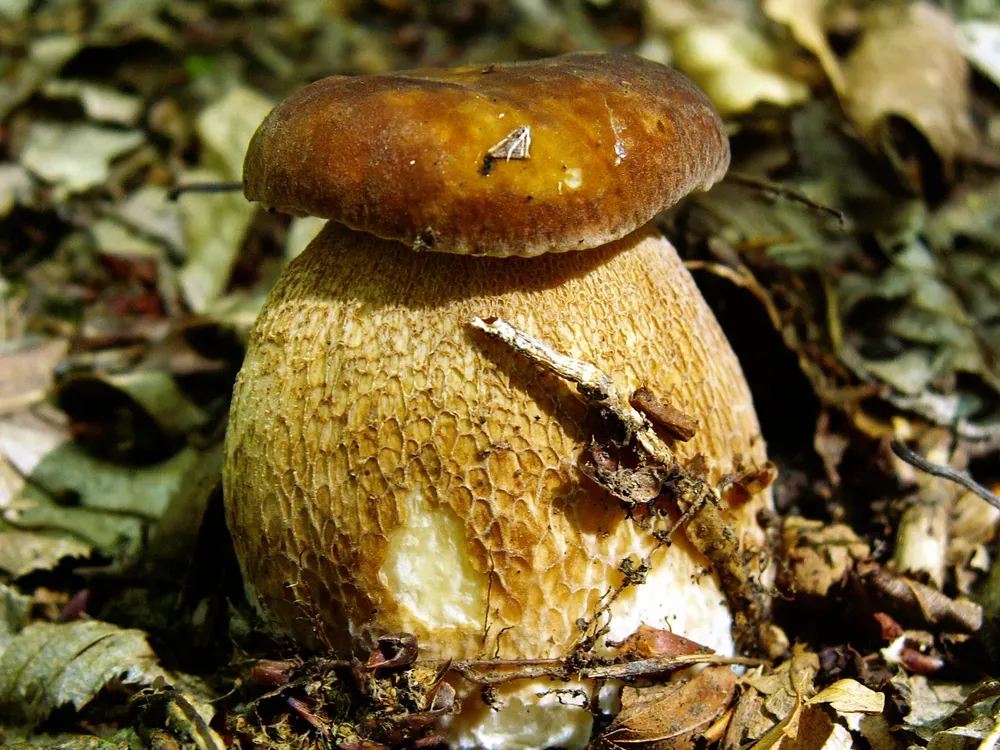
You'll recognize the summer bolete by the characteristic pale net that covers almost the whole stem, and by its dry brown cap, which often breaks into fine cracks in hot weather. The flesh is white, with a pleasant nutty smell, and doesn't change color when cut.
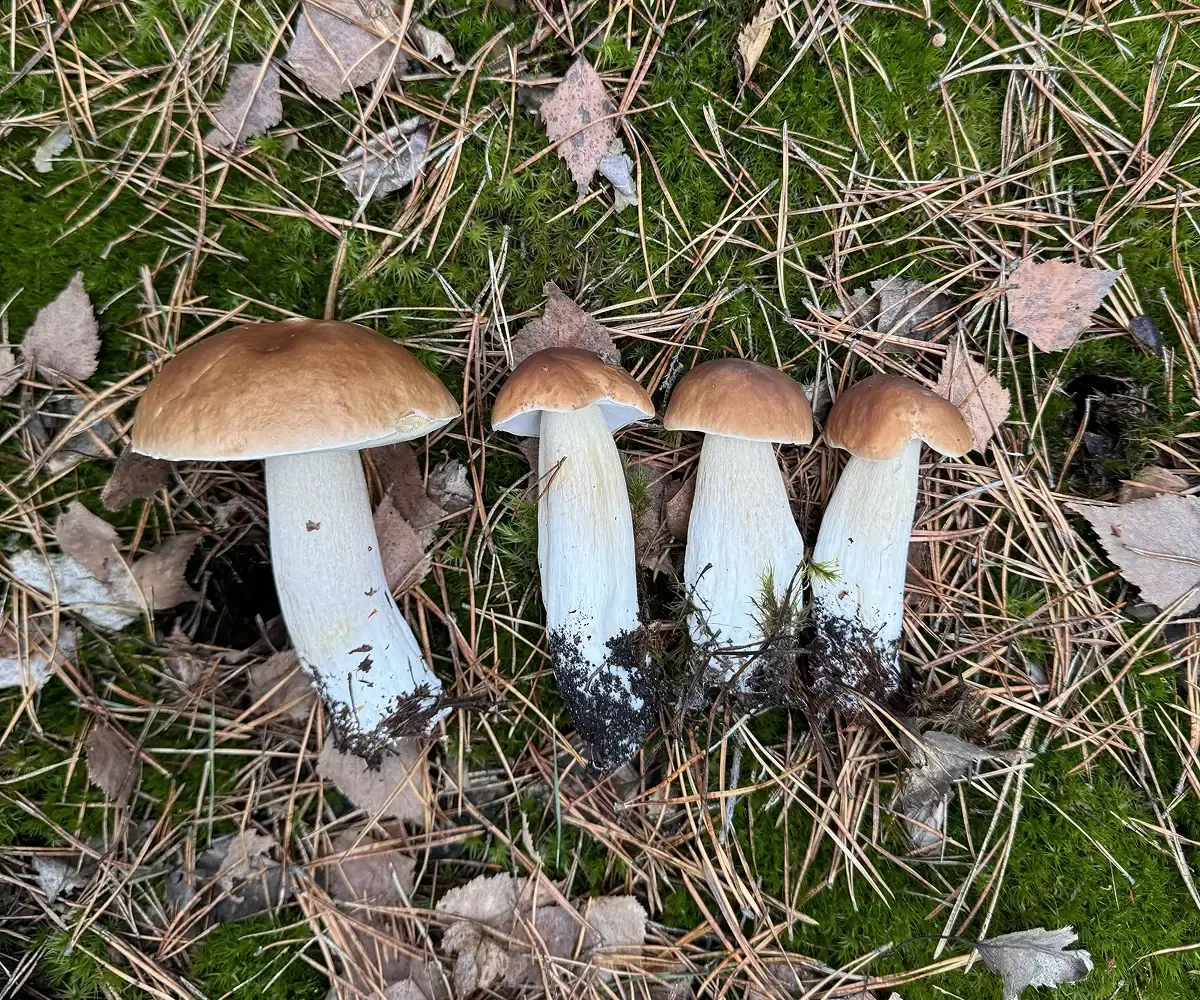
The classic porcini, Boletus edulis, comes in large numbers later, toward the end of summer and in fall. So if you find a bolete already in June, it's most likely the summer species. We go into the difference in more detail in our piece on how the summer bolete differs from the fall porcini.
Where to look for the June bolete
The summer bolete favors warm deciduous and mixed forests. Look for it wherever its partner trees grow.
- **Deciduous forest.** The best spots are bright oak woods and beech forests. The summer bolete loves oak and beech, and often grows on sun-warmed forest edges and clearings.
- **Mixed forest.** Patches where oak grows alongside birch or pine are also generous with June porcini.
- Edges and clearings. At the start of summer the bolete tends to come up not in the thicket but where there's more light and warmth, under lone old oaks.
In purely coniferous forest the summer bolete is less common; its time there comes in fall, along with the pine bolete.
Why June porcini are the cleanest
The June bolete has a big advantage over later ones. At the start of summer there are still few insects in the forest whose larvae burrow into mushrooms. That's why early porcini are often completely clean, without a single maggot hole, even large specimens.
On top of that, after the May rains the soil holds moisture and the heat hasn't dried out the forest yet. In these conditions the bolete grows firm, with springy flesh, perfect for both frying and drying.
That's why experienced foragers prize the June harvest: a few fewer mushrooms than in fall, but the quality is often the best of the whole season.
What weather to go out for porcini in June
The June bolete depends entirely on the weather. A few pointers will make your trip worthwhile.
- Follow the rain. Best of all, two or three days after a good warm rain. Without moisture the first porcini may not appear at all.
- Look for warmth. The bolete needs warmed-up soil, so the main flush usually falls in the second half of the month.
- Go out in the morning. In hot weather mushrooms are easier to spot and fresher in the morning.
So you're not guessing at random, check the mushroom radar: it shows when moisture and warmth line up well for mushrooms to appear in your region. And we've gathered general tips on the start of the season in our piece on when the summer bolete season begins.
What to watch out for so you don't mistake the June porcini
The summer bolete has a few companions you shouldn't confuse it with, especially when the mushroom is young and its features are faint.
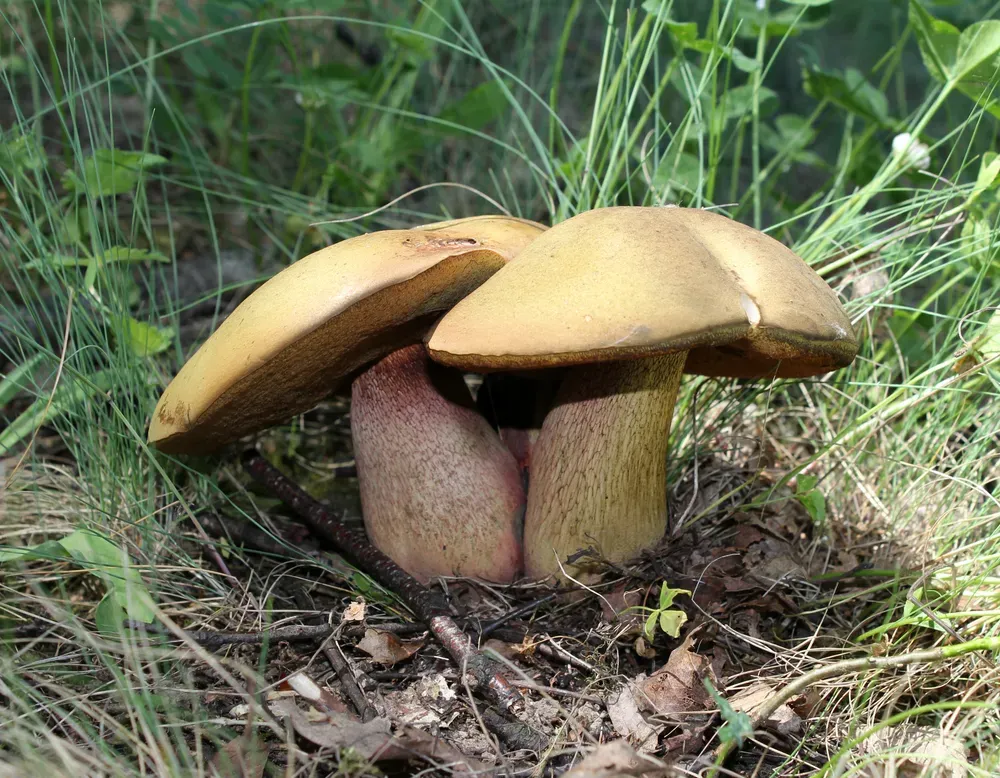
- **Bitter bolete.** The most treacherous lookalike when it comes to taste. On the outside it looks very much like a porcini, but its flesh is bitter, and the tube layer turns pink with age. A single one can ruin a whole dish. The summer bolete always has white pores and a pleasant nutty taste with no bitterness.
- **Lurid bolete.** It also grows under oaks in June, but it's easy to tell apart by its reddish pores and the flesh turning blue when cut. It's a conditionally edible mushroom that needs to be boiled first.
A simple rule for beginners: break a young bolete and touch a crumb of the flesh to your tongue without swallowing. Bitterness will give away the bitter bolete at once. And if the pores are reddish or the cut turns blue, it's no longer a porcini in front of you, so check the features carefully.
Sources
- “Field Guide to the Fungi of Ukraine” (Kyiv, Naukova Dumka publishing house).
- Boletus reticulatus on GBIF, the global biodiversity database.
- Boletus on MycoBank, the international fungal nomenclature database.
- Boletus reticulatus on Wikipedia.
Frequently asked questions
Do porcini grow in June?
Yes. In June the , Boletus reticulatus, appears. It's one of the first to come up, while the classic fall porcini arrives later, closer to the end of summer.
Which porcini appears first?
First at the start of summer comes the . You'll recognize it by the pale net over almost the whole stem and the dry brown cap that often cracks in the heat.
Where to look for porcini in June?
Best in and under oaks and beeches, on bright forest edges and clearings. In purely coniferous forest the early porcini is less common.
Why are June porcini almost never wormy?
At the start of summer there are still few insects in the forest whose larvae spoil mushrooms. That's why early boletes are often clean even when fully grown, unlike August ones.
When is the best time to go for porcini in June?
Ideally two or three days after a warm rain, and preferably in the morning. The main flush usually falls in the second, warmer half of the month. Check the .
Can you dry June porcini?
Yes, the summer bolete dries beautifully. Thanks to their firm, clean flesh, June specimens often make the best-quality dried mushrooms of the whole season.
How does the summer bolete differ from the fall porcini?
Mainly in when it appears and in details of its look. We cover the differences between the summer and fall bolete in a .
Is it easy to mistake a June porcini for an inedible mushroom?
The main lookalike that's dangerous to the taste of your dish, the , has bitter flesh and a tube layer that turns pink. The summer bolete always has white pores and a pleasant nutty taste, with no bitterness.
Mushrooms in this article
Related articles
 Recipes & cooking
How to store fresh mushrooms, and for how long
Fresh mushrooms spoil faster than you might think. Here's how long they keep in the fridge, how to store them…
August 21, 2026·4 min How to identify
Truffles in Ukraine: do they grow here, and where to look
Truffles aren't just a French delicacy. Several species grow in Ukraine too. Here's which ones, where they occ…
August 24, 2026·2 min Recipes & cooking
How long to boil mushrooms
Boiling time depends on the type of mushroom and on what you're cooking next. Here's a clear cheat sheet: how…
August 22, 2026·4 min