_cropped.webp)
Mushroom picking is an old folk tradition, but along with the pleasure it brings responsibility. To the forest that feeds us, to other foragers and to the law, because there are places where picking is prohibited. Everyone who goes into the forest should know these unwritten and written rules.
Let's look at foraging ethics and legal restrictions: how much you can pick, how to avoid harming the forest and where picking is off-limits.
How many mushrooms to pick
The main ethical principle: take only as much as you'll actually use.
Filling baskets “just in case” and then throwing out what's spoiled shows disrespect for both the forest and the mushrooms themselves. Take as much as you'll process or eat. It's not just ethical but practical: mushrooms spoil quickly, and processing a big harvest takes a lot of time.
Likewise, don't take every last mushroom in a clearing. The ones you leave will spread their spores and give rise to new mycelium, so moderation pays off in future harvests.
How not to harm the mycelium and the forest
The mushroom itself is only the fruiting body; the real life is the mycelium in the soil. Careful picking preserves it.
- Don't rake up the forest floor. Tearing up moss and leaves exposes the mycelium and dries it out.
- Don't take old mushrooms. Leave them to spread their spores; more on this in our article on why you shouldn't pick old mushrooms.
- Cut or twist carefully. Both methods are fine, just don't yank. More in the article how to pick mushrooms properly.
- Don't destroy mushrooms you don't know. Even a poisonous mushroom is part of the ecosystem and food for forest creatures. Don't kick over amanitas.
Leave the forest the way you'd like to find it next time: no raked-up forest floor and no litter.
Where picking is prohibited
There are places where mushroom picking is restricted or prohibited by law.
- Nature reserves. Any economic activity is prohibited here, including mushroom picking.
- Protected zones of national parks. Picking is not allowed in strictly protected zones, although it may be permitted in recreational ones. Check the status.
- Radiation-contaminated zones. In areas affected by the Chornobyl disaster, you must not pick mushrooms: they accumulate radionuclides. We mention this in our article on mushrooms of Polissia.
- Red Data Book species. Some rare mushrooms are listed in the Red Data Book, and picking them is prohibited.
Before heading into unfamiliar terrain, make sure it doesn't have protected status.
Forager etiquette
A few simple habits make the forest pleasant for everyone.
- Don't litter. Take everything you brought back out with you.
- Respect other people's spots. Don't trail other foragers to “scout out” their patches.
- Don't spoil other people's finds. Don't knock over mushrooms that someone found but left.
- Share knowledge, not misinformation. When advising beginners, don't pass on the dangerous myths we write about separately.
A caring forager leaves behind a clean forest and healthy mycelium, and that means harvests for years to come.
Sources
- “Key to the Fungi of Ukraine” (Kyiv, Naukova Dumka publishing house).
- Boletus edulis on GBIF, a global biodiversity database.
- Fungi on MycoBank, the international fungal nomenclature database.
- Foraging on Wikipedia.
Frequently asked questions
How many mushrooms can you pick?
As many as you'll actually process or eat. Picking “just in case” and then throwing out what's spoiled is unethical. Moderation also preserves the mycelium for future harvests.
Can you pick mushrooms in nature reserves?
No. Any economic activity is prohibited in nature reserves, including mushroom picking. In national parks it depends on the zone: in protected zones you can't, in recreational ones it's sometimes allowed.
How do you avoid harming the mycelium?
Don't rake up the forest floor, don't tear up moss and leaves, cut or twist mushrooms carefully and don't yank them. The mycelium lives in the soil, and careful picking is what preserves it.
Is it better to cut or twist mushrooms?
Both methods are fine if you do it carefully. The main thing is not to rake up the forest floor or yank the mushroom. Details in the article .
Should you knock over poisonous mushrooms?
No. Even a poisonous mushroom is part of the ecosystem and food for forest creatures. Don't kick over amanitas: they play their role in the forest.
Where else is mushroom picking prohibited?
In radiation-contaminated zones after the Chornobyl disaster, because mushrooms accumulate radionuclides, and rare Red Data Book species anywhere. Check the status of an area in advance.
Why shouldn't you take every mushroom in a clearing?
Because the ones you leave, especially mature ones, spread spores and give rise to new mycelium. So moderation in picking pays off in the forest's future harvests.
What does forager etiquette mean?
Not littering, not trailing other foragers, not spoiling other people's finds and not passing dangerous on to beginners. It's respect for the forest and for other people.
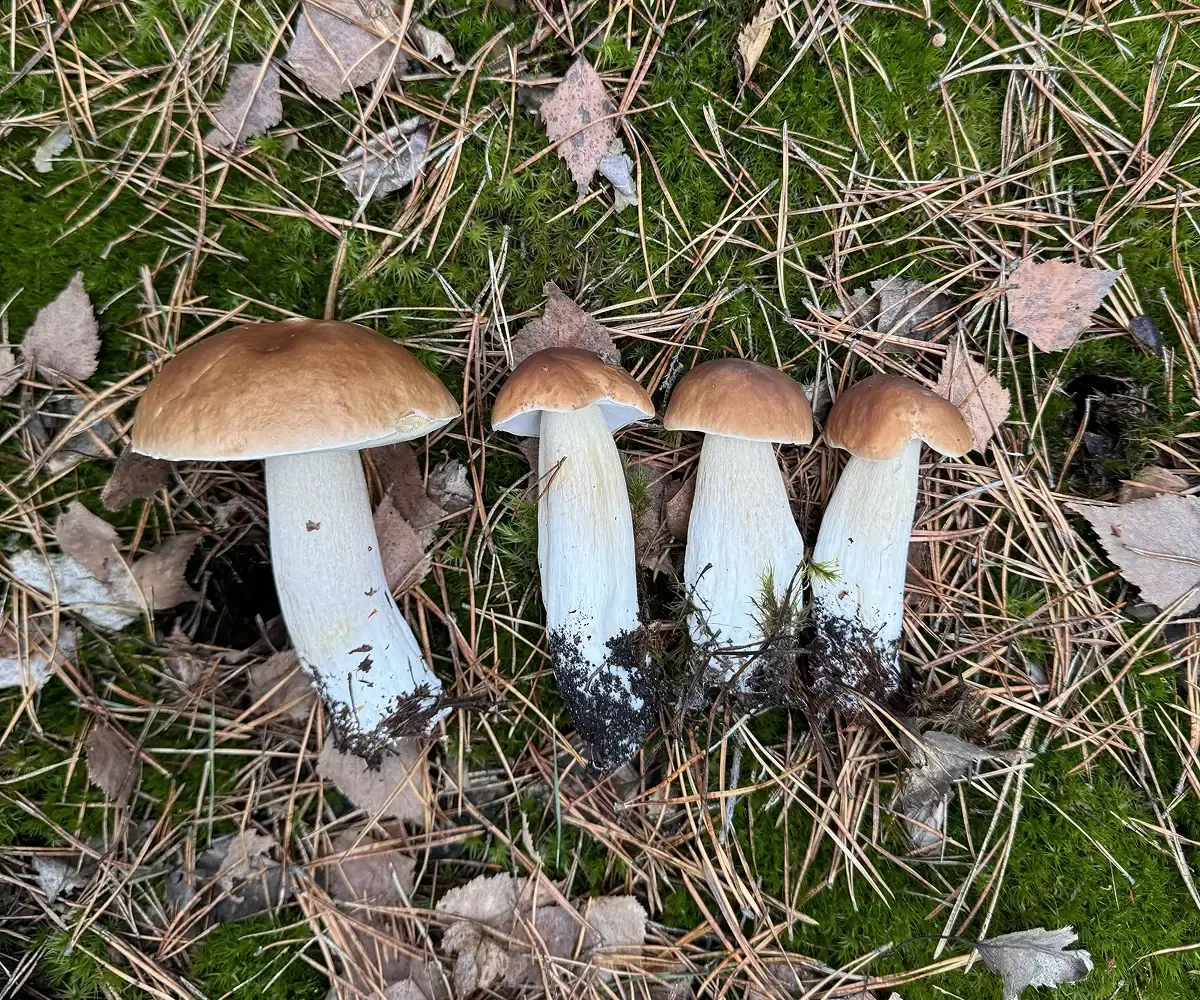
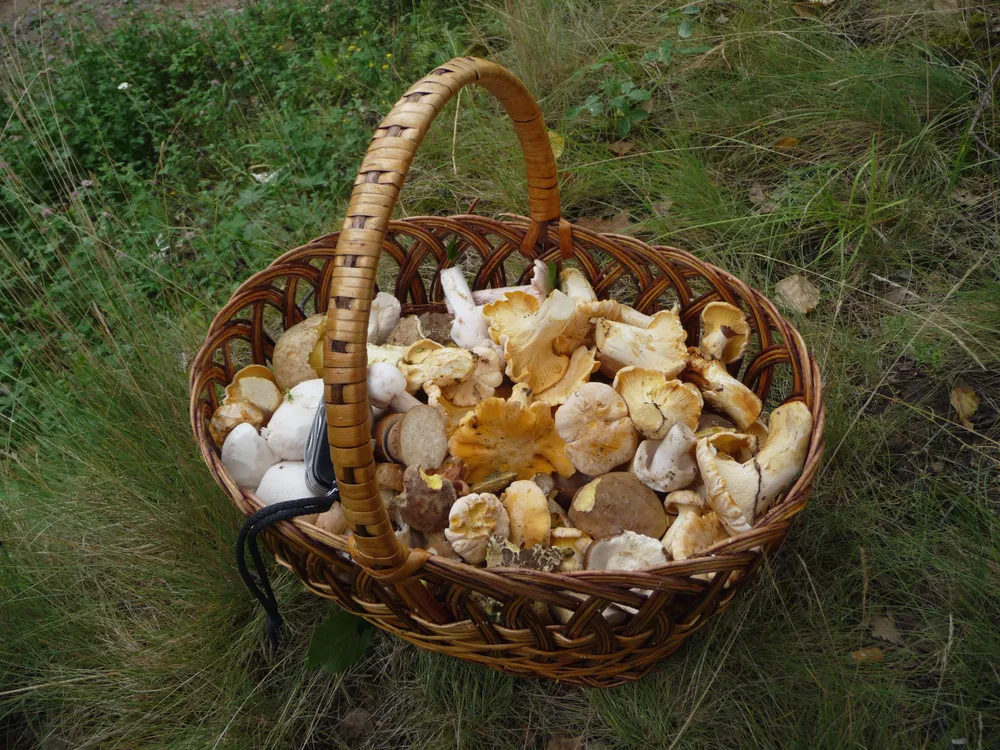
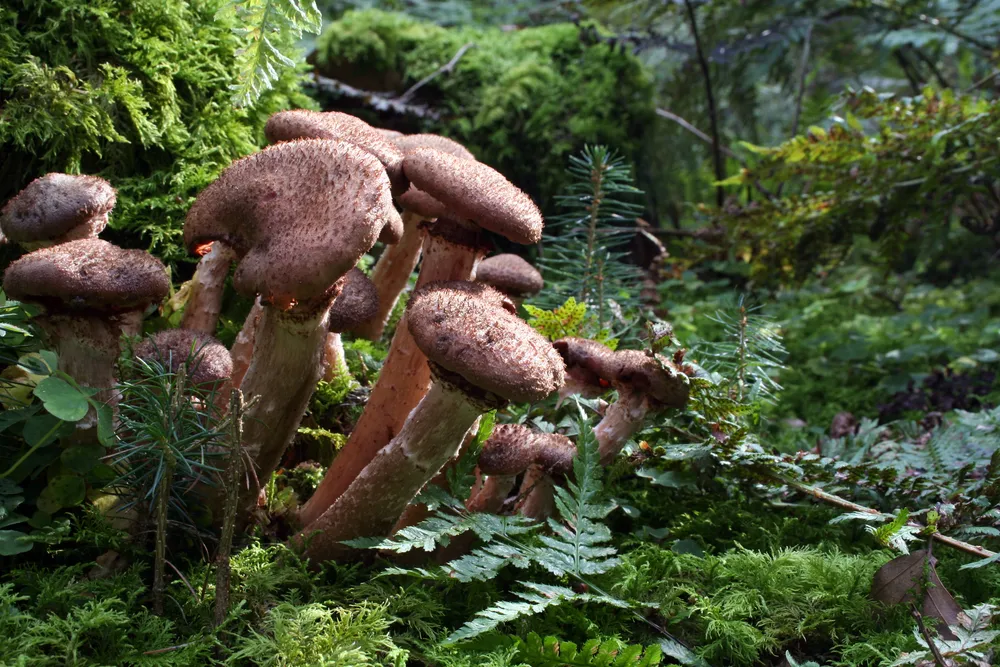
Mushrooms in this article
Related articles
 Recipes & cooking
How to store fresh mushrooms, and for how long
Fresh mushrooms spoil faster than you might think. Here's how long they keep in the fridge, how to store them…
August 21, 2026·4 min How to identify
Truffles in Ukraine: do they grow here, and where to look
Truffles aren't just a French delicacy. Several species grow in Ukraine too. Here's which ones, where they occ…
August 24, 2026·2 min Recipes & cooking
How long to boil mushrooms
Boiling time depends on the type of mushroom and on what you're cooking next. Here's a clear cheat sheet: how…
August 22, 2026·4 min