Tiger's eyeColtricia perennis
Expert-verifiedUpdated October 3, 2026
Passport
- Edibility
- Inedible
- Season
- Jul — Dec
- Hymenophore
- Pored
- Cap color
- Yellow
- Size
- Very small (<3 cm)
- Smell
- Odorless
- Reviewed
- Yes ✓
Quick answers
Where to look?
Conifer forest, Mixed forest
When does it appear?
Jul — Dec
Active months: July, August, September, October, November, December.
How to recognize it? Three signs
- Cap color: Yellow, Orange, Brown
- Cap shape: Flat
- Smell: Odorless
Fruiting season
July – December
Description
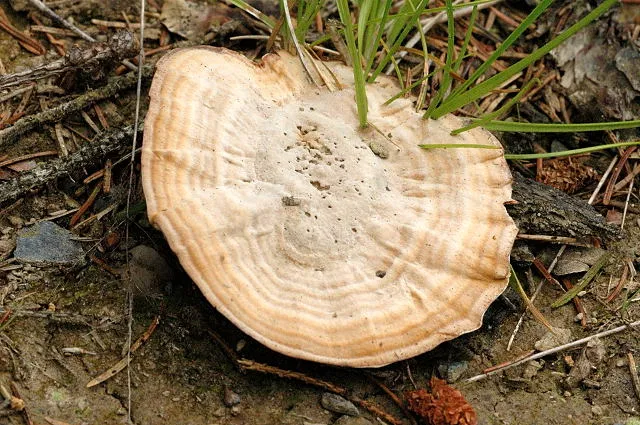
The tiger's eye (Coltricia perennis) is a distinctive small saprotrophic polypore with a clearly zoned, concentrically banded cap. The Latin epithet perennis means "perennial", a nod to the fruiting body's long life (1-3 years) and its overwintering in one spot. The Ukrainian name "dvorichna" ("biennial") is a variant translation of the same epithet. The fruiting body is 1-5 cm across, on a short stem, resembling a miniature "hat" with an unusual banded pattern.
Inedible — the flesh is tough, leathery, cardboard-like, with no culinary value. Foragers don't pick it. It is a saprotroph on soil in pine and spruce-pine forests, especially on poor sandy or acidic soils.
Key features of Coltricia perennis: Small (1-5 cm) fruiting body on a short, thin stem Clearly zoned, concentrically banded upper surface of the cap — its most distinctive feature Alternating yellow-orange, ochre, rusty-brown and dark brown zones Underside with fine pores (NOT gills): a polypore Flesh very thin, leathery, brownish-ochre Dry, matte fruiting body (resembles a "dry little hat") Grows on the ground in pine forests
The main thing is to recognize it as an indicator of poor, acidic pine forests and not to confuse it with young polypores of other genera. The mushroom is so recognizable (concentric bands + small size + pine forest litter) that serious mix-ups usually don't happen.
In Ukraine, Coltricia perennis is common in pine and mixed forests: the Carpathians, Prykarpattia, Polissia, the forest-steppe. Season: July to October, and the fruiting bodies last a long time, so you can find them even in winter.
Cap
Cap 1-5 cm across, thin, leathery, flat and spread out with a slightly sunken center, convex when young. Surface matte and dry, with fine felty fibers. Clearly zoned, concentrically banded — alternating yellow-orange, ochre, rusty-brown and dark brown bands. The base color is ochre-brown to rusty-chestnut, with a contrasting banded pattern. The margin is even, wavy in mature specimens.
Hymenophore
Pored hymenophore: fine, small pores on the underside of the cap (~3-5 pores/mm). Color brownish-ochre to rusty. NOT gills, NOT spines, but polypore pores. Spore print brown to rusty-brown.
Stem
Stem 1-3 cm tall, 0.3-0.8 cm thick, thin, cylindrical, thickening toward the base. Color rusty-brown to dark brown, with felty down. Surface dry and matte.
Flesh
Flesh very thin, leathery, tough, brownish-ochre, cardboard-like. Not fit for cooking. Smell faint, neutral, nothing special.
Smell
Faint, neutral, nothing distinctive.
Lookalikes
Related species
Mushrooms of the same genus and habitat — to study side by side and never mix up.
Bulbous honey fungus
Armillaria gallica
Dark honey fungus
Armillaria ostoyae
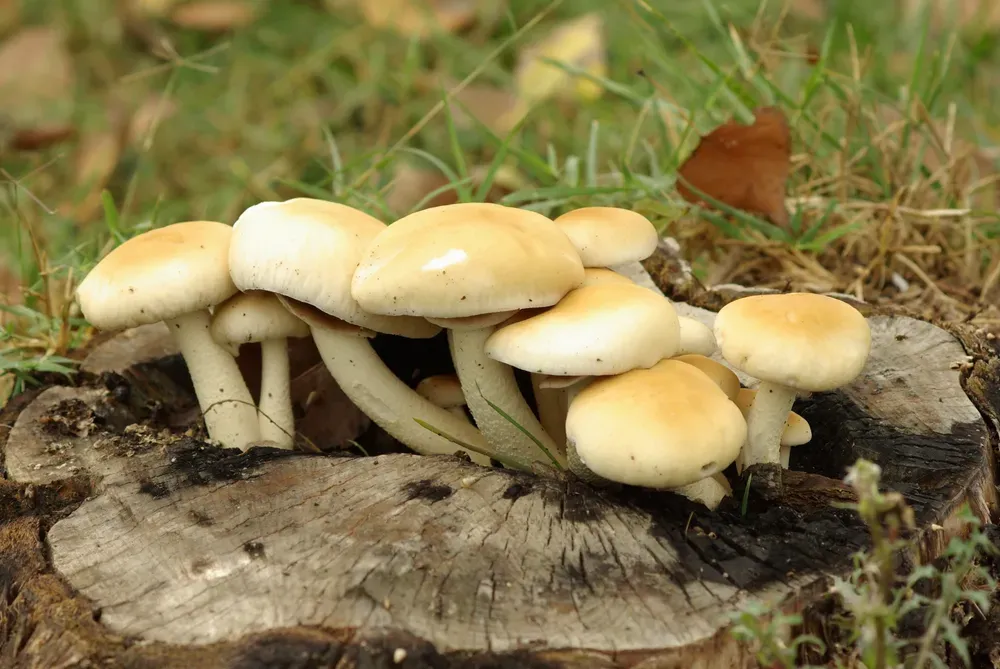
Poplar fieldcap
Cyclocybe aegerita
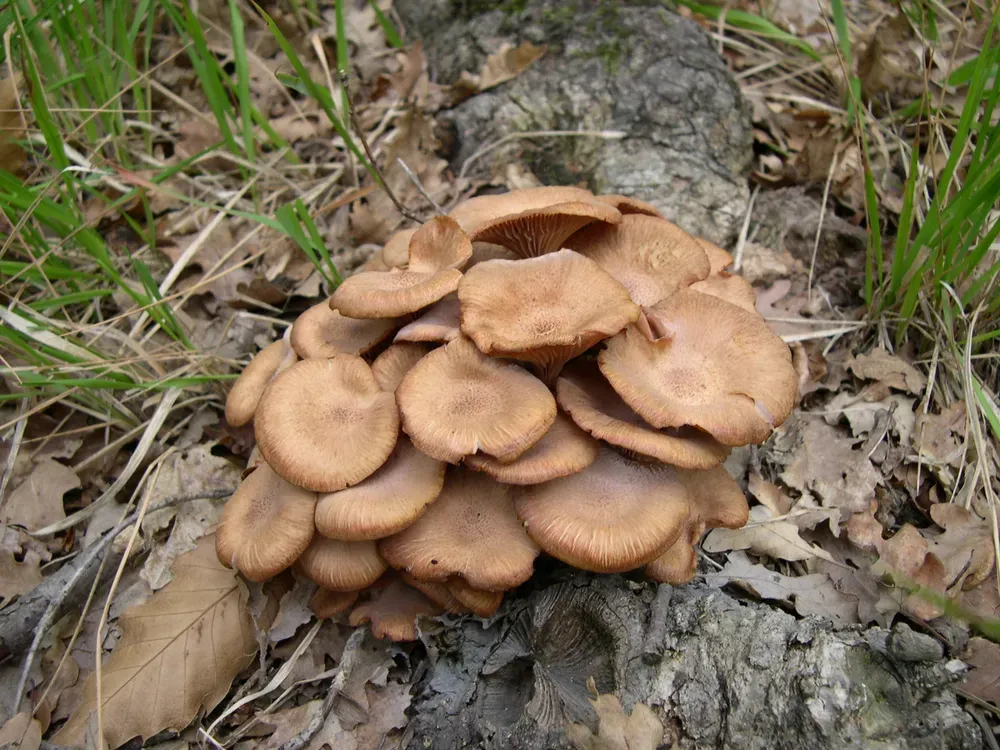
Ringless honey fungus
Desarmillaria tabescens
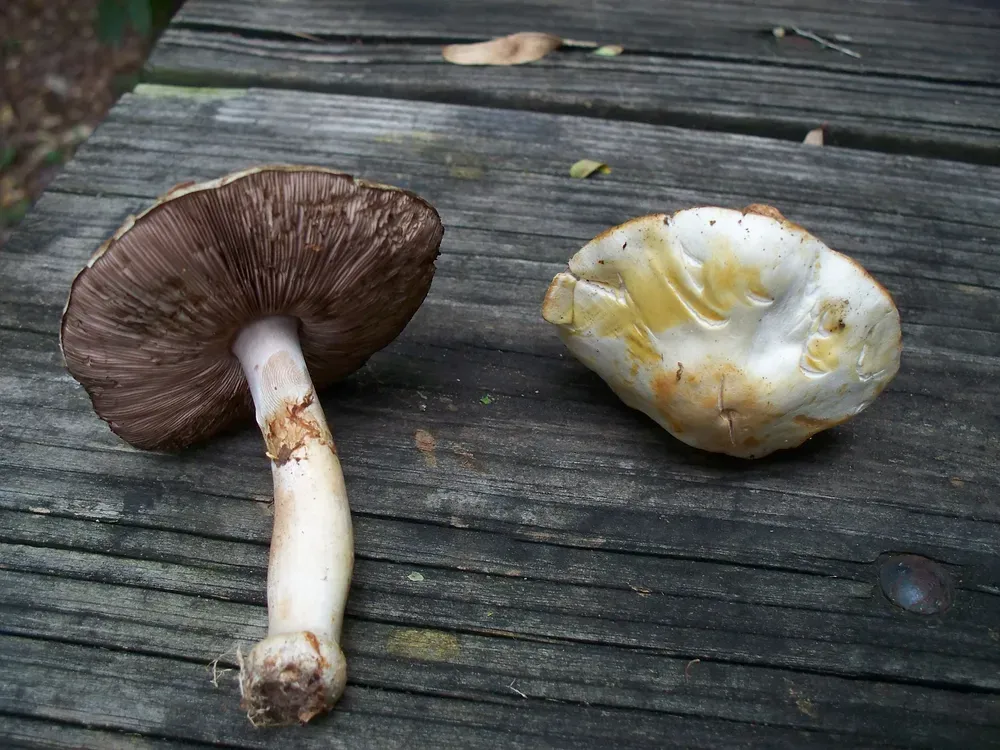
Agaricus abruptibulbus
Agaricus haemorrhoidarius
Agaricus haemorroidarius
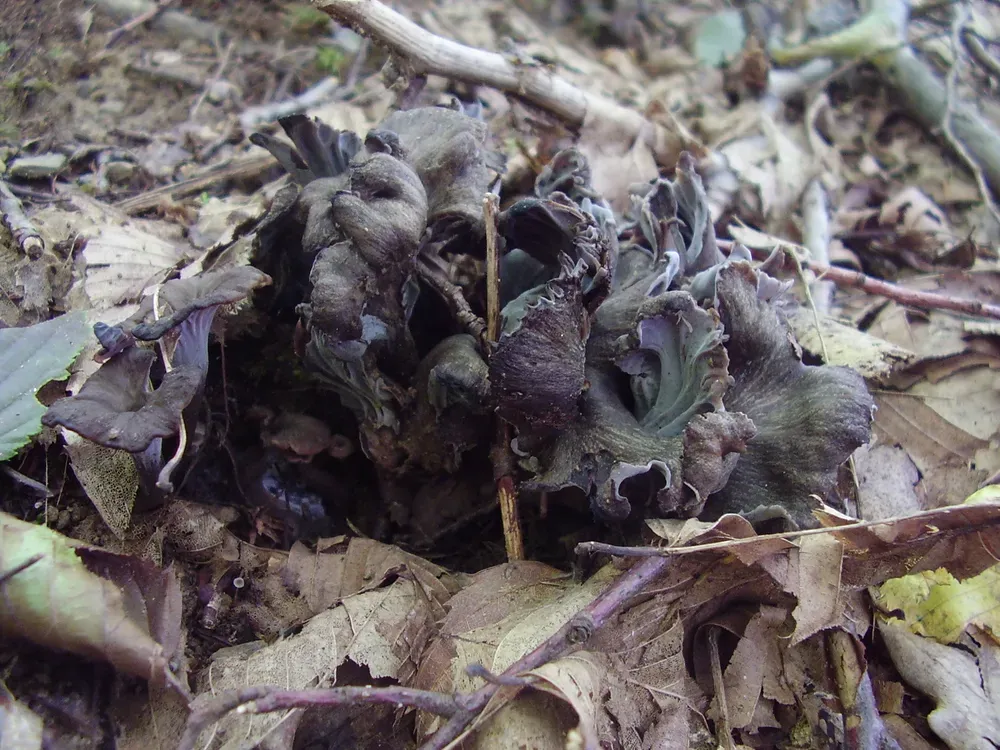
Ashen chanterelle
Cantharellus cinereus
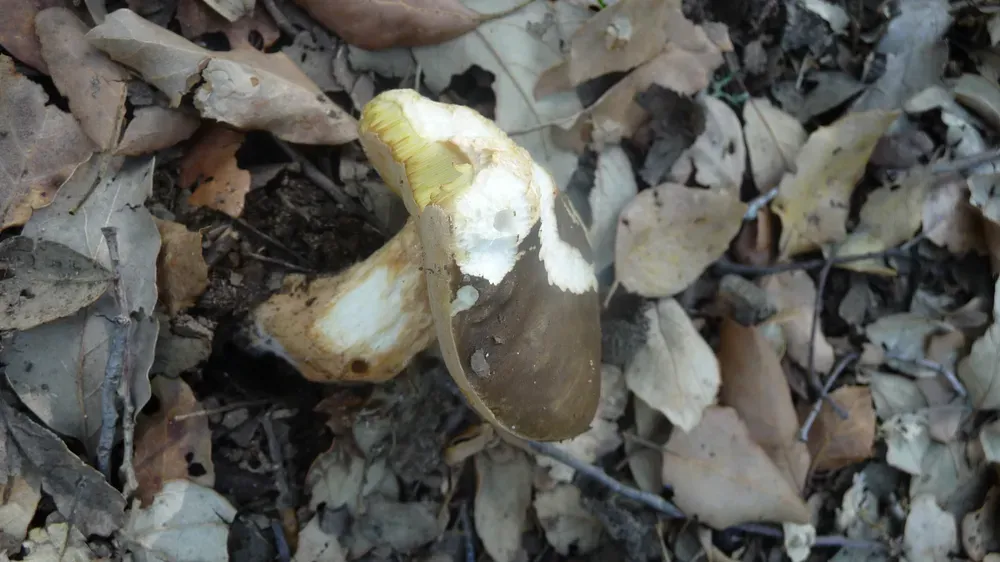
Blushing bolete
Leccinum roseofractum
Frequently asked questions
Is it poisonous?
Not poisonous, but inedible because of its tough, leathery flesh: like cardboard, impossible to chew. No culinary value.
How do you identify it for sure?
Four features. (1) Small (1-5 cm) fruiting body on a short stem. (2) Clearly zoned, concentrically banded upper surface with alternating yellow-orange, ochre and brown bands. (3) Underside with fine pores (a polypore). (4) Grows on the ground in pine forests (NOT on wood!).
Does it have any medicinal use?
In the folk medicine of some cultures it is used as a powder for treating wounds (like some other polypores) and in fungotherapy, but scientific evidence is scarce. Do not use it for self-treatment.
Where can you find it, so you'll recognize it?
On soil in pine and spruce-pine forests, especially on poor sandy or acidic soils. Among moss, in grass. Not on wood (this is the key difference from other polypores). It often grows singly or in groups of 3-10 fruiting bodies.
Which regions of Ukraine is it found in?
Common in the forest zone wherever there are coniferous forests: the Carpathians, Prykarpattia, Polissia, and in places the forest-steppe in its pine stands.
When can you come across it?
July to October, and the fruiting bodies last a long time, so you can find them later in autumn and even in winter (dried out).
What mushrooms is it confused with?
With Coltricia cinnamomea — a close relative of similar size and build, but mostly in broadleaf forests. With young Trametes versicolor (turkey tail) — also banded, but on wood rather than on the ground, and larger. With Onnia tomentosa — similar concentric zones, but larger.
Is Tiger's eye edible or poisonous?
Does Tiger's eye have gills or pores?
What does the cap of Tiger's eye look like?
What does the stem of Tiger's eye look like?
What do Tiger's eye smell and taste like?
Sources
- [1]Вікіпедія (українська)
- [2]Атлас грибів України, Зеров Д.К. (1979)
- [3]MycoBank Database
- [4]Index Fungorum
- [5]GBIF
- [6]iNaturalist Ukraine