.webp)
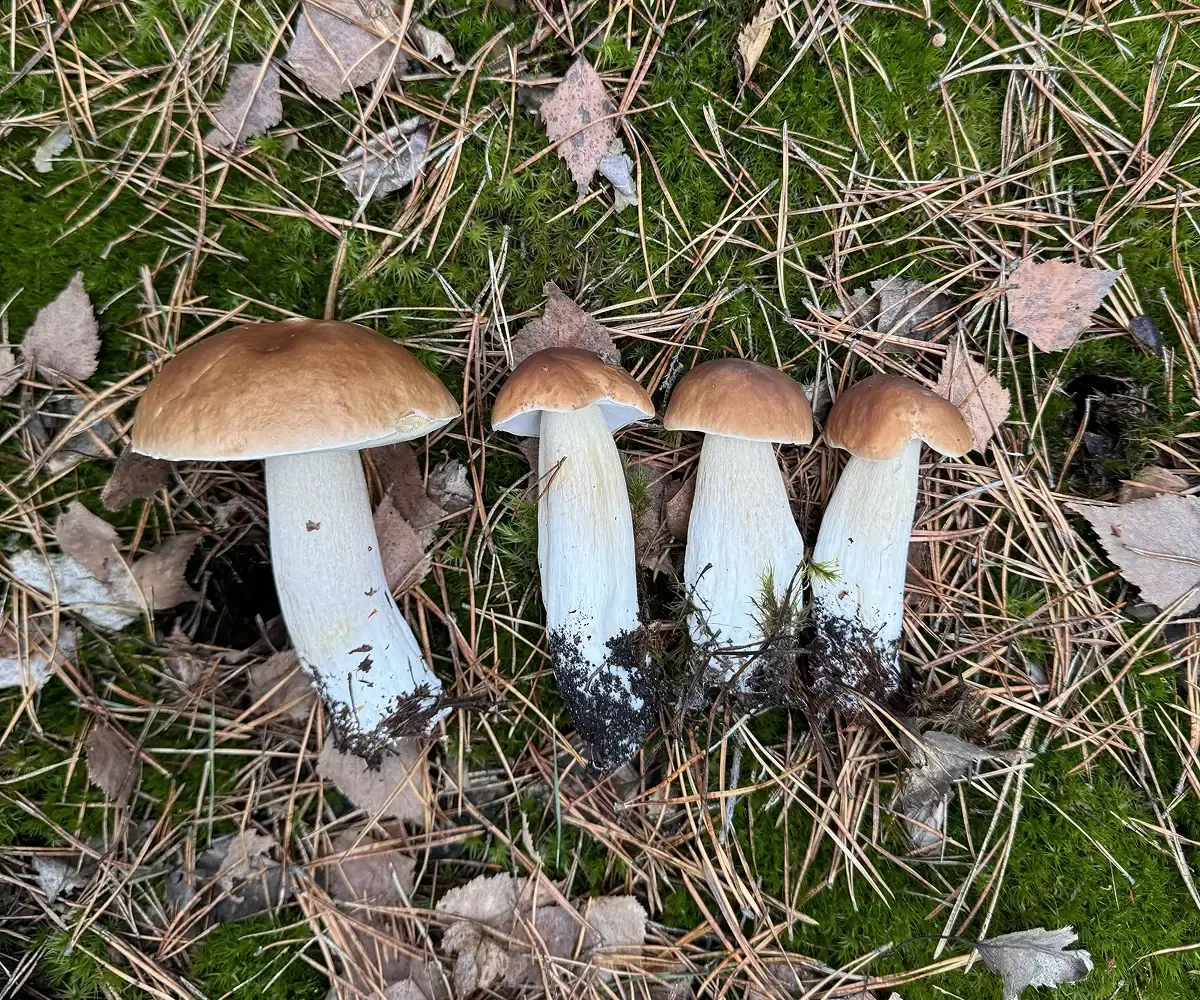
When a forager says "I found a porcini," they rarely specify which one. And it's not laziness: the name "porcini" hides not one species but a whole group of closely related boletes. They're all related, all have white flesh that doesn't turn blue when cut, and all are equally prized in the basket.
Working out who's who in this family is useful not for the Latin but for practice. Knowing which bolete grows under which tree and when it appears, you plan your outings more precisely and wander around at random less.
Why "porcini" is a group, not a single species
Let's start with the main misunderstanding. The classic porcini (Boletus edulis) is a distinct species, but in everyday speech several of its closest relatives go by the same name. They're so similar in taste, flesh and structure that foragers have long not bothered to separate them in the basket.
What unites them? First of all, firm white flesh that doesn't change color when cut, turning neither blue nor red. Then there's the tube layer under the cap (the sponge), which goes from white to yellow and, in old age, olive green. And of course a thick, barrel-shaped stem with a pale net pattern on its upper part.
These boletes differ in their partner trees, season and small details of color. These are the differences we'll use to sort out the family.
The four main porcini
In Ukrainian forests it's worth knowing four main varieties. They're all edible, fragrant and equally good in the kitchen.
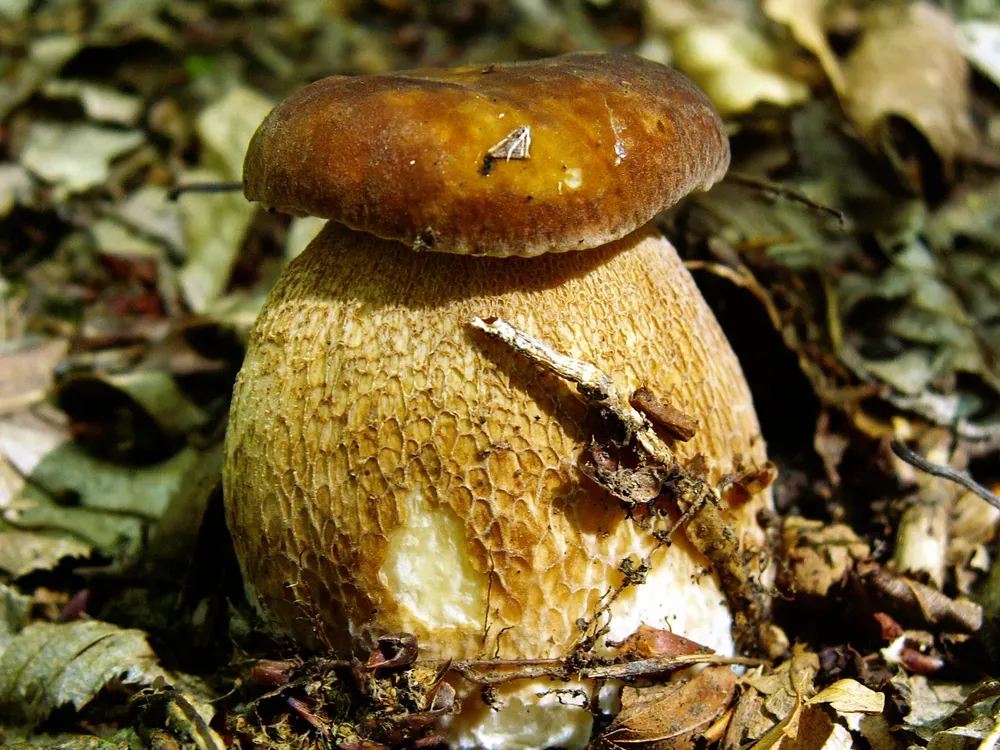
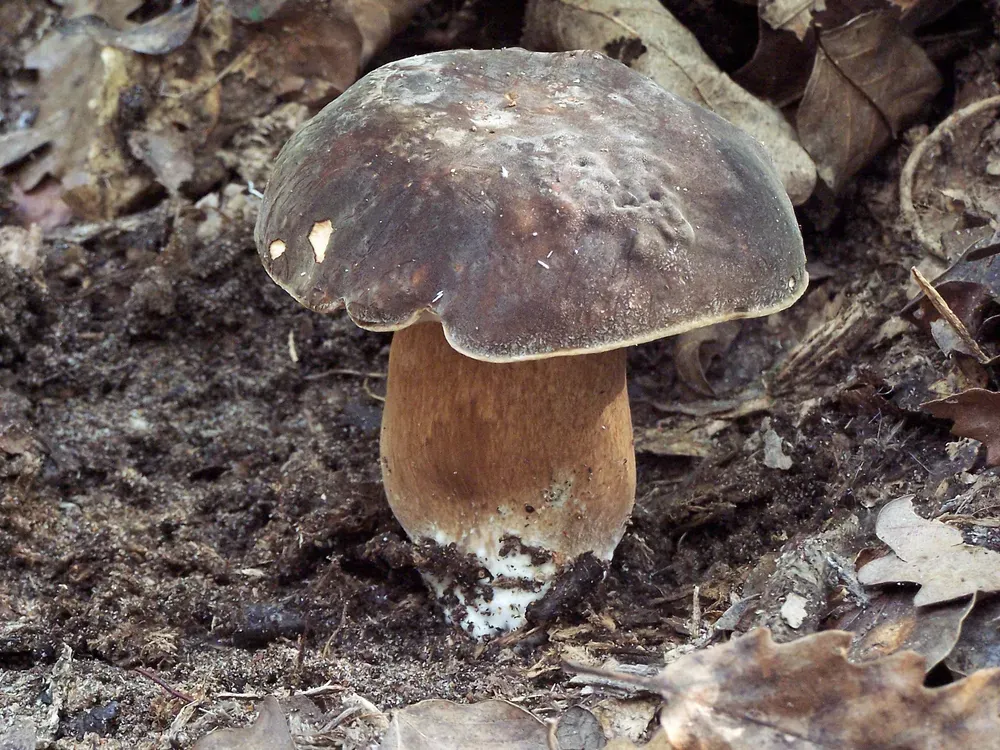
- **Summer bolete** (Boletus reticulatus), also known as the summer net bolete. It comes up earliest and loves oak, beech and hornbeam. The cap is matte and cracks into little squares in the heat, and a pale net covers almost the full length of the stem.
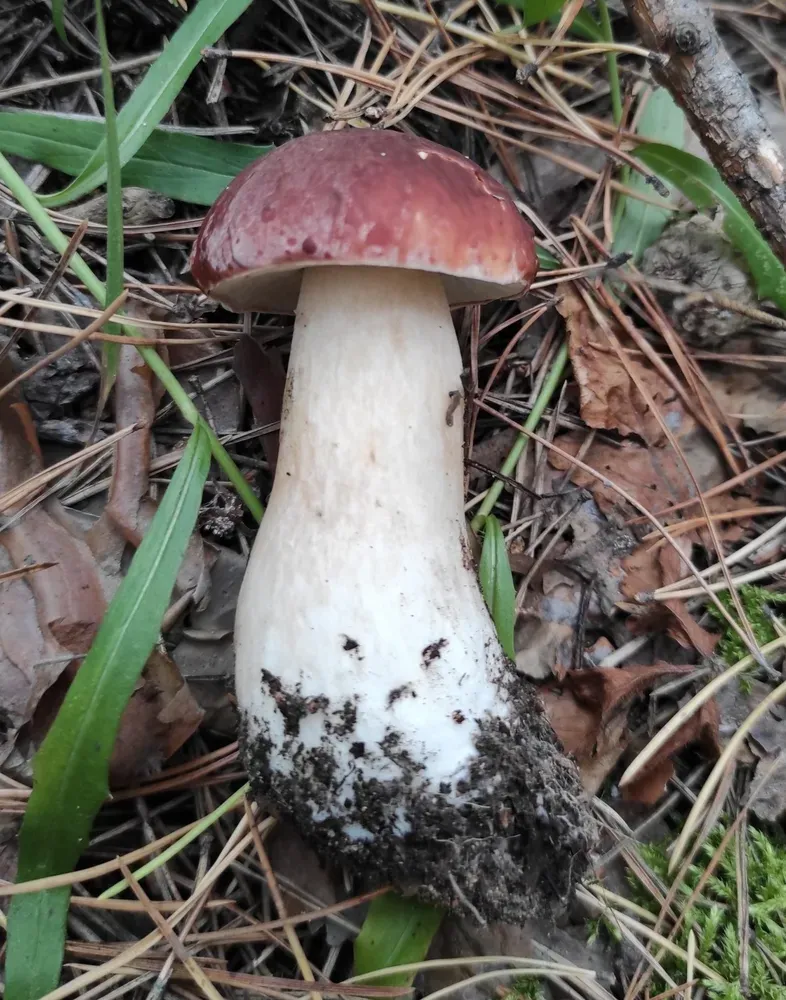
- **Pine bolete** (Boletus pinophilus). The dark-capped beauty of coniferous forests. The cap is a deep chestnut-red, often damp and shiny, and the stem is massive. It's mainly an autumn bolete.
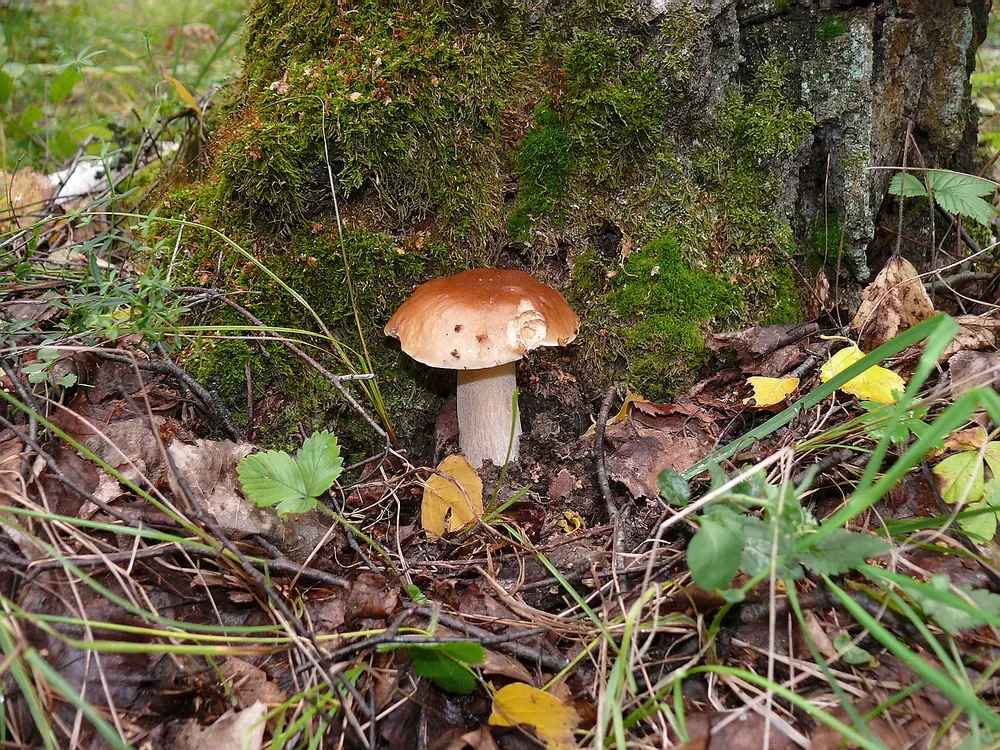
- **Boletus betulicola** (Boletus betulicola). Paler than the rest, with an ochre-cream cap, it grows under birches on forest edges and in clearings.
- **Bronze bolete** (Boletus aereus). The darkest of them all, with an almost black-bronze cap. It loves warmth and light and leans toward southern oak forests.
This group is sometimes joined by the true porcini (Boletus edulis) as a fifth, most versatile species, found in both deciduous and coniferous forests.
Which grows under which tree
The easiest way to tell porcini apart is by their trees, because each bolete is linked to certain tree species through mycorrhiza, that is, it lives in a mutually beneficial partnership with their roots.
- Oak, beech, hornbeam. This is where the summer bolete rules, and in warm southern oak forests the bronze bolete joins it.
- Pine and spruce. This is the territory of the pine bolete, the dark-capped dweller of coniferous forests.
- Birch. Bright birch forest edges are the choice of Boletus betulicola.
- Mixed woodlands. In a mixed forest, where oak and birch grow alongside pine, you can collect several varieties at once on a single outing.
That's why an experienced forager looks at the trees first, and only then at the ground. The tree species hints at exactly which porcini you can expect here.
How they change through the season
The porcini family shares the season out among its members, so these boletes keep foragers company for almost the whole warm half of the year.
First, as early as late May and June, the summer bolete comes up in bright deciduous forests. At the height of summer the bronze bolete joins it on warm southern slopes. And closer to autumn the pine bolete takes over the relay in pine forests, fruiting right up to the October frosts.
The classic porcini holds on all season, from June to October, with the main flush at the end of summer. So you don't have to guess when exactly to go, keep an eye on conditions with our mushroom radar: it shows when moisture and warmth line up well for boletes to appear.
And is the royal bolete a porcini too?
It's worth warning against a mix-up here. In the forest you can come across the royal bolete (Butyriboletus regius), a handsome pink-capped mushroom. Despite its similar "royal" fame, it belongs to a different genus and isn't a true porcini. Folk usage sometimes calls both the pine bolete, for its stately looks, and this separate species "royal". If you want to be precise, go by the cap color and the cut flesh.
And one more warning. Not every "porcini" is actually a porcini. The bay bolete is a close relative but turns blue when cut, while the bitter bitter bolete only pretends to be a porcini. These differences deserve a separate discussion.
Sources
- "Key to the Fungi of Ukraine" (Kyiv, Naukova Dumka publishing house).
- Boletus on GBIF, a global biodiversity database.
- Boletus on MycoBank, an international fungal nomenclature database.
- Boletus edulis on Wikipedia.
Frequently asked questions
How many species of porcini are there?
In Ukraine it's worth knowing at least four varieties: the summer (oak), pine, birch and bronze boletes, plus the classic true porcini. They're all related and equally prized in the basket.
How do porcini species differ from each other?
Mainly by partner trees, season and cap color. Flesh that doesn't turn blue and a pale net on the stem are common to all. The summer bolete is paler and matte, the pine bolete dark chestnut, the bronze bolete almost black, the birch one ochre-cream.
Which porcini tastes best?
Connoisseurs often praise the bronze and pine boletes for their firm flesh and rich aroma. But in practice all porcini are equally good: a young, firm specimen of any species is wonderful both fresh and dried.
Which porcini comes up earliest?
The summer bolete, also called the summer net bolete. The first ones appear as early as late May, and the main flush falls in June and July.
Are all porcini edible?
Yes, all true porcini are edible and highly prized. The key is not to confuse them with lookalikes: the bitter bolete, which has a pink pore surface, and boletes that turn blue when cut.
Do porcini turn blue when cut?
No. The common trait of the whole porcini family is white flesh that turns neither blue nor red when cut. If the cut has turned blue, you're looking at a different species, and it's worth being careful.
Is the bay bolete a porcini too?
No. is a close relative of porcini but a separate species, and its flesh turns blue when cut. It's often valued on a par with porcini, but it doesn't belong to the true porcini family.
Can you pick different porcini species on one outing?
Yes, especially in a mixed forest where oak, birch and pine grow side by side. In such a woodland, on a single walk you can come across the summer, birch and pine boletes.
Mushrooms in this article
Related articles
 Science & taxonomy
Bay bolete: health benefits and nutritional value
The bay bolete is a match for porcini in both flavor and nutrition. Here's why the bay bolete is good for you,…
August 20, 2026·2 min Science & taxonomy
Honey fungus: health benefits and risks
Honey fungus is a nourishing autumn mushroom, rich in protein and minerals. Here's why honey fungus is good fo…
August 20, 2026·2 min Recipes & cooking
How to store fresh mushrooms, and for how long
Fresh mushrooms spoil faster than you might think. Here's how long they keep in the fridge, how to store them…
August 21, 2026·4 min