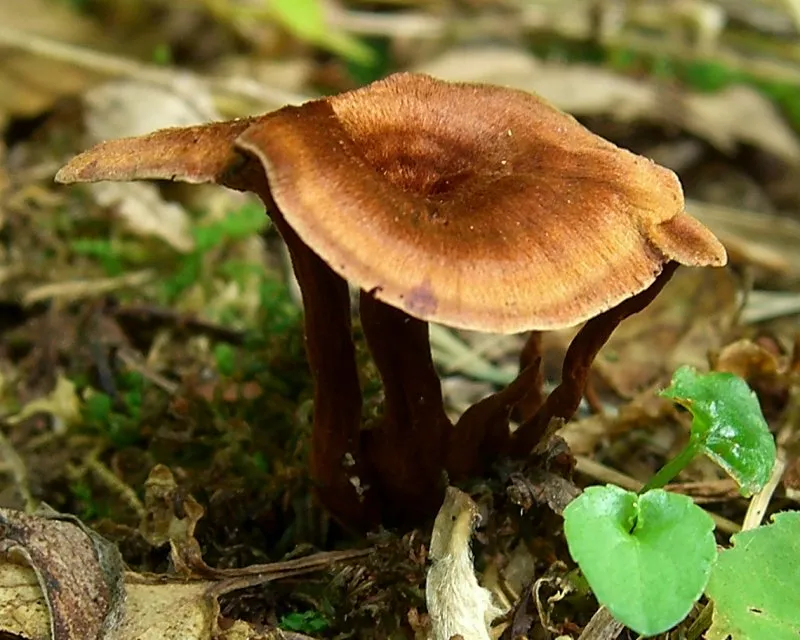
Shiny cinnamon polyporeColtricia cinnamomea
Expert-verifiedUpdated October 3, 2026
Passport
- Edibility
- Inedible
- Season
- Jul — Nov
- Hymenophore
- Pored
- Cap color
- Brown
- Size
- Very small (<3 cm)
- Smell
- Odorless
- Reviewed
- Yes ✓
Quick answers
Where to look?
Deciduous forest, Mixed forest
When does it appear?
Jul — Nov
Active months: July, August, September, October, November.
How to recognize it? Three signs
- Cap color: Brown, Dark brown
- Cap shape: Flat
- Smell: Odorless
Fruiting season
July – November
Description
The shiny cinnamon polypore (Coltricia cinnamomea) is a close relative of the tiger's eye (C. perennis), also a small saprotrophic polypore with a distinctive clearly zoned, concentrically banded cap, but with a predominantly dark chestnut-cinnamon coloring. The Latin epithet cinnamomea means "cinnamon-colored", and the name fits: the fruiting body's main tone is cinnamon-chestnut, deep brown, without the bright light-orange bands typical of C. perennis.
Inedible — the flesh is tough, leathery and cardboard-like, as in other Coltricia. It has no culinary value and foragers don't pick it. It is interesting mainly to mycologists, as an indicator of broadleaf forests with acidic soils.
Key features of Coltricia cinnamomea: Small (1-4 cm) fruiting body on a thin stem Concentrically banded upper surface with dark cinnamon and ochre-brown zones (darker and more uniform than in C. perennis) Underside with fine pores (a polypore) Flesh very thin, leathery, brownish-ochre Grows in broadleaf forests (oak, beech, hornbeam), the key difference from C. perennis (which grows in pine forests) Often forms distinctive "fairy rings" on bare soil
The main thing is to recognize it as an indicator of forests with acidic soils and not to confuse it with closely related Coltricia species. In the wild the two (C. perennis and C. cinnamomea) are often confused because they look alike; the key difference is habitat: pine forests = C. perennis, broadleaf forests = C. cinnamomea.
In Ukraine, Coltricia cinnamomea is common in broadleaf and mixed forests: the Carpathians, Prykarpattia, Polissia, the forest-steppe. Season: July to October, and the fruiting bodies last a long time.
Cap
Cap 1-4 cm across, thin, leathery, flat and spread out with a slightly sunken center. Surface matte and dry, with fine felty fibers. Clearly zoned, concentrically banded, dominated by dark cinnamon, chestnut and ochre-brown zones. The base color is cinnamon-chestnut to dark brown, richer in the center. The margin is even, wavy in mature specimens.
Hymenophore
Pored hymenophore: fine, small pores on the underside of the cap (~3-5 pores/mm). Color brownish-ochre to cinnamon. Spore print brown.
Stem
Stem 1-3 cm tall, 0.3-0.7 cm thick, thin, cylindrical. Color dark cinnamon to blackish-brown, with fine felty down. Surface dry and matte.
Flesh
Flesh very thin, leathery, tough, brownish-ochre, cardboard-like. Not fit for cooking. Smell faint, neutral.
Smell
Faint, neutral, nothing distinctive.
Lookalikes
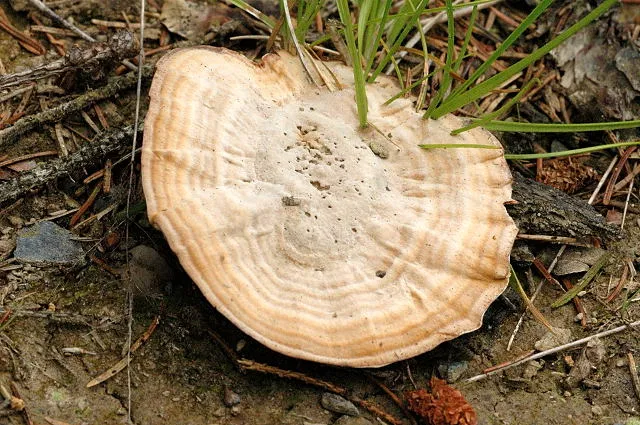
Related species
Mushrooms of the same genus and habitat — to study side by side and never mix up.
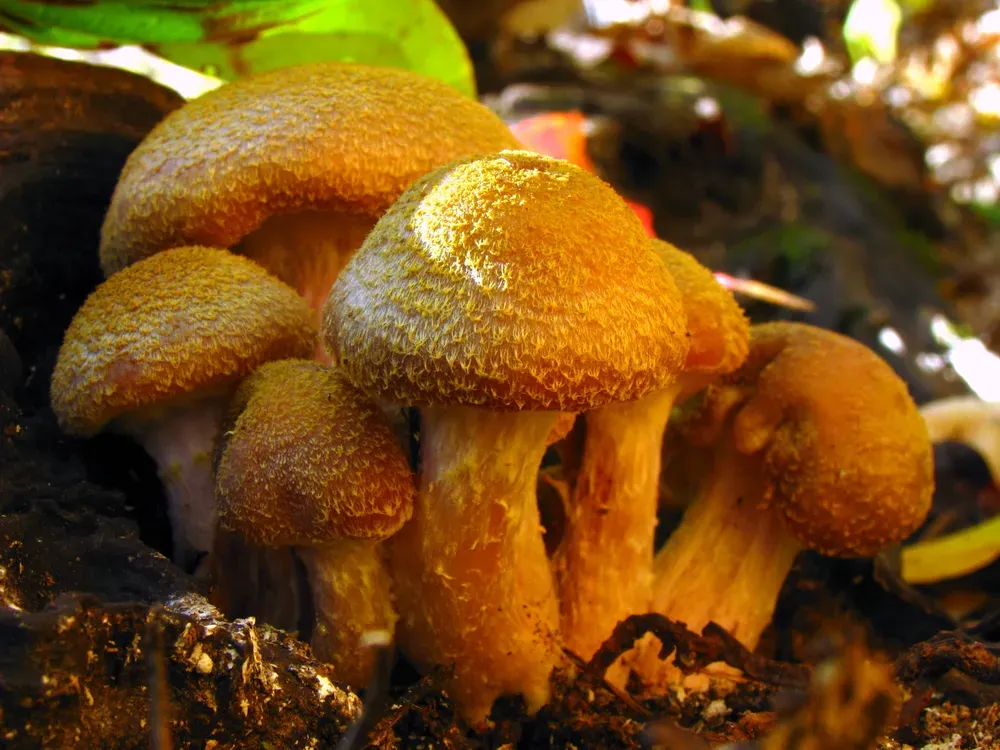
Bulbous honey fungus
Armillaria gallica
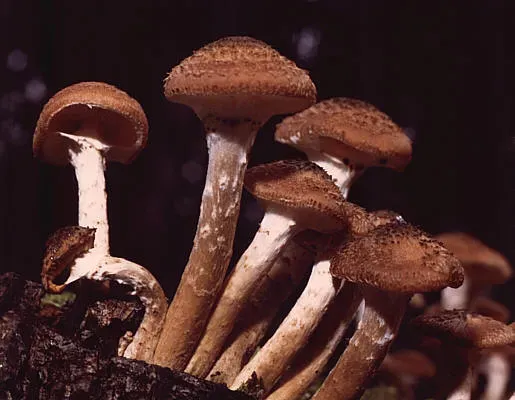
Dark honey fungus
Armillaria ostoyae
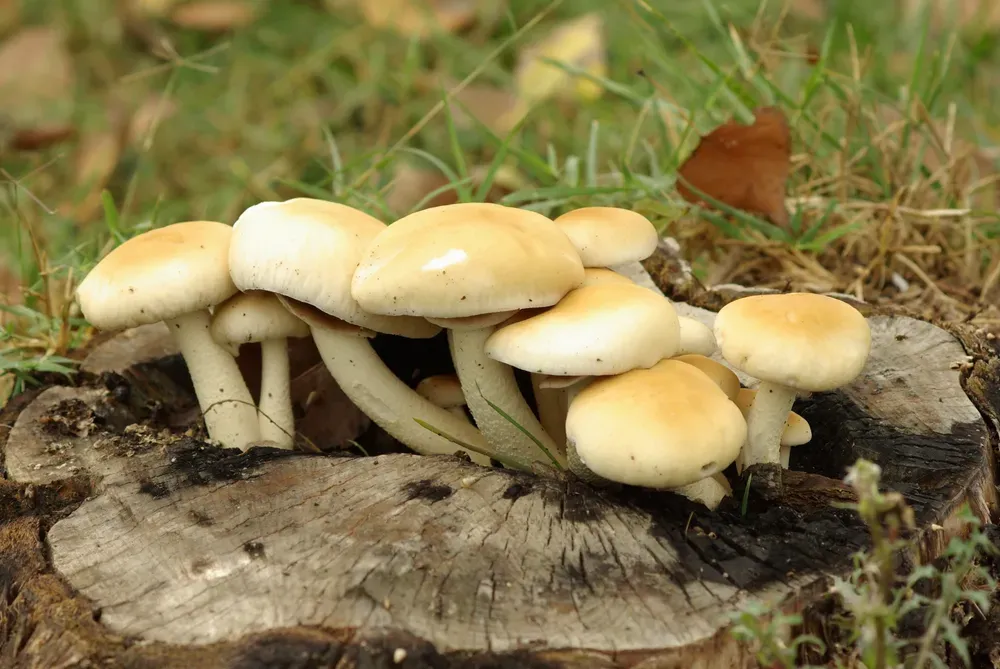
Poplar fieldcap
Cyclocybe aegerita
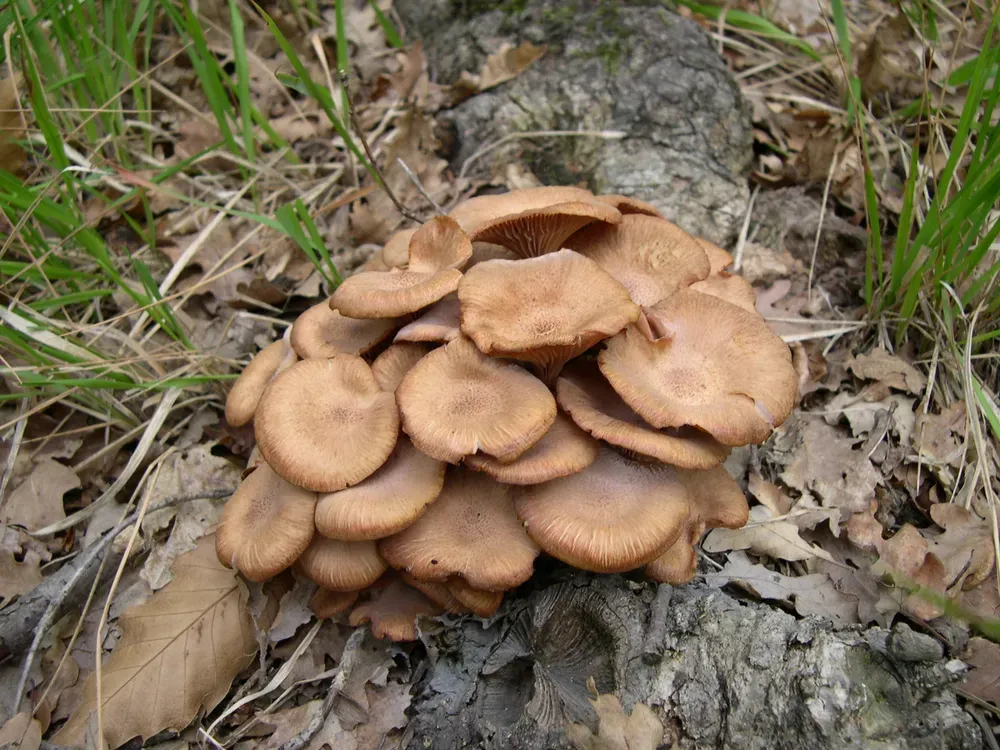
Ringless honey fungus
Desarmillaria tabescens
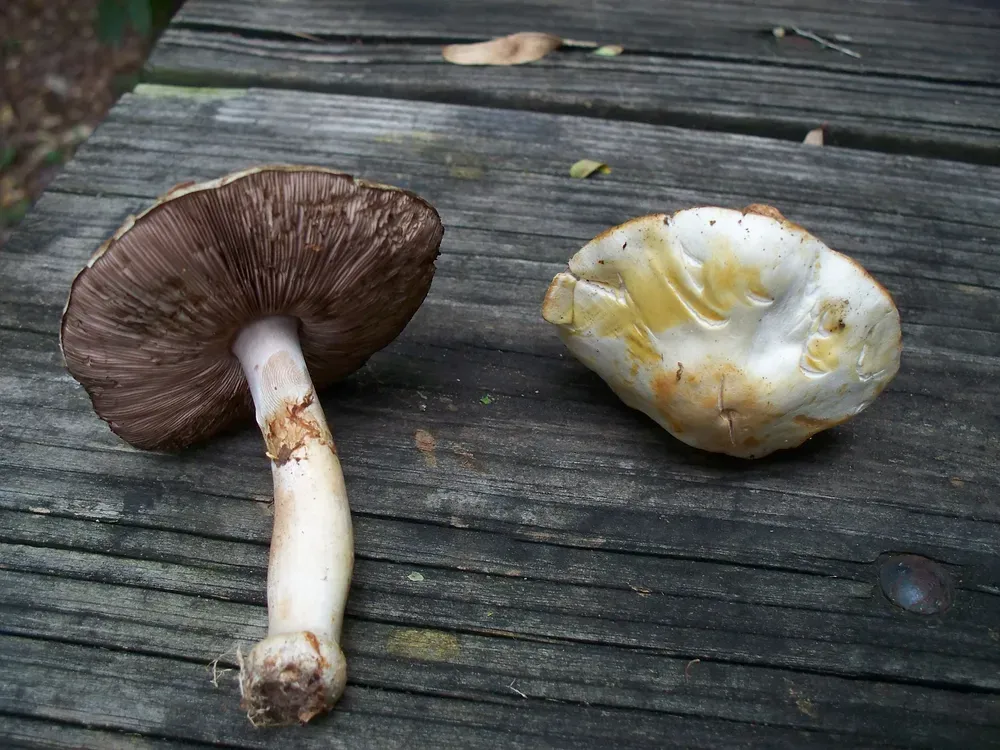
Agaricus abruptibulbus
Agaricus haemorrhoidarius
Agaricus haemorroidarius
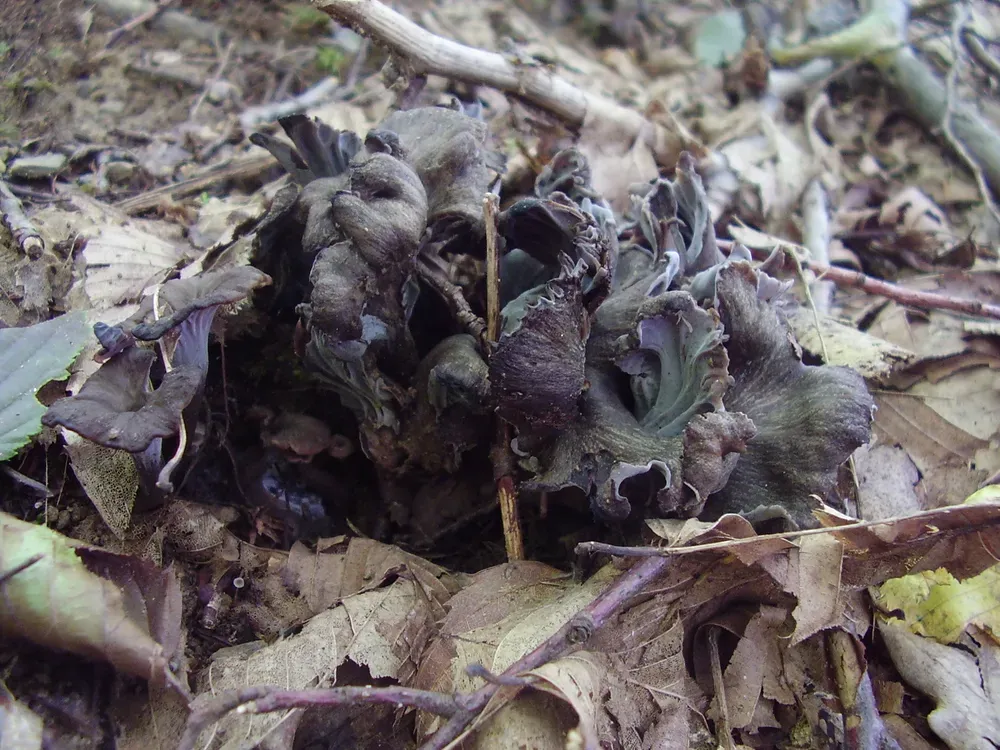
Ashen chanterelle
Cantharellus cinereus
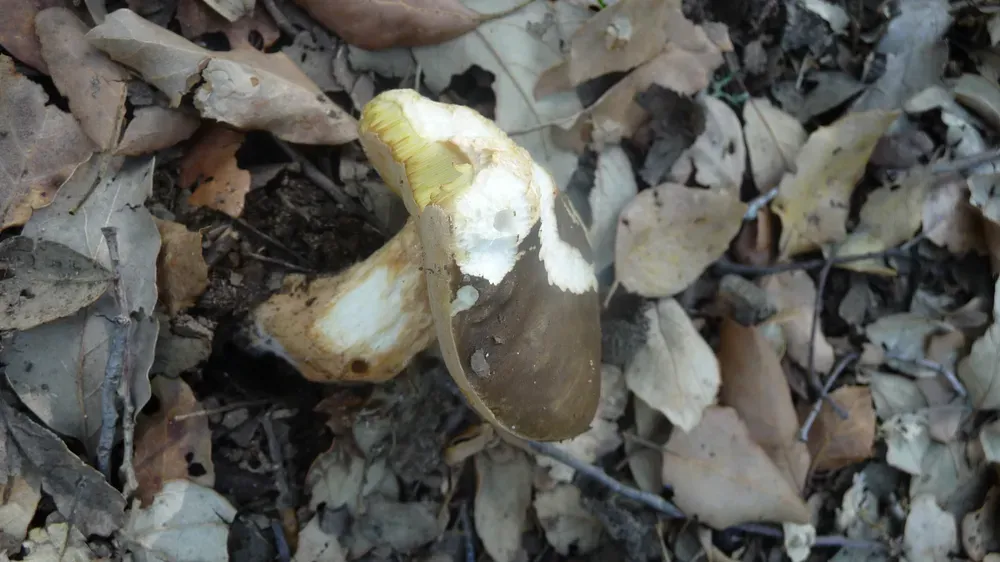
Blushing bolete
Leccinum roseofractum
Frequently asked questions
Is it poisonous?
Not poisonous, but inedible because of its tough, leathery flesh.
How do you tell it apart from C. perennis?
By habitat and color. C. cinnamomea: darker cinnamon-chestnut, in broadleaf forests (oak, beech, hornbeam). C. perennis: with distinct orange-ochre bands, in pine forests. They are often confused, so the key check is the forest type.
Where can you find it, so you'll recognize it?
On soil in broadleaf forests (oak, beech, hornbeam), in bare patches, along forest edges. It often forms "fairy rings" of 10-20 fruiting bodies.
Which regions of Ukraine is it found in?
Common throughout the forest zone: the Carpathians, Prykarpattia, Polissia, the forest-steppe.
When can you come across it?
July to October; the fruiting bodies last a long time and can be seen even in winter.
What mushrooms is it confused with?
With C. perennis — in pine forests, lighter in color. With Onnia tomentosa — larger, on conifer roots.
Is Shiny cinnamon polypore edible or poisonous?
Does Shiny cinnamon polypore have gills or pores?
What does the cap of Shiny cinnamon polypore look like?
What does the stem of Shiny cinnamon polypore look like?
What do Shiny cinnamon polypore smell and taste like?
Where does Shiny cinnamon polypore grow?
Sources
- [1]Вікіпедія (українська)
- [2]Атлас грибів України, Зеров Д.К. (1979)
- [3]MycoBank Database
- [4]Index Fungorum
- [5]GBIF
- [6]iNaturalist Ukraine