Scaly sawgillNeolentinus lepideus
Expert-verifiedUpdated June 13, 2026
Passport
- Edibility
- Conditionally edible
- Season
- May — Nov
- Hymenophore
- Gilled
- Cap color
- White
- Size
- Medium (5–15 cm)
- Smell
- Anise
- Reviewed
- Yes ✓
Quick answers
Where to look?
Conifer forest, Mixed forest
When does it appear?
May — Nov
Active months: May, June, July, August, September, October, November.
How to recognize it? Three signs
- Cap color: White, Cream, Brown
- Cap shape: Convex
- Smell: Anise
Fruiting season
May – November
Description
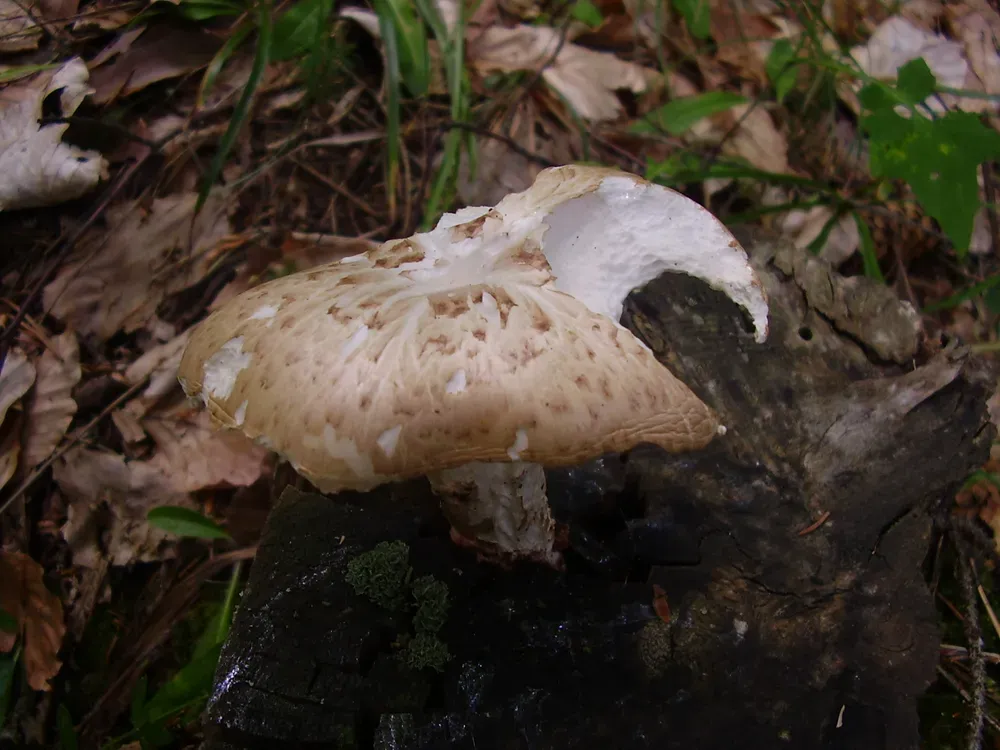
The scaly sawgill (Neolentinus lepideus) is a mushroom with a strikingly unnatural choice of home. It grows both in the wild, on stumps and logs of pine, spruce and larch, and on man-made wooden structures — old railroad ties, wooden utility poles, telegraph poles, and timber buildings in damp cellars. It is one of the toughest decayers of treated wood, which is why the literature often calls it the “boxcar” or “railroad-tie” mushroom.
In Ukraine it is found mostly in pine forests and on old wooden structures. It lives as a saprotroph and is a weak parasite on conifers. Now and then it turns up in gardens and yards on old posts. The season is long — from May to November; this mushroom is hardier than most gilled species.
Edibility — conditional, young soft specimens only. Old ones become very tough and leathery. The flesh has a faint anise scent, which adds some culinary interest, but overall the mushroom is not considered a delicacy. The most important warning: mushrooms picked from ties or poles treated with creosote or other preservatives must NOT be eaten UNDER ANY CIRCUMSTANCES — the wood is soaked with toxic compounds that the mushroom absorbs. Only take what grows naturally on clean wood.
Cap
Cap up to 13 cm, hemispherical in young mushrooms, then flattening to plano-convex. Whitish or pale brownish, with distinctive dark scales arranged in concentric rings, concentrated mostly toward the center. The margin stays inrolled for a long time.
Hymenophore
Gills attached to the stem and often running down it. White when young, turning yellowish and darker with age, reddish brown in old specimens. Gill edges are toothed and uneven (a typical feature of the genus).
Stem
Stem up to 12 cm tall, 1–2 cm thick, cylindrical. White, with distinctive dark scales below the ring. Creamy white and smooth at the top. The ring is membranous and white, and often disappears in mature specimens.
Flesh
Flesh white, springy when young, becoming very tough and leathery with age, right up to the fibrousness of old wood. Does not change color when cut. In old specimens the texture is hopeless for cooking.
Smell
Smell faintly of anise, stronger in young mushrooms, almost gone in old ones. Taste mild when young; bland in old ones, sometimes a little “woody”.
Lookalikes
Related species
Mushrooms of the same genus and habitat — to study side by side and never mix up.
Bulbous honey fungus
Armillaria gallica
Dark honey fungus
Armillaria ostoyae
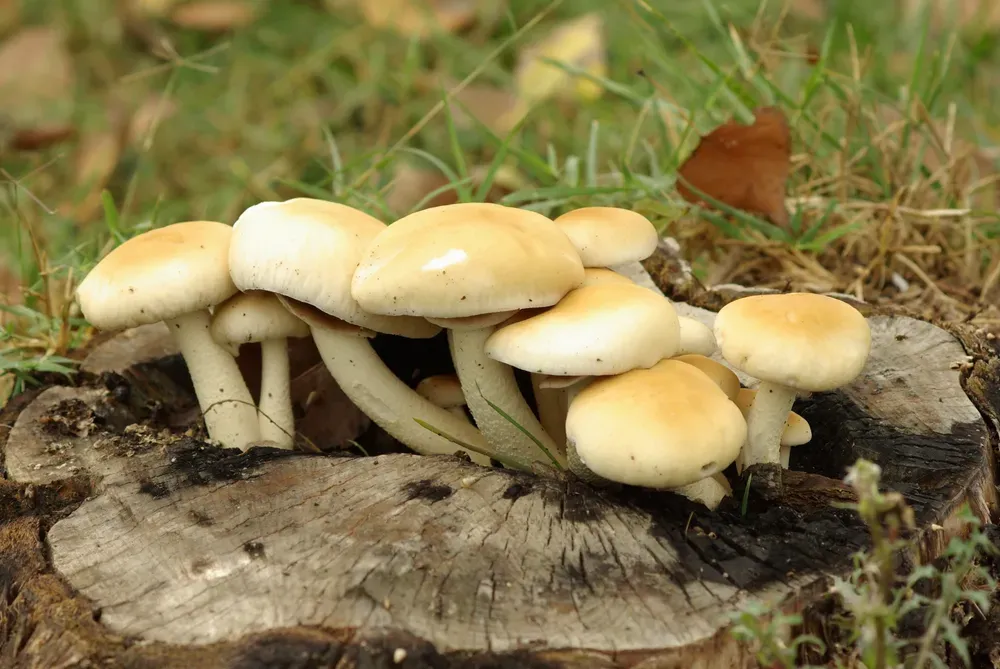
Poplar fieldcap
Cyclocybe aegerita
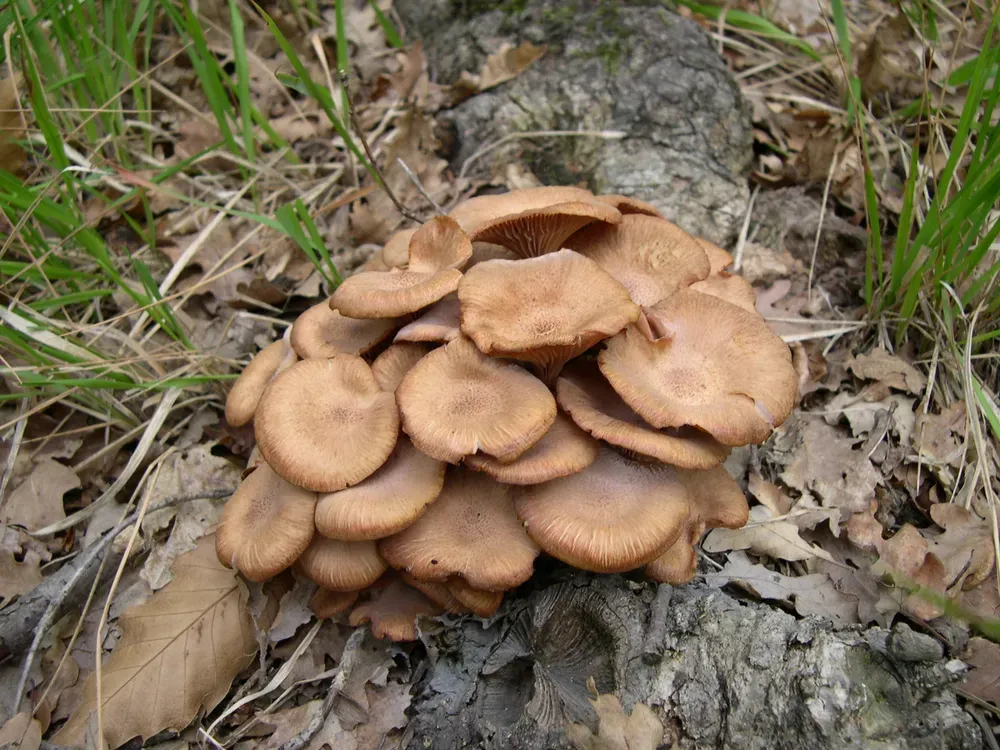
Ringless honey fungus
Desarmillaria tabescens
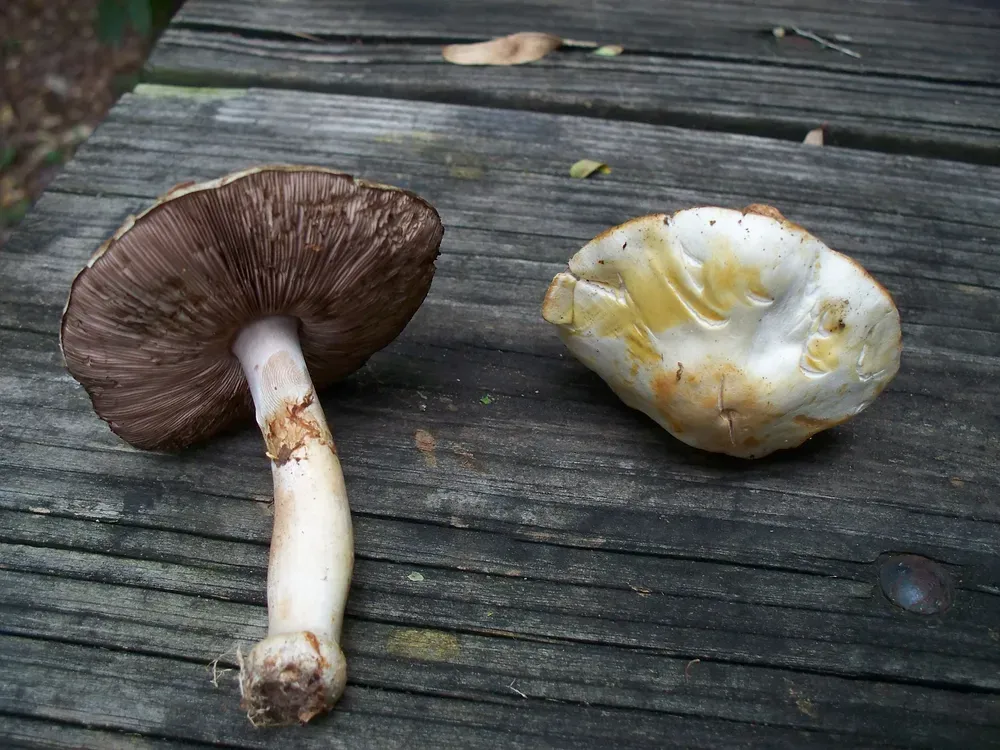
Agaricus abruptibulbus
Agaricus haemorrhoidarius
Agaricus haemorroidarius
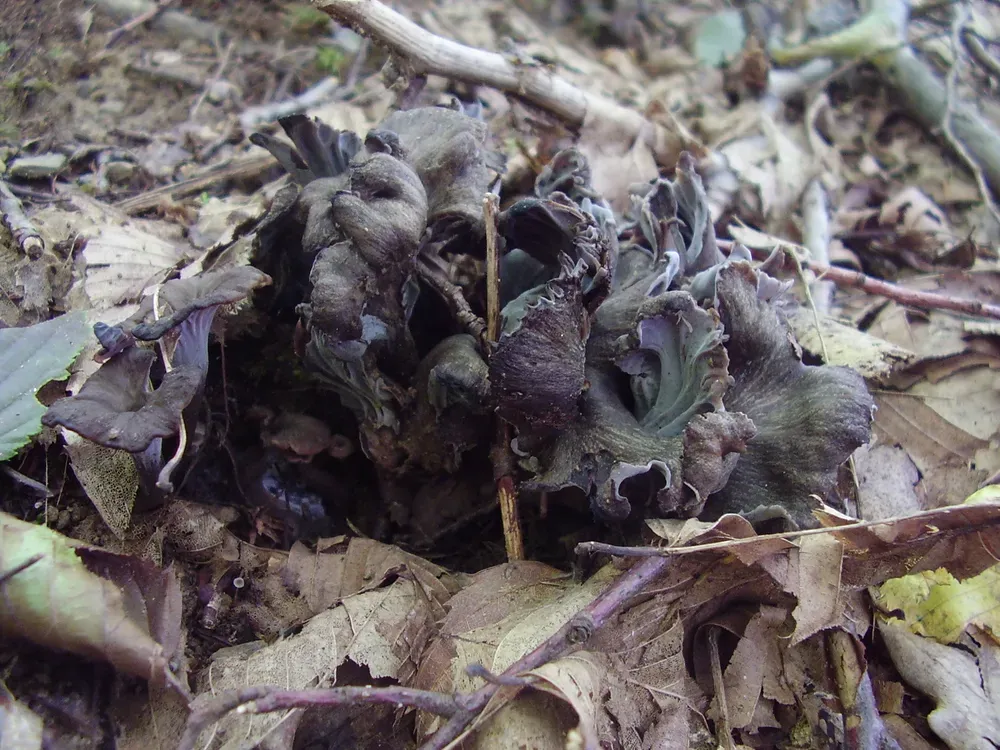
Ashen chanterelle
Cantharellus cinereus
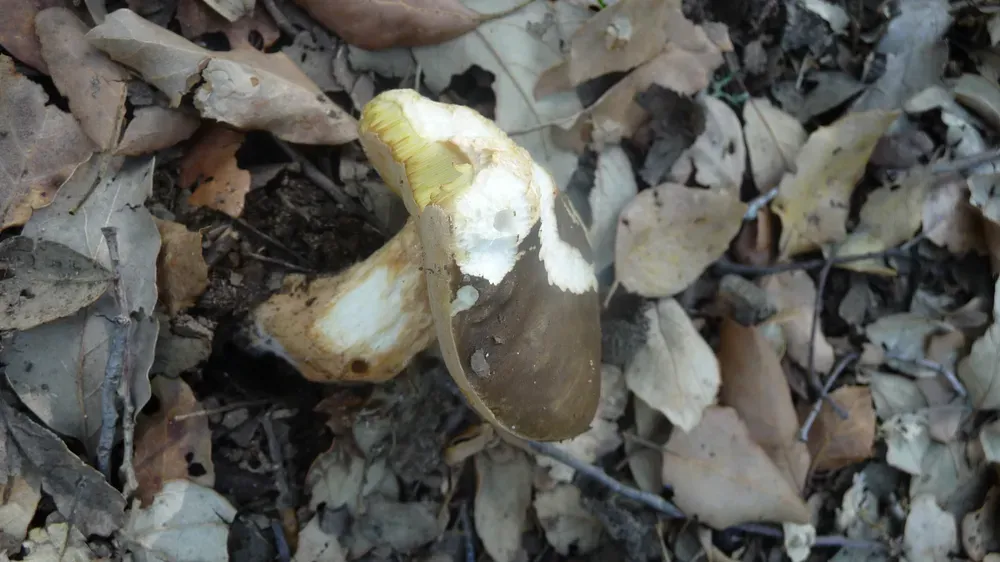
Blushing bolete
Leccinum roseofractum
Frequently asked questions
Is it safe to pick?
Only from natural wood (stumps and logs in the forest). NEVER pick it from preservative-treated ties, poles or wooden structures — creosote, copper, arsenic and other impregnating substances are toxic and accumulate in the fruiting body.
How can you tell whether a spot is safe for picking?
If the mushroom grows on a forest stump or log, it's safe. If it's on an industrial wooden structure (a tie, a pole, construction lumber), leave it. Creosote has a distinctive tarry smell, and copper stains wood greenish blue. When in doubt, skip it.
Where to look in Ukraine?
In pine forests, on stumps and logs of pine, less often spruce and larch. Throughout the forest zone, most often in Polissia and the Carpathians. Also on old natural wooden structures (barns, fences) — as long as the wood is untreated.
When does it fruit?
From May to November — one of the longest seasons among gilled mushrooms. It copes with both warm summer weather and cool autumns. It loves the moisture after rain.
How is it different from ordinary Lentinus sawgills?
The sawgill used to be placed in the genus Lentinus. Between the modern genera the difference is subtle — Neolentinus is set apart by molecular traits and some anatomical features. For a practical forager, both genera are tough, gilled wood-dwelling mushrooms that are edible when young.
Why does it grow on railroad ties?
This mushroom is one of the few that can withstand antibiotic and antiseptic creosote impregnation. Its hyphae produce enzymes that break down even toxic phenolic compounds. That's why it is the main decayer of wooden railroad ties, telegraph poles and wooden supports. It's a physiological achievement, but a culinary disaster: wood like that accumulates a lot of toxins.
How do you cook a young one?
Young soft specimens only. Peel the tough skin off the stem. Slice into thin strips. Stew for 30–40 min with vegetables and cream — the texture is like tough meat, so it needs a longer time. Better not to fry it (it stays tough either way). It goes nicely with potatoes in the oven.
Is it worth growing it in cultivation?
It isn't grown commercially. Hobby growers sometimes inoculate clean pine logs with the mycelium — the mushroom grows for several years and fruits three or four times a season. If you'd like to experiment, this is a safer option than wild foraging.
Is Scaly sawgill edible or poisonous?
Does Scaly sawgill have gills or pores?
What does the cap of Scaly sawgill look like?
What does the stem of Scaly sawgill look like?
Sources
- [1]Вікіпедія (українська)
- [2]Атлас грибів України, Зеров Д.К. (1979)
- [3]MycoBank Database
- [4]Index Fungorum
- [5]GBIF
- [6]iNaturalist Ukraine