.webp)
Shaggy ink capCoprinus comatus
Expert-verifiedUpdated October 3, 2026
Passport
- Edibility
- Edible
- Season
- May — Nov
- Hymenophore
- Gilled
- Cap color
- White
- Size
- Medium (5–15 cm)
- Smell
- Pleasant
- Reviewed
- Yes ✓
Quick answers
Where to look?
Mixed forest, Deciduous forest
When does it appear?
May — Nov
Active months: May, June, July, August, September, October, November.
How to recognize it? Three signs
- Cap color: White, Cream
- Cap shape: Cylindrical
- Smell: Pleasant
Fruiting season
May – November
Description
The shaggy ink cap — also known as “konyk” or the “inky mower’s cap” — is one of the most recognizable mushrooms of European meadows and roadsides. It has a very distinctive elongated, egg-shaped cap covered in upturned scales, on a long thin stem with a ring — early in its life it looks like a furled umbrella. As it ages, the fruit body begins to “open up,” the gills turn pink, then black, and the whole mushroom autodigests — dissolving into a black liquid full of spores. This is the hallmark of all ink caps (the genus Coprinus, now split into several genera).
This is a good edible and even a gourmet mushroom — but only at a very young age, while the cap is still white and the gills haven't turned pink. At this stage the flesh is tender, with a delicate flavor — great for frying, stewing, adding to sauces and omelets. Pick it in the morning and cook it that SAME DAY — the mushroom starts to blacken and fall apart in the basket within 4-6 hours of being cut, regardless of chilling. It can only be frozen after frying first.
In Ukraine it is found throughout the country — truly a nationwide saprotroph of fertile soils. It grows in meadows, pastures, parks, orchards, vegetable gardens, on roadsides and among mixed grasses. The season is very long: May–November, in several flushes after heavy rain. It often fruits in groups of 5-20 fruit bodies.
Cap
The cap is at first elongated and egg-shaped, 5-15 cm tall and 3-5 cm wide. With age it opens into a bell shape, then spreads out. Color white, with a cream or yellowish center, covered in distinctive upturned scales — soft and fluffy. In old fruit bodies the gill edges turn pink, then black. In the end the mushroom dissolves into a black liquid (autodigestion).
Hymenophore
Gilled hymenophore. Gills very crowded, thin, free (not touching the stem). The color changes with age: young ones are white, then turning pink, then black as the spores mature. Spore print black.
Stem
Stem 8-20 cm tall, 0.5-2 cm thick, cylindrical, slender, white, hollow inside. It has a movable ring in the middle or lower part — a characteristic feature. Surface smooth or finely downy.
Flesh
The flesh is white, soft and tender in young specimens. In old ones it quickly blackens and dissolves (autodigestion). When a young one is cut, the color doesn't change.
Smell
Faint, pleasant mushroomy smell. The taste is tender and delicate — young specimens are reminiscent of a soft omelet.
Lookalikes
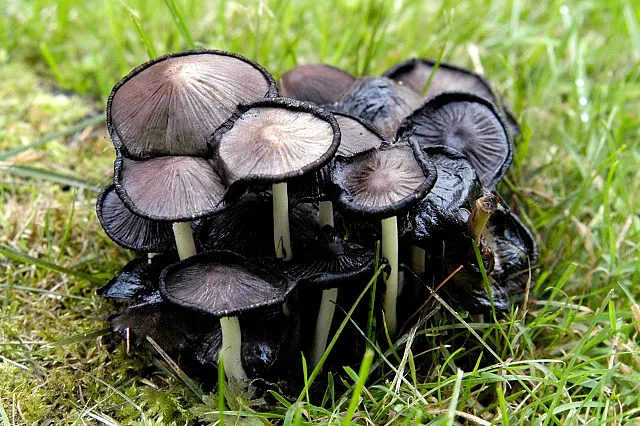
_Redhead,_Vilgalys_&_Moncalvo_593470.webp)
Related species
Mushrooms of the same genus and habitat — to study side by side and never mix up.
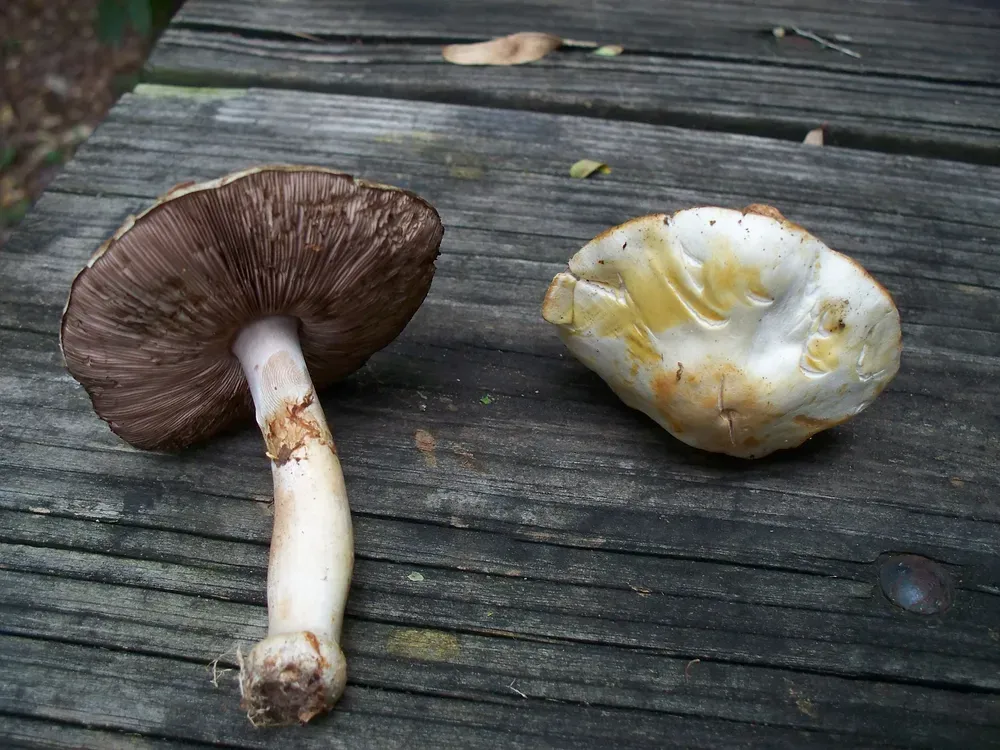
.webp)
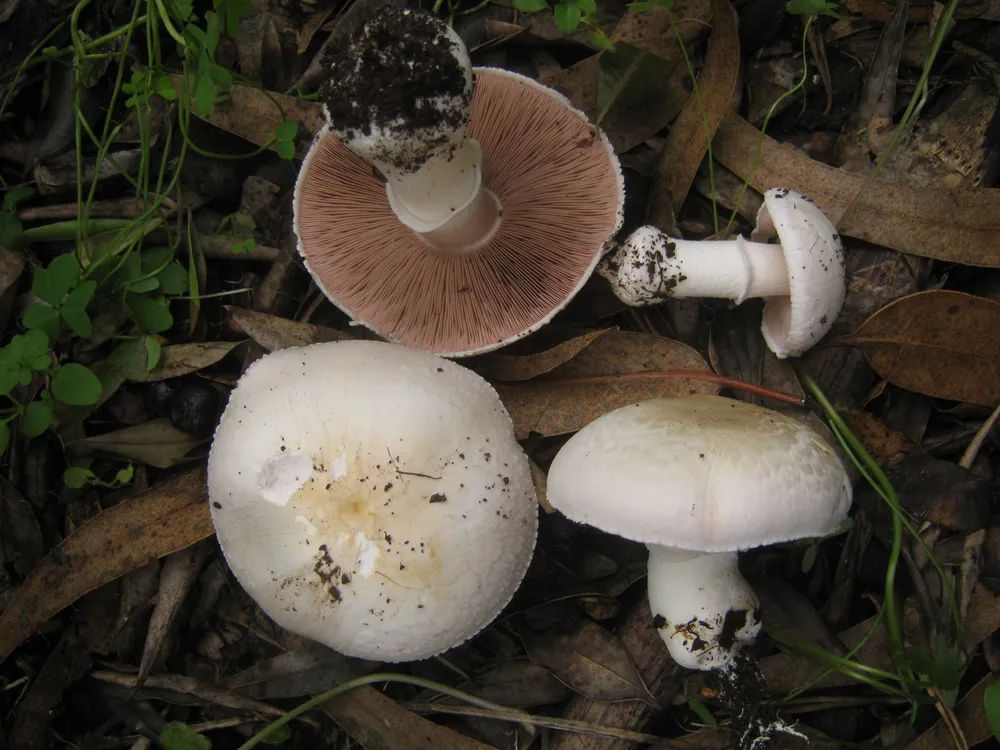
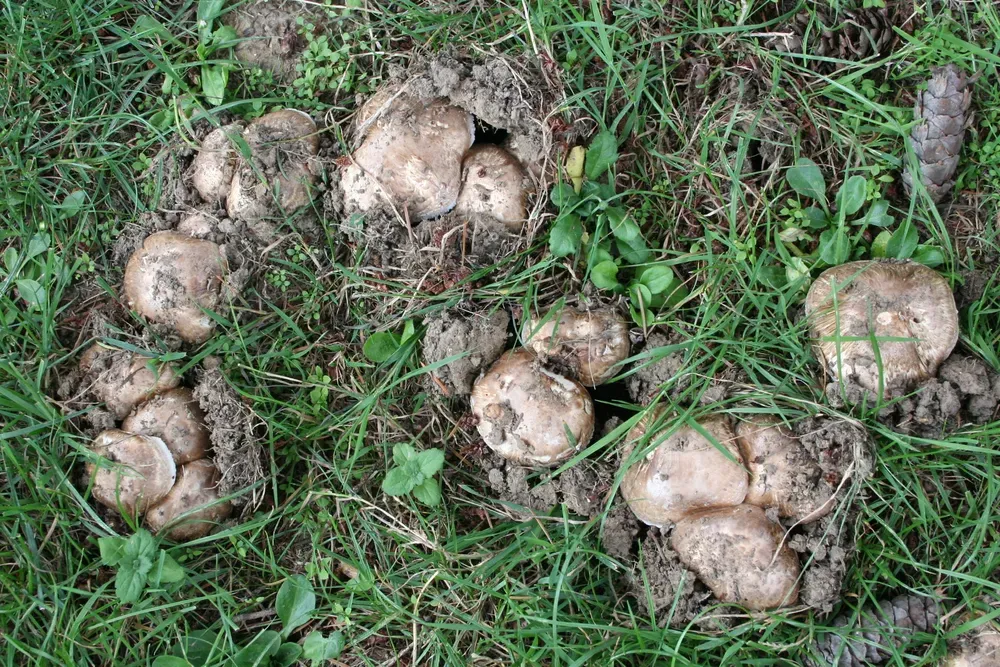
_Fr._4948278370-2.webp)
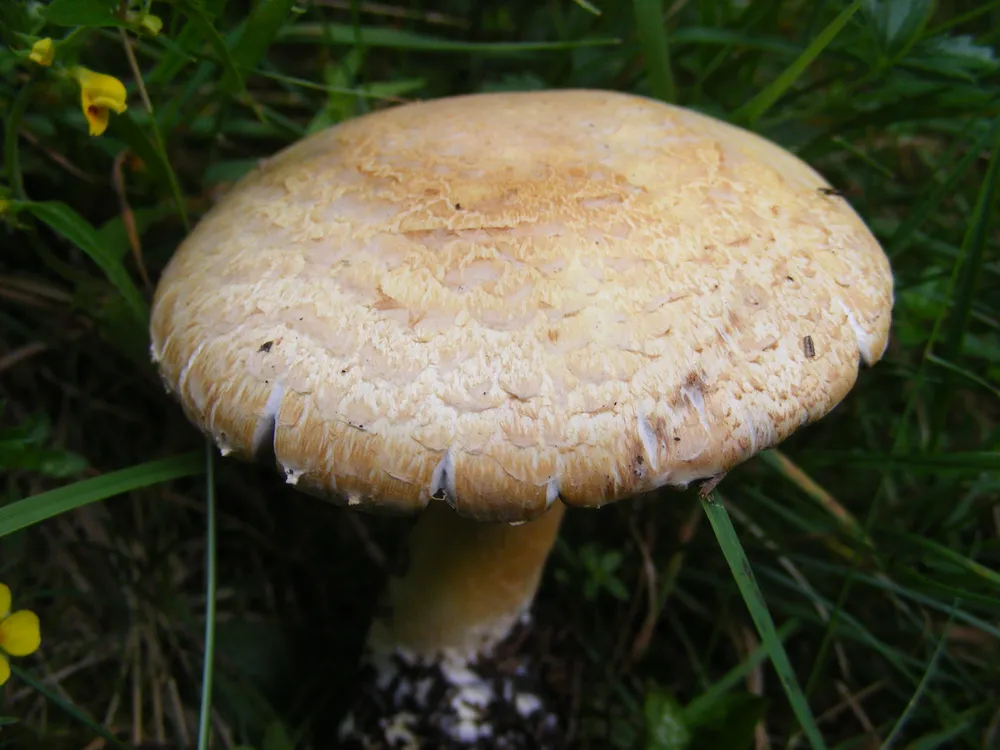
Frequently asked questions
Is it safe to eat?
Yes, it's a good edible mushroom — but only while young, as long as the cap is white and the gills are still white (NOT pink and NOT black). A young shaggy ink cap is a delicacy. Old fruit bodies with pinkish or black gills must not be eaten: they begin to decompose and can cause stomach upsets.
Can you have it with alcohol?
Yes, the white (Coprinus comatus) is compatible with alcohol — that's its key difference from the common ink cap (Coprinopsis atramentaria). The shaggy ink cap contains no coprine. But you shouldn't mix them up — check with an identification guide. If in doubt, don't drink alcohol for 3 days afterward.
Where to look for it?
In meadows, pastures, parks, orchards, vegetable gardens, on roadsides and among mixed grasses. It's a saprotroph of fertile soils and loves fertilized and composted ground. You'll hardly ever find it in the forest — it's a mushroom of human-shaped landscapes. It often grows in groups and even in “fairy rings.”
Which regions of Ukraine does it grow in?
Throughout Ukraine — truly a nationwide species. It is found in every region, in Crimea, in the Carpathians, in the steppe. Especially common near human settlements: parks, vegetable gardens, roadsides. One of the most widespread mushrooms of human-shaped landscapes.
When to look for it?
May–November, in several flushes after heavy rain. The first flush in May–June, the second in August–September, the third and most abundant in September–October. It tolerates the first light frosts. In a warm autumn — until November.
Why do you need to cook it right away?
The shaggy ink cap has a very short “shelf life” after cutting. A process of autodigestion kicks in — the tissues digest themselves, enzymes break down the cells, and the mushroom blackens and dissolves into a spore-laden liquid. This is physiology, not spoilage. Picked in the morning — cook it before lunch. It keeps in the fridge for only 1 day; it's better to fry it right away and then store the cooked product.
What is it confused with?
With the common ink cap (Coprinopsis atramentaria). The critical difference: the shaggy ink cap has a cap that is white and egg-shaped, with fluffy scales; the common ink cap's is gray-brown and bell-shaped, without scales. The common ink cap is incompatible with alcohol — it causes severe reactions. If you can't tell them apart, don't drink alcohol for 3 days.
How to tell it apart from an amanita?
Amanitas have an open cap with spots, a fixed ring and often a volva. The shaggy ink cap has a closed egg-shaped cap with fluffy scales, a movable ring on the stem and no volva. Plus, the shaggy ink cap grows in meadows and on roadsides, while amanitas grow in the forest. Their habitat preferences are very different.
Is Shaggy ink cap edible or poisonous?
Does Shaggy ink cap have gills or pores?
What does the cap of Shaggy ink cap look like?
What does the stem of Shaggy ink cap look like?
Sources
- [1]Вікіпедія (українська)
- [2]Атлас грибів України, Зеров Д.К. (1979)
- [3]MycoBank Database
- [4]Index Fungorum
- [5]GBIF
- [6]iNaturalist Ukraine