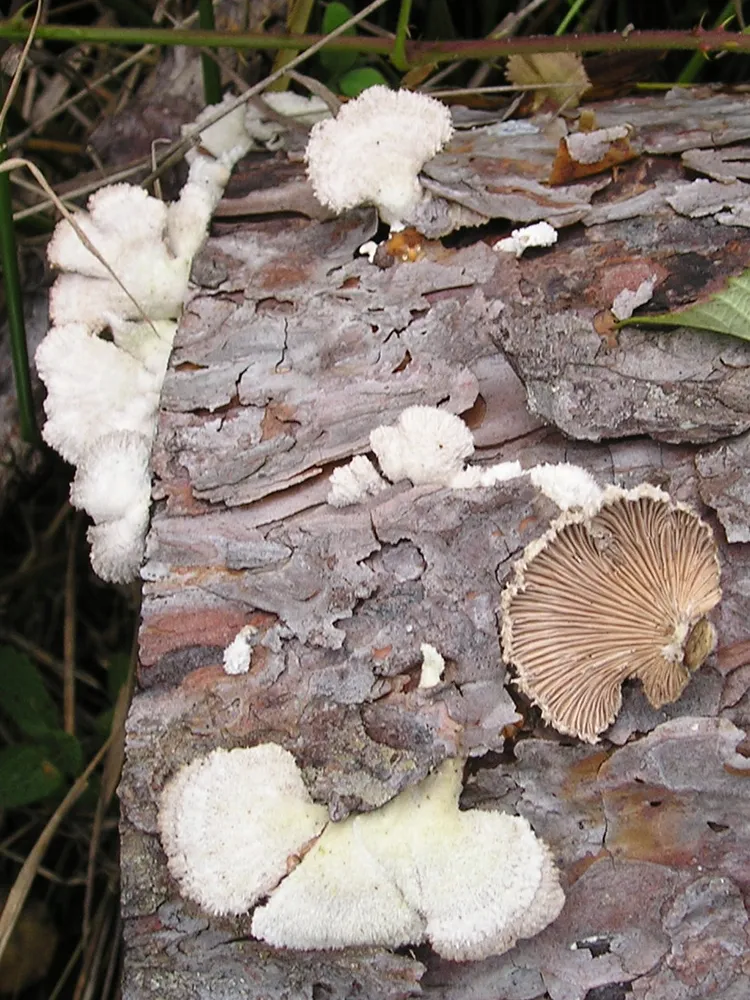
SplitgillSchizophyllum commune
Expert-verifiedUpdated October 3, 2026
Passport
- Edibility
- Inedible
- Season
- Jan — Dec
- Hymenophore
- Gilled
- Cap color
- White
- Size
- Very small (<3 cm)
- Smell
- Odorless
- Reviewed
- Yes ✓
Quick answers
Where to look?
Deciduous forest, Mixed forest
When does it appear?
Jan — Dec
Active months: January, February, March, April, May, June, July, August, September, October, November, December.
How to recognize it? Three signs
- Cap color: White, Grey
- Cap shape: Irregular
- Smell: Odorless
Fruiting season
January – December
Description
Splitgill (Schizophyllum commune) — the most widespread mushroom in the world, found on every continent except Antarctica. The Latin epithet commune means "common", and the genus name Schizophyllum comes from the Greek schizein, "to split": the gills are split lengthwise along their edges — a unique anatomical trait of the genus that you can't mistake for anything else. The cap is small (1-4 cm), fan-shaped or spherical, grayish white, covered in dense fine hairs, attached to the substrate by its side or back (no stem in the usual sense).
It grows on dead hardwood — beech, oak, hornbeam, birch, poplar — often on stumps, firewood and fallen branches; it can develop even on dry material thanks to its unique ability to survive years of drought (the fruiting bodies dry out, but after wetting they revive and release spores again — for decades on end).
In Ukraine it's considered inedible because of its very tough, leathery, cardboard-like flesh. In tropical cuisines (Mexico, India, Africa, Southeast Asia) young fruiting bodies are traditionally eaten — in soups and stews. In Europe it is mostly ignored for lack of flesh.
Medical caution. Schizophyllum commune — a known cause of opportunistic mycoses in people with weakened immunity: allergic bronchopulmonary mycosis, sinusitis, bronchopneumonic infections. In HIV-positive people, after transplants, and during long-term corticosteroid therapy, cases of invasive infection have been described. For a healthy person, the spores at normal concentrations are harmless, but people with asthma or chronic rhinosinusitis should carefully avoid masses of fruiting bodies on firewood.
In Ukraine the splitgill is common everywhere: the Carpathians, Prykarpattia, Polissia, the forest-steppe and the steppe. It's found year-round — the fruiting bodies often stay on the branches for several years.
Cap
The fruiting body is small, 1-4 cm across, fan-shaped or shell-shaped, almost spherical when young. Attached to the substrate by its side or back — there is no stem. The upper surface is gray to grayish white, densely covered in short hairs — it looks like felt or fur. The margin is wavy, often cut into lobes. When dry, the fruiting body curls inward, with the margin rolling over the gills (a way of protecting itself from moisture loss).
Hymenophore
Unique "pseudo-gills": the gills are split lengthwise along the edge — under a microscope you can see they aren't true gills but folds of the hymenophore with a characteristic division. The gills are grayish white to grayish violet. Spore print white. The split gill edges are the key diagnostic feature of the genus.
Stem
No stem. The fruiting body is attached to the substrate by its side or back edge (sessile attachment).
Flesh
Flesh very thin, leathery, tough, cardboard-like, grayish white. Doesn't change color when cut. Not used for food in the European tradition — too tough; even after long boiling it stays rubbery. Smell faint, nothing distinctive.
Smell
Faint and neutral, nothing distinctive.
›Scientific synonyms (11)
Agaricus alneus L., Agaricus alneus Reichard, Agaricus multifidus Batsch, Apus alneus (L.) Gray, Merulius alneus (L.) J.F. Gmel., Merulius alneus (Reichard) Schumach., Merulius communis (Fr.) Spirin & Zmitr., Schizophyllum alneum J. Schröt., Schizophyllum alneum (Reichard) Kuntze, Schizophyllum commune var. multifidum (Batsch) Cooke, Schizophyllum multifidum (Batsch) Fr.
Lookalikes
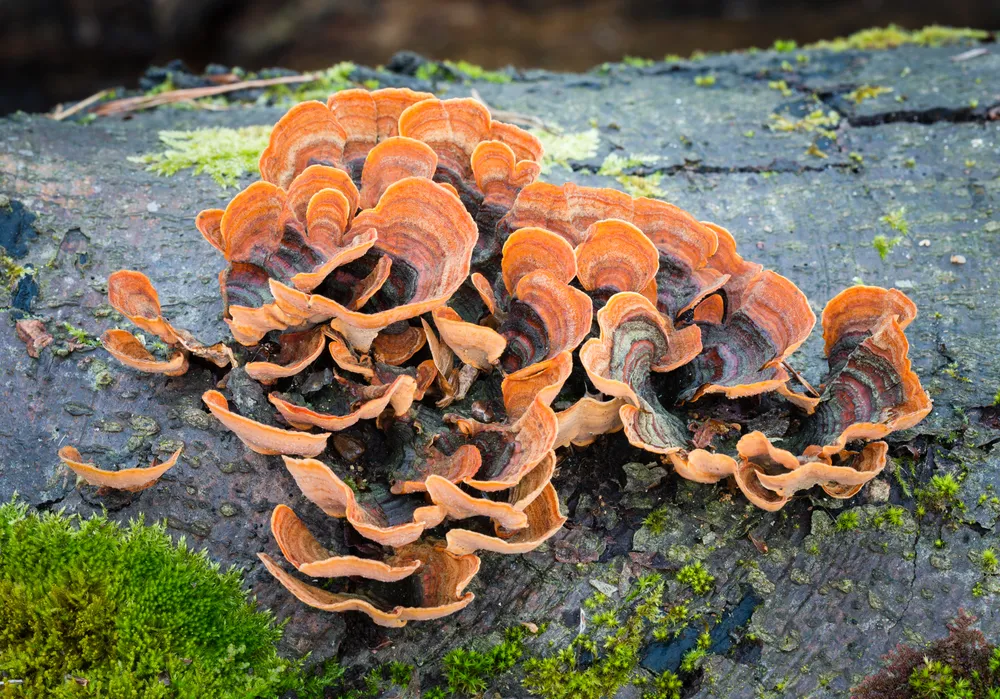
Related species
Mushrooms of the same genus and habitat — to study side by side and never mix up.
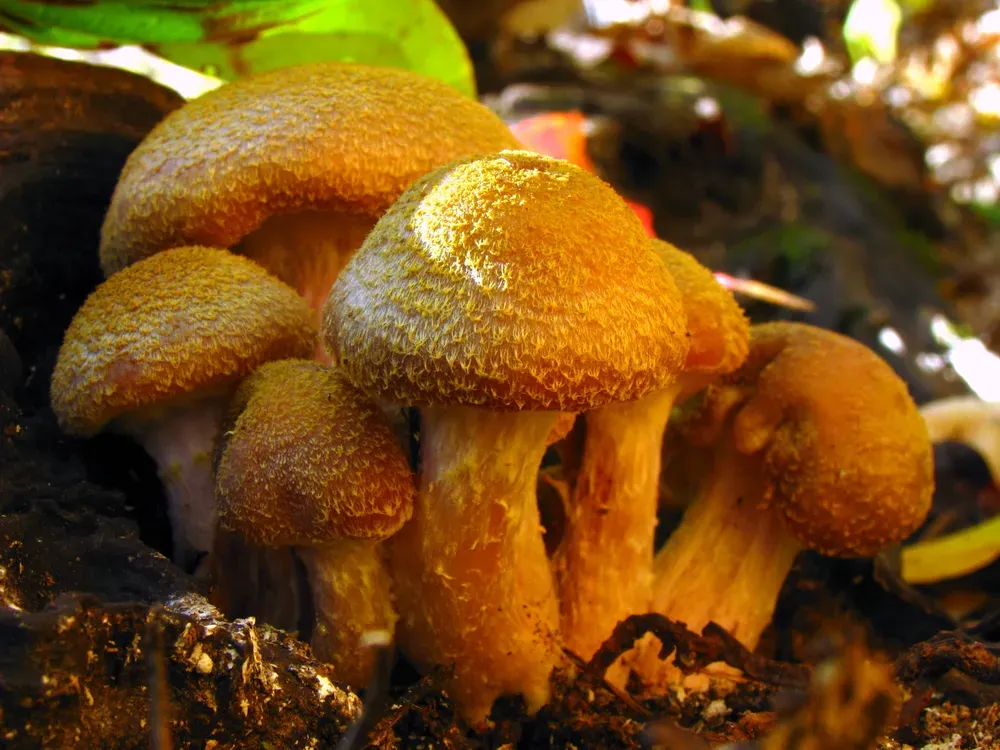
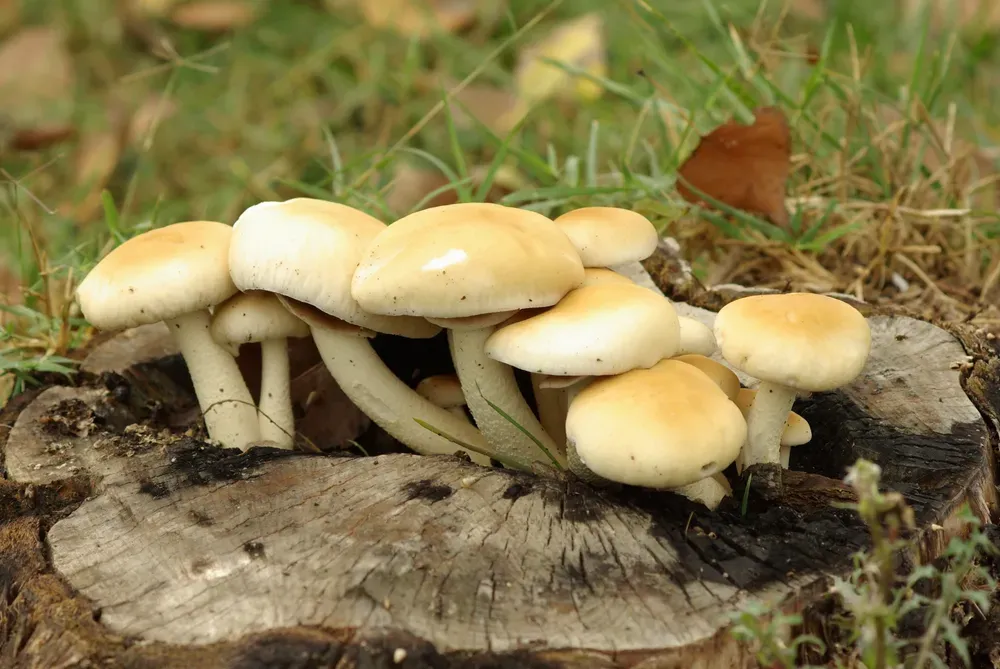
Bulbous honey fungus
Armillaria gallica
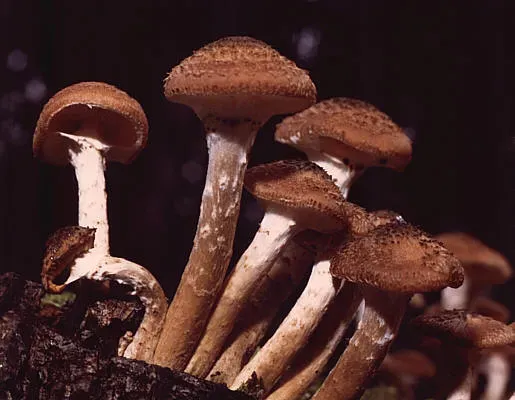
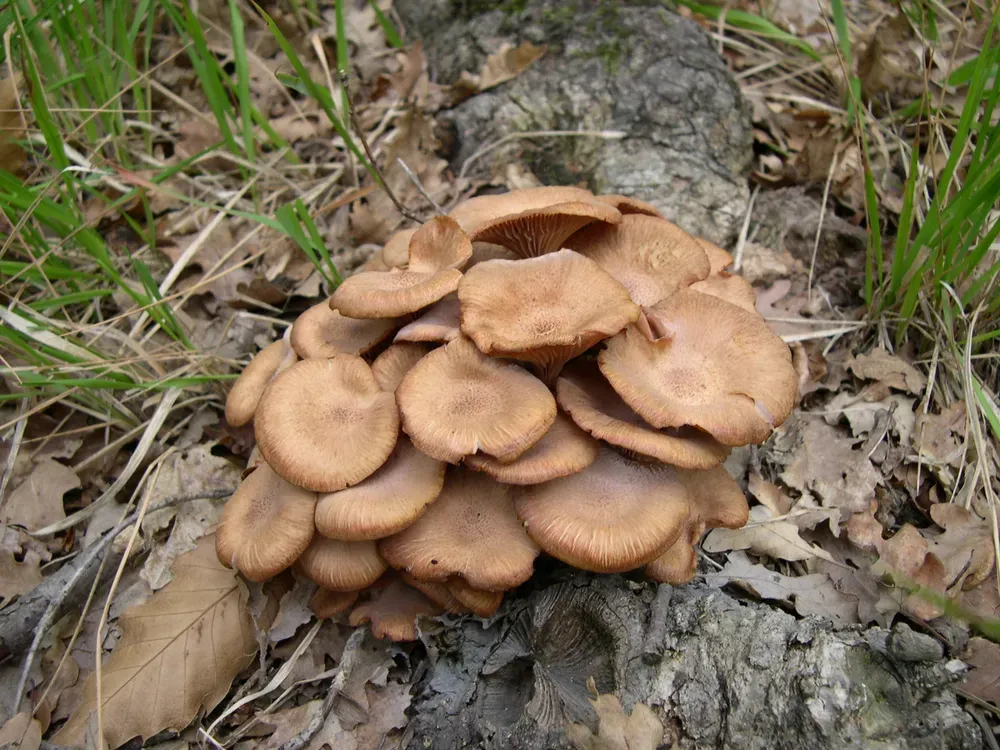
Dark honey fungus
Armillaria ostoyae
Poplar fieldcap
Cyclocybe aegerita
Ringless honey fungus
Desarmillaria tabescens
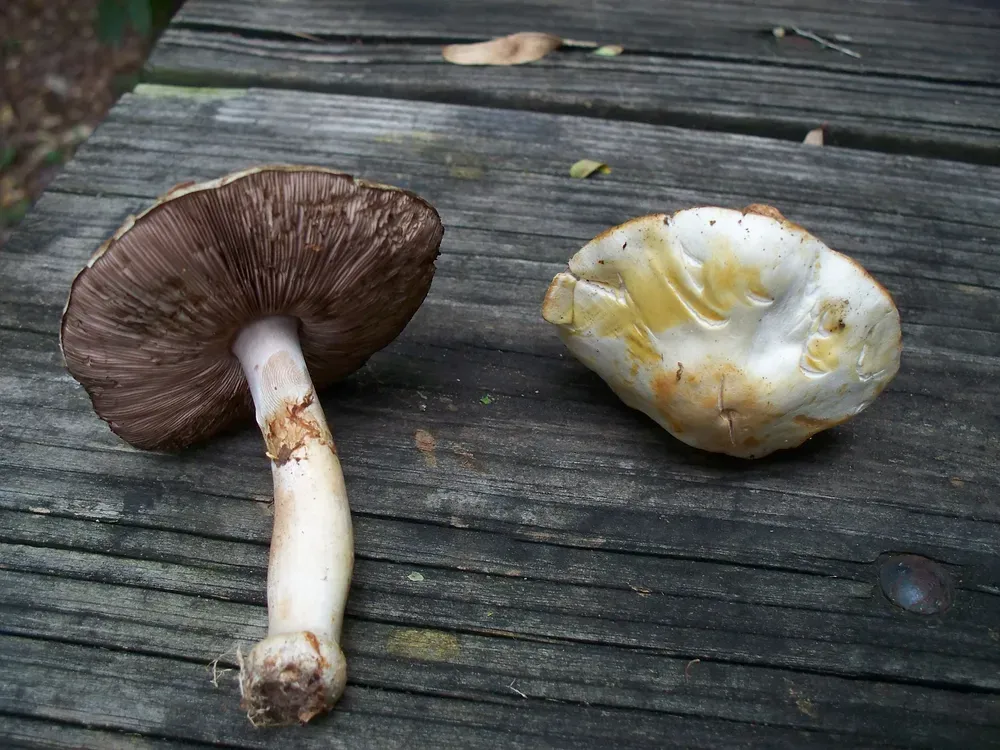
Agaricus abruptibulbus
Agaricus haemorrhoidarius
Agaricus haemorroidarius
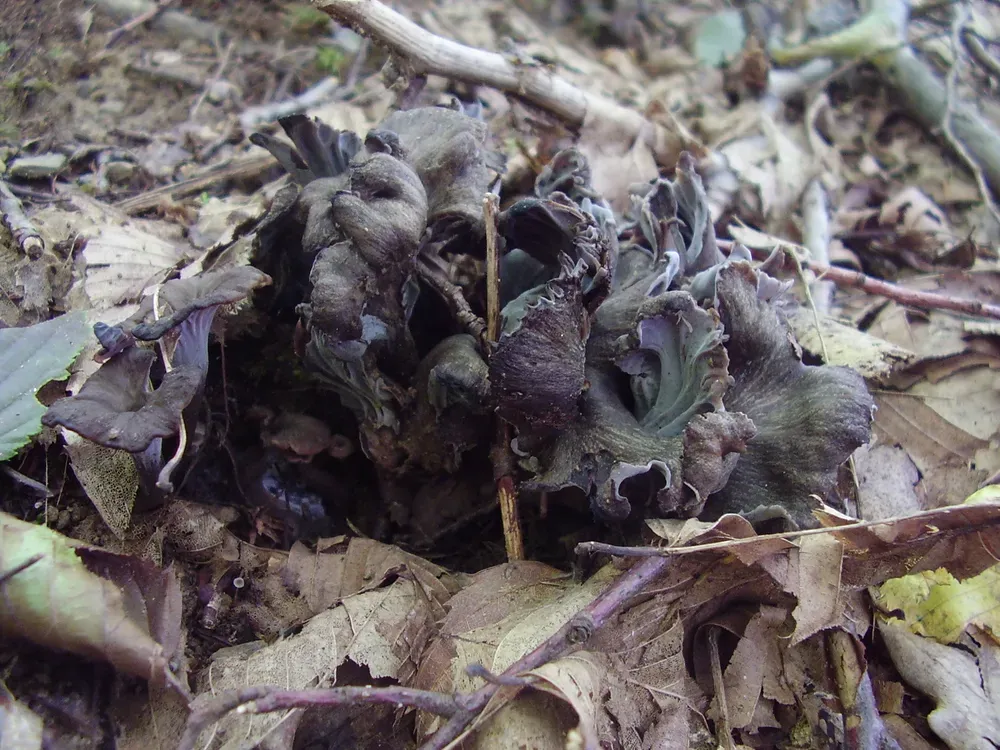
Ashen chanterelle
Cantharellus cinereus
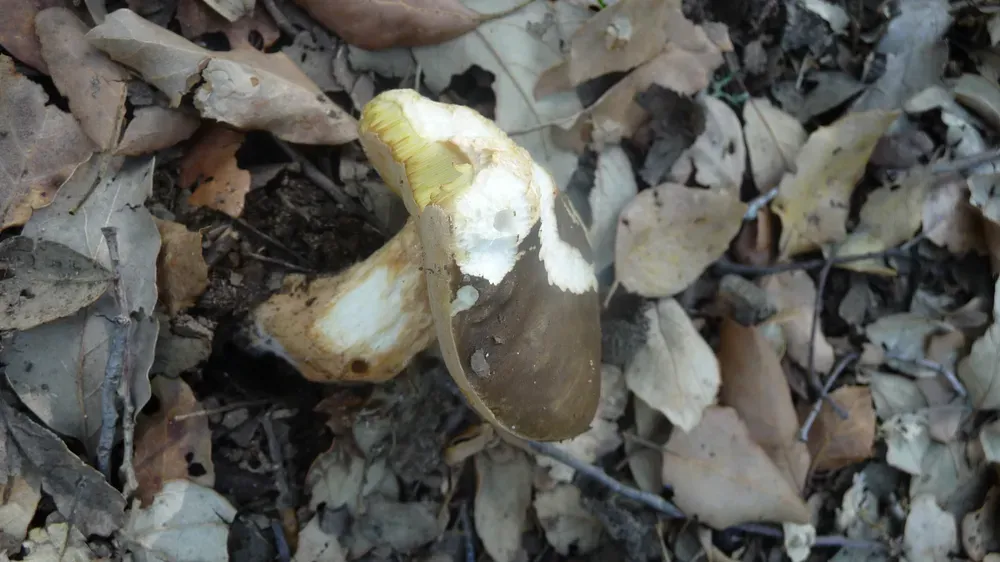
Blushing bolete
Leccinum roseofractum
Frequently asked questions
Can you eat it?
In Ukraine, in practice — no, it's too tough and cardboard-like. In tropical cuisine (Mexico, Africa, Southeast Asia) young fruiting bodies are eaten — in soups and stews. If you find it in the forest, it's of no culinary interest — not worth your time.
Is it true that it can cause an infection?
Only in people with seriously weakened immunity: HIV, after transplants, during long-term corticosteroid use, in patients on heavy chemotherapy. For a healthy person, the spores at normal concentrations are harmless. People with asthma or chronic rhinosinusitis should avoid prolonged inhalation of spores from firewood covered in fruiting bodies — allergic bronchopulmonary mycosis has been described. Not touching it with your hands and breathing near a woodpile is fine.
How do you identify it for sure?
Four features. (1) A small (1-4 cm) fan-shaped fruiting body with NO stem on wood. (2) A gray, hairy upper surface like fur. (3) Gills split along the edge — a microscopic trait of the genus, visible with a hand lens. (4) When dry, the margin curls inward. You can't mistake this combination for anything else.
Where should you look for it?
On dead hardwood (beech, oak, hornbeam, birch, poplar, willow) — fallen trunks, dry branches, stumps, firewood in woodpiles. Often on sunny, well-lit sides of the wood. In towns — on stacked firewood and in backyard heaps. The mushroom is found year-round: dried fruiting bodies stay on the wood for years.
Which regions of Ukraine is it found in?
Common everywhere — the Carpathians, Prykarpattia, Polissia, the forest-steppe, the steppe. One of the most common mushrooms in human-made habitats (woodpiles, shelterbelts, parks).
When should you look for it?
Year-round — on dead wood. Active growth in the wet season (March-November), but dried fruiting bodies are visible in winter too, and they revive after rain.
What mushrooms is it confused with?
With small sessile bracket fungi (Trametes, Stereum) — but their hymenophore has pores or is smooth, not gilled. With young Crepidotus mollis — it's fleshier, not hairy, and its gills are true gills, not split. Split gills under a hand lens mean Schizophyllum, for certain, no alternatives.
Is Splitgill edible or poisonous?
Does Splitgill have gills or pores?
What does the cap of Splitgill look like?
What does the stem of Splitgill look like?
What do Splitgill smell and taste like?
Sources
- [1]Вікіпедія (українська)
- [2]Атлас грибів України, Зеров Д.К. (1979)
- [3]MycoBank Database
- [4]Index Fungorum
- [5]GBIF
- [6]iNaturalist Ukraine