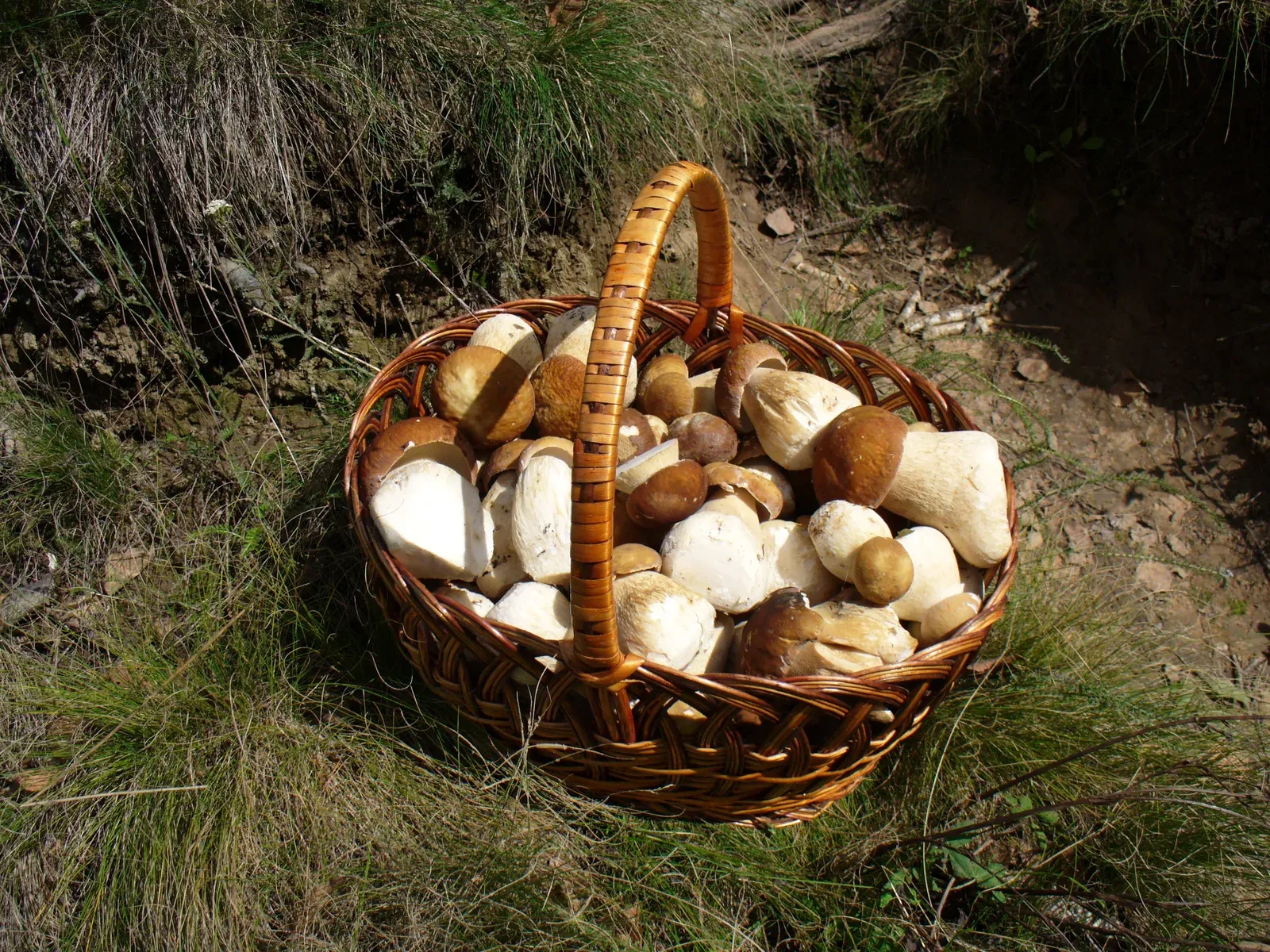
If July is the height of summer, August is already turning the forest toward autumn. Nights grow cooler, mists settle in the mornings, and it's exactly this moisture that wakes up mushrooms that have been biding their time all summer. The variety is the widest of the whole year: some summer species are still hanging on, while the autumn ones are already taking the stage.
Let's look at which mushrooms are in full swing in August, which have just appeared, and why the end of the month marks the start of the «second flush».
Why August starts the second flush
In August, two favorable conditions coincide: the soil still holds plenty of summer warmth, while cool nights and morning mists add moisture. For the mycelium it's ideal — after August rains the forest fruits abundantly, all at once.
That's why the end of summer is called the «second flush»: porcini, which backed off in the July heat, come up in numbers again, joined by species that weren't around in summer. The closer to September, the more autumn mushrooms in the forest.
Rather than guessing at random, check the mushroom radar: it shows when moisture and warmth line up well for mushrooms to appear in your region.
Summer mushrooms still hanging on
The first half of August is really a continuation of July. The forest is still full of what has been growing all season.
- Chanterelles. They hang on until the end of summer and are almost never wormy. Look for them in mixed and deciduous forests, among moss and fallen leaves.
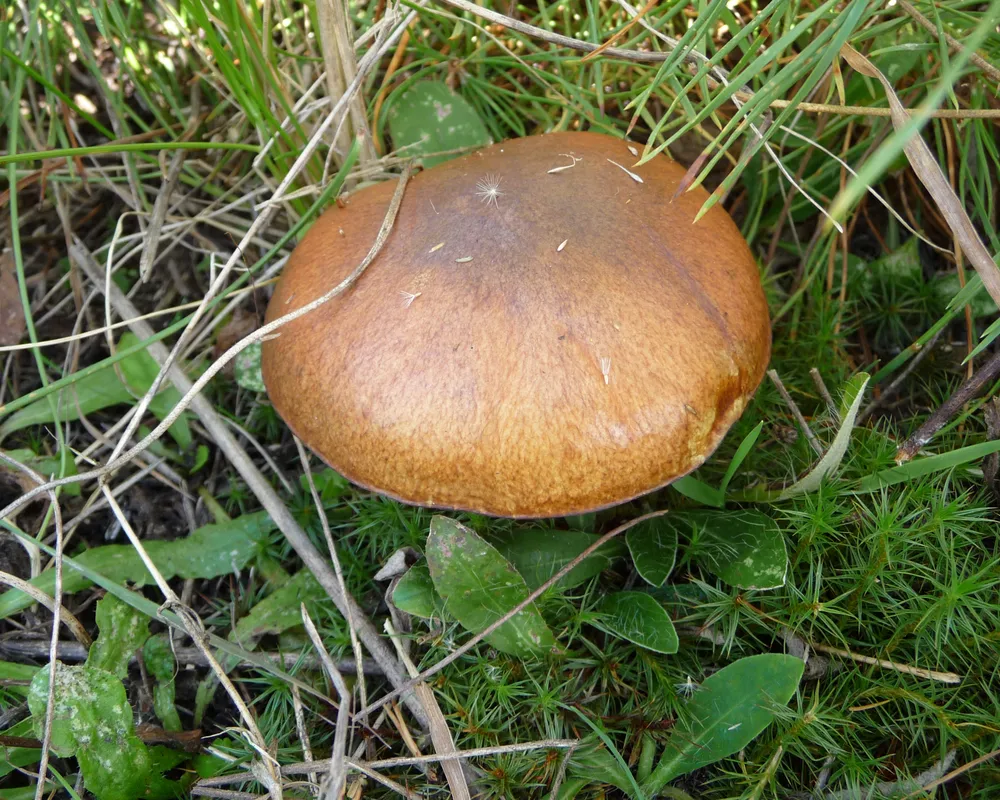
- Slippery jacks. Young pine stands produce flushes after August rains. We cover when the slippery jack season starts and how long it lasts in a separate article.
- Brittlegills and Xerocomus boletes. The most common «background» mushrooms of the forest. If a Xerocomus bolete turns blue when cut — don't worry, that's normal for this species.
The second flush of porcini and boletes
August's main prize is once again pored mushrooms. After the July lull they come back with renewed strength.
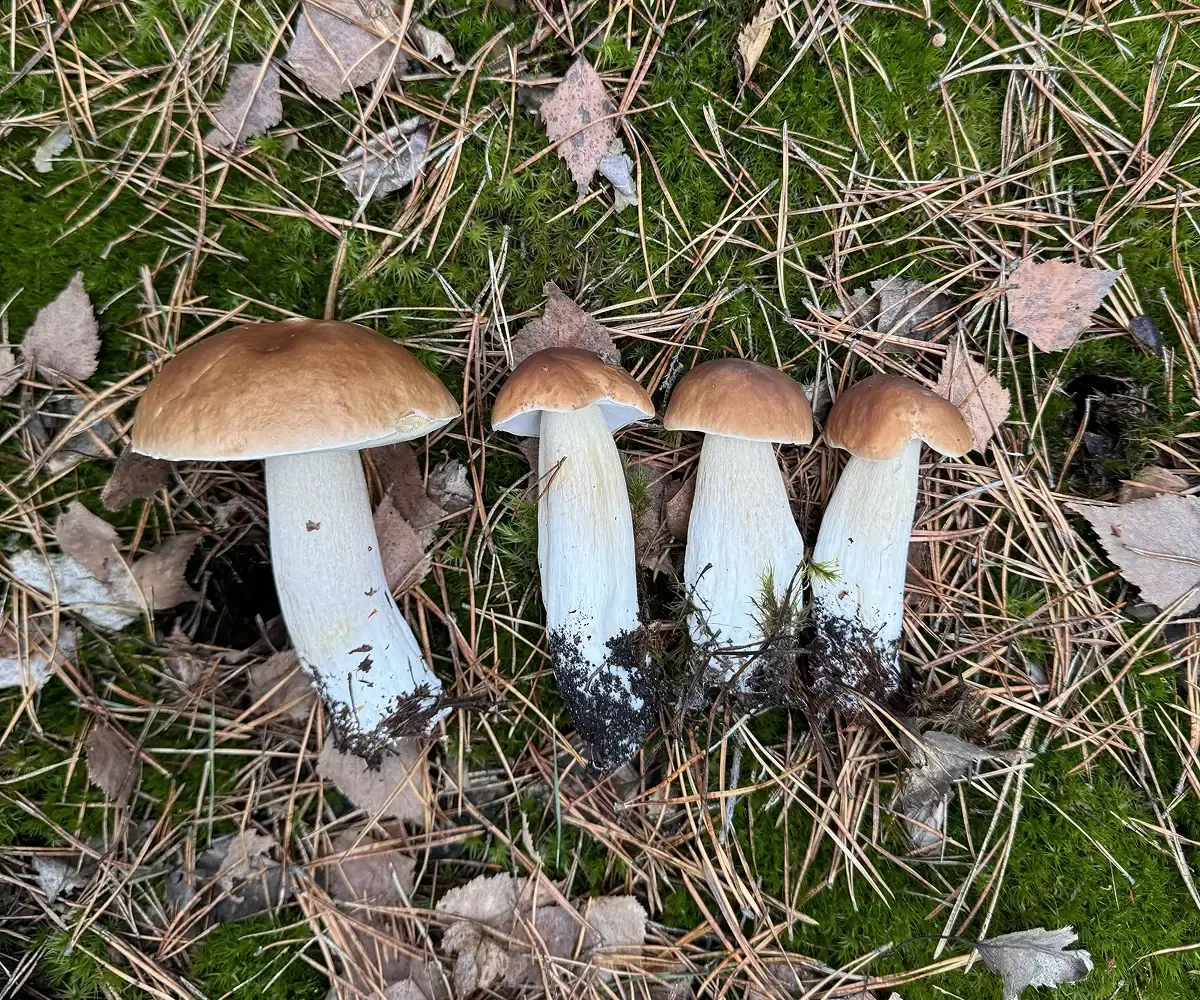
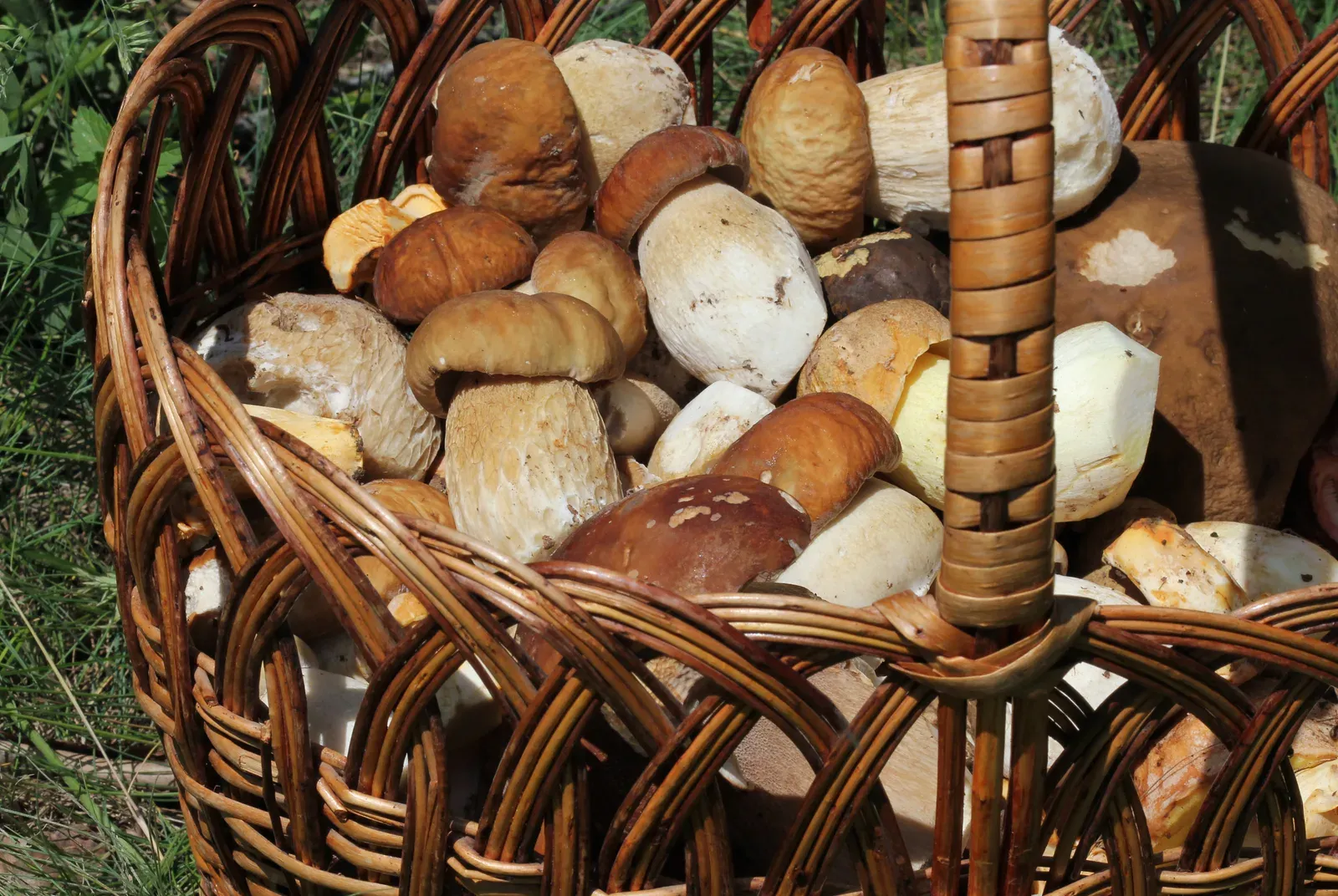
- Porcini. August brings a second flush of porcini — both in oak woods and in pine forests. Toward autumn, porcini become firmer and less wormy than in the July heat.
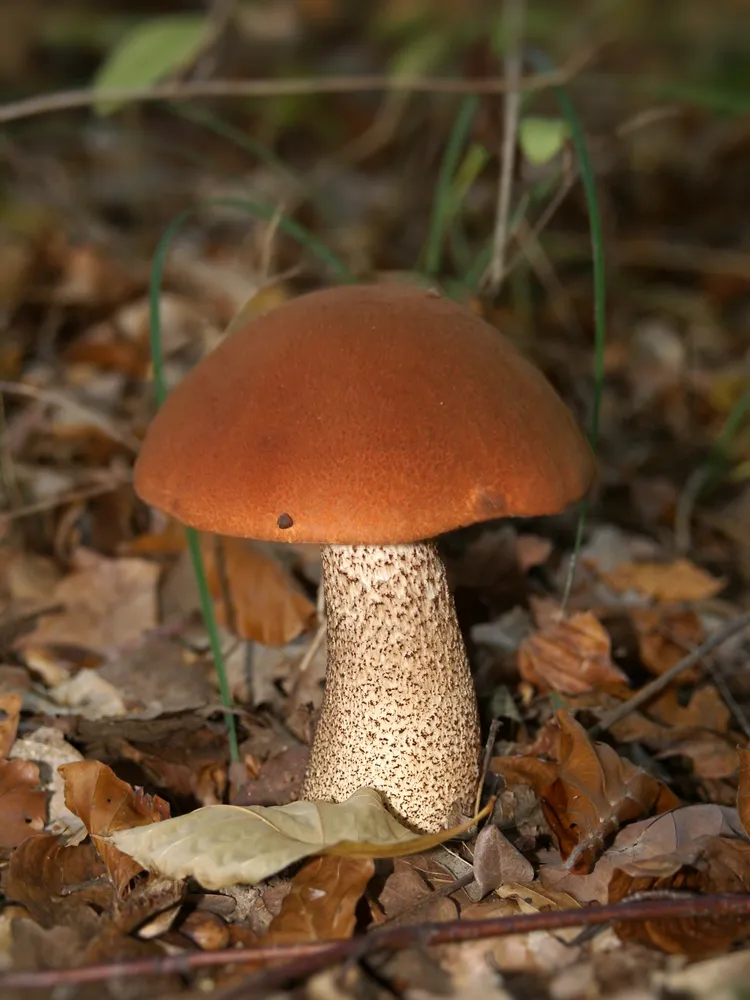
- Brown birch bolete and red-capped scaber stalk. Birch boletes and aspen boletes gain strength in August near birches and aspens. The red caps of the red-capped scaber stalk can be seen from afar.
- Lurid bolete. A sturdy bolete of oak woods that turns blue when cut. A good edible mushroom, but it needs proper processing — check the species description before cooking.
Autumn mushrooms already appearing
It's the arrival of these species that sets August apart from July — they are the heralds of the autumn season.
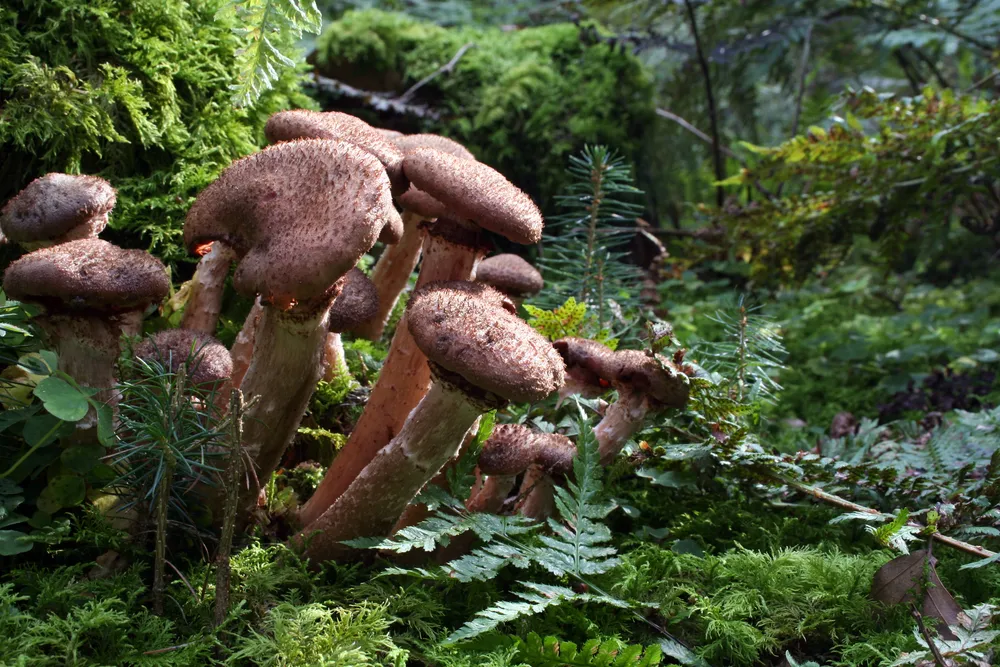
- Honey fungus. Honey fungus starts at the end of August: first scattered clusters on stumps and around roots, and in September — in large numbers. Take care to tell them apart from false honey mushrooms.
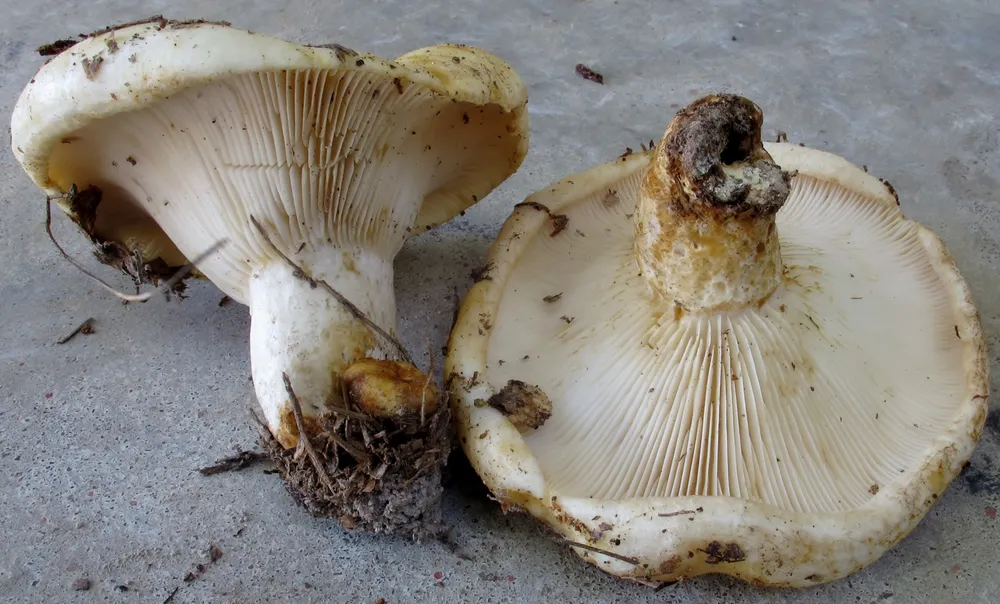
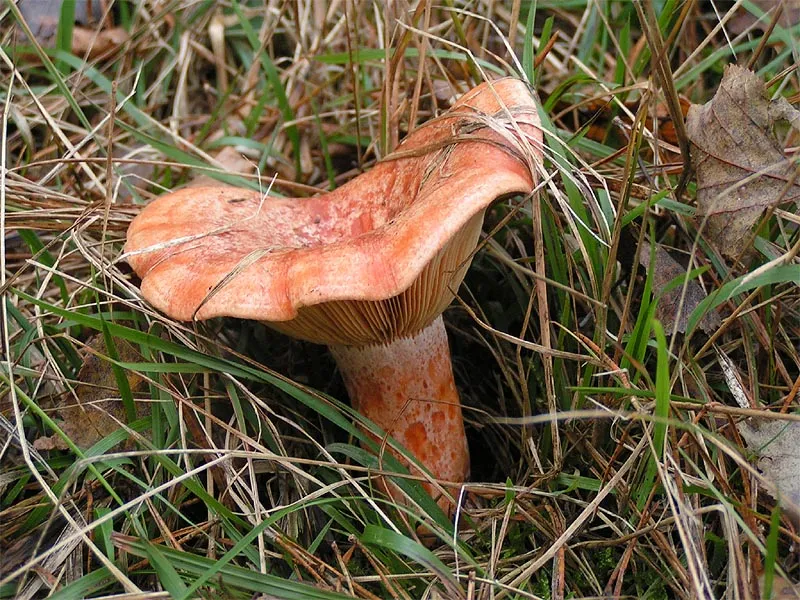
- Milk caps. They come into season in the second half of August — firm gilled mushrooms for salting that grow in groups in deciduous and mixed forests.
- Saffron milk caps. They appear in pine and spruce plantations. We have a separate article on when saffron milk caps appear and where to look for them.
Milk caps and saffron milk caps are a classic pair of mushrooms for salting, and August is just the month to start thinking about putting some away for winter.
Where and when to look for mushrooms in August
A few pointers will make your August outing pay off.
- Follow the rain and mist. The best time is two or three days after a warm rain. Cool nights with morning mists add moisture even in dry weather — a good sign for a forager.
- Check different forests. Boletes stick to oaks, birches and pines; honey fungus to stumps; milk caps and saffron milk caps to conifer and deciduous plantations. The more varied your route, the fuller your basket.
- Don't rush after honey fungus early in the month. They'll come up in numbers in September. In August, bet on boletes, chanterelles and the first milk caps, and check for honey fungus closer to the end of the month.
- Plan your preserving. The August harvest is best dried, pickled or frozen — it's just the time to stock up for winter.
And most importantly: keep an eye on the weather. Mushrooms can sit out a dry half of August underground, but after rain and the first cool nights the forest comes alive within days — and you can catch exactly that moment with the mushroom radar.
Common August foraging mistakes
A bountiful month has its pitfalls.
- Confusing the first honey fungus with false ones. Early in the season this is the most dangerous mistake. Check the features of true honey mushrooms before you put any in your basket.
- Heading into the forest in dry heat. The first half of August can still be hot. Without moisture the mycelium won't fruit — wait for rain or mist.
- Taking overripe boletes. In warm weather mushrooms age quickly. An old porcini with a greenish pore layer is best left behind.
- Forgetting about preserving. The August harvest is abundant — you can't eat it all fresh. Plan drying, pickling or freezing ahead of time.
August rewards attention to the weather and a varied route: wait for rain, walk through the oak wood, the pine stand and the old stumps — and the end of summer will almost certainly repay you with a full basket.
Sources
- «Key to the Fungi of Ukraine» (Kyiv, Naukova Dumka publishing house).
- Boletus edulis in GBIF, the Global Biodiversity Information Facility.
- Armillaria mellea in MycoBank, the international fungal nomenclature database.
- Mushroom hunting on Wikipedia.
Frequently asked questions
What mushrooms grow in August?
August brings a second flush of porcini; chanterelles, slippery jacks, brown birch boletes and red-capped scaber stalks are still going, and at the end of the month honey fungus, milk caps and saffron milk caps appear.
When does honey fungus start in August?
Honey fungus usually starts in the second half of August — first scattered clusters on stumps, with the main crop coming in September.
Are there porcini in August?
Yes, August is the second flush of porcini. After the July lull, porcini come up in numbers again both in oak woods and in pine forests.
When should you pick milk caps and saffron milk caps?
Both come into season in the second half of August and continue through autumn. They're a classic pair of mushrooms for salting, so August is the time to think about preserving.
How do August mushrooms differ from July ones?
In August, autumn species join the summer ones — honey fungus, milk caps, saffron milk caps. Cool nights and mists add moisture, and boletes become firmer and less wormy.
When is the best time to go to the forest in August?
Two or three days after a warm rain. Cool nights with morning mists add moisture even in dry weather — check the mushroom radar.
Can you confuse the first honey fungus with poisonous ones?
Yes, early in the season true honey mushrooms are easy to confuse with false ones. Always check the identification features — the ring on the stem and the color of the gills help tell them apart.
What should you do with the August harvest?
August mushrooms are best dried, pickled or frozen. The harvest is usually abundant, so it's just the time to stock up for winter.
Mushrooms in this article
Related articles
 Recipes & cooking
How to store fresh mushrooms, and for how long
Fresh mushrooms spoil faster than you might think. Here's how long they keep in the fridge, how to store them…
August 21, 2026·4 min How to identify
Truffles in Ukraine: do they grow here, and where to look
Truffles aren't just a French delicacy. Several species grow in Ukraine too. Here's which ones, where they occ…
August 24, 2026·2 min Recipes & cooking
How long to boil mushrooms
Boiling time depends on the type of mushroom and on what you're cooking next. Here's a clear cheat sheet: how…
August 22, 2026·4 min