THIS DATA HAS NOT BEEN VERIFIED BY AN EXPERT. Use at your own risk.
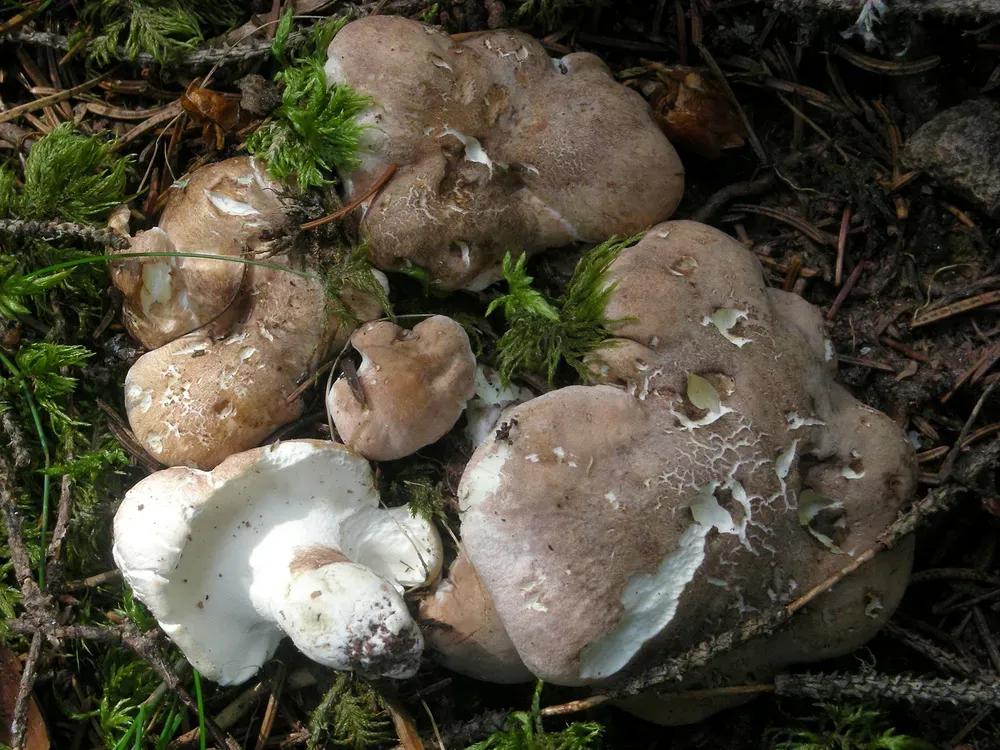
Sheep polyporeAlbatrellus ovinus
Under reviewUpdated October 3, 2026
Passport
- Edibility
- Edible
- Season
- Aug — Oct
- Hymenophore
- Pored
- Cap color
- White
- Size
- Medium (5–15 cm)
- Smell
- Pleasant
- Reviewed
- Under review
Quick answers
Where to look?
Conifer forest, Mixed forest
When does it appear?
Aug — Oct
Active months: August, September, October.
How to recognize it? Three signs
- Cap color: White, Cream, Yellow
- Cap shape: Convex, Flat, Depressed
- Smell: Pleasant
Fruiting season
August – October
Description
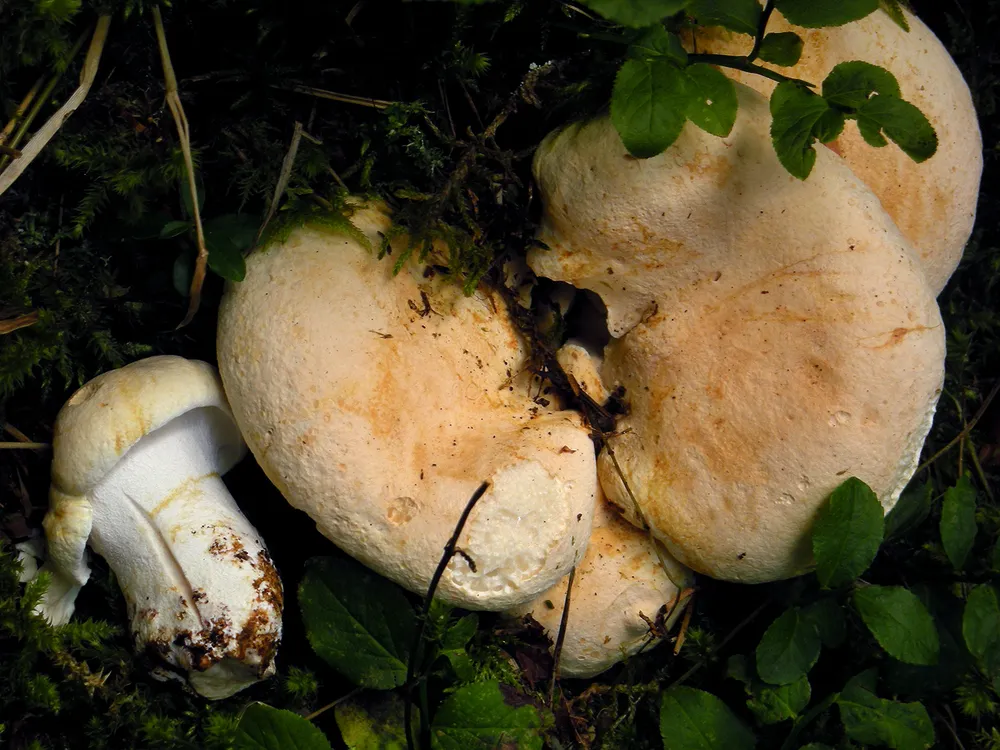
The sheep polypore, known to science as Albatrellus ovinus, is a ground-dwelling polypore with a sturdy whitish fruiting body that, unlike the shelf-like polypores on trees, grows right on the soil, like an ordinary cap-and-stem mushroom. Its round, whitish-cream cap on a short, thick stem really does resemble a sheep's back from a distance, which may be what the folk name hints at. It is a mycorrhizal mushroom that partners with conifers, most often spruce, so it is found in conifer and mixed forests.
In Ukraine the sheep polypore grows in conifer and mixed forests, mostly in mountain and foothill areas, among moss and conifer needle litter. It fruits in late summer and autumn — from August to October; the mushroom appears in groups, often with several fruiting bodies fused at the base.
In terms of edibility, the sheep polypore is an edible mushroom, but it is edible only when young and properly cooked. Its dense white flesh has a pleasant nutty flavor; young mushrooms are fried and added to dishes. Old specimens become tough and slightly bitter. In some people the mushroom may cause a mild laxative effect, so eat it in moderation and well cooked. In Northern Europe it is prized and even sold at markets.
Cap
The cap of the sheep polypore reaches 4 to 15, rarely up to 20 centimeters across. When young it is convex, becoming flat or funnel-shaped and depressed with age, often with a wavy margin. The surface is dry and smooth, whitish or cream in young mushrooms, turning yellowish-ochre or reddish with age and becoming covered with a network of cracks. The round, fleshy cap on a short stem makes it look like a ground-dwelling cap-and-stem mushroom rather than a polypore.
Hymenophore
The hymenophore is tubular-porous, as in polypores, but fine. The pores are small, round or angular, running noticeably down the stem (decurrent), white or cream, turning yellowish or greenish-yellow with age and when damaged. The tubes are short. The spore print is white. The white, decurrent pore layer that turns yellow is a characteristic feature of the species.
Stem
The stem is short and thick, central or slightly off-center, 3 to 7 centimeters tall, whitish or cream, dense, often tapering downward, sometimes branched. Several stems may be fused at the base. There is no ring and no volva. The squat, sturdy stem supports the fleshy cap well.
Flesh
The flesh is white, dense and fleshy; when cut and with age it may take on a yellowish or greenish-yellow tint. In young mushrooms the taste is mild, pleasant and nutty; in old ones it turns slightly bitter. Thanks to its density, the flesh holds its shape well; only young specimens are chosen for the table, and they are cooked thoroughly.
Smell
The smell is faint, pleasant, mushroomy, with no sharp notes. The aroma is not a defining feature, so identification relies on the whitish, fleshy cap growing on the ground, the fine decurrent pores that turn yellow, and growth in groups in conifer forest near spruce.
›Scientific synonyms (3)
Boletus ovinus Schaeff. (1774), Polyporus ovinus (Schaeff.) Fr., Scutiger ovinus (Schaeff.) Murrill
Lookalikes
Related species
Mushrooms of the same genus and habitat — to study side by side and never mix up.
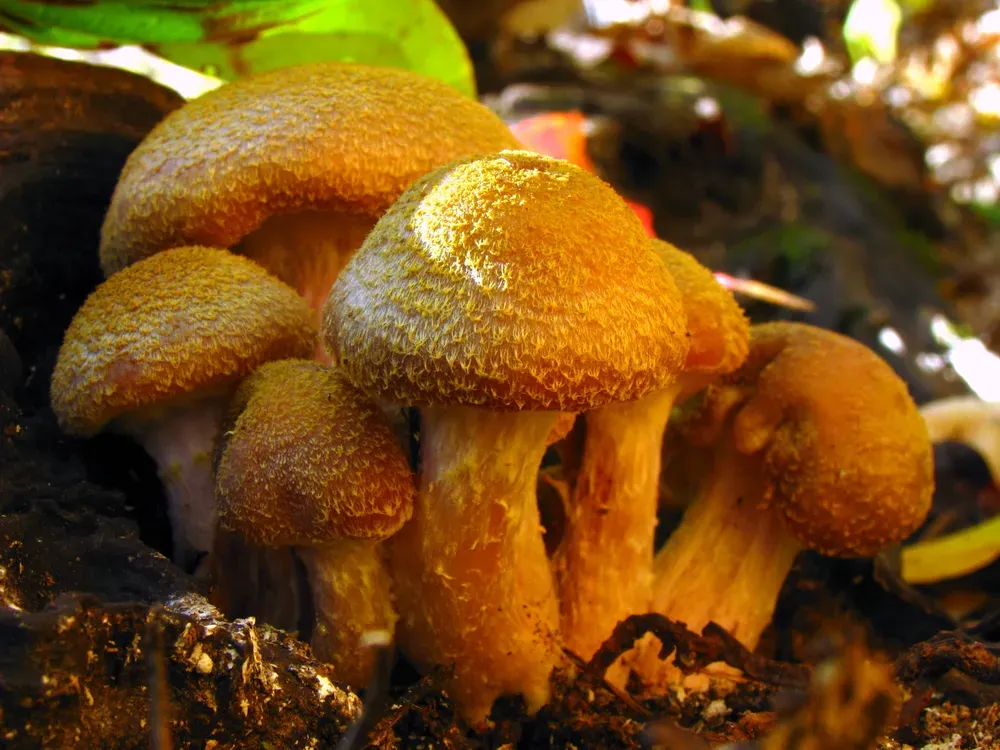
Bulbous honey fungus
Armillaria gallica
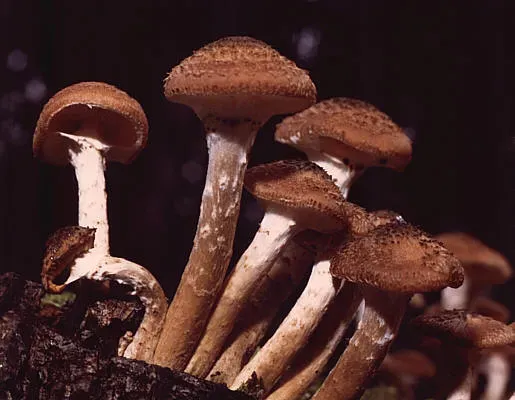
Dark honey fungus
Armillaria ostoyae
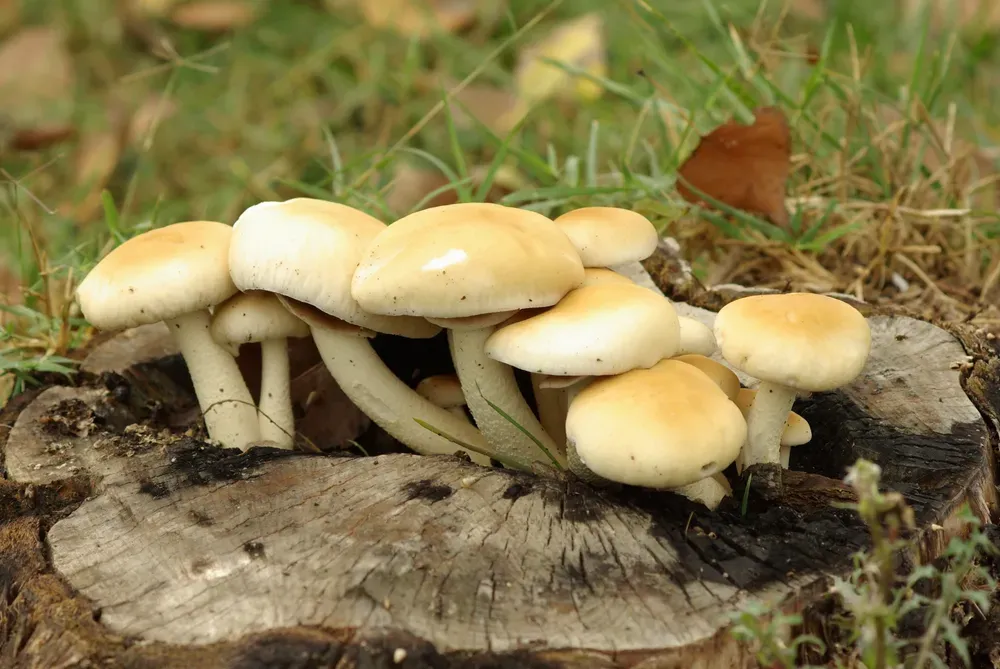
Poplar fieldcap
Cyclocybe aegerita
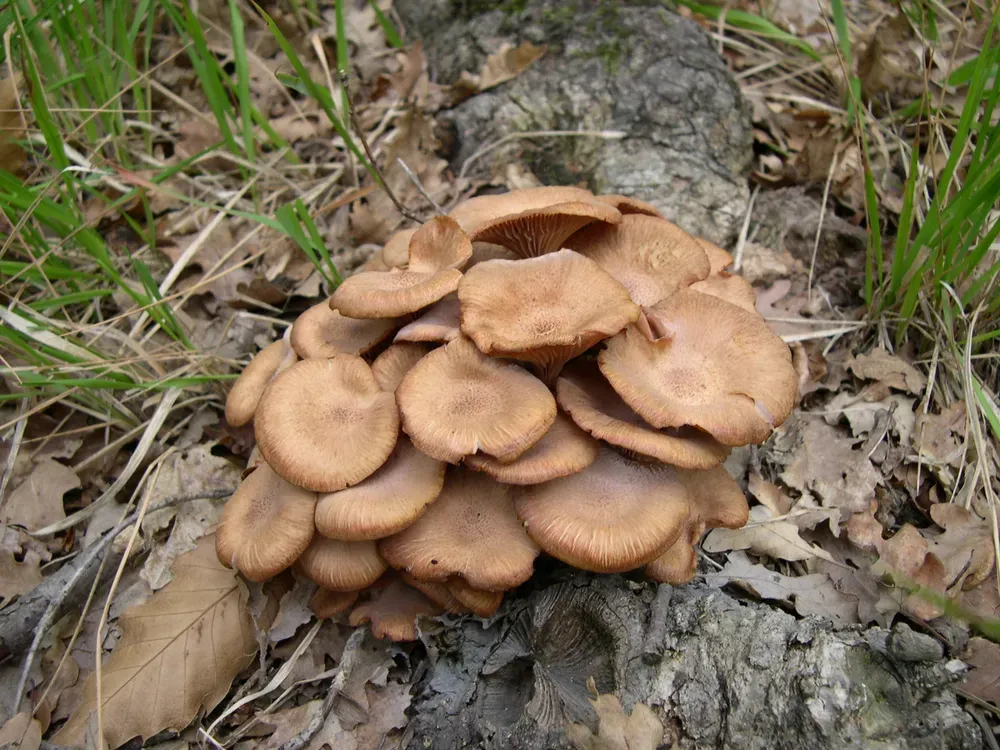
Ringless honey fungus
Desarmillaria tabescens
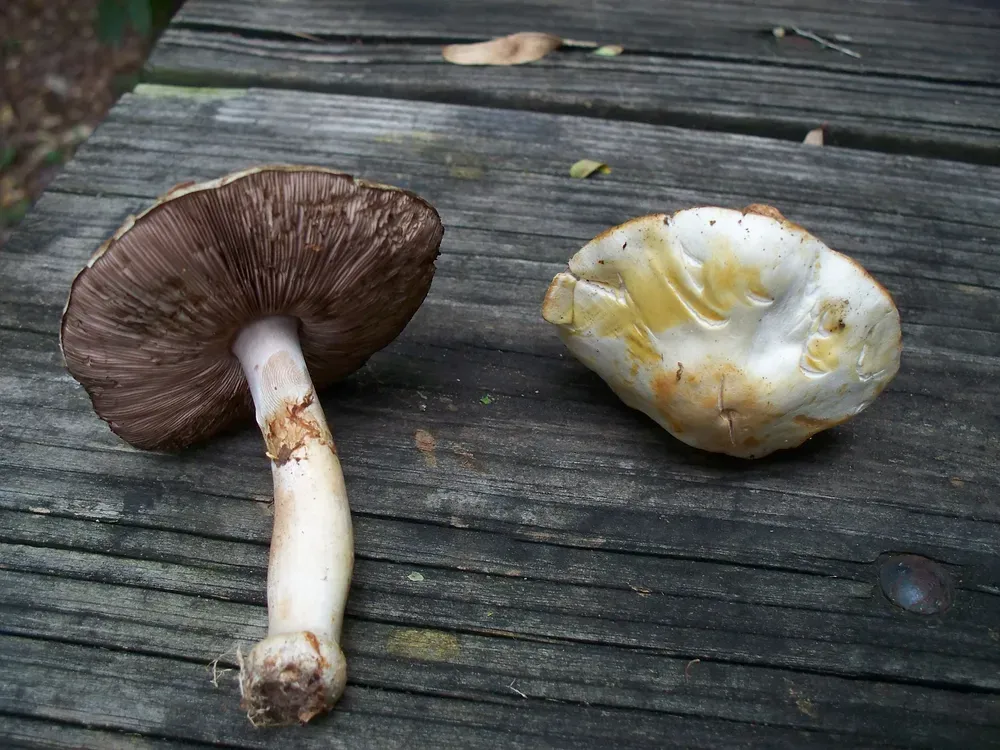
Agaricus abruptibulbus
Agaricus haemorrhoidarius
Agaricus haemorroidarius
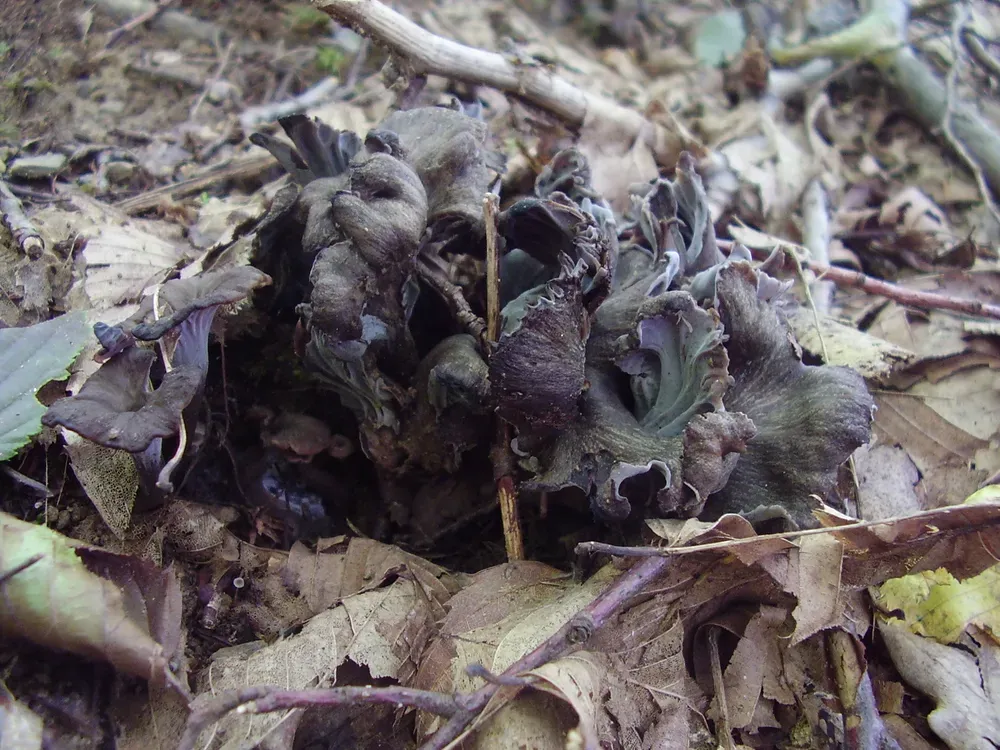
Ashen chanterelle
Cantharellus cinereus
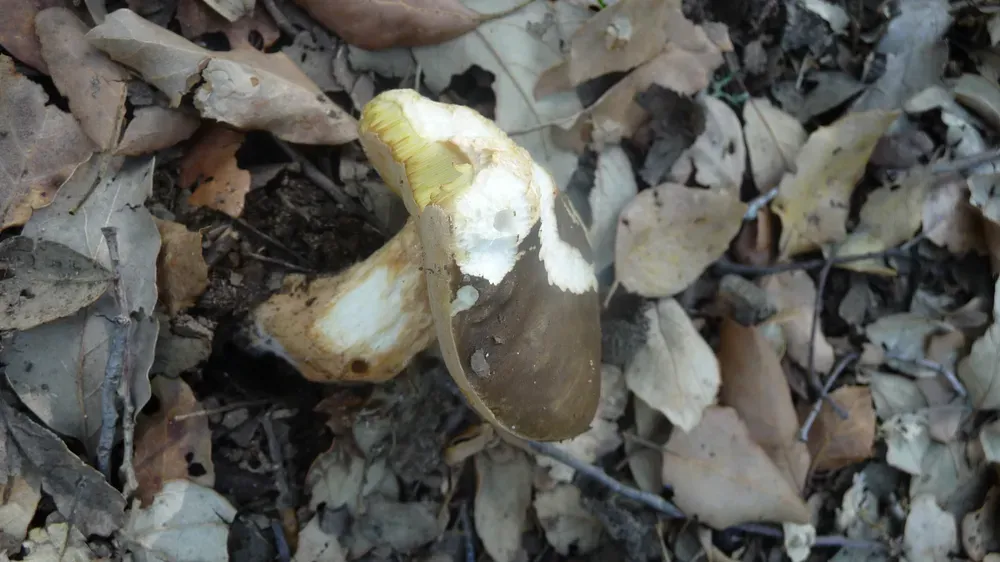
Blushing bolete
Leccinum roseofractum
Frequently asked questions
Is Sheep polypore edible or poisonous?
Does Sheep polypore have gills or pores?
What does the cap of Sheep polypore look like?
What does the stem of Sheep polypore look like?
What do Sheep polypore smell and taste like?
Where does Sheep polypore grow?
Which trees does Sheep polypore grow under?
When should you pick Sheep polypore?
What can Sheep polypore be confused with?
How do you cook Sheep polypore?
Can you dry Sheep polypore?
What is the scientific name of Sheep polypore?
Sources
- [1]Вікіпедія (українська)
- [2]Атлас грибів України, Зеров Д.К. (1979)
- [3]MycoBank Database
- [4]Index Fungorum
- [5]GBIF
- [6]iNaturalist Ukraine