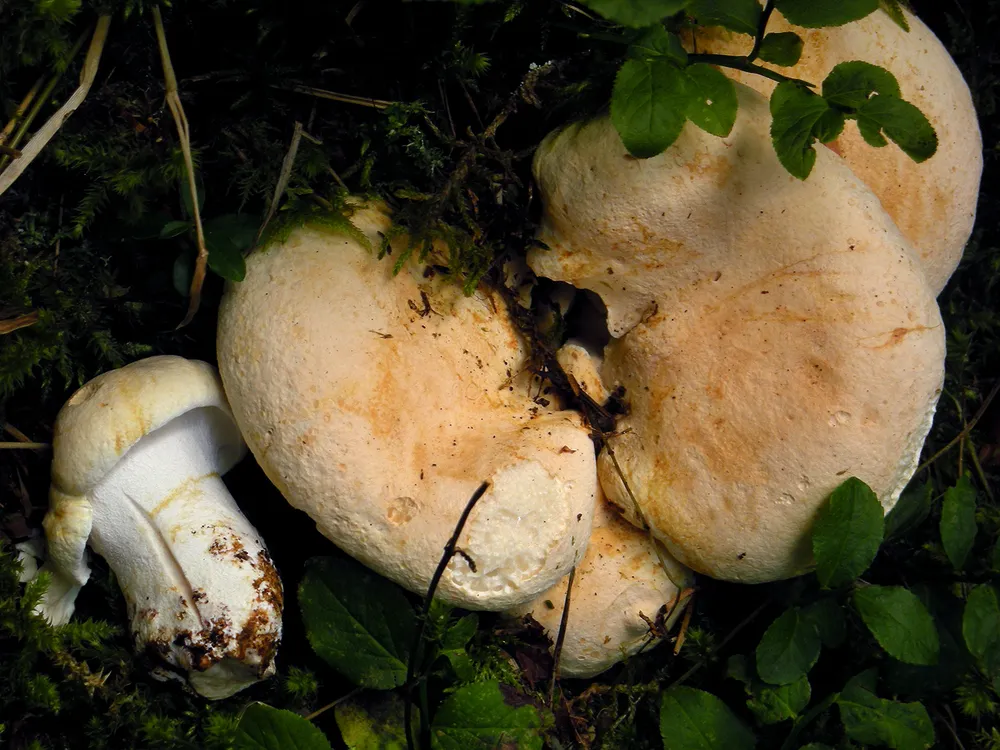
Fused polyporeAlbatrellopsis confluens
Expert-verifiedUpdated October 3, 2026
Passport
- Edibility
- Conditionally edible
- Season
- Jul — Oct
- Hymenophore
- Pored
- Cap color
- Yellow
- Size
- Large (over 15 cm)
- Smell
- Pleasant
- Reviewed
- Yes ✓
Quick answers
Where to look?
Conifer forest, Mixed forest
When does it appear?
Jul — Oct
Active months: July, August, September, October.
How to recognize it? Three signs
- Cap color: Yellow, Orange, Red
- Cap shape: Convex
- Smell: Pleasant
Fruiting season
July – October
Description
The fused polypore is a substantial, fleshy mushroom of conifer and mixed forests. It forms mycorrhiza with spruce, so look for it where there are needles underfoot and spruce roots run deep. In Ukraine it occurs in the Carpathians.
Fruiting bodies appear from July to October — the peak falls in August–September, especially after warm rains. Several caps often grow together at their bases into a single mass — hence “fused” in the name. A young mushroom is yellowish, turning red or orange with time, so you can spot it in the forest from afar.
It is a conditionally edible species. Its flesh is slightly bitter, but after brief boiling the bitterness disappears and you can cook it further. Only young fruiting bodies are picked — old ones get coarse and aren’t worth a dish. Seasoned Carpathian foragers know it well; in the rest of Ukraine it is rare.
Cap
Cap up to 15 cm across, up to 3 cm thick. Yellowish in young mushrooms, turning red or orange with time — an intense color that is hard to mistake. The surface is dry; caps often fuse together.
Hymenophore
Tubular pore surface. Tubes short, 1–3 mm long. White at first, browning with time. Spore print white.
Stem
Up to 10 cm tall. The young stem is white, then gets covered with rusty spots and takes on the cap’s color as it ages. Central, with no ring and no volva.
Flesh
Firm, fleshy, white when cut. It has a slightly bitter taste that disappears after brief boiling.
Smell
Mushroomy, pleasant, not sharp. No chemical or unpleasant notes.
›Scientific synonyms (5)
Boletus confluens Alb. & Schwein. (1805), Scutiger confluens (Fr.) Bond. & Sing. (1941), Polyporus confluens Alb. & Schw., Albatrellus confluens (Alb. & Schwein.) Kotl. & Pouzar (1957), Albatrellus confluens
Lookalikes
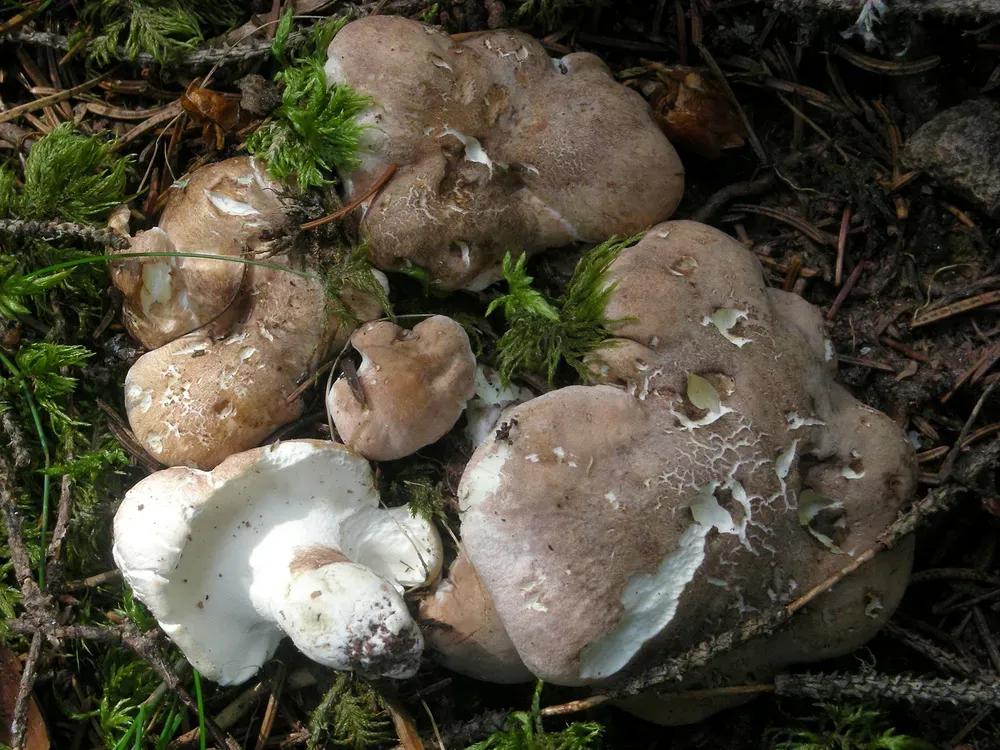
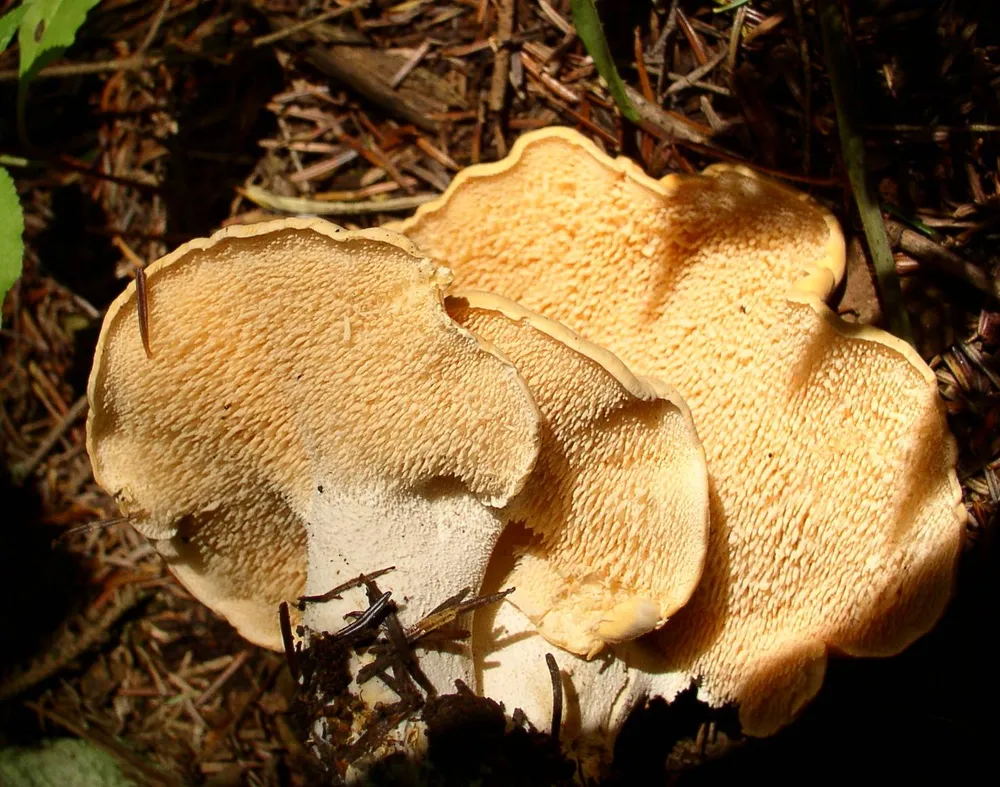
Related species
Mushrooms of the same genus and habitat — to study side by side and never mix up.
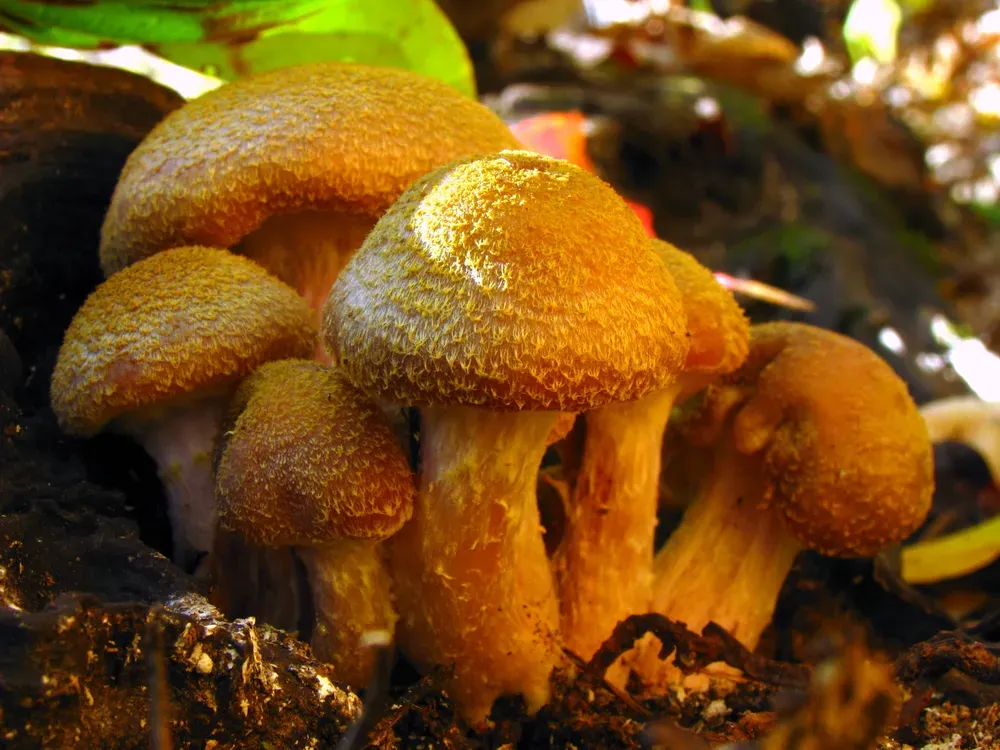
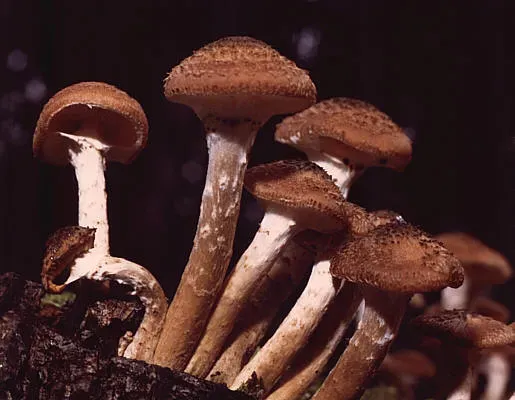
Bulbous honey fungus
Armillaria gallica
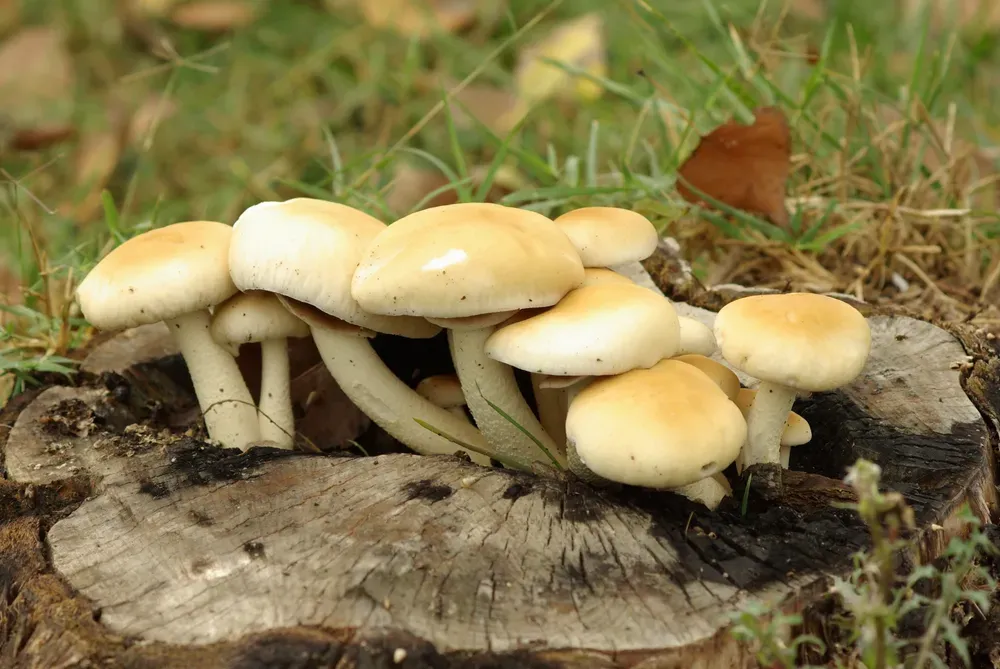
Dark honey fungus
Armillaria ostoyae
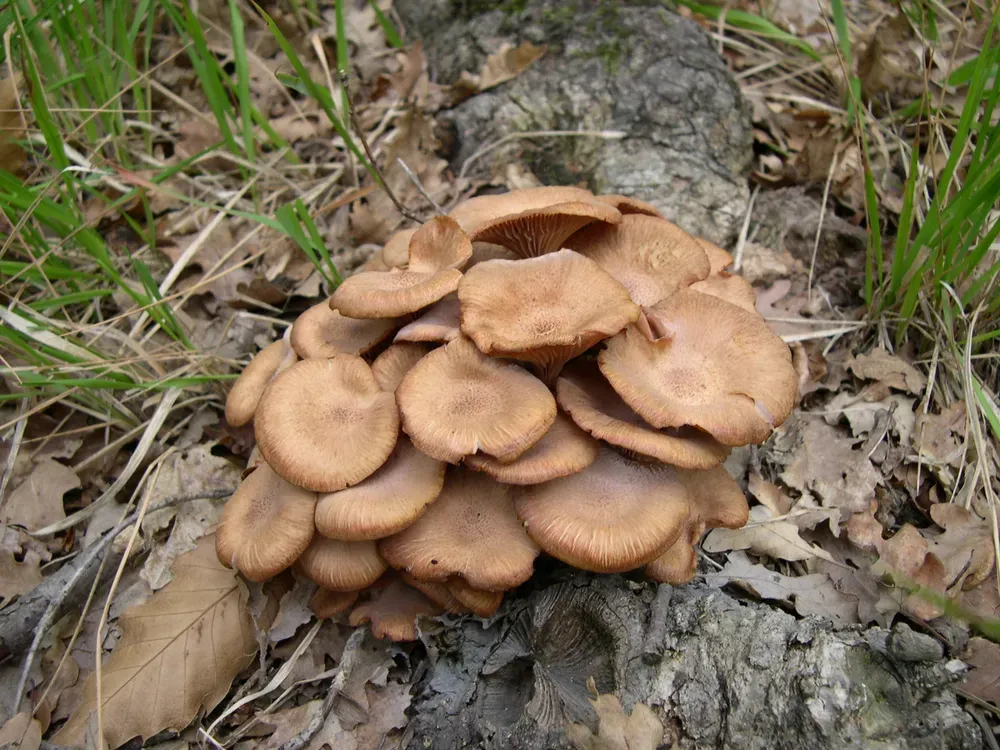
Poplar fieldcap
Cyclocybe aegerita
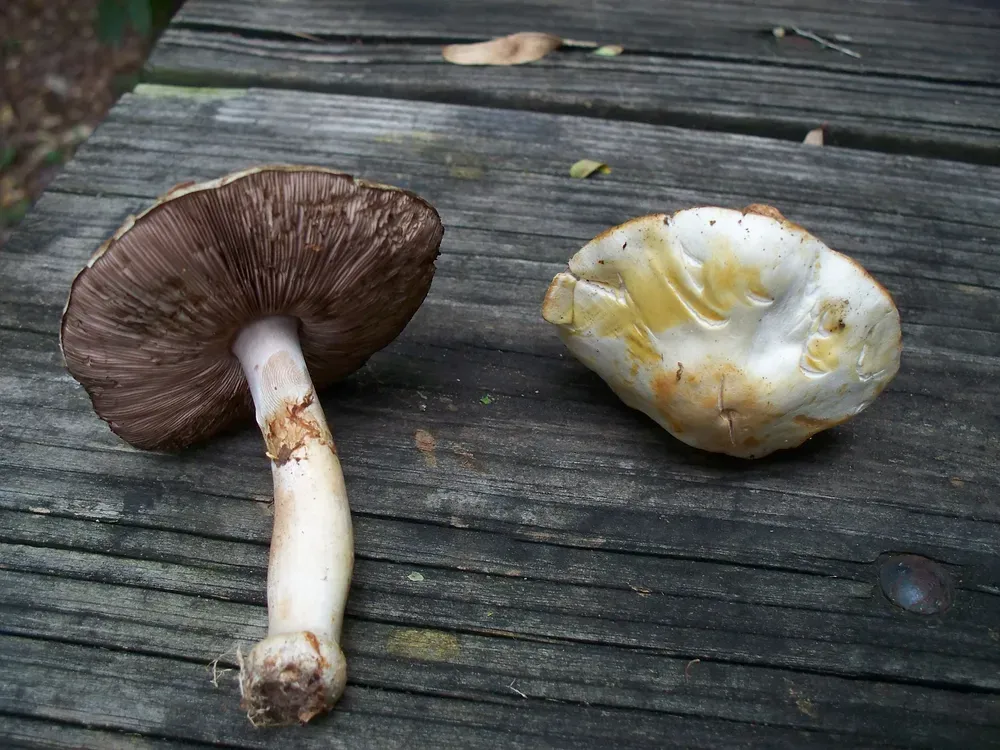
Ringless honey fungus
Desarmillaria tabescens
Agaricus abruptibulbus
Agaricus haemorrhoidarius
Agaricus haemorroidarius
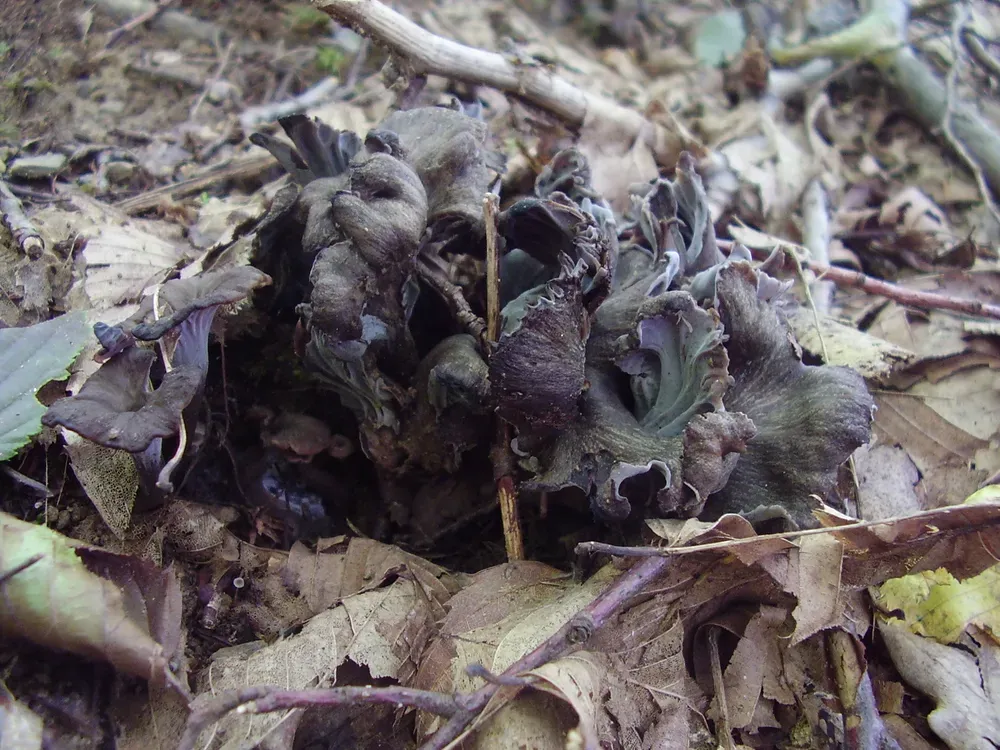
Ashen chanterelle
Cantharellus cinereus
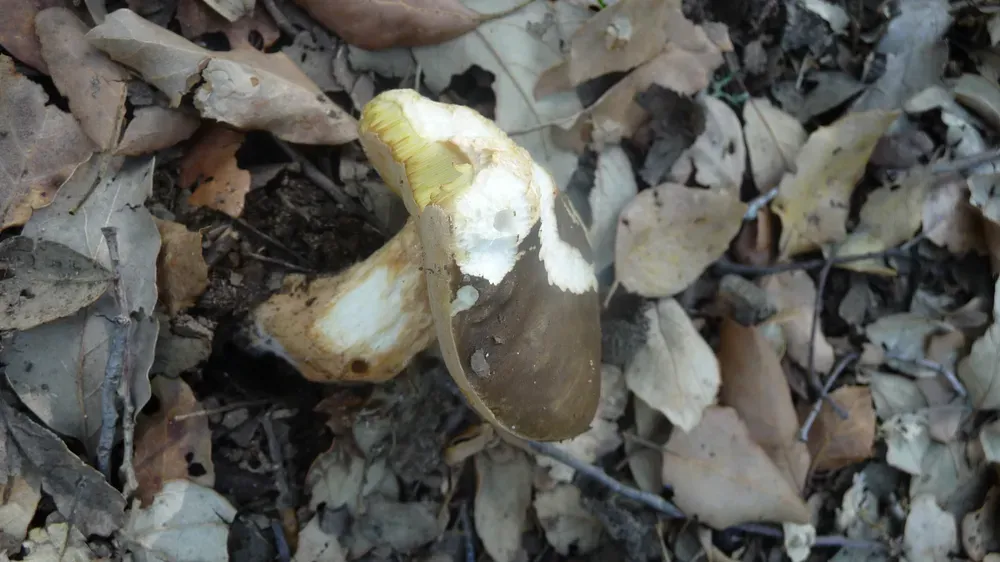
Blushing bolete
Leccinum roseofractum
Frequently asked questions
Can you eat it?
Yes, but as a conditionally edible mushroom. First boil it for 10–15 minutes in salted water and drain the liquid — this removes the bitterness. Then cook further: fry, stew, pickle. Only young fruiting bodies are picked.
Why aren’t old fruiting bodies picked?
With age the flesh coarsens, becomes hard and is poorly digested. It won’t cause any poisoning, but the dish will be inedible. A young mushroom has white tubular “insides”; an old one is browner and tougher.
Where should you look for it?
In conifer and mixed forests with spruce. It forms mycorrhiza specifically with spruce — without it, it doesn’t grow. In Ukraine — mostly in the Carpathians.
Does it grow in oak forests?
No. It is a mushroom of spruce and spruce-broadleaf stands. You won’t see it among oaks, hornbeams or birches.
When does it appear?
From July to October. Peak — August–September, especially after warm rains. In a dry summer fruiting bodies appear later and singly.
Does it grow every year?
In Carpathian spruce forests — yes, at known spots it returns to the same places. In drought years it may “skip” a season.
What can it be confused with?
With other Albatrellus-type species — for example Albatrellus ovinus (sheep polypore) and A. cristatus. They are all conditionally edible after boiling, but accurate identification matters for recording the find.
How do you tell it from look-alikes?
The telltale sign is several caps fusing into one mass and the intense red-orange color of a mature mushroom. The sheep polypore stays yellowish and doesn’t turn red.
Is Fused polypore edible or poisonous?
Does Fused polypore have gills or pores?
What does the cap of Fused polypore look like?
What does the stem of Fused polypore look like?
Sources
- [1]Вікіпедія (українська)
- [2]Атлас грибів України, Зеров Д.К. (1979)
- [3]MycoBank Database
- [4]Index Fungorum
- [5]GBIF
- [6]iNaturalist Ukraine